Overview
Ahava is an Israeli cosmetics company that makes skincare and body-care products built around minerals and mud from the Dead Sea. Its full corporate name is Ahava Dead Sea Laboratories Ltd., and "ahava" is the Hebrew word for "love." The company was founded in 1988 at the Dead Sea by Ziva Gilad, a spa technician who, according to Wikipedia, had the idea after watching tourists collect Dead Sea mud to take home [4]. It is headquartered in Lod, Israel, and operates a laboratory on the shore of the Dead Sea.
Since 2015 the company has been owned by Fosun International, a Chinese conglomerate, which makes its current status that of an acquired brand [4]. It continues to trade as a standalone Dead Sea skincare label, with an active direct-to-consumer storefront.
Origin & founders
Ahava began in the late 1980s, when Ziva Gilad stood each morning on the desert shore of the Dead Sea [1]. The company launched in 1988 as a single stand selling bottles of body scrub to visitors, and Wikipedia notes that it generated about one million dollars in that first year [4]. From the start the idea was narrow rather than broad: instead of building formulas around many botanical ingredients, the brand has kept what one review called "a singular focus" on the minerals and mud of the Dead Sea.
Most accounts place the brand's origin firmly in Israel. One editorial review states that Ahava "started in New York City," which conflicts with the company's own founding story and with Wikipedia's record of a headquarters in Lod, Israel; the New York reference most likely describes a United States market launch rather than the brand's beginning [5][4].
Ownership
Ahava has changed hands several times. In 2009 Shamrock Holdings, an investment company associated with the Disney family, acquired a 20% stake [4]. By 2011 its shareholders included Hamashbir Holdings, Gaon Holdings and three kibbutzim. In 2015 Fosun International agreed to buy a controlling share, in a deal valued at roughly 300 million Israeli shekels, or about 77 million US dollars [4]. The brand has continued to operate under the Fosun group since then.
Philosophy & positioning
The company positions its range as "mineral-powered skincare," and describes its formulas as "grounded, intelligent, and deeply nourishing" and intended to strengthen the skin and restore its balance [1]. It frames its outlook around two stated ideas, a "Union of Science & Nature" and "Responsibility Without Ceremony," and sums up its identity in the line "Born Vegan, Sustainably Sourced, Kind to Your Skin, Nature-Infused Science." Reviewers place its pricing in a prestige tier, with most products falling in the roughly 30-to-80-dollar range and described as pricier than comparable retailers.
Products & innovation
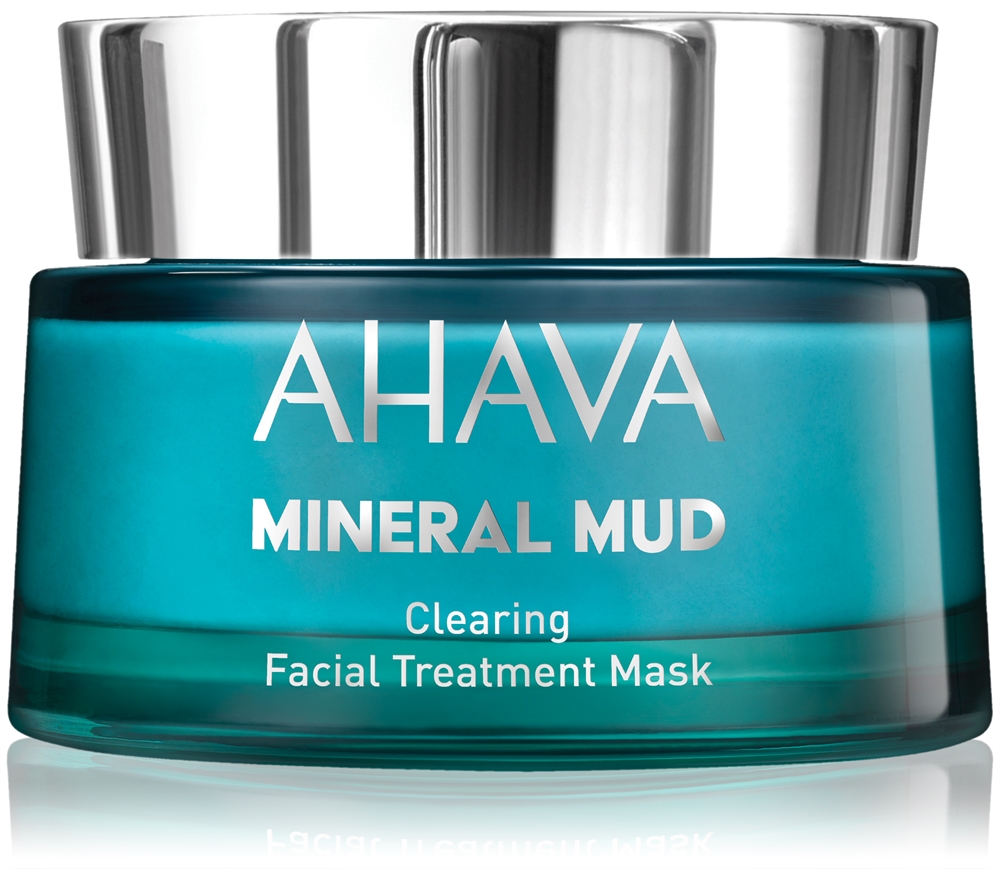
The centerpiece of Ahava's products is Osmoter, a proprietary mineral complex drawn from the Dead Sea and built on magnesium, sodium, potassium and calcium. The company registered Osmoter as a trademark in 1989 [4] and describes it as activating the skin's natural hydration. Alongside it, the brand says it holds 19 patented complexes [1]. Its catalogue centers on face and body care, and the products most often singled out in reviews include the Dead Sea Mud Mask, the Mineral Hand Cream, the Mineral Body Lotion and an Extreme Firming Mineral Eye Cream. The mud mask in particular is repeatedly cited as a standout product and has been distributed through the Allure Beauty Box.
On ethics, the company says its products are 100% vegan and "always have been," carries Vegan Society certification [1], and states that its formulas are free of parabens, sulfates, phthalates and triclosan.
Sustainability
Ahava ties its environmental messaging closely to the Dead Sea itself, saying it is "passionate about protecting and preserving the Dead Sea, our home and habitat, for future generations." Under a program it calls NATURAL ELEMENTS, the company describes solar panels that supply most of its facility's electricity, closed-loop water systems, and recycled packaging. It also reports creating water pools and vegetation around its factory to support bird migration through the Great Rift Valley, sponsoring bird-ringing research and building a bird observatory. A long-running "Sea-to-Store" education program, said to have operated for more than 15 years, teaches schoolchildren about Dead Sea resources and factory operations.
Recognition
Coverage of the brand has appeared in Allure, Glamour and The New York Post, according to an editorial review, though these mentions reach the record second-hand through that aggregator rather than through direct feature articles.
Controversies
For years Ahava's main factory operated in Mitzpe Shalem, an Israeli settlement and kibbutz on the West Bank shore of the Dead Sea. The company held exclusive Israeli government licensing to extract Dead Sea mud, and as of 2010 was described as the only cosmetics firm legally permitted to mine raw materials there. The human-rights organization B'Tselem argued that extracting mud from occupied Palestinian territory breached the Hague Convention, and groups including Code Pink launched boycott campaigns under the Boycott, Divestment and Sanctions movement, characterizing the products as made from "stolen Palestinian natural resources" [4]. In March 2016, the company relocated its factory from Mitzpe Shalem to the Tamar Regional Council, reported to be a move to avoid European Union directives against trade with companies operating in settlements and to reduce boycott pressure [4].
Current status
Ahava remains operational and is owned by Fosun International, which acquired its controlling share in 2015. The brand runs an active direct-to-consumer storefront, and its most recent visible activity in the sources dates to current online promotions.
Facts & evidence
Documented facts from Glowpedia's fact base — every row carries a source.
Timeline#
AHAVA founded at the Dead Sea by Ziva Gilad; launched as a single stand selling Dead Sea body scrub.↗ en.wikipedia.org
Osmoter registered as AHAVA's trademark.↗ en.wikipedia.org
Shamrock Holdings (Disney Family investment company) acquired 20% of Ahava.↗ en.wikipedia.org
Acquired by Fosun International (controlling share, ~NIS 300 million / $77M USD).↗ en.wikipedia.org
Factory relocated from Kibbutz Mitzpe Shalem (West Bank) to Tamar Regional Council.↗ en.wikipedia.org
Signature products#
AHAVA Dead Sea Mud Mask for detoxifying and refreshing with mineral-rich formula ... Natural Dead Sea Body Mud ($17 for 13.6 oz)↗ honestbrandreviews.com
Mineral Hand Cream ($24 for 3.4 oz) - 258 reviews, 5/5 stars↗ honestbrandreviews.com
Mineral Body Lotion ($31 for 8.5 oz)↗ honestbrandreviews.com
Extreme Firming Mineral Eye Cream ($64)↗ honestbrandreviews.com
Dead Sea Mud Mask — Repeatedly cited as a cult/standout AHAVA product across reviews and beauty-box distribution.↗ honestbrandreviews.com
Key ingredients#
Proprietary technologies & patents#
“Osmoter™ - Proprietary mineral complex and signature ingredient ... 19 patented complexes”
“19 patented complexes”
Mentioned in#
Allure — Brand spotlighted by Allure; AHAVA Purifying Mud Mask distributed via Allure Beauty Box.↗ honestbrandreviews.com
Glamour — Brand spotlighted by Glamour magazine.↗ honestbrandreviews.com
The New York Post — Brand spotlighted by The New York Post.↗ honestbrandreviews.com
Certification pass
What each certification and self-stated claim rests on: the source, whose website it's on, and what needs review.
“Vegan Society trademark certification”↗ ahava.com
“Six stated principles: ... animal rights defense”↗ ahava.com
“Paraben free”↗ ahava.com
“Six stated principles: ... recycled packaging adoption”↗ ahava.com
“SLS/SLES, Phthalate, Triclosan free”↗ ahava.com
“100% vegan (stated as "always have been")”↗ ahava.com
None of these statements has been checked against the certifying bodies' registers. The statements were observed on 13 Jun 2026.
Where to buy
Where the brand is sold according to Glowjakt's price data, per market.
Prices come from Glowjakt and are updated daily. Glowpedia receives no payment for clicks.
Ingredients across the range
Key ingredients across Ahava's range, from the ingredient lists of 148 of 159 products in Sweden.
Share of products with a known ingredient list. “None identified” means nothing matched our ingredient groups, not that the product is free of them.
Sources
T1 primary · T2 secondary · T3 note- [1]T1ahava.com/pages/about-ahavaahava.com (brand site)
- [4]T3en.wikipedia.org/wiki/AhavaWikipedia
- [5]T3honestbrandreviews.com/reviews/ahava-review/honestbrandreviews.com