Overview
Booming Bob is an independent skincare brand built around a single idea: skincare made entirely without water. Instead of the water that forms the base of most lotions and creams, its products rely on oils, waxes and botanical extracts. The company frames the whole range around two stated principles, transparency and sustainability, and lists every ingredient on the front of each product so that, in its words, "the consumer should understand what they apply to the skin" [1].
The brand sells directly through a multilingual online shop and is stocked by retailers across Europe, including a dedicated UK site that describes it as "Swedish Organic Skin & Body Care" [8]. It remains active, with a live store and ongoing distribution as of 2026.
Origin & founders
The brand takes its name from a chance meeting rather than a founder. According to its own account, one of the creators, named Emil, met an older, well-traveled American named Bob at a wedding [1]. Bob spoke about the oil-based skincare he had encountered on his travels, particularly in the Middle East, and Emil documented the conversation. That exchange, the company says, became the starting point for a water-free, oil-based line, and the name honors "the creator that sparked the whole thing" [1].
Public detail beyond this is limited. The brand gives no founding year, describing its launch only as having happened "a couple of years ago," and Bob's role appears to be as inspiration rather than as a formal founder. No surname is given for either person.
Philosophy & positioning
Booming Bob's central argument is about water. The company points out that water is one of the most common ingredients in skincare and is often used as a filler; because bacteria grow more readily in water-based products, preservatives then become necessary [3]. Its response is to leave water out altogether and work only with oils, waxes and extracts. To keep these blends stable, the brand adds organic rosemary extract and natural vitamin E as preservatives, and bottles its oils in dark glass to slow oxidation from light [3].
The company positions this within a broader sustainability stance that, it says, runs "from cultivation to end product" [3]. It states that it avoids ingredients it considers harmful to the environment, naming palm oil specifically, and that it sources from organically certified producers. Transparency is presented as the second pillar: printing the full ingredient list on the front of each product is framed as a way to let customers judge what they are buying for themselves.
Products & innovation
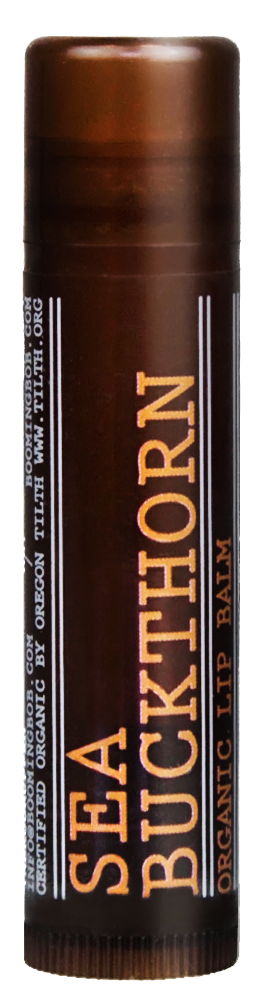
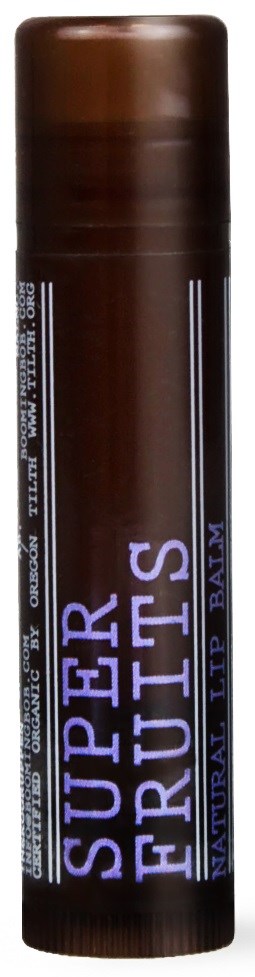
The range is built on facial and body oils, with lip balms and essential oils alongside them; the Lip Balm Peppermint and a facial oil for dry and sensitive skin appear among its signature items. Raw materials are sourced internationally, and the brand maintains an "Origin" page that lists each botanical with its country of source, such as argan oil from Morocco and olive oil from Italy, Spain and Tunisia.
In its product education, the company offers a simple rationale for oils: it states that healthy skin needs roughly 70% moisture and 30% fat, and that an oil helps protect the skin from external stress while maintaining a healthy moisture level [3]. It advises applying water-soluble products first and oil-based ones afterward to seal moisture in.
Ethics & sustainability
Sustainability claims feature prominently in how the brand describes itself. It says it minimizes plastic and uses recycled material where plastic is unavoidable, with outer packaging made from 100% recycled paper, and states that all materials are recyclable [1].
On certification, the picture is mixed. The brand references the United States Department of Agriculture's National Organic Program, under which it says at least 95% of content must be organic, and NSF Organic certification, which sets a 70% organic threshold [4]. A third certification, EcoCert Cosmos, is listed as "in process" rather than completed [4]. The company also states that manufacturing is deliberately split between the United States and South Africa, depending on where the raw materials are grown [4] — a notable point given that the brand itself is presented in its UK market as Swedish [8], with home-market materials in Swedish.
Current status
Booming Bob is active. It operates a live multilingual e-commerce site and a separate UK storefront, and is carried by several European retailers, including stockists in the Netherlands and Switzerland, as of 2026 [8]. No public awards, press coverage or controversies were identified, which is consistent with a small, independently run brand.
Facts & evidence
Documented facts from Glowpedia's fact base — every row carries a source.
Signature products#
Lip Balm Peppermint (featured product image)↗ boomingbob.se
Face oil, dry & sensitive | Booming Bob↗ boomingbob.se
Key ingredients#
Certification pass
What each certification and self-stated claim rests on: the source, whose website it's on, and what needs review.
“Work with organically certified producers”↗ boomingbob.se
“outer packaging consists of 100% recycled paper ... All materials are recyclable”↗ boomingbob.se
“The brand is 100% natural, organic, microplastic-free, cruelty-free, vegan, and sustainable.”↗ degroenedrogist.nl
ethics_and_sustainability.value_claims.cruelty_free
“The brand is 100% natural, organic, microplastic-free, cruelty-free, vegan, and sustainable.”↗ degroenedrogist.nl
ethics_and_sustainability.value_claims.vegan
None of these statements has been checked against the certifying bodies' registers. The statements were observed on 13 Jun 2026.
Where to buy
Where the brand is sold according to Glowjakt's price data, per market.
Prices come from Glowjakt and are updated daily. Glowpedia receives no payment for clicks.
Ingredients across the range
Key ingredients across Booming Bob's range, from the ingredient lists of 17 of 17 products in Sweden.
Share of products with a known ingredient list. “None identified” means nothing matched our ingredient groups, not that the product is free of them.
Sources
T1 primary · T2 secondary · T3 note- [1]T1boomingbob.se/om-bbboomingbob.se (brand site)
- [3]T2boomingbob.se/guideboomingbob.se (brand site)
- [4]T2boomingbob.se/ekologisk-certifieringboomingbob.se (brand site)
- [8]T3boomingbob.co.ukboomingbob.co.uk