Overview
Burt's Bees is an American natural personal care company founded in 1984 in Dover-Foxcroft, Maine, by beekeeper Burt Shavitz and Roxanne Quimby [4]. Built around beeswax and honey, it grew from handmade candles into a broad range of lip balms, skincare and body products. Since 2007 it has been owned by The Clorox Company, which acquired the business for approximately $925 million and has run it as a wholly-owned subsidiary. The brand remains commercially active worldwide, but its ownership now sits with a large consumer-goods corporation rather than its founders.
Origin and founders
The company began with a beekeeper's surplus wax. Burt Shavitz, who had photographed for Time and Life before moving to Maine in 1970, kept hives in Dover-Foxcroft and sold honey from his truck under the name "Burt's Bees" [5]. In 1984 he met Roxanne Quimby, a single mother of two, and the two began making and selling candles alongside the honey [5]. Early operations ran out of an abandoned one-room schoolhouse rented for $150 a year; first-year sales reached around $20,000. The brand still frames this story as its identity, describing its founders as "a beekeeper and an artist, who left their hectic city lives to be at one with nature."
The company was incorporated in 1991, with Shavitz serving as its public face — his engraved portrait became the logo.
History and milestones
In 1994 Quimby moved the headquarters from Maine to Durham, North Carolina, where the company is still based. Shavitz left the business that same year (see Controversies). Over the following decade the product line widened well beyond its beeswax roots, adding toothpaste and shampoo in the early 2000s and a Baby Bee infant-care range. In 2017 the company launched a colour cosmetics line that included foundation, mascara, eyeshadow and blush.
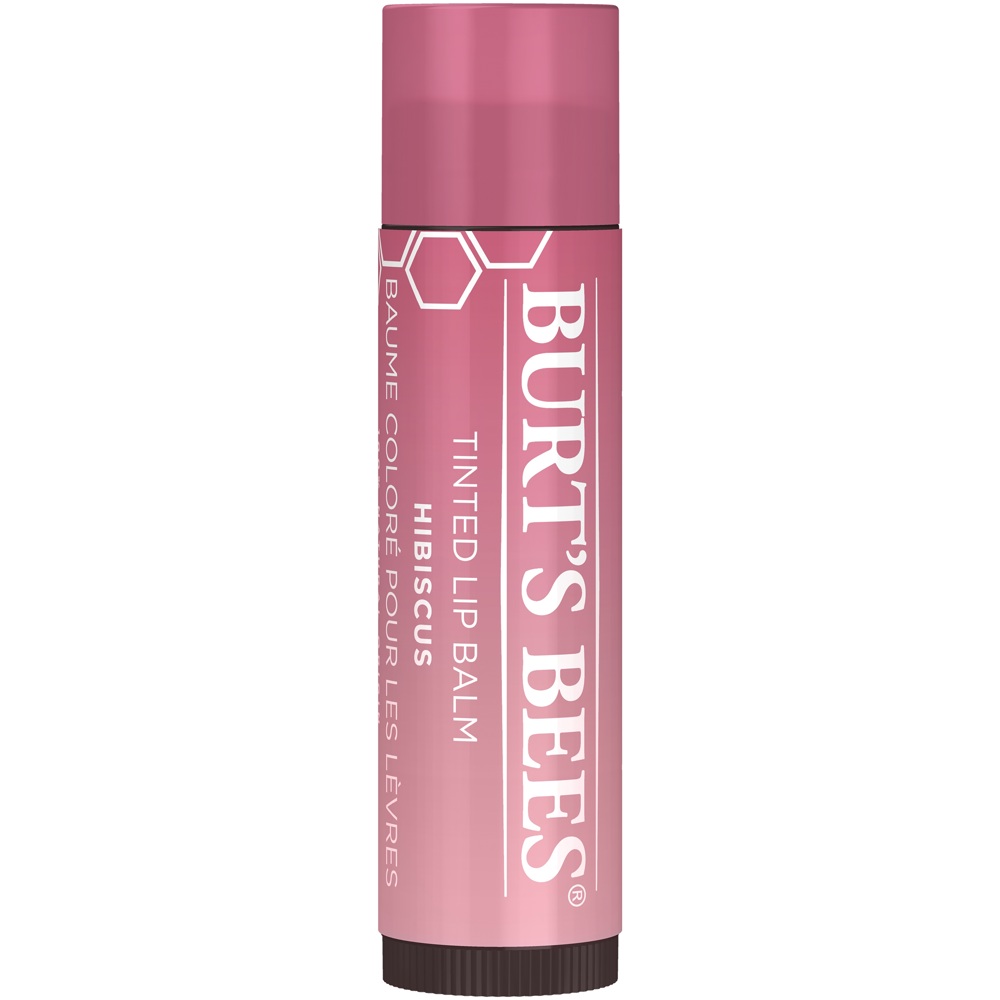
Its single best-known product remains the Beeswax Lip Balm. By March 2018, according to figures reported on the brand, one tube of the lip balm was being purchased every second [4].
Ownership
Ownership changed hands twice in the 2000s. In 2004 the private-equity firm AEA Investors acquired an 80% stake for $173 million, with Quimby keeping 20% and a board seat [4]. Three years later, in 2007, The Clorox Company bought the business outright. Most sources, including Wikipedia, put the price at roughly $925 million [4]; the business outlet Capitalism.com reports $913 million, a figure that reflects the value net of cash [6]. Clorox has operated Burt's Bees as a subsidiary ever since, keeping it as a distinct brand rather than folding it into the parent's main lines.
Philosophy and positioning
Burt's Bees presents itself as, in its own words, an "Earth Friendly, Natural Personal Care Company" [6]. Its stated principles are "quality, transparency, kindness," and the company says its products are a way of life rather than simply skincare, summarised in the tagline "Live your good life #BeMoreBurt." Roxanne Quimby's founding principle — "we take from nature, so we must respect and preserve it" — is still quoted as the basis for the brand's environmental positioning. Products are sold at an accessible, drugstore price point.
Products and sustainability
Beeswax and honey remain the brand's signature ingredients, carried through lip balms, hand creams and a wider skincare and body range. The company states that all its products are over 95% natural origin and made without phthalates, parabens, petrolatum or sodium lauryl sulfate [3]. It has been certified by the Leaping Bunny programme for more than 14 years and says it does not test its formulas on animals [3]. Packaging is described as recyclable curbside or through TerraCycle, and the company reports diverting all of its operational waste from landfill since 2010.
Conservation has been part of the brand's public story on two fronts that are sometimes confused. Co-founder Roxanne Quimby personally donated 87,000 acres of Maine wildlands to the National Park Service [3]; separately, the company reports a partnership with The Nature Conservancy to preserve 185,000 acres of Maine forest [6]. Other stated initiatives include responsible ingredient-sourcing partnerships and the SheKeeper programme supporting women working in shea in Ghana.
Controversies
The departure of Burt Shavitz in 1994 is the most documented episode in the company's history, and the two founders gave conflicting accounts. By Quimby's telling, relayed through her son, Shavitz was unhappy working for a growing company and chose to leave [5]. By Shavitz's account, Quimby learned of his affairs with employees and threatened sexual-harassment lawsuits unless he signed over his shares [5]. Shavitz was bought out in 1999 — reportedly with a house valued at about $130,000 — and Quimby later said she gave him an additional $4 million after the 2007 sale, stating that everyone involved had been treated fairly. The dispute was the subject of the 2014 documentary "Burt's Buzz." Shavitz died in 2015.
Current status
Burt's Bees is an active brand owned by The Clorox Company, which has held it as a wholly-owned subsidiary since 2007 [4]. It maintains a global retail presence and regional storefronts and social accounts, and its most recent major expansion was the 2017 launch of its cosmetics line.
Facts & evidence
Documented facts from Glowpedia's fact base — every row carries a source.
Timeline#
Founded in Dover-Foxcroft, Maine; Roxanne Quimby began making candles from Burt Shavitz's beeswax.↗ en.wikipedia.org
Company incorporated.↗ slate.com
Headquarters moved to Durham, North Carolina; Burt Shavitz left the company.↗ slate.com
AEA Investors acquired an 80% stake for $173 million; Quimby retained 20% and a board seat.↗ en.wikipedia.org
Acquired by Clorox for approximately $925 million; operated as a wholly-owned subsidiary since.↗ en.wikipedia.org
Launched a cosmetics line (foundation, mascara, eyeshadow, blush).↗ en.wikipedia.org
Signature products#
Lip balms (flagship product) ... By March 2018, "one tube of the lip balm was purchased every second"↗ en.wikipedia.org
Beeswax Lip Balm — By March 2018, one tube of the lip balm was reportedly purchased every second.↗ en.wikipedia.org
Key ingredients#
Mentioned in#
Slate — Feature on the 'Burt's Buzz' documentary detailing the founders' history and the dispute between Burt Shavitz and Roxanne Quimby.↗ slate.com
Certification pass
What each certification and self-stated claim rests on: the source, whose website it's on, and what needs review.
“Burt's Bees has been Leaping Bunny Certified for more than 14 years.”↗ burtsbees.co.uk
“Carbon-neutral operations”↗ capitalism.com
“We never test our formulas on animals or ask anyone to do so on our behalf.”↗ burtsbees.co.uk
“All our products are over 95% natural origin, without phthalates, parabens, petrolatum, or sodium lauryl sulfate.”↗ burtsbees.co.uk
“Packaging is recyclable curbside or through TerraCycle”↗ burtsbees.co.uk
“without phthalates, parabens, petrolatum, or sodium lauryl sulfate”↗ burtsbees.co.uk
None of these statements has been checked against the certifying bodies' registers. The statements were observed on 13 Jun 2026.
Where to buy
Where the brand is sold according to Glowjakt's price data, per market.
Prices come from Glowjakt and are updated daily. Glowpedia receives no payment for clicks.
Ingredients across the range
Key ingredients across Burt's Bees's range, from the ingredient lists of 93 of 109 products in Sweden.
Share of products with a known ingredient list. “None identified” means nothing matched our ingredient groups, not that the product is free of them.
Sources
T1 primary · T2 secondary · T3 note- [3]T2burtsbees.co.uk/about-us/giving-back/burtsbees.co.uk (brand site)
- [4]T3en.wikipedia.org/wiki/Burt's_BeesWikipedia
- [5]T3slate.com/business/2014/08/burts-bees-founders-burts-buzz-documentary-reveals-crazy-drama-behind-origin-story.htmlslate.com
- [6]T3capitalism.com/burts-bees-brand-clorox-sustainability/capitalism.com