Overview
Casamorati is an Italian fragrance house whose origins trace to 19th-century Bologna and which exists today as a sub-line of the niche perfumer Xerjoff. The original perfumery was founded by Claudio Casamorati, who registered the double-C trademark that still defines the brand on 17 April 1888 [1]. After thriving into the early 20th century, the house closed amid financial difficulty around the middle of the century and disappeared from the market for roughly sixty years before Xerjoff acquired its rights and revived it in 2009 [3].
The modern line is actively marketed, with new fragrances released as recently as 2024. It positions itself as a heritage revival, pairing the Casamorati name and visual identity with contemporary niche perfumery under the ownership of Xerjoff Group S.p.A.
Origin and founders
Claudio Casamorati established the C. Casamorati Perfume Factory — La Fabbrica di Profumi C. Casamorati — in Bologna during the 19th century, producing fragrances and bath soaps during the Belle Époque. The double-C logo he registered in 1888 became, in the house's own telling, "synonymous with elegance and quality" as the business gained international recognition for its perfumed goods.
The early history includes a frequently cited royal episode. At the 1888 Grande Esposizione Emiliana in Bologna, Queen Margaret of Savoy — Italy's first queen — encountered Casamorati's perfumes and presented the founder with a gold pin, reportedly saying she could not begin her mornings without his scented products [1]. The anecdote remains part of the brand's marketing today.
History and milestones
The house prospered into the early 20th century but faced financial trouble that led to its closure around the mid-1900s, after which its perfumes vanished from the market for over six decades [1]. In 2009, Sergio Momo — a Turin-based painter and designer who had co-founded the perfume company Xerjoff with Dominique Salvo in 2007 — acquired Casamorati's dormant rights and re-established it as a sub-line within the Xerjoff group, restoring the original flacon and logo [3].
Under Xerjoff, the line expanded steadily. Mefisto appeared in 2009 and Lira, described by one editorial account as the revival's breakthrough composition, followed in 2011 [3]. The most recent documented releases, Quattro Pizzi and Levar del Sole, arrived in 2024 and were framed as marking a generational change of perfumers [3].
Ownership
Casamorati is owned by Xerjoff Group S.p.A., the Italian fragrance company that revived it. Xerjoff itself was founded in 2007 in Turin by Sergio Momo and Dominique Salvo [2]. Sources differ on which city to associate with Casamorati: the house's own framing and retailer copy locate its identity in Bologna, the site of the original factory [5], while its parent company is headquartered in Turin [2]. The two are not in conflict so much as different in scope — the historical and brand-identity home is Bologna, while present-day operations sit with Xerjoff in Turin.
Philosophy and positioning
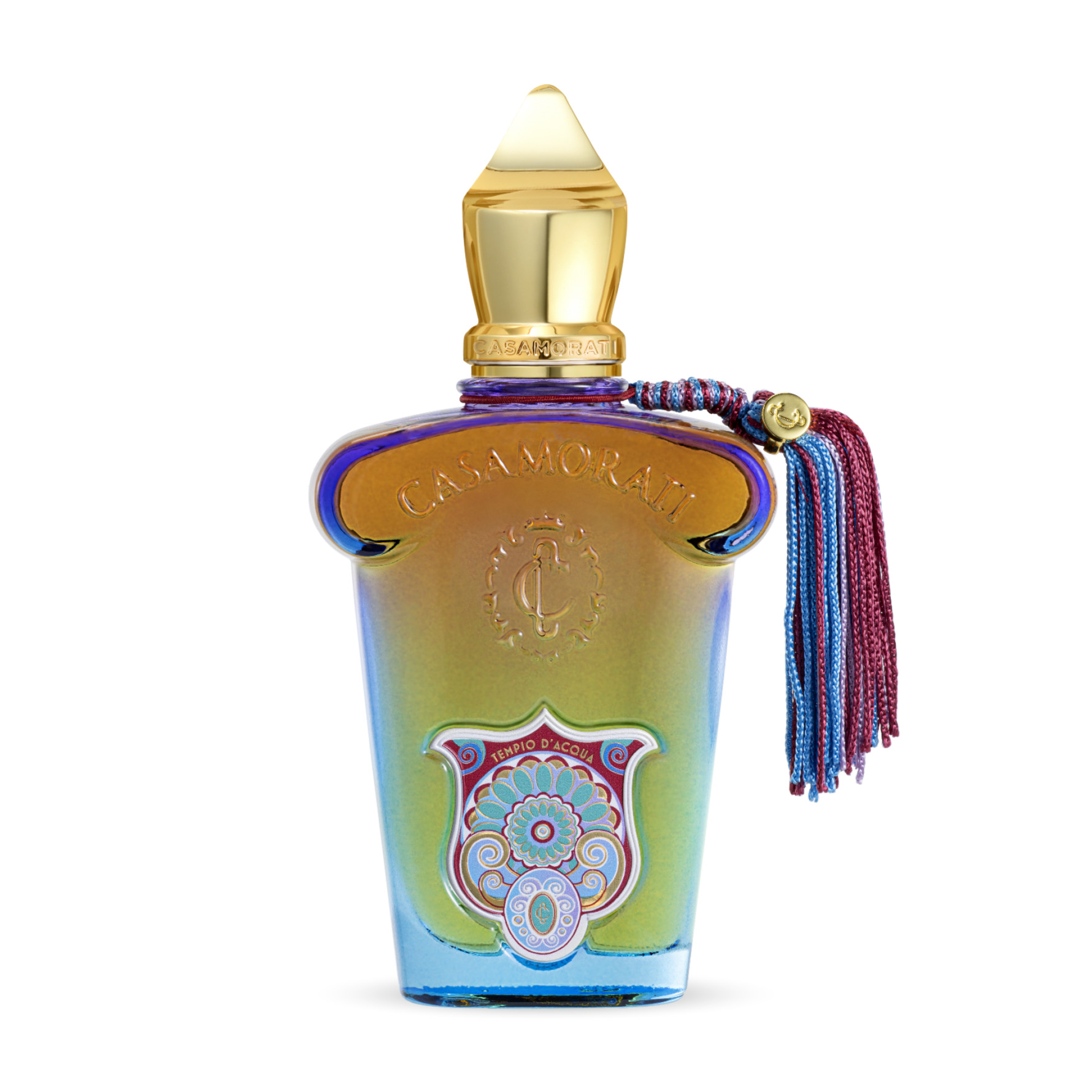
According to house-supplied copy, the line "recreates the history of this glorious house of fragrances founded in Italy between the 18th and 19th centuries, with the intention of safeguarding the historical and artistic heritage of the glamorous Art Nouveau era" [5]. Momo has described the project as an effort to "bring Casamorati back" and "safeguard this component of Italy's glamorous heritage" [4]. The revival keeps some scents close to their century-old recipes while blending others with modern perfumery techniques, and it draws visual cues from the Liberty-era, or Italian Art Nouveau, aesthetic — preserving the double-C cartouche and the Roman-column bottle silhouette.
In market terms, Casamorati sits as what one feature called "the accessible doorway into Sergio Momo's Xerjoff universe," with its eau de parfum concentrations and prices set below the main Xerjoff range. Editorial coverage characterises its style as plush, theatrical and warmly spiced — a deliberately Italian maximalism set against the more austere tendencies of French niche perfumery, appealing to collectors drawn to that register.
Products
All of the line's fragrances are offered as eau de parfum. Among its better-known compositions are Lira (2011), a sweet, fruity blend built around blood orange, bergamot and vanilla; Mefisto (2009), a masculine cologne; and 1888, a heritage statement woven from carnation, saffron, rose, amber and sandalwood. Other releases include La Tosca, a chypre floral named after Puccini's 1900 opera, and Dolce Amalfi, a Mediterranean spiced oriental. The naming frequently references opera culture, in keeping with Bologna's operatic heritage.
Current status
Casamorati is active. As a sub-line of Xerjoff, it has been marketed continuously since the 2009 revival and has documented launches as recently as 2024, distributed internationally through niche fragrance retailers [3]. This modern incarnation is distinct from the original house, which operated from 1888 until its mid-20th-century closure and was defunct for some sixty years before Xerjoff restored it.
Facts & evidence
Documented facts from Glowpedia's fact base — every row carries a source.
Timeline#
Claudio Casamorati registered the double-C trademark in Bologna on 17 April 1888.↗ xerjoff.com
At the Grande Esposizione Emiliana in Bologna, Queen Margaret of Savoy gifted Claudio Casamorati a gold pin in appreciation of his perfumes.↗ xerjoff.com
Xerjoff (Sergio Momo) acquired Casamorati's dormant rights and revived the house, restoring the original flacon and logo.↗ xerjoff.com
Acquired/revived by Xerjoff (Xerjoff Group S.p.A.), co-founded by Sergio Momo and Dominique Salvo in 2007.↗ khrishaperfumery.com.au
Lira released (perfumer Chris Maurice), described as the breakthrough composition.↗ khrishaperfumery.com.au
Quattro Pizzi (Sofia Bardelli) and Levar del Sole released, signaling a generational perfumer transition.↗ khrishaperfumery.com.au
Signature products#
Lira (2011, Chris Maurice): The breakthrough composition featuring blood orange, bergamot, lavender, cinnamon, jasmine, rose, vanilla, caramel, and musk↗ khrishaperfumery.com.au
Mefisto (2009, Jacques Flori): Italian masculine cologne with bergamot, grapefruit, lavender, iris, sandalwood, and amber↗ khrishaperfumery.com.au
1888: Heritage statement featuring carnation, pepper, saffron, rose, amber, sandalwood, and patchouli↗ khrishaperfumery.com.au
La Tosca: Chris Maurice chypre floral named after Puccini's 1900 opera↗ khrishaperfumery.com.au
Dolce Amalfi: Mediterranean spicy oriental with apple, saffron, vanilla, tonka, and amber↗ khrishaperfumery.com.au
Mentioned in#
CaFleureBon — Editorial review of Casamorati 1888 describing the house's heritage and the fragrance's spicy-resinous character ('Xerjoff Casamorati 1888 Review: Classic Vintage Elegance').↗ cafleurebon.com
Khrisha Perfumery (Journal) — Editorial feature 'Inside Casamorati: A Bologna House Reborn by Xerjoff' covering the 1888 origins, 2009 revival and signature fragrances.↗ khrishaperfumery.com.au
Where to buy
Where the brand is sold according to Glowjakt's price data, per market.
Prices come from Glowjakt and are updated daily. Glowpedia receives no payment for clicks.
Ingredients across the range
Key ingredients across Casamorati's range, from the ingredient lists of 3 of 3 products in Sweden.
Share of products with a known ingredient list. “None identified” means nothing matched our ingredient groups, not that the product is free of them.
Sources
T1 primary · T2 secondary · T3 note- [1]T2xerjoff.com/en-us/blogs/our-world/the-story-of-casamoratixerjoff.com (brand site)
- [2]T3en.wikipedia.org/wiki/XerjoffWikipedia
- [3]T3khrishaperfumery.com.au/blogs/journal/inside-casamorati-a-bologna-house-reborn-by-xerjoffkhrishaperfumery.com.au
- [4]T3cafleurebon.com/xerjoff-casamorati-1888-review-classic-vintage-elegance-draw/cafleurebon.com
- [5]T3luckyscent.com/brands/xerjoff-casamoratiluckyscent.com