
Overview
Chanel is a French luxury house founded by Gabrielle "Coco" Chanel (1883–1971). It began as a Paris millinery business in the early 1910s and grew into one of fashion's defining names, with a beauty arm that today spans fragrance, makeup and skincare. The company remains privately held by the Wertheimer family through the holding company Chanel Limited, and it continues to operate globally.
Sources differ on exactly when the house began. Wikipedia dates the founding to 1910, the year Coco Chanel became a licensed milliner and opened her shop Chanel Modes on rue Cambon in Paris [1]; an editorial profile instead gives 1909, the year she opened an earlier millinery shop on Boulevard Malesherbes [4]. A separate, firmer date anchors the beauty business: Parfums Chanel, the perfume and cosmetics company, was founded in 1924 [1].
Origin & founders
Coco Chanel was born in Saumur, France, in 1883. Financed by her partner Arthur "Boy" Capel, she set up as a milliner and, by 1919, was registered as a couturière with her maison de couture at 31 rue Cambon — the address that would anchor the house. Her early work replaced the corseted silhouette of the period with looser, jersey-based garments; she is described as having popularised "a sporty, casual chic as the feminine standard of style." Chanel summed up her own approach in a 1923 remark that "simplicity is the keynote of all true elegance."
History & milestones
The brand's expansion beyond clothing came in 1921, when Chanel introduced the fragrance Chanel No. 5 — among the first instances of a designer extending a name beyond garments. The perfume was formulated by the French-Russian perfumer Ernest Beaux, who presented a numbered series of samples; Chanel chose the fifth and kept its number [2]. Released at her rue Cambon boutique, it became the product the house is most identified with, and an editorial source calls it "the most-recognised perfume in history" [4].
The handbag followed in February 1955 with the Chanel 2.55, named for its launch date and built around a shoulder strap that allowed hands-free use. After Coco Chanel's death in 1971, the house entered a new era when Karl Lagerfeld took over as chief designer in 1983, a role he held until his death in 2019. On the beauty side, the lipstick Rouge à Lèvres arrived in 1954 during Chanel's return to fashion, and the nail line Le Vernis launched in 1974; its 1995 shade Rouge Noir is remembered as a culturally influential colour.
Ownership
Chanel has been controlled by the Wertheimer family for a century. In 1924, Pierre Wertheimer and his brother partnered with Coco Chanel to form Parfums Chanel; the Wertheimers took 70 percent of the stock while Chanel received 10 percent [2]. The imbalance led to decades of dispute, and after the war she renegotiated to secure a share of worldwide sales [3]. Today the brothers Alain and Gérard Wertheimer control the company through Chanel Limited, the London-registered holding company established in 2018. The house remains private, which an editorial profile links to its avoidance of public-market pressure and licensing dilution.
Philosophy & positioning
The company is described as having transformed haute couture and ready-to-wear by replacing structured, corseted silhouettes with garments women found both functional and flattering. Its identity rests on what one source frames as "prestige, luxury, and class," and it keeps to a tight visual code of black, white, beige and gold. The beauty division is positioned at the formal end of the luxury market, aimed at buyers seeking a heritage name rather than newer "clean" or modern positioning, according to an editorial review [4].
Products & innovation
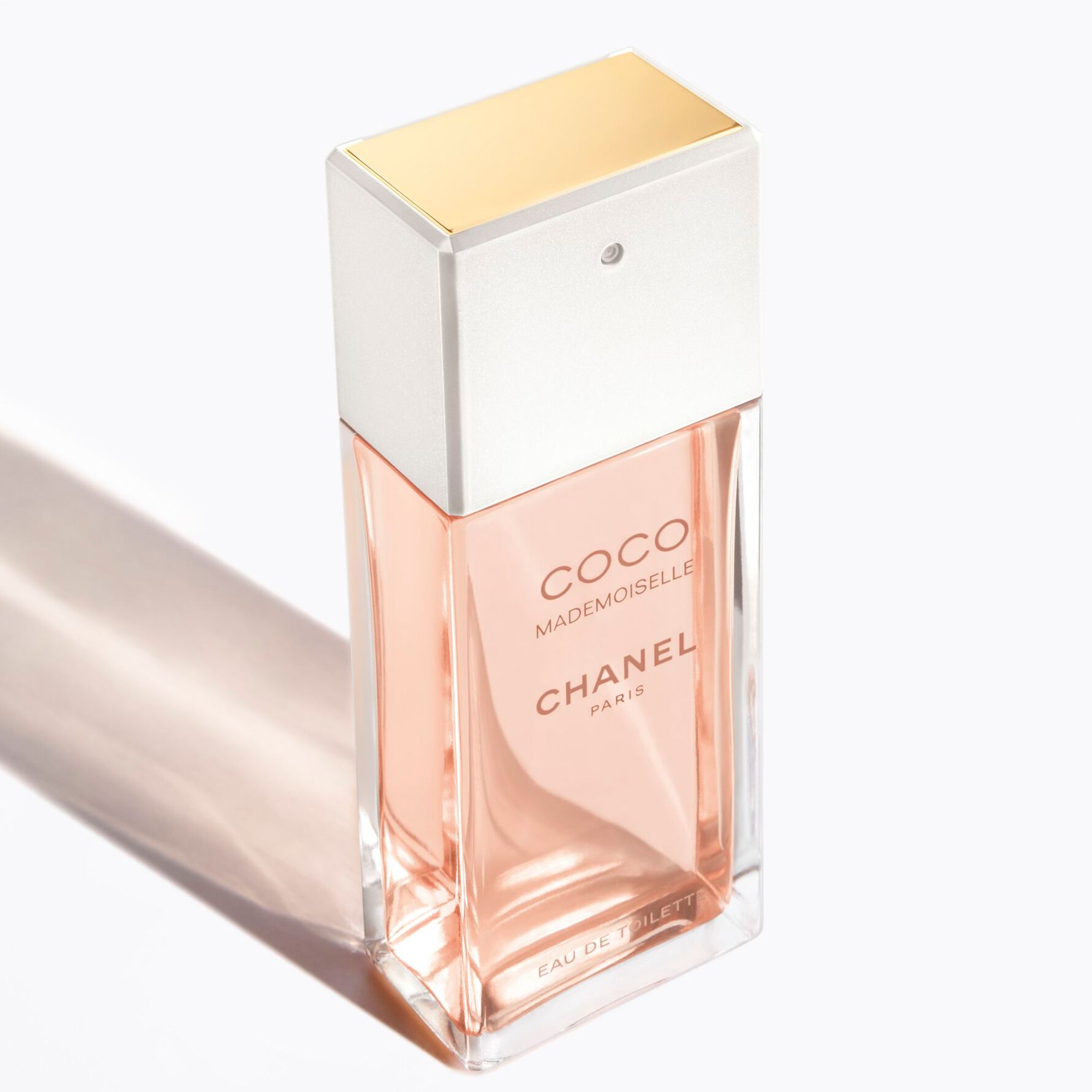
The beauty arm is organised around three areas. In fragrance, No. 5 sits alongside Coco Mademoiselle, Chance and the men's line Bleu de Chanel; No. 5 is built on aldehydes with ylang-ylang, jasmine and sandalwood. Makeup includes the Les Beiges tinted base, marketed as skincare-meets-makeup, and the Rouge Coco and Rouge Allure lipstick lines. Skincare centres on the camellia-led Hydra Beauty range and the higher-concentration Sublimage line, which an editorial source credits with driving much of the division's skincare growth, particularly in Asian markets [4]. In 2022 the house launched No. 1 de Chanel, a beauty line it states uses 97% naturally derived ingredients and eco-conscious packaging.
Recognition
Coco Chanel remains the only fashion designer included on Time magazine's list of the 100 most influential people of the 20th century [3]. The house won a Fashion Oscar at the Neiman Marcus Fashion Awards in Dallas in 1957. No. 5 also gathered a lasting piece of cultural lore: in April 1952 the actress Marilyn Monroe, asked what she wore to bed, answered "Chanel No. 5" [2].
Controversies
Coco Chanel's wartime conduct is the most documented controversy attached to the house. During the Second World War she lived at the Hôtel Ritz Paris with Hans Günther von Dincklage, a Nazi intelligence officer, and operated under a clandestine Abwehr identity code-named "Westminster." She was arrested for collaboration after the liberation of France but released, and afterwards spent several years in exile in Switzerland [1].
Current status
Chanel is active. It is a privately held global house with more than 500 boutiques worldwide and roughly 32,000 employees as of 2024, reporting US$19.7 billion in revenue for 2023. Recent leadership changes underline its ongoing operation: Leena Nair became global chief executive in 2021, and Matthieu Blazy was appointed artistic director in December 2024. The company has also set out climate targets under a "Mission 1.5" plan, including a 50% cut to its carbon footprint by 2030 and a move to fully renewable electricity by 2025.
Facts & evidence
Documented facts from Glowpedia's fact base — every row carries a source.
Timeline#
Coco Chanel opened her first independent millinery shop, Chanel Modes, on rue Cambon, Paris (financed by Boy Capel)↗ en.wikipedia.org
Chanel No. 5 fragrance created by perfumer Ernest Beaux; first perfume to bear a designer's name↗ en.wikipedia.org
Parfums Chanel (the perfume & cosmetics company) founded with the Wertheimer brothers↗ en.wikipedia.org
Pierre Wertheimer founded Parfums Chanel; the Wertheimer family took 70% ownership of the perfume business↗ en.wikipedia.org
Rouge à Lèvres lipstick launched (sleek black case with gold band) during Coco Chanel's comeback↗ 5elevenmag.com
Chanel 2.55 handbag introduced (February 1955)↗ en.wikipedia.org
Le Vernis nail polish introduced; Alain Wertheimer assumed control of Chanel S.A.↗ en.wikipedia.org
Karl Lagerfeld took over as chief designer↗ en.wikipedia.org
Rouge Noir nail polish launched, a culturally influential shade↗ 5elevenmag.com
No. 1 de Chanel beauty line launched with 97% naturally derived ingredients and eco-conscious packaging↗ en.wikipedia.org
Awards#
Fashion Oscar, Neiman Marcus Fashion Awards (Dallas) — Fashion↗ en.wikipedia.org
Signature products#
Created by perfumer Ernest Beaux in 1921 ... Described as "the perfume [Chanel] is well known for"↗ en.wikipedia.org
Sublimage includes a higher concentration of active ingredients developed through in-depth research and development.↗ glow.com.au
Rouge Coco: Part of Chanel's signature lipstick collection, available in multiple formulations including Rouge Coco, Rouge Coco Flash, and Rouge Coco Baume Shine.↗ glow.com.au
Les Beiges Healthy Glow Foundation: A luminous-finish tinted base positioned as skincare-meets-makeup↗ glow.com.au
Le Vernis, the nail polish introduced in 1974 that hasn't changed.↗ 5elevenmag.com
Chanel No. 5 — "The most-recognised perfume in history"↗ glow.com.au
Sublimage — Skincare sales rose mostly due to Sublimage; launched a line with refillable packaging and increased popularity in the Asian market↗ glow.com.au
Key ingredients#
Mentioned in#
Time — Coco Chanel is the only fashion designer listed on Time magazine's list of the 100 most influential people of the 20th century↗ en.wikipedia.org
Where to buy
Where the brand is sold according to Glowjakt's price data, per market.
Prices come from Glowjakt and are updated daily. Glowpedia receives no payment for clicks.
Sources
T1 primary · T2 secondary · T3 note- [1]T3en.wikipedia.org/wiki/ChanelWikipedia
- [2]T3en.wikipedia.org/wiki/Chanel_No._5Wikipedia
- [3]T3en.wikipedia.org/wiki/Coco_ChanelWikipedia
- [4]T3glow.com.au/brands/chanel-beauty/glow.com.au