Overview
Coach is an American fashion house based in New York City, founded in 1941 and known principally for handbags, luggage and leather accessories rather than beauty products [1]. It enters the beauty market through a single channel: a licensed fragrance line created, produced and distributed by the Paris-based perfume company Interparfums. The brand operates as the main subsidiary of Tapestry, Inc., a company listed on the New York Stock Exchange, and remains active, with new perfumes launched as recently as 2025.
The fragrance business is the part of Coach relevant to a beauty catalogue. It is a separate operation from the leather-goods house under a long-term licence, though both share the same name, design language and New York identity.
Origin & founders
Coach began in 1941 as a family-run leather workshop in a loft on 34th Street in Manhattan, starting with six leatherworkers who made wallets and billfolds by hand. Miles Cahn and his wife Lillian joined in 1946 and bought the company through a leveraged buyout in 1961. According to the company's account, Miles Cahn studied how the leather of baseball gloves grew softer and richer with use, and developed a process to make stronger, more supple leather with deeper colour; Lillian Cahn proposed adding women's handbags to what had been a men's accessories business, and the cowhide bags sold quickly.
In 1961 the Cahns hired the sportswear designer Bonnie Cashin, who led design through 1974 and introduced side pockets, brighter colours, matching accessories and the brass toggle hardware that became a recognisable Coach signature. The company's corporate headquarters remain on 34th Street, at the site of the original factory.
History & milestones
Coach expanded through wholesale distribution in the north-eastern United States and opened its first directly operated store on Madison Avenue in 1981. In 1985 the Cahns sold the company, then called Coach Leatherware, to the Sara Lee Corporation for 30 million dollars and turned to a goat farm and cheese business [1]. Under later creative director Reed Krakoff, who joined in the late 1990s, the products were redesigned to be lighter and more functional, and the company grew into an internationally known brand.
The company went public on the New York Stock Exchange in 2000 and changed its name that year to Coach, Inc. Its first fragrance, simply called Coach, appeared in 2007 [3]. In 2014 Stuart Vevers became executive creative director, a role he had effectively taken up after joining in 2013.
The most consequential change for the beauty line came in 2015, when Coach signed an eleven-year exclusive worldwide fragrance licence with Interparfums, announced that April [4]. Interparfums-produced scents began distribution in autumn 2016, and the 2016 release reused the name "Coach the Fragrance" for an entirely new composition and bottle. In 2017 the parent company renamed itself Tapestry, Inc., changing its NYSE ticker from COH to TPR [1]. The Coach Dreams line launched in 2020, and in March 2025 the Interparfums licence was extended to June 2031, accompanied by two new perfumes [9].
Ownership
Coach is the principal subsidiary of Tapestry, Inc., the holding company that was itself called Coach, Inc. until the 2017 rename. Tapestry's portfolio includes Kate Spade, which Coach acquired in 2017 for 2.4 billion dollars [1]. Earlier acquisitions under the Coach corporate umbrella included the shoemaker Stuart Weitzman, agreed in 2015 for up to 574 million dollars.
The fragrances themselves are not made by Tapestry. Under the licence, Interparfums holds responsibility for creating, producing and distributing Coach perfumes, with sales through department and specialty stores, duty-free outlets and Coach's own retail locations [4].
Philosophy & positioning
Coach presents itself as a New York house built on craft and longevity. In brand copy distributed to fragrance retailers, the company describes itself as "a global fashion house founded in New York in 1941" that, drawing on the vision of creative director Stuart Vevers and what it calls the inclusive and courageous spirit of its hometown, "makes beautiful things, crafted to last—for you to be yourself in" [5].
The fragrances are positioned to carry the same identity. Vevers said he wanted a scent representing what he described as Coach's free-spirited attitude — "individual, authentic and cool" — and the line is framed around the energy and downtown style of New York City [2]. Bottle design borrows from the leather goods: the original fragrance used a gold turn-lock echoing the clasp of a well-known Coach bag, finished with a leather hang-tag.
Products & innovation
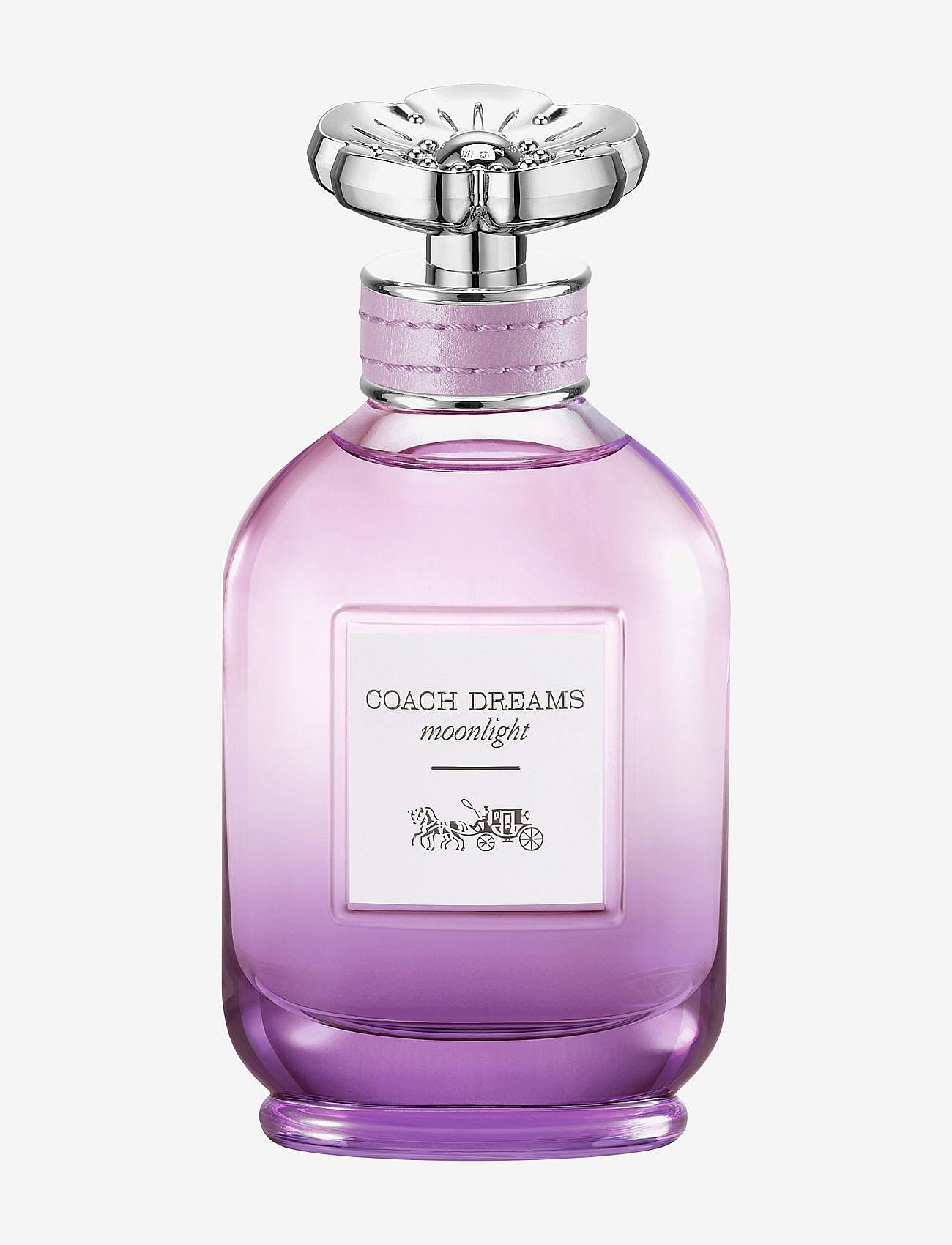
The Coach fragrance range is built mainly around women's scents, with men's releases alongside. The first Interparfums-era women's launch, Coach the Fragrance (2016), is a floral-fruity composition described with raspberry, Turkish roses and suede musk. The Coach Dreams family, beginning in 2020, became the central women's line; the original Coach Dreams was created by a team of perfumers including Olivier Pescheux and Antoine Maisondieu, with notes of pear, gardenia and woody ambroxan [6]. Later flankers extended the range, including Coach Dreams Sunset (2021), Coach Dreams Moonlight (2024) and Coach Dreams Starlight (2025). A separate release, Coach Wild Rose, is described by the company as inspired by Coach's prairie floral prints.
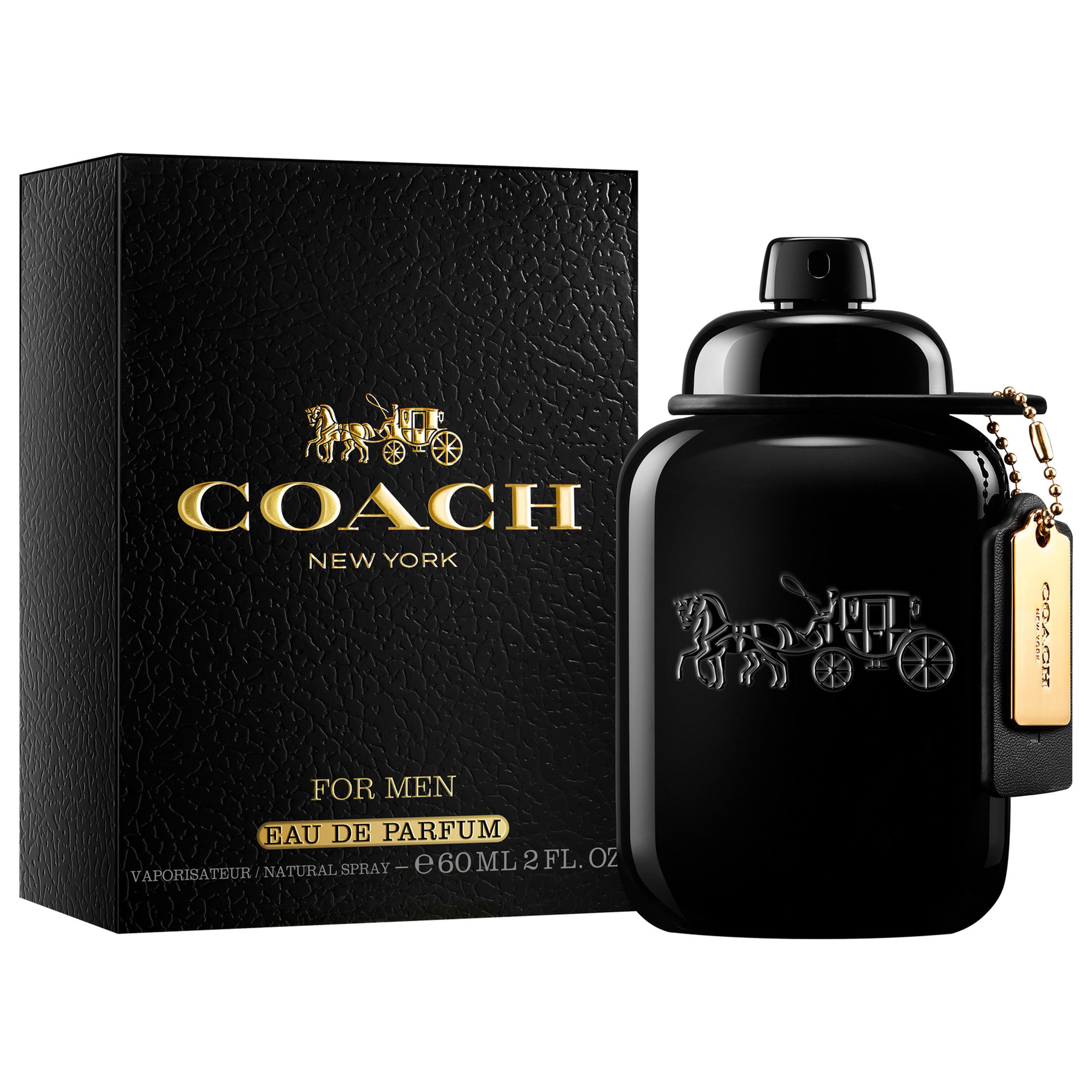
Coach for Men brings a different profile, with citrus, pear, cardamom, suede and ambergris. Across the line, the trade press has tracked steady commercial growth: Coach fragrance sales rose from under 10 million euros in 2015 to roughly 190 million euros in 2024, a result the partners attribute chiefly to the Coach and Coach Dreams lines [10].
Recognition
The leather-goods house has drawn well-known faces to its campaigns, several of which also front the fragrances. Selena Gomez was announced as a Coach partner around the brand's 75th anniversary in 2016, and Jennifer Lopez became the global face of the company in 2019. The fragrance line has been profiled by fragrance-specialist editorial, including the Perfume Society, which set the scents against Coach's 1941 Manhattan-loft heritage. Trade outlet WWD reported the 2025 licence extension.
Controversies
In July 2020, Jide J. Zeitlin, the chief executive of parent company Tapestry, Inc., resigned following allegations of personal misconduct [1]. This was a corporate-leadership matter at the holding-company level rather than anything specific to the products or the fragrance line.
Current status
Coach is active and trades globally as the main subsidiary of Tapestry, Inc. Its fragrance line under Interparfums is expanding rather than winding down: the licence was renewed in March 2025 and now runs to June 2031, with new perfumes released in 2024 and 2025 [9]. The most recent visible activity in the beauty range is the 2025 launch of additions such as Coach Dreams Starlight [11].
Facts & evidence
Documented facts from Glowpedia's fact base — every row carries a source.
Timeline#
Founded as a family-run leather workshop on 34th Street, Manhattan, with six leatherworkers making wallets and billfolds by hand↗ en.wikipedia.org
Miles and Lillian Cahn buy the company via leveraged buyout and hire designer Bonnie Cashin↗ en.wikipedia.org
Opened first directly operated retail location on Madison Avenue, Manhattan↗ en.wikipedia.org
Coach Leatherware sold to Sara Lee Corporation for $30 million↗ en.wikipedia.org
IPO on NYSE; company renamed Coach, Inc.↗ en.wikipedia.org
First Coach fragrance (original 'Coach') launched↗ fragrantica.com
Signed 11-year exclusive worldwide fragrance license with Interparfums SA (announced April 2015)↗ tapestry.gcs-web.com
Acquired Stuart Weitzman for up to $574 million↗ en.wikipedia.org
Interparfums-produced Coach fragrances begin distribution (fall 2016); 'Coach the Fragrance' relaunched↗ fragrantica.com
Coach, Inc. rebranded as Tapestry, Inc. (effective October 31; NYSE ticker COH to TPR)↗ en.wikipedia.org
Acquired Kate Spade for $2.4 billion↗ en.wikipedia.org
Coach Dreams fragrance line launched↗ fragrantica.com
Interparfums fragrance license extended to June 30, 2031 (announced March 14, 2025)↗ webdisclosure.com
Signature products#
Coach Eau de Parfum (2016): "floral-fruity" with raspberry, Turkish roses, and suede musk↗ perfumesociety.org
Coach Dreams by Coach is a floral fruity fragrance for women that was launched in 2020.↗ fragrantica.com
Coach for Men: citrus, pear, coriander, cardamom, suede, ambergris↗ perfumesociety.org
Coach Wild Rose, which is inspired by Coach's prairie floral prints, a symbol of the house's free-spirited attitude.↗ dillards.com
Mentioned in#
Perfume Society — Editorial house profile describing Coach's 1941 Manhattan-loft heritage and the fragrance line's New York positioning under Stuart Vevers↗ perfumesociety.org
WWD — Reported Coach and Interparfums extending their fragrance license for five more years (to June 2031)↗ wwd.com
Where to buy
Where the brand is sold according to Glowjakt's price data, per market.
Prices come from Glowjakt and are updated daily. Glowpedia receives no payment for clicks.
Ingredients across the range
Key ingredients across Coach's range, from the ingredient lists of 56 of 63 products in Sweden.
Share of products with a known ingredient list. “None identified” means nothing matched our ingredient groups, not that the product is free of them.
Related brands
Sources
T1 primary · T2 secondary · T3 note- [1]T3en.wikipedia.org/wiki/Coach_New_YorkWikipedia
- [2]T3perfumesociety.org/perfume-house/coach/perfumesociety.org
- [3]T3fragrantica.com/perfume/Coach/Coach-the-Fragrance-38855.htmlfragrantica.com
- [4]T3tapestry.gcs-web.com/news-releases/news-release-details/coach-and-interparfums-sa-sign-global-license-agreement-coachtapestry.gcs-web.com
- [5]T3dillards.com/p/coach-eau-de-parfum/506477330dillards.com
- [6]T3fragrantica.com/perfume/Coach/Coach-Dreams-58846.htmlfragrantica.com
- [9]T3webdisclosure.com/press-release/coach-and-interparfums-extend-their-partnership-in-the-universe-of-fragrances-until-june-2031-jZ1sadvcvJMwebdisclosure.com
- [10]T3wwd.com/beauty-industry-news/fragrance/coach-interparfums-sa-extend-fragrance-license-1237047172/wwd.com
- [11]T3fragrantica.com/perfume/Coach/Coach-Dreams-Starlight-120363.htmlfragrantica.com