Overview
État Libre d'Orange is a French niche perfume house founded in Paris in 2006 by Etienne de Swardt [4]. The house built its identity on provocation, naming fragrances and framing concepts in ways meant to unsettle a conventional perfume audience. It remains active, selling a current catalogue of more than thirty fragrances through its own e-commerce site and boutiques in Paris, Shenzhen and Tokyo [3].
The brand's name is one of its more frequently misread details. "État libre d'Orange" translates as the Orange Free State, the historical South African republic, and de Swardt chose it to honour his birthplace rather than to signal any South African operation [1]. The company itself is French and headquartered in Paris.
Origin and founders
Etienne de Swardt was born on 27 August 1970 in Pretoria, South Africa [5]. Before launching his own house he joined LVMH in 1994 and wrote concepts for Givenchy perfumes until 2000 [5]. His earlier independent projects leaned toward the unconventional: a line of perfumes for pets in 2000, and fragrances for the boxing brand Everlast in 2004.
He founded État Libre d'Orange in 2006, describing it in early materials as a gallery in Paris. According to the company, the name carried personal meaning — in his telling, the Orange Free State was "a land of staggeringly rough beauty," and naming the house after it honoured what his birthplace represented [1]. De Swardt has said he set out to create an enclave of creative freedom, writing what he called an Orange Free State manifesto and a declaration of olfactory independence.
Ownership
The operating company behind État Libre d'Orange is Éditions des Sens, described as the fragrance company created for the brand [4]. No acquisitions or changes of ownership are documented.
Philosophy and positioning
État Libre d'Orange positions itself as an avant-garde house that treats fragrance as a statement rather than a pleasant accessory. The company describes its work as "an ambitious, audacious perfumery. Liberated. Free to create," and frames a fragrance as "more than a signature, an essence" and "more than a fragrance, a state of mind" [1]. Its stated values are originality, audacity, authenticity and freedom of expression.
The house is widely associated with the niche-perfumery movement of the 2000s and with a deliberately provocative approach to fragrance [6]. Its motto, "Perfume is dead, long live perfume!", is frequently cited in editorial coverage as shorthand for that posture. The provocation extends to naming: editorial writers have noted that the house gives its fragrances names that can be irritating or offensive, treating them as a teasing entry point into each scent's theme.
Products and innovation
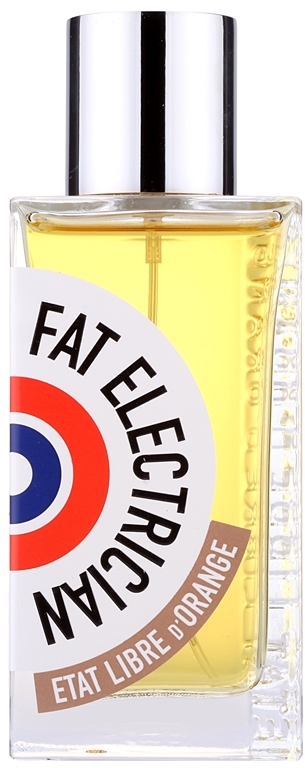
The catalogue spans more than thirty fragrances alongside candles and discovery kits [1]. Several releases recur in coverage of the house. Sécrétions Magnifiques, composed by perfumer Antoine Lie, was among the first scents the house created and is built around an unusual accord of milk, blood and adrenaline [6]. Fat Electrician, by Antoine Maisondieu, works with vetiver, vanilla bean, myrrh and opopanax. Other named fragrances include Let's Pretend, Above the Waves, You or Someone Like You and Nostos.
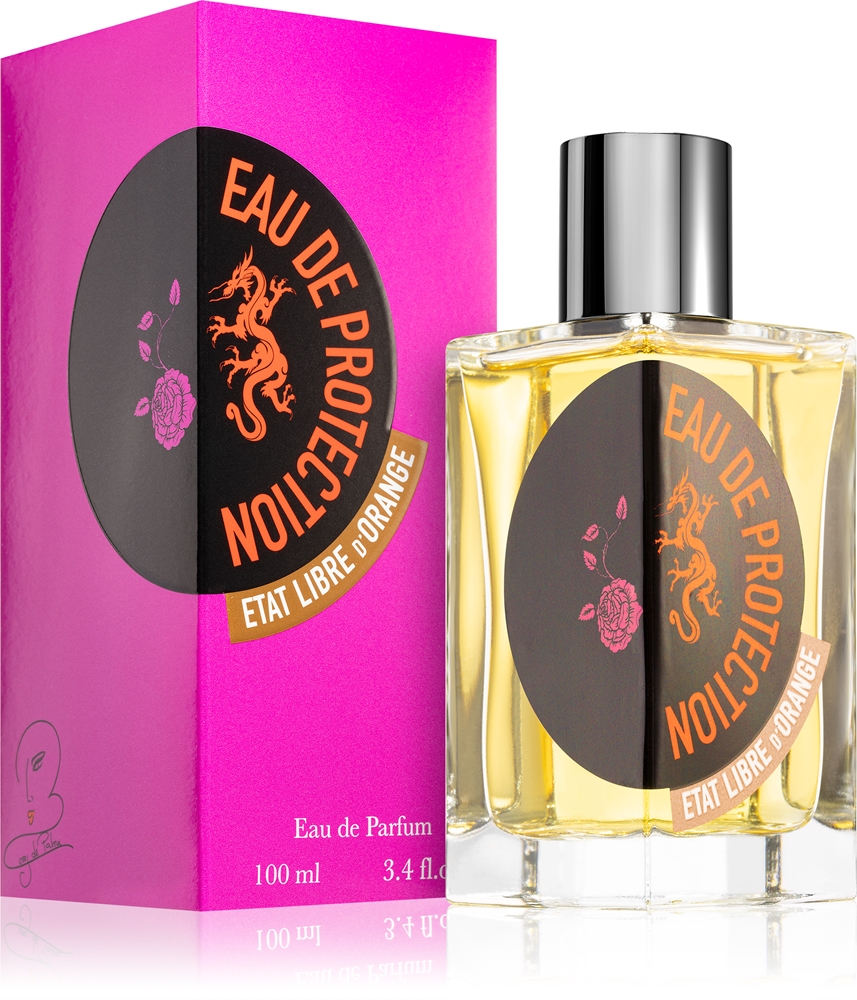
Collaboration with public figures has been a recurring device. Like This was developed with the actor Tilda Swinton, who described wanting "a smell that would keep me at home wherever I was" [6]. Rossy de Palma Eau de Protection, created for the Spanish actress of the same name, was the house's first fragrance devoted to a celebrity. Editorial coverage also lists the Sex Pistols among its collaborators.
On materials and ethics, the company states that its products are made in France and that it is cruelty-free, using no animal extracts or raw materials [2]. It says it uses only vegan raw materials but cannot offer a certificate to formally declare its products vegan, and it does not currently reuse its fragrance bottles. The company also describes the production of the raw materials it uses as sustainable.
Controversies
Sécrétions Magnifiques has drawn sustained debate since its 2006 release. Conceived as an "ode to bodily fluids" — evoking blood, adrenaline, mother's milk and sweat — it is regularly described as the most controversial scent the house has made and one that still provokes strong reactions [6]. More broadly, the house's deliberately confrontational fragrance names have been noted as polarising.
Current status
État Libre d'Orange is active. As of 2025–2026 it operates a live direct-to-consumer site carrying a full current range and runs physical boutiques in France (two in Paris), China (Shenzhen) and Japan (Tokyo) [3].
Facts & evidence
Documented facts from Glowpedia's fact base — every row carries a source.
Awards#
Fragrance Foundation Award — Like This (with Tilda Swinton)↗ perfumesociety.org
Signature products#
Sécrétions Magnifique by Antoine Lie (notes: milk, blood, adrenaline accord)↗ perfumesociety.org
Like This (collaboration with Tilda Swinton; ginger, baby carrot, pumpkin notes; won Fragrance Foundation Award)↗ perfumesociety.org
Etat Libre d'Orange launched Rossy de Palma Eau de Protection, which was the first fragrance of the house devoted to a celebrity, created for Spanish actress Rossy de Palma.↗ perfumesociety.org
Fat Electrician by Antoine Maisondieu (vetiver, vanilla bean, myrrh, opopanax)↗ perfumesociety.org
Named fragrances include: Let's Pretend, Above the Waves, You or Someone Like You, Nostos↗ etatlibredorange.com
Sécrétions Magnifiques — Described as the most controversial ELDO scent, an 'ode to bodily fluids' that still evokes strong emotions.↗ perfumesociety.org
Mentioned in#
Harper's Bazaar (Singapore) — Founder interview headlined 'Meet The Founder Of The Most Controversial Fragrance House Ever'.↗ harpersbazaar.com.sg
Adweek — Coverage of an ELDO luxury perfume project ('Making a Luxury Perfume out of Trash and Worms'), cited by Wikipedia.↗ en.wikipedia.org
Certification pass
What each certification and self-stated claim rests on: the source, whose website it's on, and what needs review.
“We are cruelty free and we do not use animal extracts / raw materials.”↗ etatlibredorange.com
“Our products are made in France.”↗ etatlibredorange.com
“We use only vegan raw materials in our formula but we cannot offer a certificate to officially declare that we produce vegan products.”↗ etatlibredorange.com
None of these statements has been checked against the certifying bodies' registers. The statements were observed on 14 Jun 2026.
Where to buy
Where the brand is sold according to Glowjakt's price data, per market.
Prices come from Glowjakt and are updated daily. Glowpedia receives no payment for clicks.
Ingredients across the range
Key ingredients across Etat Libre D'Orange's range, from the ingredient lists of 59 of 87 products in Sweden.
Share of products with a known ingredient list. “None identified” means nothing matched our ingredient groups, not that the product is free of them.
Sources
T1 primary · T2 secondary · T3 note- [1]T1etatlibredorange.com/pages/the-brandetatlibredorange.com (brand site)
- [2]T2etatlibredorange.com/pages/q-aetatlibredorange.com (brand site)
- [3]T2etatlibredorange.com/pages/locationetatlibredorange.com (brand site)
- [4]T3en.wikipedia.org/wiki/%C3%89tat_libre_d%27OrangeWikipedia
- [5]T3en.wikipedia.org/wiki/Etienne_de_SwardtWikipedia
- [6]T3perfumesociety.org/perfume-house/etat-libre-dorange/perfumesociety.org