Overview
Lorenzo Villoresi is an independent Italian perfume house based in Florence, founded by the perfumer of the same name. The maison occupies a 15th-century palazzo on Via de' Bardi overlooking the Arno, where it combines a boutique, an aromatic garden and a dedicated perfume museum. The company dates its formal founding to 1990 [2], though Villoresi had begun composing bespoke fragrances slightly earlier from an "Atelier dei profumi" in his home, an activity Lampoon Magazine traces to 1989 [7].
Villoresi works outside the major fragrance corporations as a self-taught, independent perfumer [4], and the brand frames its approach as a kind of "haute couture" of scent. Its perfumes are sold through its own boutique and e-commerce alongside a retailer network spanning, by the brand's account, 50 to 60-plus countries, primarily in Europe and the Middle East [7].
Origin & founders
Lorenzo Villoresi was born in Florence on 5 April 1956 [4] into a Florentine family with, as the company describes it, strong cultural roots. He studied at university level, taking degrees in ancient philosophy and biblical philology, with research interests in ancient Jewish, Egyptian and Mesopotamian cultures. Beginning in 1981, he travelled extensively through the Middle East — Egypt and Morocco among them — where, by his own account, he first encountered the world of essences, aromatic raw materials and perfumes, and saw how differently scent was treated there than in the West.
That study and travel fed directly into his work, and he is particularly associated with Oriental compositions built around spices, amber, incense, resins, vanilla and sandalwood [4]. He first created custom fragrances from his home on Via de' Bardi, work he has likened to a form of haute couture, before formally establishing the Maison Lorenzo Villoresi in 1990 in his family's Renaissance palazzo facing the river.
History & milestones
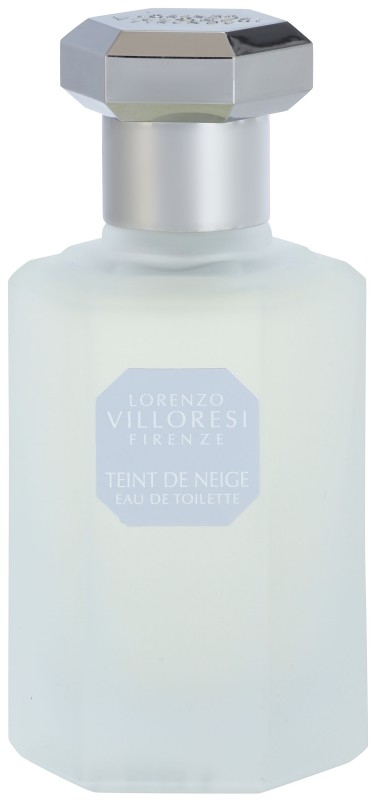
The house released a series of fragrances through the 1990s and 2000s that remain central to its catalogue. Sandalo, built around Mysore sandalwood, was launched in 1995 [12]. Piper Nigrum, a black-pepper composition that became a long-standing bestseller, followed in 1999, with Dilmun and the powdery-floral Teint de Neige in 2000 and Yerbamate in 2001. Alamut, an Oriental fragrance, arrived in 2006. The company has continued to compose new scents into the 2020s, with Aura Maris introduced in 2026.
Villoresi has also written on the subject. He published Il Profumo: Cultura, storia e tecniche in 1995 and curated the Il Mondo del Profumo booklet series in the second half of the 1990s, and he has acted as a consultant for Pitti Immagine's Fragranze, an exhibition devoted to artisanal perfume houses.
Philosophy & positioning
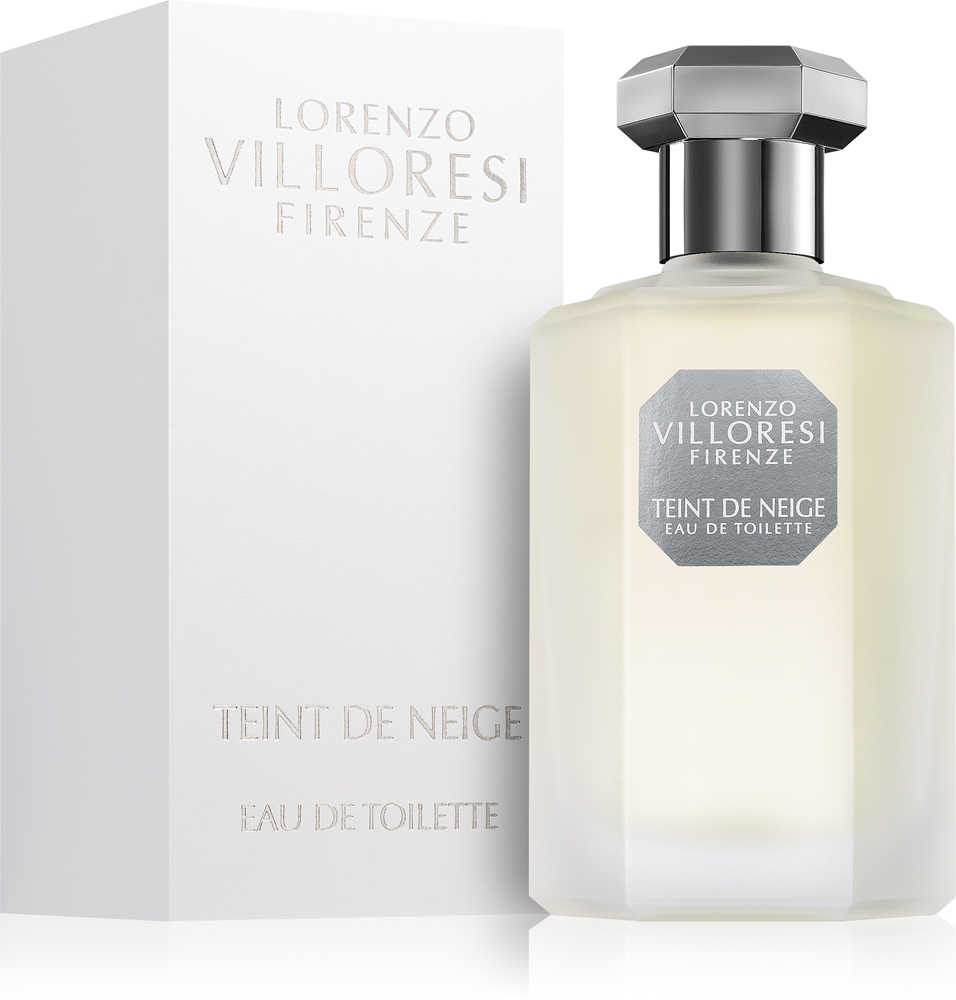
The maison presents perfumery as a personal and cultural pursuit rather than a mass-market one. Its stated tagline describes perfume as "an unlimited universe, a journey evoking dreams, stories, colors and feelings," and Villoresi has summarised his own role as translating "memories, visions and sensations into a fragrance," which he calls a form of haute couture. The brand emphasises bespoke, individually designed perfumes and internal artisanal production in Florence, where the founder remains personally involved in each composition. Its hexagonal bottle is described by the house as an expression of understated, personal luxury.
According to the company, it works with high-quality natural ingredients sourced internationally and maintains a certified supply chain for raw materials, presenting sustainability as part of overall quality rather than a separate programme; no specific environmental certifications were surfaced. Production is based in Florence [2].
Products & innovation
Beyond personal fragrance, the brand produces a home collection — room fragrances, scented candles, sachets and incense — and a line of accessories in materials such as Carrara and travertine marble, ebony and plated brass. It also develops scents for luxury hotels and resorts. Across these lines the recurring signatures are sandalwood, black pepper, yerba mate, Mediterranean botanicals and the olive notes of its Olea Europaea collection.
In 2019 the house opened the Museo Villoresi at Via de' Bardi 12, a three-level museum of more than 1,000 square metres set in the Renaissance palazzo. L'Officiel records its inauguration on 1 June 2019 [10]. Its centrepiece is the Osmorama, a fragrance library presenting a wide range of aromatic ingredients, alongside a Garden of Aromas terrace overlooking the Arno and exhibits tracing aromatic trade routes across roughly 2,500 years.
Recognition
In 2006, Villoresi received the Prix François Coty in Paris, awarded on 23 November [9]. Editorial coverage describes him as the first Italian and the first independent perfumer to receive the distinction [8], which is sometimes likened to an Academy Award for the profession; the jury said the choice celebrated "independent creators who are attempting to preserve the tradition of the great noses of the past" [9]. He went on to receive the Flair de Parfum award in Vienna in 2015, and in 2022 the Cologni Foundation for the Métiers d'Art named him Maestro d'Arte e Mestiere for Artistic Perfumery, inscribing him in its Libro d'Oro at Palazzo Litta in Milan [5]. His work has also been recognised by the Michelangelo Foundation as part of its Homo Faber programme.
Current status
The brand is active. It launched a new fragrance, Aura Maris, in 2026, and continues to operate its e-commerce site, the Florence boutique and the Museo Villoresi, with distribution across 50 to 60-plus countries. Several of the founder's children have been reported as involved in the business, including one studying perfumery in Grasse.
Facts & evidence
Documented facts from Glowpedia's fact base — every row carries a source.
Timeline#
Lorenzo Villoresi opens the 'Atelier dei profumi' in his home on Via de' Bardi in Florence, creating bespoke custom fragrances. Early bestseller Piper Nigrum takes shape during this period.↗ lampoonmagazine.com
Official founding of Maison Lorenzo Villoresi in Florence after completing his philosophy degree and years of travel and experimentation.↗ lorenzovilloresi.it
Launch of Sandalo perfume — inspired by ancient Indian tradition, built around Mysore sandalwood. One of the brand's enduring cult signatures.↗ fragrantica.com
Publishes 'Il Profumo: Cultura, storia e tecniche' (his first major book on perfumery).↗ en.wikipedia.org
Launch of Piper Nigrum — black-pepper-driven oriental composition, becomes a longstanding bestseller.↗ en.wikipedia.org
Launch of Teint de Neige and Dilmun — Teint de Neige becomes a cult powdery-floral that 'defies conventional trends.'↗ en.wikipedia.org
Launch of Yerbamate.↗ en.wikipedia.org
Awarded the Prix François Coty in Paris on November 23 — first Italian and first independent perfumer to receive the distinction. Also launches Alamut the same year.↗ nstperfume.com
Awarded the Flair de Parfum award in Vienna.↗ maestrodartemestiere.it
Villoresi Museum (Museo Villoresi) inaugurated on June 1 at Via de' Bardi 12, Florence — three-level, 1,000+ sqm museum in a Renaissance palazzo featuring the Osmorama fragrance library, Giardino degli Aromi terrace overlooking the Arno, and 2,500-year historical trade-route exhibits.↗ lofficieluk.com
Awarded Maestro d'Arte e Mestiere for Artistic Perfumery by the Cologni Foundation for the Métiers d'Art on October 4, 2022 at Palazzo Litta, Milan — joining the Libro d'Oro dell'eccellenza artigiana.↗ maestrodartemestiere.it
Launch of Aura Maris (new fragrance for women and men) — confirms ongoing creative activity.↗ fragrantica.com
Awards#
Prix François Coty↗ nstperfume.com
Flair de Parfum award↗ maestrodartemestiere.it
Maestro d'Arte e Mestiere for Artistic Perfumery↗ maestrodartemestiere.it
Signature products#
Piper Nigrum — described as 'still a best seller' that 'took shape in those years' of the early Atelier ... Piper Nigrum (1999)↗ lampoonmagazine.com
Sandalo was launched in 1995 and Lorenzo Villoresi is the nose behind this fragrance. The woody, powdery and warm scent of Sandalo ... Lorenzo Villoresi Sandalo is a rich, refined perfume made with Mysore Sandalwood.↗ fragrantica.com
Teint de Neige — powdery-floral fragrance that 'has defied conventional trends and managed to grow in popularity through time' ... Teint de Neige (2000)↗ lampoonmagazine.com
Yerbamate (2001)↗ en.wikipedia.org
Alamut (2006) ... An oriental fragrance inspired by legendary Persian gardens, combining osmanthus with amber, leather, and resinous undertones.↗ us.marcgebauer.com
Dilmun (2000) ... A Mediterranean composition opening with citrus and neroli, balanced by incense and woody base notes.↗ us.marcgebauer.com
Mare Nostrum TETI is highlighted, described as having 'fresh and sparkling floral-fruity top note of wild berries and mandarin' with heart notes of magnolia and lily of the valley.↗ lorenzovilloresi.it
Piper Nigrum↗ lampoonmagazine.com
Sandalo↗ fragrantica.com
Teint de Neige↗ lampoonmagazine.com
Key ingredients#
Mentioned in#
Wikipedia — Dedicated biographical article covering birth, family, founding 1990, signature perfumes, Prix François Coty, books and Pitti Immagine activities.↗ en.wikipedia.org
Lampoon Magazine — Editorial 'Lorenzo Villoresi: raw materials and inspirations, it all starts with a Pot Pourri' — covers founder bio, Middle East travels, Piper Nigrum origin, Villoresi Museum, family succession.↗ lampoonmagazine.com
Firenze Made in Tuscany — 'The Florence of Lorenzo Villoresi' — describes him as 'one of Europe's greatest noses' and 'the first Italian and first independent perfume-maker to win the Coty Prize.'↗ firenzemadeintuscany.com
L'Officiel UK — 'The Villoresi Perfume Museum in Florence' — full feature on the Museo Villoresi opening, scale, Osmorama and Garden of Aromas.↗ lofficieluk.com
Homo Faber / Michelangelo Foundation — Artisan profile recognizing Villoresi as an exemplar of contemporary craftsmanship.↗ homofaber.com
Now Smell This — Original 2006 reporting on the Prix François Coty win.↗ nstperfume.com
Fragrantica — Designer page catalogues entire fragrance line; dedicated coverage of the 2022 Maestro d'Arte e Mestiere award.↗ fragrantica.com
Essencional — Feature 'Lorenzo Villoresi, a Living Treasure' covering family palazzo, academic background, Atman Xaman launch, Maestro d'Arte e Mestiere recognition.↗ essencional.com
Certification pass
What each certification and self-stated claim rests on: the source, whose website it's on, and what needs review.
“Lorenzo Villoresi products are made in Florence, Italy ... internal artisanal production”↗ lorenzovilloresi.it
“Lorenzo Villoresi Firenze is an artisanal Italian perfume house celebrated for its bespoke craftsmanship and classical elegance. Working from his atelier in Florence, Villoresi composes fragrances with meticulous attention to structure, materials, and balance, and remains personally involved in the development of his perfumes.”↗ us.marcgebauer.com
“The brand emphasizes the importance of using the highest quality natural ingredients sourced from around the world ... they have a certified supply chain for raw materials, consider sustainability an integral part of quality”↗ firenzemadeintuscany.com
None of these statements has been checked against the certifying bodies' registers. The statements were observed on 5 Jun 2026.
Where to buy
Where the brand is sold according to Glowjakt's price data, per market.
Prices come from Glowjakt and are updated daily. Glowpedia receives no payment for clicks.
Ingredients across the range
Key ingredients across Lorenzo Villoresi's range, from the ingredient lists of 29 of 32 products in Sweden.
Share of products with a known ingredient list. “None identified” means nothing matched our ingredient groups, not that the product is free of them.
Sources
T1 primary · T2 secondary · T3 note- [2]T1lorenzovilloresi.it/eu_en/maison-villoresilorenzovilloresi.it (brand site)
- [4]T2en.wikipedia.org/wiki/Lorenzo_VilloresiWikipedia
- [5]T2maestrodartemestiere.it/it/libro-d-oro/2022/lorenzo-villoresimaestrodartemestiere.it (brand site)
- [7]T3lampoonmagazine.com/lorenzo-villoresi-perfumes-raw-materials-museum-florence/lampoonmagazine.com
- [8]T3firenzemadeintuscany.com/en/article/the-florence-of-lorenzo-villoresi/firenzemadeintuscany.com
- [9]T3nstperfume.com/2006/11/26/lorenzo-villoresi-wins-2006-prix-francois-coty/nstperfume.com
- [10]T3lofficieluk.com/format/TheVilloresiPerfumeMuseuminFlorence.phplofficieluk.com
- [12]T3fragrantica.com/perfume/Lorenzo-Villoresi/Sandalo-5092.htmlfragrantica.com