Overview
Mary Kay is an American cosmetics company founded in 1963 by Mary Kay Ash in Dallas, Texas [8]. It makes and sells skincare, colour cosmetics, body and sun care, and women's and men's fragrances, and is distinguished less by any single product than by how it reaches customers: through a network of independent salespeople rather than retail stores. The company remains active and privately held, with reported revenue of US$2.7 billion in 2022 and sales in more than 40 markets [7].
The business was built around a stated purpose as much as a product line. According to the company, its founding mission was "to enrich the lives of women and their families," and Mary Kay Ash framed the venture as a way to give women a route into running their own businesses. That framing — entrepreneurship for women, organised through a direct-selling model — has remained the company's defining characteristic for more than sixty years.
Origin and founders
Mary Kay Ash launched the company on 13 September 1963, originally under the name Beauty by Mary Kay, alongside her children Ben, Marilyn and Richard. The product range grew from a line of cosmetics she had worn for several years, having bought the formula from a private seller. Sources differ on how the launch was financed: the company's history page says she was "armed with her life savings," while Wikipedia records a specific figure of a "$5,000 investment from her oldest son, Ben Rogers, Jr." [3][8] In its first year the company reported 318 consultants and $198,154 in sales [7].
Ash had spent years in direct sales before founding the company, working for Stanley Home Products from 1939 and later selling books door to door. She built the new venture around a "house party" approach, in which representatives invited friends for complimentary facials before showing them products. Her own statement of method was repeated often inside the company: stay true to your values, work hard, and make everyone feel important. Ash died on 22 November 2001; by then the company reported over 800,000 representatives across 37 countries and annual sales above $200 million.
History and milestones
Several early traditions became lasting fixtures. In 1964 Ash began an annual gathering, called Seminar, to recognise saleswomen's achievements and provide business education. In 1969 the company introduced what it calls the "career car" concept, awarding a pink Cadillac as a sales incentive — a vehicle that became the brand's most recognisable symbol. Wikipedia dates the first pink Cadillac purchase a year earlier, to 1968 [7]. General Motors has since produced more than 100,000 custom cars for the programme, which now spans several models alongside the flagship pink Cadillac.
International expansion began in 1971, when the company opened in Australia, its first overseas subsidiary, followed by Canada in 1978. By its 40th anniversary in 2003 the company reported more than one million independent salesforce members across over 30 markets.
Ownership
Mary Kay Inc. is a privately held company and has not been the subject of any acquisition. It is closely tied to the founding family: Richard R. Rogers, Ash's son, serves as executive chairman, and Ryan Rogers was named chief executive in 2022 [7]. The company manufactures chiefly at its primary plant in Dallas, with a separate facility in Hangzhou for the Chinese market; an earlier plant in La Chaux-de-Fonds, Switzerland, operated from 1997 to 2003.
Philosophy and positioning
The company presents itself under the line "Confident. Beautiful. Connected." and describes its purpose as helping women build businesses "on their own terms." Its model rests on Independent Beauty Consultants, who earn a stated 50% gross profit on products sold at full retail price plus commissions on the wholesale purchases of consultants they recruit. This multi-level marketing structure has drawn recurring criticism; Wikipedia cites a 68.6% annual turnover rate among consultants from US Federal Trade Commission data, with some sources reporting higher figures [7]. The company also runs a long-standing charitable arm, the Pink Changing Lives programme, which it says has directed donations toward causes including cancers affecting women and the prevention of domestic violence.
Products and innovation
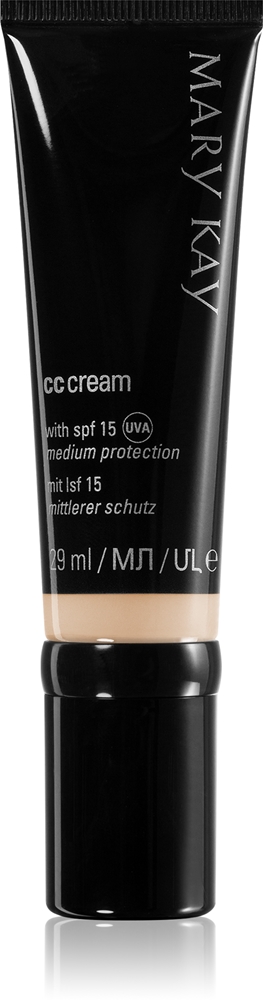
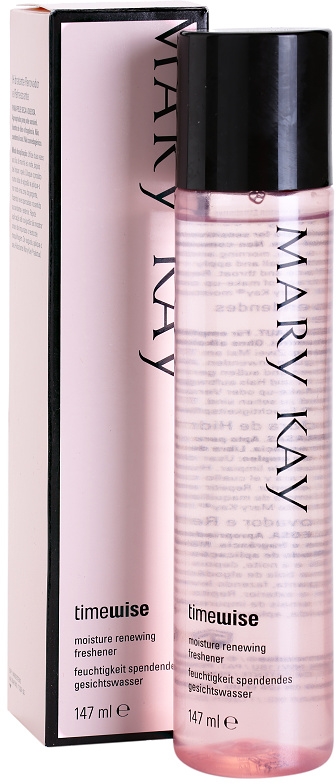
Mary Kay's range spans skincare, makeup, body and sun care, and fragrance for both women and men. Its skincare is organised into collections including TimeWise, Clinical Solutions and Clear Proof, and the TimeWise Miracle Set is among its longest-promoted signature offerings. Other recurring products include the Satin Hands Pampering Set, the men's MKMen line, and a range of colour cosmetics covering face, eyes, cheeks and lips. According to a 2025 company press release, Mary Kay holds nearly 1,500 patents worldwide across products, technologies and packaging; some trade-press summaries put the figure at more than 1,600 [6][10].
Sustainability
The company frames sustainability around three pillars — environmental, social and economic — and says its programme is aligned with the United Nations Sustainable Development Goals. It describes the approach as extending beyond carbon reduction and recycling to "creating a business model that values and uplifts every individual, especially women" [4]. The company publishes annual sustainability reports in several languages; it does not state specific carbon-reduction targets, target years or third-party environmental certifications on its sustainability page.
Recognition
Mary Kay was named the "#1 Direct Selling Brand of Skin Care and Color Cosmetics in the World" by Euromonitor International in 2025, the third consecutive year it received the ranking [6]. The company also states it received 65 beauty awards in 2024.
Controversies
Mary Kay lost its cruelty-free standing in 2012 after it began selling in mainland China, where the law at the time required animal testing for imported cosmetics. It was subsequently removed from PETA's cruelty-free list; PETA's Kathy Guillermo stated that the company's "products are once again being dripped into rabbits' eyes and smeared onto animals' abraded skin" [9]. The company's direct-selling structure has also been a subject of legal scrutiny: in Woolf v. Mary Kay Cosmetics (2004), a workplace-rights dispute concerned an independent contractor terminated during illness [7], and the company pursued trademark actions in 2008–2009 against liquidators selling discounted inventory online.
Current status
Mary Kay remains an active, privately held company operating globally through its independent-consultant model. Its most recent notable milestone was the 2025 Euromonitor ranking. The company closed its operations in Australia and New Zealand in March 2020, citing market conditions, but continues to sell in more than 40 markets worldwide [7].
Facts & evidence
Documented facts from Glowpedia's fact base — every row carries a source.
Timeline#
Mary Kay Ash founds Beauty by Mary Kay in Dallas, Texas, with her children Ben, Marilyn and Richard, on September 13.↗ marykayglobal.com
Mary Kay Ash begins the annual 'Seminar' tradition recognizing women's accomplishments in entrepreneurship.↗ marykayglobal.com
Introduces the 'career car' concept, making the pink Cadillac an iconic symbol of the brand.↗ marykayglobal.com
Mary Kay Inc. opens in Australia, its first international subsidiary.↗ marykayglobal.com
Mary Kay opens in Canada.↗ marykayglobal.com
Founder Mary Kay Ash passes away on November 22 (Thanksgiving Day).↗ marykayglobal.com
Awards#
#1 Direct Selling Brand of Skin Care and Color Cosmetics in the World (Euromonitor International) — Direct selling / skin care & color cosmetics↗ newsroom.marykay.com
Signature products#
"TimeWise Miracle Set" - "Shop the Set"↗ marykay.com
"White Tea & Citrus Satin Hands® Pampering Set" - "Treat Your Hands"↗ marykay.com
"Mary Kay Clinical Solutions Dynamic Wrinkle Limiter" - "Target. Treat. Transform."↗ marykay.com
"Mary Kay Unlimited® Lip Gloss" - "Now Trending"↗ marykay.com
"MKMen® Ultimate Moisturizer" - "Defend Against Dryness"↗ marykay.com
Proprietary technologies & patents#
“Patents: Nearly 1,500 patents held globally”
Mentioned in#
Happi (trade press) — Reported Mary Kay named No. 1 DTC skincare and color cosmetics brand by Euromonitor International.↗ happi.com
Where to buy
Where the brand is sold according to Glowjakt's price data, per market.
Prices come from Glowjakt and are updated daily. Glowpedia receives no payment for clicks.
Ingredients across the range
Key ingredients across Mary Kay's range, from the ingredient lists of 23 of 26 products in Sweden.
Share of products with a known ingredient list. “None identified” means nothing matched our ingredient groups, not that the product is free of them.
Sources
T1 primary · T2 secondary · T3 note- [3]T2marykayglobal.com/our-history/marykayglobal.com (brand site)
- [4]T2marykayglobal.com/sustainability/marykayglobal.com (brand site)
- [6]T2newsroom.marykay.com/media/one-two-three-peat-mary-kay-inc-named-1-direct-selling-brand-of-skin-care-and-color-cosmetics-in-the-world-for-three-years-in-a-row/newsroom.marykay.com (brand site)
- [7]T3en.wikipedia.org/wiki/Mary_KayWikipedia
- [8]T3en.wikipedia.org/wiki/Mary_Kay_AshWikipedia
- [9]T3crueltyfreekitty.com/brands/mary-kay/crueltyfreekitty.com
- [10]T3happi.com/breaking-news/mary-kay-named-no-1-dtc-skincare-and-color-cosmetics-brand/happi.com