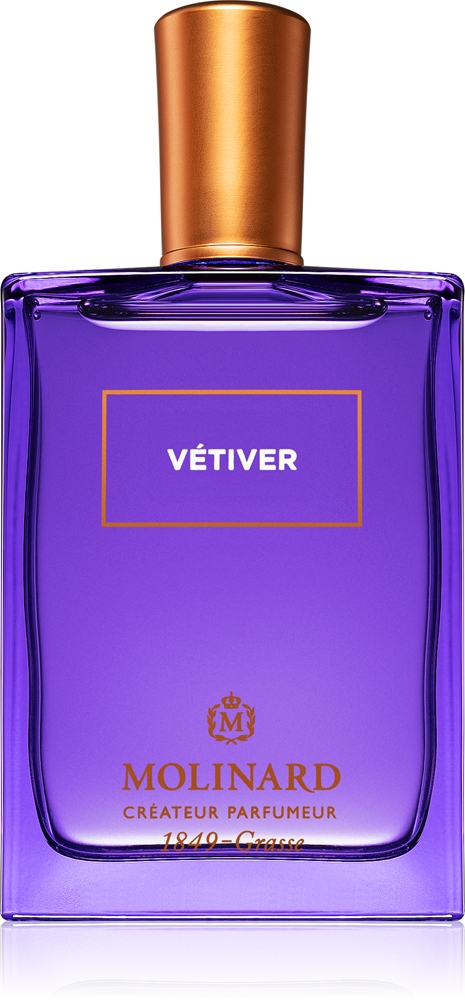
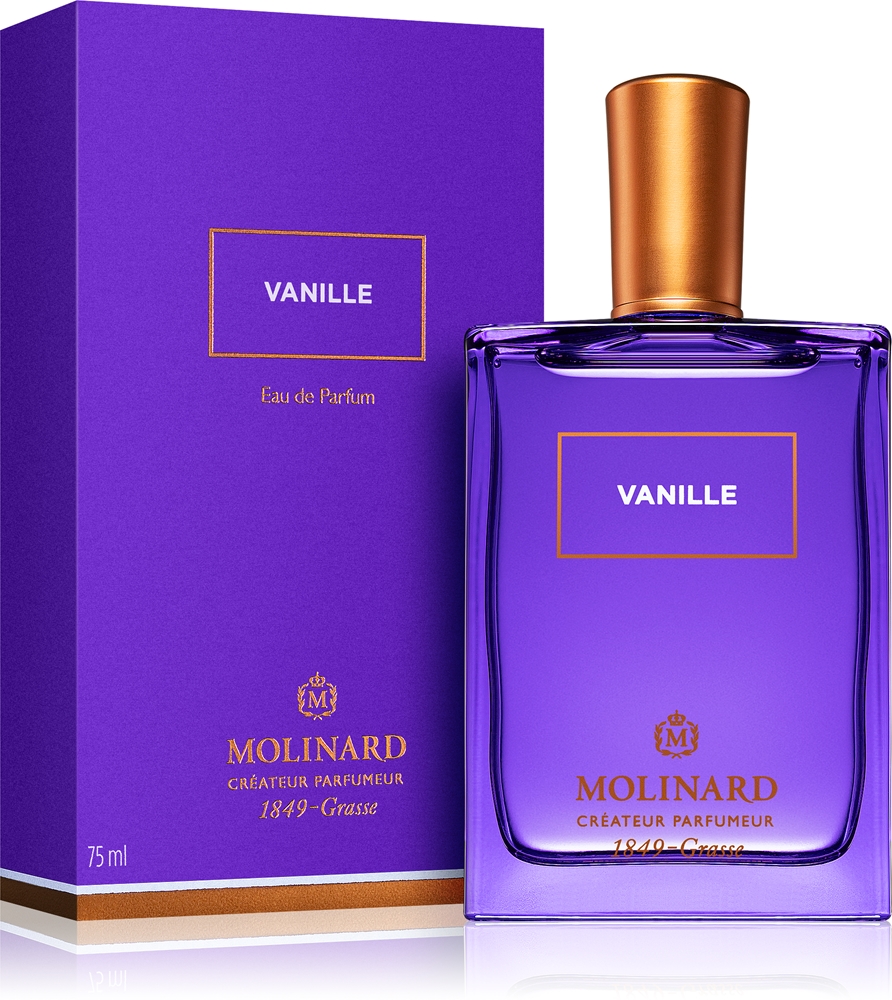
Overview
Molinard is a French perfume house based in Grasse, the town in Provence long regarded as a centre of European perfumery. The company traces its origins to 1849 [5] and has remained family-owned and independent across five generations, a continuity it places at the heart of its identity. It makes perfumes, eau de cologne, floral waters and solid scents, and still produces in Grasse, where its former distillery now operates as a museum.
The house dates its founding to Hyacinthe Molinard, described on the company's own pages as an alchemist who started from a small stall in the heart of Grasse. Today it is led by Célia Lerouge-Bénard, named by the company as the fifth generation and the first woman to run the house.
Origin and founders
Molinard records its beginnings in 1849 as a family perfume house in Grasse, founded by Hyacinthe Molinard. Wikipedia describes it as one of the oldest family-run perfumeries in France [7]. The brand frames Grasse not merely as a location but as the source of its craft, calling the town the place "where the most beautiful know-how" of perfumery is found.
The founding date carries a small complication that the company's own materials reflect. Several concordant sources — the brand's sustainability page, Wikipedia, and two editorial profiles — give 1849 as the year the house was founded [5]. A separate page on Molinard's site, devoted to its "five generations," instead opens its timeline in 1900, crediting Albert Sittler with "opening the doors of the Bastide Molinard" that year [2]. The two dates describe different events: 1849 is the founding of the house under Hyacinthe Molinard, while 1900 is when the company moved into its Grasse estate and the distillery whose metal structure was designed by Gustave Eiffel [7]. One editorial source notes the distinction explicitly, anchoring the house to 1849 while dating the bastide building to 1900 [9].
History and milestones
In 1860, the firm began producing single-flower fragrances drawn from jasmine, rose, mimosa and violet, presented in bottles of Baccarat crystal [7]. Over the following decades it worked with notable glassmakers, including René Lalique, and in 1920 the bottle-designer Julien Viard created several flacon designs for its perfumes.
The early 1920s produced the house's best-known creations. In 1921 Molinard launched Habanita, described in editorial coverage as the first feminine oriental perfume to foreground vetiver, an essence until then associated with men's fragrance [8]. Around the same period the firm introduced Concréta, recorded as one of the first solid perfumes. The company's family-history page dates the solid perfume to 1925, a minor discrepancy with the 1921 date given in reference sources.
Later generations shaped the modern business in different ways. The company credits Henri Bénard, a chemist and mayor of Grasse, with the Habanita and solid-perfume innovations; Pierre Lerouge-Bénard with developing a factory specialised in perfumery raw materials; and Jean-Pierre Lerouge-Bénard with opening the house to bespoke creation, establishing a perfume-making workshop for the public in 1994 [6].
Ownership
Molinard presents itself as a family and independent house through five generations, with no external ownership changes recorded in its materials. The line runs from Hyacinthe Molinard through the Bénard and Lerouge-Bénard families to Célia Lerouge-Bénard, whom the company identifies as its current head and the first woman to lead it.
Philosophy and positioning
The company describes its approach as an "inheritance perfumery" that draws on accumulated experience while remaining rooted in Grasse savoir-faire and natural raw materials. Its manifesto frames perfume primarily as emotion, and favours, in its words, "an authentic perfumery" that follows a creator's inspiration "rather than complying with trends." Molinard also states a belief that perfume should reach everyone, describing it as the house's "duty to make it available to all." Alongside its heritage, the company markets bespoke fragrance creation under the line "Votre parfum sur-mesure" (your custom fragrance), tied to its Grasse workshops.
Products and innovation
Molinard's range spans perfumes, eau de cologne, floral waters and solid scents, organised into collections including Habanita, Personnelle, Privée, Matières and Icônes, with home fragrance and care products alongside. Hero materials cited by the house and in coverage of it include jasmine, rose, mimosa, violet and vetiver. Habanita remains in production and has been re-released over the years in new forms, and it is the product most consistently identified with the house in outside profiles [8].
Manufacturing is concentrated in Grasse. According to the company, every step "from the formulation to the bottle" is carried out at its production site there [4]. Molinard also describes a long-standing partnership with Esatitude, a workplace for people with mental disabilities, where it says each bottle is filled, assembled and packaged by hand.
Recognition
Molinard holds the French state's "Entreprise du Patrimoine Vivant" (Living Heritage Company) label, awarded for craftsmanship. The regional tourism board for the Côte d'Azur notes that among perfume houses the distinction is shared with only two others, Guerlain and Caron [8]. The house has also been profiled for its heritage and its Eiffel-designed distillery, including in an article built around the claim that one of the world's oldest perfume factories is French [9].
Sustainability
Molinard's published policy organises its commitments around three areas it names as "the environment, the human and our products," and lists categories including responsible governance, working conditions and business ethics. The company states that 2023 was devoted to identifying the main impacts of its activities [5]. No third-party certifications — such as organic, vegan or cruelty-free labels — appear in the material the company publishes on this policy.
Current status
The house is active. It operates a transactional website with current promotions, runs its Grasse production site, and maintains its former distillery as a museum on Boulevard Victor Hugo in Grasse, where bespoke creation workshops continue. The company is present on social media as @molinardparfums. By its own account the house is more than 170 years old, a span it ties directly to its 1849 founding.
Facts & evidence
Documented facts from Glowpedia's fact base — every row carries a source.
Timeline#
Maison Molinard founded as a family perfume house in Grasse (Hyacinthe Molinard).↗ en.wikipedia.org
Began creating single-flower fragrances (Jasmin, Rose, Mimosa, Violet) in Baccarat crystal bottles.↗ en.wikipedia.org
Company moved into the Grasse estate / old perfume factory; distillery's metal structure designed by Gustave Eiffel.↗ en.wikipedia.org
Bottle-designer Julien Viard created several glass flacon designs for the company's perfumes.↗ en.wikipedia.org
Launched Habanita, the first feminine oriental perfume to glorify vetiver; also one of the first solid perfumes (Concréta).↗ en.wikipedia.org
Jean-Pierre Lerouge-Bénard (4th generation) created the bespoke perfume-creation workshop.↗ molinard.com
Awards#
Entreprise du Patrimoine Vivant (Living Heritage Company) — French State label — Heritage craftsmanship↗ cotedazurfrance.com
Signature products#
In 1921, Maison Molinard created Habanita, the first feminine oriental perfume to glorify vetiver, until then an essence reserved for men.↗ cotedazurfrance.com
In 1921, the firm launched one of the first solid perfumes, Concréta↗ en.wikipedia.org
Habanita — 1921 fragrance described as the first feminine oriental to glorify vetiver; still in production and continually re-released (e.g. Habanita Eau de Parfum 2012, La Cologne 2016).↗ cotedazurfrance.com
Key ingredients#
Mentioned in#
Côte d'Azur France (regional tourism board) — Profile describing Molinard as established in Grasse since 1849 and holder of the 'Entreprise du patrimoine vivant' label alongside only Guerlain and Caron.↗ cotedazurfrance.com
French Glimpses — Article titled 'One of the oldest perfume factory in the world is French', profiling Molinard's heritage and Eiffel-designed distillery.↗ frenchglimpses.com
Where to buy
Where the brand is sold according to Glowjakt's price data, per market.
Prices come from Glowjakt and are updated daily. Glowpedia receives no payment for clicks.
Ingredients across the range
Key ingredients across Molinard's range, from the ingredient lists of 69 of 71 products in Sweden.
Share of products with a known ingredient list. “None identified” means nothing matched our ingredient groups, not that the product is free of them.
Sources
T1 primary · T2 secondary · T3 note- [2]T2molinard.com/en/pages/the-5-generationsmolinard.com (brand site)
- [4]T2molinard.com/en/pages/made-in-grassemolinard.com (brand site)
- [5]T2molinard.com/en/pages/our-responsible-and-sustainable-policymolinard.com (brand site)
- [6]T2molinard.com/en/pages/bastide-visit-and-museummolinard.com (brand site)
- [7]T3en.wikipedia.org/wiki/MolinardWikipedia
- [8]T3cotedazurfrance.com/to-do/flowers-and-perfumes/molinard-a-craft-recognized-throughout-the-world/cotedazurfrance.com
- [9]T3frenchglimpses.com/2022/05/08/one-of-the-oldest-perfume-factory-in-the-world-is-french/frenchglimpses.com