Overview
Palmolive is an American personal-care brand best known for its green bar soap made with palm and olive oils, the combination that gives the name its meaning. The soap was introduced in 1898 by the B.J. Johnson Company, a soap maker in Milwaukee, Wisconsin [6]. By the turn of the twentieth century it was, according to encyclopedic and historical accounts, the world's best-selling soap [8]. The brand is today one of the major product lines of the Colgate-Palmolive Company, a public multinational that has owned it since a 1928 merger [7], and it remains active worldwide, with a current-dated brand site maintained under a 2026 Colgate-Palmolive copyright [1].
Modern Palmolive centres on body care rather than the cosmetics of its early decades: body wash, hand soap, shower gel, shampoo, conditioner and deodorant, positioned at the drugstore price tier and sold through general retail.
Origin & founders
The brand traces back to Milwaukee soap maker B.J. Johnson. Sources differ on his full first name — Wikipedia records him as Burdette Jay Johnson, while Milwaukee Magazine names him Benedict Johnson — but both refer to him as B.J. Johnson [6][9]. He had established his soap business in Milwaukee in 1864, producing goods that early on included soap, candles and, by some accounts, cheese.
In 1898 the company introduced a pale, olive-green floating bar made from coconut, palm and olive oils, plus cocoa butter. Encyclopaedia Britannica credits B.J. Johnson with developing the formula that year and attributes the product name directly to its two signature oils, palm and olive [8]. Early marketing leaned on the exotic image of those ingredients: campaigns promoted the bar as a cleanser fit for the age of the Pharaohs and highlighted sources such as "Genuine Malaga (Spain) Olive Oil".
History & milestones
The soap's commercial success reshaped the company around it. In 1917 the B.J. Johnson Company renamed itself Palmolive after the product [7]. Because of this, sources describe the brand's beginnings in two ways: 1898 marks the introduction of the soap, while 1917 marks the year the company took the Palmolive name — the earlier date is treated here as the founding year, with the rename logged as a later milestone.
A wider product line followed the soap, including a Palmolive shaving cream in 1920, and the brand became a fixture of early broadcast advertising through radio programmes such as The Palmolive Hour (1927–1931) and Palmolive Beauty Box Theater (1934–1937). In the 1920s it adopted the tagline "Keep that Schoolgirl Complexion". The company relocated to Chicago in 1923 while maintaining Milwaukee production until 1934.
Consolidation defined the following decade. In 1926 the firm combined with the Peet Brothers Soap Company to form the Palmolive-Peet Company. In June 1928 Palmolive-Peet negotiated to acquire the Colgate Company; the merger, effective July 1, 1928, joined three of the oldest and largest American soap and perfumery businesses [7]. The combined firm was first called the Colgate-Palmolive-Peet Company and officially became the Colgate-Palmolive Company in 1953.
Ownership
Palmolive has been owned by the Colgate-Palmolive Company since the 1928 merger that created the parent firm. Colgate-Palmolive is a public multinational headquartered on Park Avenue in Midtown Manhattan, New York City, and is listed on the New York Stock Exchange under the ticker CL as an S&P 500 component; the company reports roughly 34,000 employees and a presence in some 200 countries [7]. Within that portfolio Palmolive sits alongside sister brands including Sanex, Lady Speed Stick and FILORGA, and remains one of the group's principal personal-care lines.
Philosophy & positioning
Palmolive positions nature at the centre of its identity, building on the palm-and-olive-oil origins of its first soap. "Nature is at the core of everything we do," the company states on its brand site, framing natural ingredients and pleasant scents as a way for people to reconnect with nature in everyday body-care routines [2]. It describes its wider purpose as making the world "a healthier and happier place," a mission it links to global handwashing-education programmes run with public-health authorities and local communities.
The brand emphasises what it calls a century of heritage in mixing palm and olive oils in the original soap formula. On the product side it presents itself around sensory experience — a range of fragrances grouped into floral, fruity, citrus and woody families, and textures the company describes as running from "silky-smooth gels" to "velvet-soft foam". Its self-described tagline is "Home for natural body care".
Products & innovation
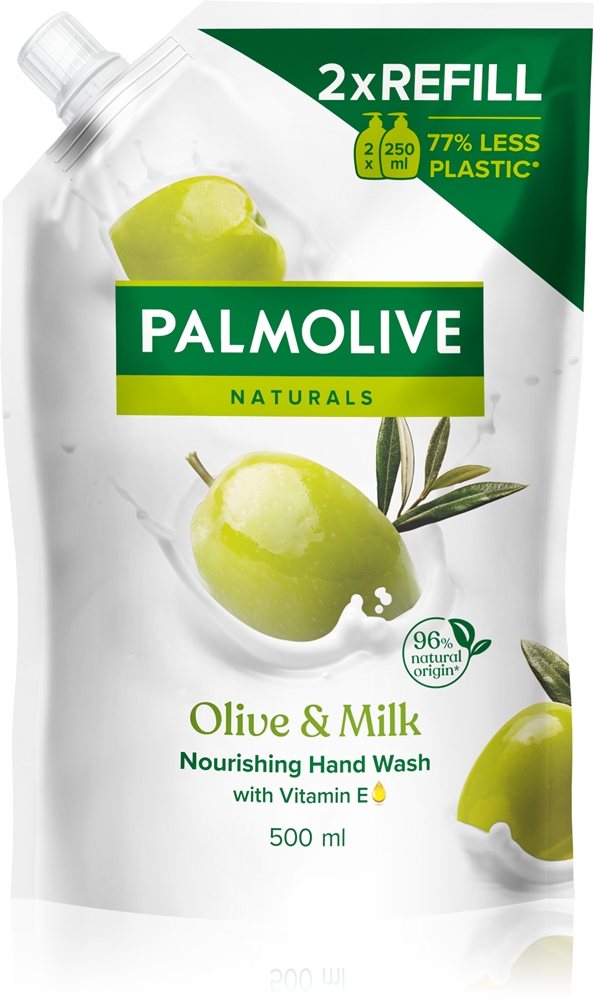
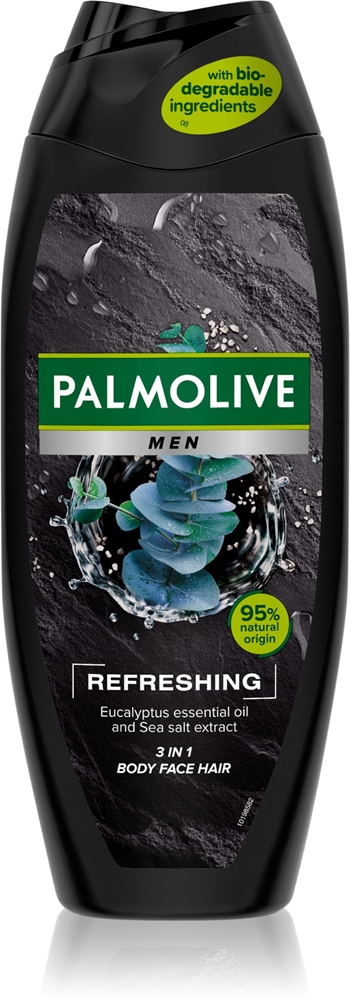
The signature product remains the green palm-and-olive-oil bar soap introduced in 1898. The contemporary range is organised into series such as Naturals, Thermal Spa, Aroma Essence, Skin Radiance, Pure, Men, Kids and Hygiene Plus, spanning body wash, hand soap and deodorant. Featured products include the Naturals Milk & Honey liquid hand soap and the Palmolive Men Citrus Crush 3-in-1.
Ingredient storytelling is central to how the brand describes its formulas. Beyond the founding palm and olive oils, Palmolive publishes a glossary of natural ingredients — among them coconut, shea butter, honey, aloe vera and milk — each paired with described skin benefits such as moisturising or antioxidant properties [5]. The company frames these as "carefully selected and responsibly produced ingredients" chosen with environmental impact in mind.
Sustainability
Palmolive describes a responsible-sourcing approach built on four pillars: environmental protection, ethical labour practices, health and safety, and business integrity. The company reports achieving GBCI TRUE Zero Waste certification at 20 facilities across five continents, and frames its packaging work around a circular-economy goal of finding more sustainable ways to use, reuse and recycle plastic packaging [3]. It also states that it works toward eliminating laboratory animal testing in cosmetics-safety standards. The brand's published sustainability material does not detail palm-oil sourcing specifics or ingredient percentages.
Recognition
Palmolive's standing rests largely on its historical prominence rather than contemporary awards. Encyclopaedia Britannica documents the soap as the world's best-selling soap at the turn of the twentieth century, and Milwaukee Magazine's 2017 profile records its Milwaukee origins, its 1898 launch and the marketing era of the "Keep that Schoolgirl Complexion" campaign [9].
Current status
Palmolive is an active, globally distributed personal-care line of the NYSE-listed Colgate-Palmolive Company. Its brand site is current and maintained, carrying a 2026 Colgate-Palmolive copyright and present product ranges [1]. The brand's scope today is body care and hygiene, distinct from the broader Palmolive cosmetics line of its early decades; Colgate-Palmolive also uses the Palmolive name on dishwashing liquid, which falls outside beauty and personal care.
Facts & evidence
Documented facts from Glowpedia's fact base — every row carries a source.
Timeline#
Palmolive soap introduced — green floating bar of palm, olive and coconut oils by B.J. Johnson Co., Milwaukee↗ en.wikipedia.org
B.J. Johnson Company renamed itself 'Palmolive' after the soap's success↗ en.wikipedia.org
Palmolive Shaving Cream introduced↗ en.wikipedia.org
Consolidation with Peet Brothers Soap Company (Palmolive-Peet Company)↗ en.wikipedia.org
Merger with Colgate Co. effective July 1, forming Colgate-Palmolive-Peet Company↗ en.wikipedia.org
Palmolive-Peet Company acquired/merged with Colgate Company, forming Colgate-Palmolive↗ en.wikipedia.org
Officially became Colgate-Palmolive Company↗ en.wikipedia.org
Signature products#
In 1898, the company introduced a pale, olive-green-colored, floating bar of soap made of coconut, palm and olive oils↗ en.wikipedia.org
Naturals Milk & Honey liquid hand soap↗ palmolive.se
Palmolive Men Citrus Crush 3-in-1↗ palmolive.se
Key ingredients#
Mentioned in#
Encyclopaedia Britannica — Documents Palmolive (palm + olive oils) as the world's best-selling soap at the turn of the 20th century.↗ britannica.com
Milwaukee Magazine — Historical profile of Palmolive's Milwaukee origins, 1898 launch and 'Keep that Schoolgirl Complexion' marketing era.↗ milwaukeemag.com
Certification pass
What each certification and self-stated claim rests on: the source, whose website it's on, and what needs review.
“hitta bättre, mer hållbara sätt att använda, återanvända och återvinna våra plastförpackningar”↗ palmolive.se
None of these statements has been checked against the certifying bodies' registers. The statements were observed on 11 Jun 2026.
Where to buy
Where the brand is sold according to Glowjakt's price data, per market.
Prices come from Glowjakt and are updated daily. Glowpedia receives no payment for clicks.
Ingredients across the range
Key ingredients across Palmolive's range, from the ingredient lists of 135 of 145 products in Sweden.
Share of products with a known ingredient list. “None identified” means nothing matched our ingredient groups, not that the product is free of them.
Related brands


Sources
T1 primary · T2 secondary · T3 note- [1]T1palmolive.sepalmolive.se (brand site)
- [2]T1palmolive.se/who-we-are/brand-voicepalmolive.se (brand site)
- [3]T2palmolive.se/who-we-are/naturalworldpalmolive.se (brand site)
- [5]T2palmolive.se/news-and-articles/fragrances-and-ingredients/glossary-of-natural-ingredients-and-their-benefitspalmolive.se (brand site)
- [6]T3en.wikipedia.org/wiki/Palmolive_(brand)Wikipedia
- [7]T3en.wikipedia.org/wiki/Colgate-PalmoliveWikipedia
- [8]T3britannica.com/topic/Palmolive-Peet-Companybritannica.com
- [9]T3milwaukeemag.com/story-behind-this-bar-of-palmolive-soap/milwaukeemag.com