Overview
Sabon is an Israeli bath and body brand founded in Tel Aviv in 1997, known for handmade soaps and products built around Dead Sea minerals and Mediterranean botanicals. It began as a small shop selling firm soap by weight and grew into an international retailer operating around 180 stores across 14 countries [6]. The brand is now owned by the French group Groupe Rocher, parent of Yves Rocher, which took full control by around 2018 [6].
The company positions itself in the prestige bath-and-body segment, framing the bath as a slow, restorative ritual rather than a quick wash. Its name comes from the Semitic word for "soap" [3].
Origin and founders
Sabon was started in 1997 by two childhood friends, Sigal Kotler-Levy and Avi Piatok, who opened a small soap shop on Sheinkin (Shenkin) Street in the centre of Tel Aviv [6]. According to the company, the pair worked from a 70-year-old Australian recipe picked up during their travels, selling firm handmade soap by weight [3]. In the same year one of the founders, described by Sabon as the "nose of the house," created the brand's first fragrance, Patchouli-Lavender-Vanilla, which the company says became its signature scent across its body range.
From the outset the products drew on materials from the Dead Sea — salt, mud and algae — together with Mediterranean botanicals such as olive oil and shea butter, an ingredient story the brand still foregrounds today.
History and milestones
Sabon expanded from its single Tel Aviv store into an international chain. By the brand's own account, roughly two decades after opening it was operating in about 180 locations worldwide, a footprint later put at 180 stores in 14 countries with around 1,000 employees.
In 2016, Yves Rocher, part of France's Groupe Rocher, acquired a 70% stake in Sabon as part of the group's move to refocus on beauty and well-being; it bought the remaining 30% roughly two years later [6].
In 2025, the Israeli retailer Golf & Co Group acquired exclusive franchise rights to Sabon's Israeli stores under a five-year agreement, taking on 22 stores in the country [6]. Excluded from that deal were Sabon's manufacturing factory in Kiryat Gat, its Israeli headquarters and its distribution centre, which the company said would close in 2026 [6].
Ownership
Sabon's parent company is Groupe Rocher, the French family-owned group behind Yves Rocher, making Yves Rocher a sister brand. The brand's own materials describe the ownership differently in different places: a company FAQ states that Sabon is "owned and operated by Yves Rocher Company" [4], while its About pages say the brand "operates as part of the Golf Group, one of Israel's leading retail groups" [5]. Trade reporting reconciles the two: Groupe Rocher (through Yves Rocher) is the global owner, while Golf & Co Group holds the Israeli franchise from 2025 [6].
Philosophy and positioning
The company describes the "healing and relaxing powers of nature" as the heart of its philosophy, and says it wants to turn bath time into a holistic experience. Its stated values centre on natural ingredients, handmade craftsmanship and the idea of taking back time for oneself. Sabon uses the tagline "The home that enlivens heart and senses," and emphasises warmth and hospitality in its stores, where staff invite customers to try the product ritual at an in-store water well.
The brand favours clear glass containers that show the contents, and says its formulas are made in-house using traditional recipes. It presents itself in the luxury end of the bath-and-body market, describing its range as premium soap and body products.
Products
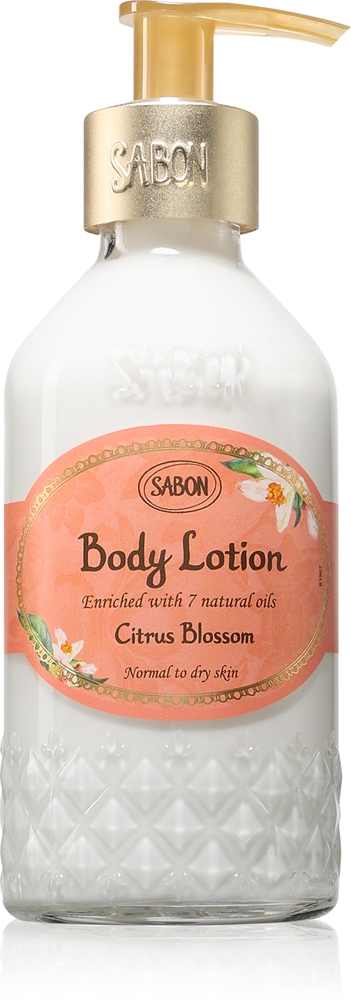
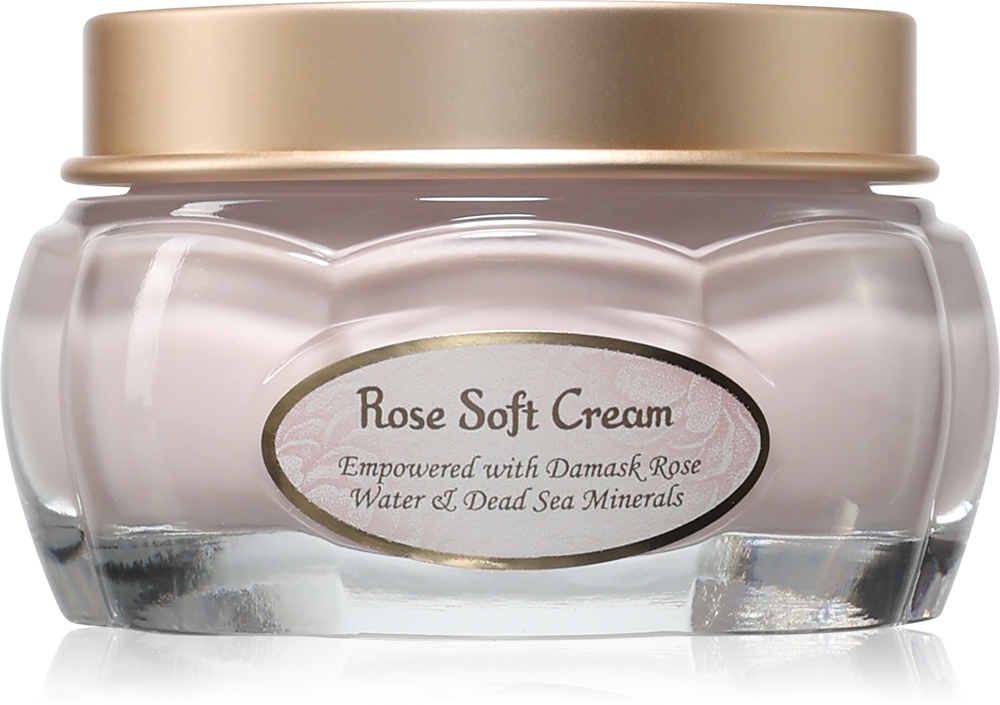
Sabon's range spans body cleansers, scrubs, moisturisers, hand and hair care, facial skincare, fragrance and home items such as candles and diffusers. Its best-known product is the Sea Salt (Dead Sea) Body Scrub, which the company markets as its "world-famous icon," made from Dead Sea salt and botanical oils. Sabon's sales claim for the scrub differs by market: its global site states that one jar is sold "every 90 seconds" worldwide [5], while its US storefront gives the figure as "every 30 seconds" [1]. The brand also promotes a three-step body ritual of Shower Oil, body scrub and moisturiser, and its Patchouli-Lavender-Vanilla scent remains a core fragrance.
On ethics, the company states that it does not test products on animals and does not use ingredients, suppliers or facilities involved in animal testing [4].
Current status
Sabon remains active and trading internationally, with a live US e-commerce site and stores across multiple countries, but it is no longer independent: it is owned by Groupe Rocher. Its most significant recent development is a contraction of its home market — the 2025 transfer of its Israeli stores to a Golf & Co franchise and the planned 2026 closure of its Israeli headquarters, Kiryat Gat factory and distribution centre [6].
Facts & evidence
Documented facts from Glowpedia's fact base — every row carries a source.
Timeline#
First SABON store opened on Sheinkin Street, Tel Aviv (August 1997); first fragrance Patchouli-Lavender-Vanilla created.↗ bluebellgroup.com
Yves Rocher (Groupe Rocher) acquired a 70% stake in Sabon.↗ beautymatter.com
Acquired 70% by Yves Rocher / Groupe Rocher (remaining 30% acquired two years later, ~2018).↗ beautymatter.com
Israeli Golf & Co Group acquired exclusive franchise rights to Sabon's Israel stores; Israel HQ/factory/distribution set to close in 2026.↗ beautymatter.com
Signature products#
OUR WORLD-FAMOUS ICON: Sea Salt Body Scrub ... One jar is sold every 90 seconds around the world!↗ sabon.co.il
In 1997, SABON's co-founder and nose of the house concocted the brand's first fragrance, Patchouli-Lavender-Vanilla. It soon became SABON's star scent featured in all body ritual.↗ sabon.co.il
Shower Oil: a gentle and rich cleanser composed of 4 botanical oils to smooth and protect the skin↗ sabon.co.il
Sea Salt / Dead Sea Body Scrub — Brand reports one jar of its body scrub sold every 90 seconds worldwide; marketed as its 'world-famous icon'.↗ sabon.co.il
Key ingredients#
Mentioned in#
BeautyMatter — Reported Israeli Golf & Co Group acquiring franchise rights to Sabon and the planned 2026 closure of Sabon's Israel HQ, Kiryat Gat factory and distribution center.↗ beautymatter.com
Certification pass
What each certification and self-stated claim rests on: the source, whose website it's on, and what needs review.
“Sabon does not test any product on animals. Sabon does not support nor use ingredients, supplies, or manufacturing facilities that practice animal testing.”↗ sabon.co.il
None of these statements has been checked against the certifying bodies' registers. The statements were observed on 17 Jun 2026.
Where to buy
Where the brand is sold according to Glowjakt's price data, per market.
Prices come from Glowjakt and are updated daily. Glowpedia receives no payment for clicks.
Ingredients across the range
Key ingredients across Sabon's range, from the ingredient lists of 37 of 45 products in Sweden.
Share of products with a known ingredient list. “None identified” means nothing matched our ingredient groups, not that the product is free of them.
Related brands
Sources
T1 primary · T2 secondary · T3 note- [1]T1us.sabon.com/pages/about-usus.sabon.com (brand site)
- [3]T2sabon.co.il/en/about-sabon/our-storysabon.co.il (brand site)
- [4]T2sabon.co.il/en/faq/companysabon.co.il (brand site)
- [5]T2sabon.co.il/en/about-sabonsabon.co.il (brand site)
- [6]T3beautymatter.com/articles/israeli-golf-retail-group-acquires-franchise-rights-to-sabonbeautymatter.com