Overview
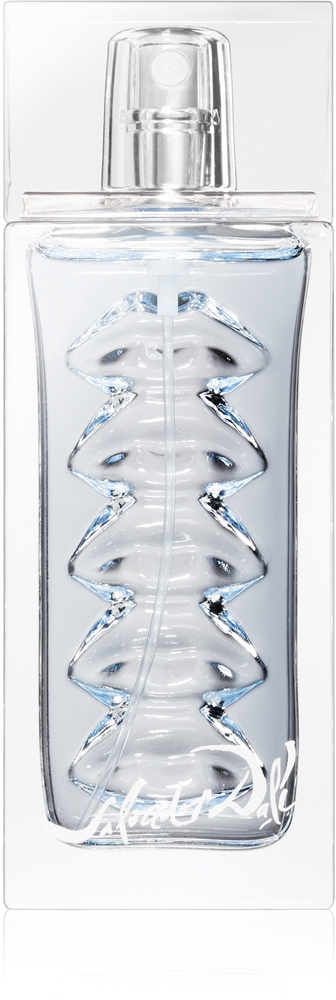
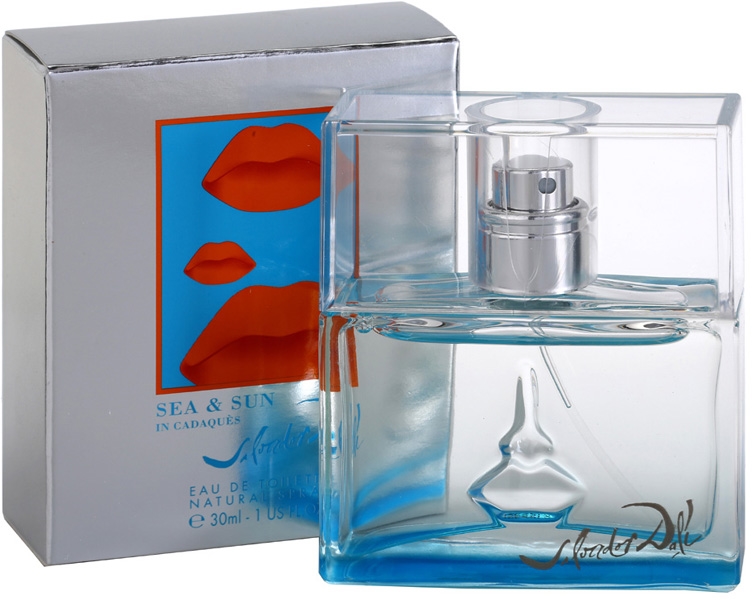
Salvador Dali is a French fragrance brand built around the name and designs of the Spanish surrealist artist Salvador Dalí (1904–1989). Its first scent launched in 1983 and is widely described in fragrance writing as the world's first "artist fragrance" [8]. The line pairs perfumery with sculptural bottles drawn from Dalí's own sketches, most recognisably a flacon shaped as a nose and a pair of lips.
The brand was created and long held under licence by the Paris house Cofinluxe. After Cofinluxe entered liquidation in January 2024, distribution passed to another French company, Création Beauté International [1]. The brand remains on sale internationally.
Origin & founders
The project began in the early 1980s, when the French perfume entrepreneur Jean-Pierre Grivory persuaded Dalí to design a bottle and lend his name to a perfume; Grivory's company, Cofinluxe, took the licence for the line [5]. Grivory had founded the company — first named Cofci — in 1976 as a family-run, independent Paris business.
The origin of the first fragrance is tied to Dalí's personal life. In 1981, after finishing his painting Apparition of the Face of Aphrodite of Knidos, Dalí sketched a perfume bottle, and that sketch shaped the debut scent [7]. The first fragrance appeared in 1983, the year after the death of Dalí's wife and muse, Gala, and was conceived partly as a tribute to her. It was released as a numbered limited edition in crystal, then reworked for a wider market in 1985.
History & milestones
Dalí's involvement with perfume long predated his own brand. In 1943 he designed the packaging for Elsa Schiaparelli's "Shocking Radiance" oils, and in 1947 the two collaborated on "Roy Soleil," produced in a run of 2,000 Baccarat crystal bottles, one of which is held in a perfume museum in Barcelona [7].
The 1983 debut of "Dali" carried the perfumer Alberto Morillas [4] and a bottle by the designer Pierre Dinand, whose nose-and-lips flacon became the line's signature; Dinand has recounted that the design was finalised after Dalí's death [6]. A men's counterpart followed in the mid-1980s, and Laguna arrived in 1991. Dalí himself died in 1989, and the brand continued posthumously under the Cofinluxe licence. Later releases included the Fabulous Collection of 2011, four gold-plated fragrances made by the perfumers Michel Almairac, Dorothea Piot and Philippe Bousseton [7], and the Daligramme Collection in 2017.
Ownership
Ownership of the line has shifted with the fortunes of its licensees. Cofinluxe held the licence from 1983 and manufactured the fragrances in France [5]. In October 2023 a French commercial court opened reorganisation proceedings against Cofinluxe, and in January 2024 these were converted to liquidation, ending the company after roughly five decades.
Distribution then moved to Création Beauté International, a Paris beauty group founded by Hervé Josserand that lists Les Parfums Salvador Dali within its "niche and selective" perfume portfolio [1]. Sources differ on how to name the brand's owner because they describe different periods: editorial profiles record Cofinluxe as the historic licence holder from 1983 [5], while the current distributor of record is Création Beauté International [1].
Philosophy & positioning
The brand presents itself at the meeting point of surrealist art and perfumery. Each fragrance is framed as an "olfactory artwork" that combines an elaborate bottle with the scent inside, and the house sums up its identity as "the surrealistic encounter of Art and Perfume." Dalí's own view of scent runs through this positioning; he is quoted as holding that, of the five senses, smell best expresses the idea of immortality [7]. The feminine fragrances lean on floral notes such as jasmine — the flower Dalí is said to have worn behind his ear as he painted — and rose.
Products & innovation
The catalogue is built on fragrance rather than wider cosmetics. The founding "Dali" scent remains the reference point, and the range has grown across four decades to include Laguna, Dalimix, Eau de Rubylips and later collections. A recurring feature is the sculptural packaging, with several lines using bottles that echo the mouth-and-nose motif Dalí first sketched. The debut flacon in particular is cited in fragrance writing as the first perfume conceived purely around art.
Current status
The brand is active. Its historic licensee Cofinluxe closed in the 2024 liquidation, but the line continued under Création Beauté International, which reports operations across more than 100 countries [1]. The fragrances are sold through multiple channels, including online fragrance retailers and the Dalí museum shop in Florida [5], and remain in circulation at international retailers.
Facts & evidence
Documented facts from Glowpedia's fact base — every row carries a source.
Timeline#
Salvador Dalí designs packaging for Schiaparelli's 'Shocking Radiance' oil line (early perfume-design collaboration, predates own brand by 40 years)↗ surrealismstore.com
Dalí and Schiaparelli collaborate on 'Roy Soleil' (2,000 Baccarat crystal copies, one in Barcelona's Perfume Museum)↗ surrealismstore.com
Dalí sketches the iconic lips-and-nose perfume bottle, inspired by his painting 'Apparition of the Face of Aphrodite of Knidos'↗ surrealismstore.com
Debut launch of 'Dali Le Parfum' as numbered limited edition crystal flacon — Cofinluxe (then Cofci) under Jean-Pierre Grivory holds the license. Perfumer: Alberto Morillas.↗ fr.wikipedia.org
International mass-market release of the original Dali fragrance after success of 1983 limited edition↗ australianperfumejunkies.com
Salvador Dali Pour Homme (men's companion scent — sometimes cited as 1987)↗ nstperfume.com
Death of Salvador Dalí — brand continues posthumously under Cofinluxe license↗ nstperfume.com
Laguna fragrance launched↗ nstperfume.com
'Fabulous Collection' of 4 gold-plated luxury fragrances launched (perfumers: Michel Almairac, Dorothea Piot, Philippe Bousseton)↗ surrealismstore.com
Daligramme Collection launched↗ nstperfume.com
Cofinluxe (historical licensee since 1983) enters liquidation in January 2024 after October 2023 judicial reorganisation. Brand transitions to Création Beauté International distribution.↗ creationbeauteinternational.fr
Following Cofinluxe liquidation, Les Parfums Salvador Dali distribution moves to Création Beauté International (founded by Hervé Josserand)↗ creationbeauteinternational.fr
Signature products#
The original fragrance 'Salvador Dali Le Parfum' debuted in 1983, the year after Gala's death. Due to its immediate success, it was reformulated for mass market release in 1985.↗ australianperfumejunkies.com
Salvador Dali Pour Homme (1986)↗ nstperfume.com
Laguna (1991)↗ nstperfume.com
Eau de Rubylips (2005)↗ nstperfume.com
Dalimix (1996)↗ nstperfume.com
Dali Le Parfum (1983) — Widely cited in fragrance editorial as 'the very first artist fragrance in the world' — iconic sculptured lips-and-nose flacon designed by Pierre Dinand.↗ cofinluxe.fr
Key ingredients#
Mentioned in#
Now Smell This (NST Perfume) — Brand-house profile covering Salvador Dali fragrance line, licensing background, and product timeline.↗ nstperfume.com
Australian Perfume Junkies — Editorial review of Salvador Dali EDT covering 1983/1985/2011 reformulations and bottle designer Pierre Dinand.↗ australianperfumejunkies.com
Where to buy
Where the brand is sold according to Glowjakt's price data, per market.
Prices come from Glowjakt and are updated daily. Glowpedia receives no payment for clicks.
Ingredients across the range
Key ingredients across Salvador Dali's range, from the ingredient lists of 26 of 50 products in Sweden.
Share of products with a known ingredient list. “None identified” means nothing matched our ingredient groups, not that the product is free of them.
Sources
T1 primary · T2 secondary · T3 note- [1]T1creationbeauteinternational.fr/les-parfums-salvador-dali/creationbeauteinternational.fr (brand site)
- [4]T3fr.wikipedia.org/wiki/Liste_de_parfumsWikipedia
- [5]T3nstperfume.com/perfume-houses-s/salvador-dali/nstperfume.com
- [6]T3australianperfumejunkies.com/2012/07/04/salvador-dali-edt-198319852011-review/australianperfumejunkies.com
- [7]T3surrealismstore.com/en/blog/the-exclusive-parfums-of-salvador-dalisurrealismstore.com
- [8]T3cofinluxe.fr/en/brands/parfums-salvador-dali/cofinluxe.fr