Overview
Skinfood is a South Korean skincare and cosmetics brand headquartered in Seoul, built around a "food cosmetics" concept that uses edible ingredients such as fruits, vegetables and grains in its formulations. The brand carries a "Since 1957" heritage that refers to its parent company, iPEERES Cosmetics; the Skinfood retail label itself launched in 2003 [1][8]. After financial collapse and a 2018 court receivership, the brand was acquired by a private equity fund in 2019 and continues to operate, with a live US e-commerce store and reported distribution across multiple countries [9].
Skinfood positions itself as, in its own words, "the first cosmetic brand to root itself in food," working from the idea that nutritive food yields nutritive beauty. Its tagline is "Treat your skin with food."
Origin and founding
The "1957" date that appears in Skinfood's branding and in its Wikipedia infobox refers to the establishment of its parent company, iPEERES Cosmetics, rather than the retail brand [6]. Accounts of the brand's own launch differ: the South China Morning Post dates the Skinfood label to 2003, when iPEERES introduced it targeting consumers in their twenties and thirties, while The Korea Herald gives 2004 [8][7]. The first standalone Skinfood store opened in Seoul's Myeong-dong district in December 2004. No founder is named in the available sources.
The brand's concept was summarised in its early motto, "delicious cosmetics made with delicious food," drawing on ingredients such as tomato, avocado, honey and gold caviar.
Philosophy and positioning
Skinfood describes its guiding belief as the notion that "nutritive food results in nutritive beauty for healthy, beautiful skin," and frames beauty as a healthy lifestyle choice. The company emphasises ingredient sourcing, describing product development as "a journey across the world" to find quality food components, and it invites customers to "Be a Skinfoodie." Its product range spans skincare, makeup and body care, organised on its own site both by category and by food ingredient.
Products and ingredients
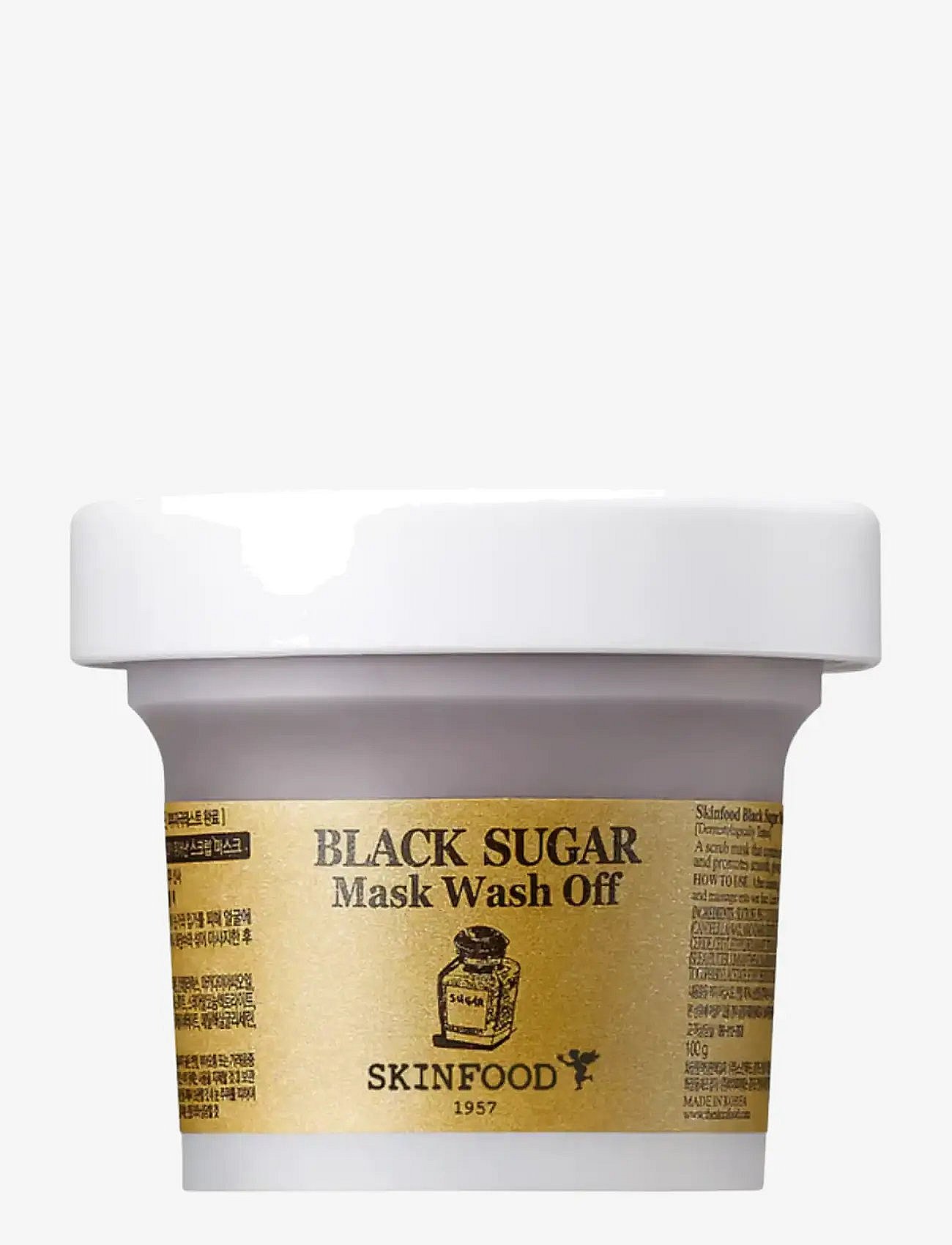
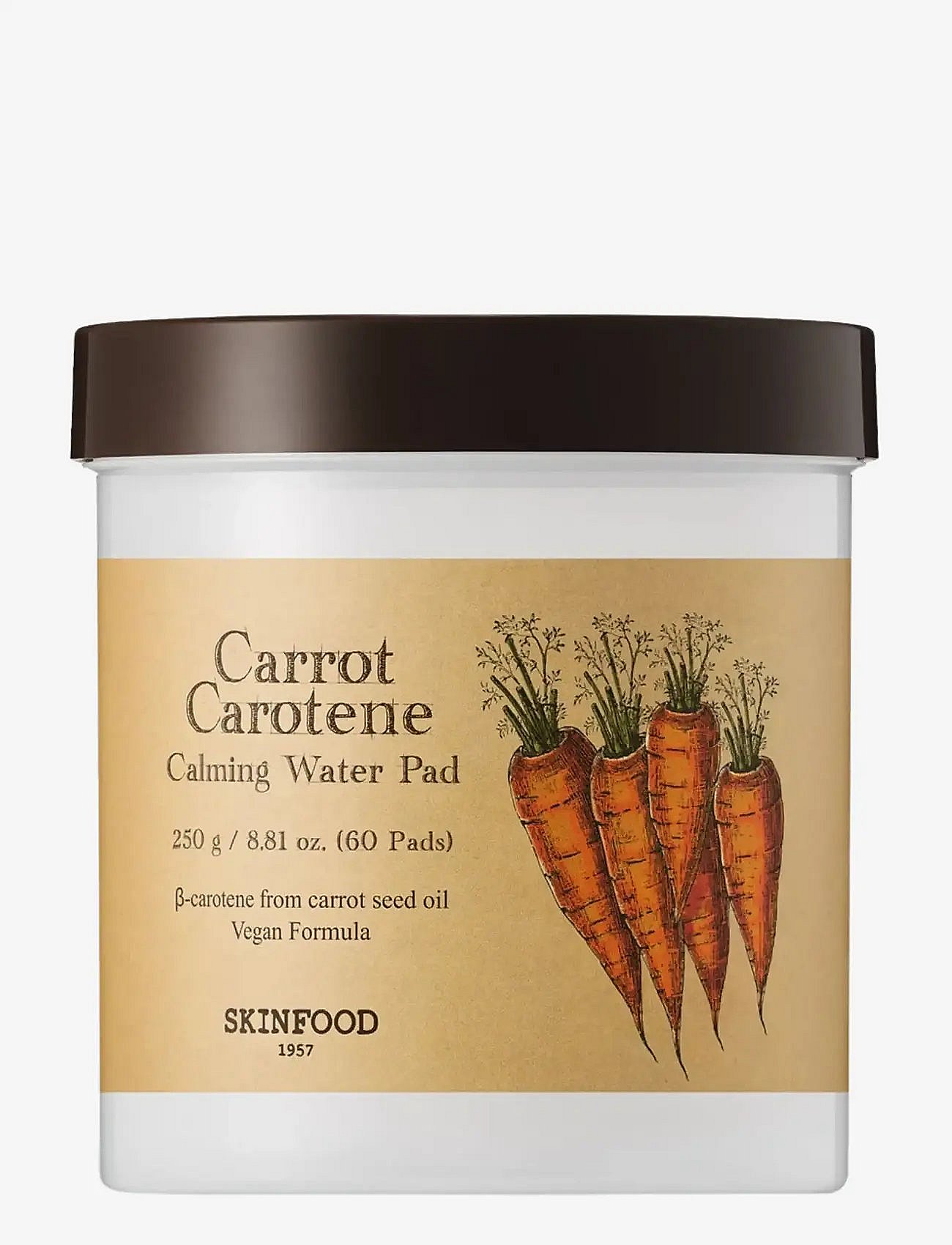
Skinfood's formulations are built around food-derived ingredients, among them acorn, avocado, black sugar, carrot, egg white, grape, honey, peach, rice, royal honey and yuja. Signature and frequently listed products include the Black Sugar Mask Wash Off, the Carrot Carotene Calming Water Pad, the Royal Honey Propolis Enrich Barrier Cream, the Peach Sake Toner and the Salmon Dark Circle Concealer Cream [8]. The Black Sugar Mask Wash Off has been described in editorial coverage as an award winner and a consistent bestseller. According to the South China Morning Post, the brand at one point offered roughly 1,000 products across skincare, hair, body and makeup, and its pricing sits at an accessible, drugstore tier.
Distribution
Skinfood has operated through a multi-channel model. The South China Morning Post reported around 350 stores in South Korea and a presence in 16 countries, with placement through retailers including ULTA in the United States, Boots in the United Kingdom and Sephora locations in Europe [8]. Wikipedia similarly records expansion across Asia — including Taiwan, the Philippines, China, Indonesia, Malaysia, Singapore, Japan and Hong Kong — alongside locations in Europe and the Americas [6]. The brand has also partnered with Korean actresses as ambassadors between 2011 and 2022, among them Lee Min-jung, Ha Yeon-soo and Kim You-jung.
Financial difficulties and receivership
After reaching a strong position in the Korean market in its early years, Skinfood's sales declined sharply in the mid-2010s. The company attributed the downturn to market saturation from newer, cheaper brands and to a fall in overseas-tourist-driven sales following the 2015 MERS outbreak and 2016 diplomatic tensions between South Korea and China [10]. In October 2018 Skinfood filed for court receivership after four consecutive years of losses, citing accumulated debt of 43.4 billion won and a debt-to-equity ratio of 781% [7]. Franchisees filed a lawsuit citing poor management. In 2019 the private equity fund Pine Tree Partners acquired the brand and launched a normalisation program to restructure operations [9].
Controversies
In August 2012, Hong Kong's Consumer Council reported that two Skinfood nail products contained benzene, which it described as a known carcinogen; the company disputed the finding [6].
In 2020, former chief executive Cho Yoon-ho was sentenced to five years in prison for diverting roughly 12 billion won (about US$9.7 million) from Skinfood's online sales to a private company between 2006 and 2018. He was also found to have used a company subsidiary to pay for personal horse purchases and their upkeep [9].
Current status
Skinfood remains active. Following the 2019 acquisition by Pine Tree Partners, the current entity is a post-bankruptcy, reorganised version of the earlier company. Its US e-commerce site is live with current promotions and bestseller rotations, and available sources indicate continued multi-region distribution.
Facts & evidence
Documented facts from Glowpedia's fact base — every row carries a source.
Timeline#
Parent company iPEERES Cosmetics established (cosmetics technology foundation for the later Skinfood brand)↗ scmp.com
Skinfood retail brand launched by iPEERES Cosmetics, targeting consumers aged 20-30↗ scmp.com
First standalone Skinfood store opened in Seoul's Myeong-dong district (December)↗ scmp.com
Hong Kong Consumer Council reported two Skinfood nail products contained benzene; company disputed the claim↗ en.wikipedia.org
MERS outbreak in South Korea hits overseas-tourist-driven sales↗ koreaherald.com
Skinfood files for court receivership in October 2018 amid 43.4 billion won debt and 4 consecutive years of losses↗ koreaherald.com
Acquired by Pine Tree Partners private equity fund; company entered normalization program↗ koreatimes.co.kr
Ex-CEO Cho Yoon-ho sentenced to 5 years in prison for embezzling ~12 billion won (US$9.7M) between 2006-2018↗ koreatimes.co.kr
Signature products#
Black Sugar Mask Wash Off (award winner)↗ scmp.com
Best-selling items include Carrot Carotene Calming Water Pad, Royal Honey Propolis Enrich Barrier Cream, and Black Sugar Mask.↗ en.wikipedia.org
Best-selling items include Carrot Carotene Calming Water Pad, Royal Honey Propolis Enrich Barrier Cream, and Black Sugar Mask.↗ en.wikipedia.org
Peach Sake Toner — Sale price: $7.00 (Regular: $16.00)↗ theskinfood.us
Notable products include: Black Sugar Mask Wash Off (award winner), Royal Honey Propolis Essence, Salmon Dark Circle Concealer Cream, Avocado & Olive Lip Balm↗ scmp.com
Black Sugar Mask Wash Off — Described as award winner and consistently listed as a SKINFOOD bestseller across editorial coverage↗ scmp.com
Key ingredients#
Mentioned in#
South China Morning Post — Brand profile titled 'Delicious cosmetics made with delicious food by SKINFOOD' covering food-cosmetics concept, founding and global expansion↗ scmp.com
The Korea Herald — Coverage of Skinfood's court receivership filing — 'Money-losing Skinfood seeks court receivership amid suffering biz'↗ koreaherald.com
The Korea Times — Coverage of ex-CEO Cho Yoon-ho's 5-year prison sentence for embezzling ~12 billion won between 2006-2018↗ koreatimes.co.kr
Inside Retail Asia — Coverage of Skinfood's collapse — 'South Korean cosmetics firm Skinfood collapses'↗ insideretail.asia
Cosmetics Design Asia — Coverage of court receivership filing and 2019 follow-up on Pine Tree Partners' $171M acquisition↗ cosmeticsdesign-asia.com
Where to buy
Where the brand is sold according to Glowjakt's price data, per market.
Prices come from Glowjakt and are updated daily. Glowpedia receives no payment for clicks.
Ingredients across the range
Key ingredients across Skinfood's range, from the ingredient lists of 8 of 8 products in Sweden.
Share of products with a known ingredient list. “None identified” means nothing matched our ingredient groups, not that the product is free of them.
Sources
T1 primary · T2 secondary · T3 note- [1]T1theskinfood.ustheskinfood.us (brand site)
- [6]T3en.wikipedia.org/wiki/Skin_FoodWikipedia
- [7]T3koreaherald.com/article/1803404koreaherald.com
- [8]T3scmp.com/country-reports/business/topics/south-korea-business-report/article/2116056/delicious-cosmetics-madescmp.com
- [9]T3koreatimes.co.kr/www/nation/2020/05/251_290272.htmlkoreatimes.co.kr
- [10]T3insideretail.asia/2018/10/11/south-korean-cosmetics-firm-skinfood-collapses/insideretail.asia