Overview
Carbon Theory is a British skincare brand based in London, specialising in affordable products for acne- and blemish-prone skin. It was founded in 2018 in the Islington district of London by Philip Taylor, and built its early reputation on a single charcoal-and-tea-tree cleansing bar that sold out within hours after a national newspaper feature. The company markets itself under the line "The Anti Breakout Brand" and sells through high-street chains, beauty retailers and its own website across the UK, the United States and parts of Europe. The brand is active, and as of 2026 was running a licensed collaboration with the cartoon SpongeBob SquarePants.
The company's stated approach is to deliver what it calls clinically proven, lab-formulated products without a premium price, positioning itself toward budget-conscious teenagers and young adults. Most sources place its founding in 2018, though one editorial outlet records 2017.
Origin and founders
Carbon Theory was started by Philip Taylor, a former senior commercial acquisitions manager at the shopping-centre operator Westfield [9]. According to the company, the brand was "born in London in 2018, with a handful of ingredients, our founder Phil's kitchen sink, and a bold vision to reinvent spot-fighting skincare" [1]. In the early days Taylor kept stock under his desk and posted orders during work breaks before the brand reached wider retail.
The founding year is recorded slightly differently across sources. The company's own LinkedIn profile gives 2018 [1], a date supported by trade press covering its 2018 retail launch; the editorial outlet Mamabella instead lists 2017 [6]. Carbon Theory's self-stated year is 2018.
History and milestones
The brand's breakthrough came through Boots, where it launched in 2018 via the retailer's Beauty Finds test programme in 180 UK stores. In May that year the Daily Mail published an article describing the cleansing bar as a "miracle" for acne sufferers, illustrated with before-and-after photographs. The coverage triggered roughly 3,000 online purchases within three hours and cleared three months of Boots inventory in the same window [9]. Carbon Theory filled around 6,000 orders over the following three weeks and took five weeks to restock. The brand later expanded to well over a thousand Boots locations.
In 2020 the company entered the United States, debuting at 768 Ulta Beauty stores in March; the cleansing bar sold out on ulta.com within a week [9]. The following year it moved into Walgreens, beginning at 2,000 doors in July 2021 and growing to 3,000 by that October, while its Boots sales rose by about 200 percent [8]. By 2025 the company reported that it had sold more than one million products and grown from the original cleansing bar to a lineup of over 35 products across six ranges, stocked in the UK, US and Europe [1].
Philosophy and positioning
Carbon Theory describes itself as "The Anti Breakout Brand" and, on its LinkedIn profile, as "the UK's most in-demand medicated skincare brand" [1]. Its products are aimed at acne-, blemish- and oil-prone skin, and the company frames its mission as disrupting conventional skincare with straightforward, effective formulas. The brand says its goal is to keep skin clear "without the premium price tag," and describes its range as clinically proven and lab-formulated. Pricing sits at the drugstore end of the market; one editorial review called the products "highly affordable," while noting they are "not as cheap as, say, The Ordinary" [6].
The company has also stated that it built its profile without paid endorsements. "We've never paid an influencer," Taylor told one trade publication. "Every post is vetted that they aren't using a medication" [9].
Products and innovation
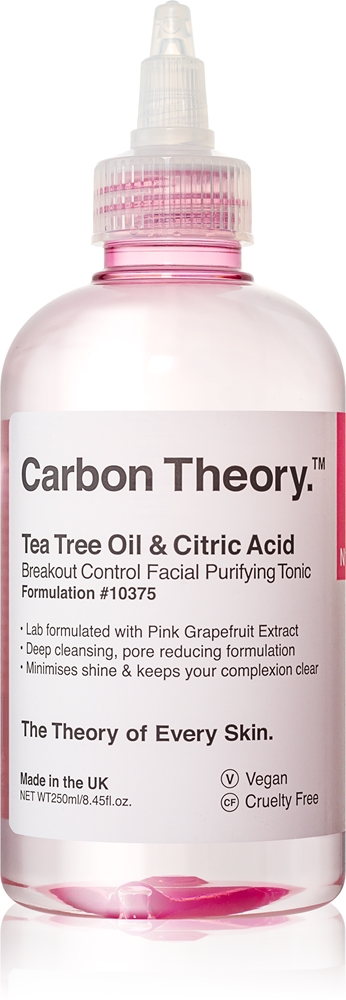
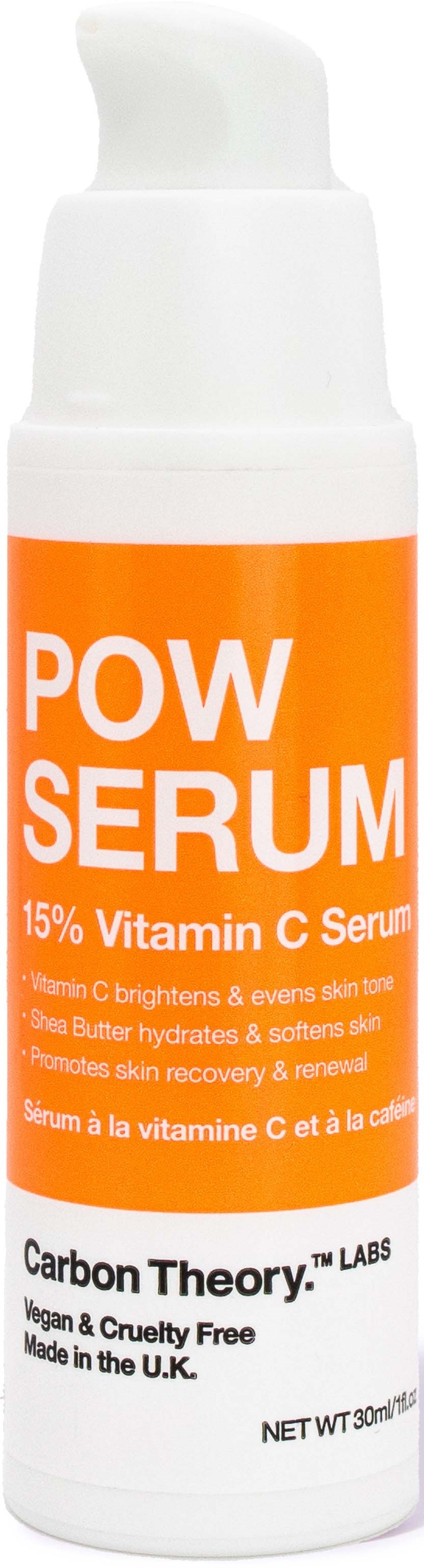
The brand is built around a small set of hero ingredients — activated charcoal, tea tree oil and shea butter, alongside acids such as salicylic and glycolic acid and vitamins C and E. Its best-known product is the Charcoal & Tea Tree Oil Breakout Control Facial Cleansing Bar, the cleansing bar at the centre of its 2018 viral moment, which retails at around £6. The range has since broadened to include items such as the Supacylic Liquid Zap Patch, hydrocolloid spot patches, the Hypa Dart microdart patches and the SupaVit-C vitamin C serum line.
The company says its products are vegan and cruelty-free, and that they are manufactured in the United Kingdom. Carbon Theory also lists itself as a member of the Roundtable on Sustainable Palm Oil (RSPO) [1].
Recognition
In 2020 the Charcoal & Tea Tree Oil Breakout Control Facial Cleansing Bar received an Allure Best of Beauty Award [9]. During its US expansion the brand was featured on the morning programmes Good Morning America and Today [8]. Carbon Theory additionally cites coverage in titles including Vogue, ELLE, NYLON, Cosmopolitan and Stylist.
Current status
Carbon Theory is active. Its direct-to-consumer website was trading at the time of writing and, as of mid-2026, was running a licensed "SpongeBob SquarePants X Carbon Theory" collection. The brand introduced a vitamin C range in 2024 and reports retail distribution across the UK, US and Europe. Its LinkedIn profile lists it as a personal-care manufacturer with a small team of two to ten employees [1].
Facts & evidence
Documented facts from Glowpedia's fact base — every row carries a source.
Timeline#
Founded in Islington, London by Philip Taylor; company launched February 2018.↗ linkedin.com
Launched at Boots via the Beauty Finds test program in 180 UK stores; after a Daily Mail 'miracle' article, sold out three months' inventory in three hours (3,000 online purchases within three hours).↗ beautyindependent.com
Charcoal & Tea Tree Oil Cleansing Bar won Allure Best of Beauty Award; brand debuted in the US at 768 Ulta Beauty doors (March 2020), selling out on ulta.com within a week.↗ beautyindependent.com
Expanded into Walgreens (2,000 doors July 2021, growing to 3,000 by October 2021); Boots sales up 200%; expanded to ~1,200-1,300 Boots stores over two years.↗ beautyindependent.com
Brand reports cumulative milestone of over 1 million products sold, having grown from the iconic Charcoal & Tea Tree Cleansing Bar to a full lineup of 35+ products across 6 ranges, stocked across the UK, US and Europe (company self-statement; cumulative as of LinkedIn About at fetch).↗ linkedin.com
Awards#
Allure Best of Beauty Award — Charcoal & Tea Tree Oil Breakout Control Facial Cleansing Bar↗ beautyindependent.com
Signature products#
Their best-selling cleansing bar is made with just three powerful natural ingredients - charcoal, tea tree oil and shea butter.↗ mamabella.uk
Key products include the Anti-Breakout Facial Cleansing Charcoal Bar (from £6.00), Supacylic Liquid Zap Patch, Zap Patch spot patches, and Hypa Dart microdart patches.↗ carbontheory.com
SupaVit-C Pow Serum 15% (159 kr)↗ lyko.com
Charcoal & Tea Tree Oil Breakout Control Facial Cleansing Bar — Viral cult 'miracle' acne soap: sold out three months of Boots inventory in three hours after a 2018 Daily Mail feature; later sold out on ulta.com within a week of US launch. Retails ~£6 / $9.99.↗ beautyindependent.com
Key ingredients#
Mentioned in#
Daily Mail — Article calling the charcoal cleansing bar a 'miracle' for acne sufferers, with before-and-after photos; triggered the brand's viral breakthrough and sell-out at Boots.↗ beautyindependent.com
Good Morning America — Brand featured on the show during US expansion.↗ beautyindependent.com
Today show — Brand featured on the show during US expansion.↗ beautyindependent.com
Vogue, ELLE, NYLON, Cosmopolitan, Stylist — Brand-stated 'as featured in' list of publications that have covered Carbon Theory.↗ carbontheory.com
Certification pass
What each certification and self-stated claim rests on: the source, whose website it's on, and what needs review.
“Our lab-formulated products contain premium natural ingredients, are manufactured in the UK, are Vegan Friendly and Cruelty-Free.”↗ linkedin.com
“Our lab-formulated products contain premium natural ingredients, are manufactured in the UK, are Vegan Friendly and Cruelty-Free.”↗ linkedin.com
None of these statements has been checked against the certifying bodies' registers. The statements were observed on 20 Jun 2026.
Where to buy
Where the brand is sold according to Glowjakt's price data, per market.
Prices come from Glowjakt and are updated daily. Glowpedia receives no payment for clicks.
Ingredients across the range
Key ingredients across Carbon Theory's range, from the ingredient lists of 40 of 41 products in Sweden.
Share of products with a known ingredient list. “None identified” means nothing matched our ingredient groups, not that the product is free of them.
Sources
T1 primary · T2 secondary · T3 note- [1]T1linkedin.com/company/carbon-theory/about/linkedin.com (brand site)
- [6]T3mamabella.uk/carbon-theory-brand-spotlight-best-products/mamabella.uk
- [8]T3beautyindependent.com/carbon-theory-the-anti-breakout-brand-that-broke-into-the-us-last-year-at-ulta-beauty-expands-to-walgreens/beautyindependent.com
- [9]T3beautyindependent.com/boots-bestselling-acne-busting-cleansing-bar-carbon-theory-ulta-beauty/beautyindependent.com