
Overview
Cartier is a French luxury house founded in Paris in 1847 by Louis-François Cartier, who took over the workshop of his master, the jeweller Adolphe Picard [1]. Best known worldwide for jewellery and watchmaking, the company also runs an in-house fragrance arm, Cartier Parfums, which is the basis for its presence among beauty brands. Cartier is headquartered in Paris and operates today as the flagship maison of the Swiss group Compagnie Financière Richemont SA [4]. It remains an active, global business, with more than 200 stores across 125 countries and three historical maisons, in Paris, London and New York.
The house has long been associated with royalty and high society. King Edward VII is recorded as calling Cartier "the jeweller of kings and the king of jewellers", and after issuing a royal warrant in 1904 [1], similar appointments followed from the courts of Spain, Portugal, Serbia, Russia and the French House of Orléans.
Origin & founders
Louis-François Cartier established the firm in 1847, and his son Alfred Cartier took over in 1874. It was Alfred's three sons, however — Louis, Pierre and Jacques — who turned a Paris workshop into an international name. Louis ran the Paris branch, moving it to the Rue de la Paix in 1899; Pierre opened a New York branch in 1909; and Jacques took charge of the London operations, eventually settling the house at its New Bond Street address. By the early twentieth century Cartier had branches in London, New York and Saint Petersburg. The family retained control of the company until 1964.
Louis Cartier is credited with several of the house's defining ideas, including the use of platinum in jewellery, which allowed for stronger yet nearly invisible settings and put the focus on the stones themselves. He was also responsible for some of Cartier's most celebrated work, among them the "mystery clocks" — timepieces with a transparent dial whose mechanism is hidden — and the colourful Art Deco "Tutti Frutti" jewels. The New York branch produced one of the firm's better-known anecdotes: in 1917 Pierre Cartier acquired the Neo-Renaissance mansion at 653 Fifth Avenue in exchange for 100 dollars and a double-stranded natural pearl necklace then valued at a million dollars.
In 1904 the Brazilian aviator Alberto Santos-Dumont, frustrated by the impracticality of pocket watches in flight, prompted Louis Cartier to design a flat wristwatch with a square bezel — the Santos, Cartier's first men's wristwatch and, the company notes, the only time it named a watch after its original wearer. In 1907 Cartier signed a contract with Edmond Jaeger to supply the movements for its watches, a relationship that later grew into a joint venture producing movements for the house.
History & milestones
Cartier's twentieth-century output established many of its most recognisable designs. The Tank watch, designed by Louis Cartier and inspired by the tanks of the First World War, was introduced in 1919, and spawned a long line of variants — the Tank cintrée, the Tank Louis Cartier, the Tank Française and others — over the following decades. The Love bracelet appeared in 1969 and the Juste un Clou bracelet, created at Cartier New York, in 1971. In 1933 the house filed a patent for the "invisible mount", a stone-setting technique in which the metal of the mount disappears to show only the stones; known as the Mystery Setting, it became a signature element of Cartier's high jewellery.
The largest single order in the company's history came in 1925, when the Maharaja of Patiala, Bhupinder Singh, commissioned the Patiala Necklace and other pieces. Royal and aristocratic patronage ran through the house's early reputation: Empress Eugénie was an early client of Louis-François and Alfred Cartier, and the firm later served as official supplier to monarchs across Europe and beyond. In 1997 Cartier marked its 150th anniversary with creations including a diamond-paved serpent necklace set with two large pear-cut emeralds.
Cartier also built a presence beyond jewellery and watches. In 1984 Alain Dominique Perrin founded the Fondation Cartier pour l'Art Contemporain, an association with living artists intended to carry the house into the next century; a decade later the foundation moved to a purpose-built Paris home designed by the architect Jean Nouvel. Between 1976 and 2003 the Cartier name was also licensed to special editions of several Lincoln models by the American carmaker.
The house entered fragrance comparatively late. Its first perfumes, Must de Cartier and Santos de Cartier, were launched in 1981, followed by the Panthère de Cartier perfume in 1987. Later releases include So Pretty de Cartier (1995) and the men's fragrance Déclaration, composed by Jean-Claude Ellena in 1998 [6].
Ownership
After Pierre Cartier's death in 1964, the heirs running the London, New York and Paris affiliates sold the businesses, and the three branches were temporarily separated. In 1972, Robert Hocq, backed by a group of investors led by Joseph Kanoui, bought Cartier Paris; the London and New York houses were repurchased in 1974 and 1976, reuniting Cartier worldwide [1]. This is also when the "Les Must de Cartier" diffusion line emerged, a name coined by Hocq with general director Alain Dominique Perrin. The three branches were formally reunited in 1979 under a holding company, Cartier Monde, with Kanoui as vice-president; following Hocq's accidental death that December, his daughter Nathalie Hocq became president.
In the early 1990s Cartier was folded into a broader luxury grouping: the Vendôme Luxury Group, formed in 1993 to bring together Cartier, Dunhill, Montblanc, Piaget, Baume & Mercier, Chloé and several other houses.
Two dates mark the modern ownership story, and they describe different events rather than a contradiction. The Kanoui-led consortium acquired Cartier Paris in 1972 [1]; full control passed to the Richemont group in 1988, when, according to one trade encyclopedia, the group "consolidated its position in Cartier by acquiring the shares it did not already control" [4]. Cartier has since operated as Richemont's flagship maison, and as of 2012 was owned, through Richemont, by the South African Rupert family [1]. Within the wider group, Cartier sits alongside sister houses such as Dunhill, Montblanc and Chloé.
Philosophy & positioning
Cartier is described as one of the most prestigious manufacturers of luxury goods, and its identity draws heavily on its history of royal patronage. The fragrance arm has its own stated outlook. Through its in-house perfumer, the house frames scent-making as a matter of "modern scientific techniques of capturing, re-creating and improving on natural perfumery materials" [3] — an emphasis on synthetic craft over the simple imitation of nature.
Products & innovation
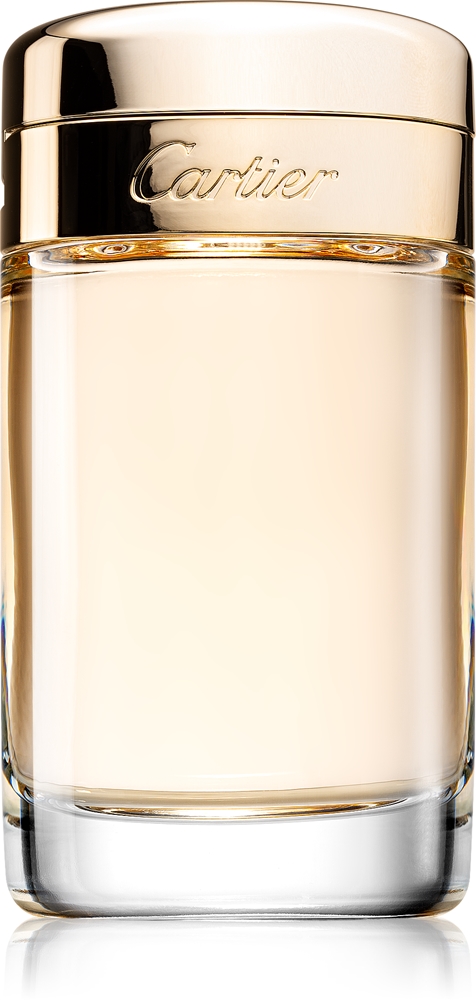
Unlike many luxury houses, which license their names to outside fragrance companies, Cartier creates its perfumes in-house under Cartier Parfums. The work is led by perfumer Mathilde Laurent, who joined Cartier in 2005 and has been its in-house perfumer since 2006 [2]; editorial coverage describes her as the creative force behind the line. Her compositions include Baiser Volé (2006) and, later, the Les Heures Voyageuses oud line.
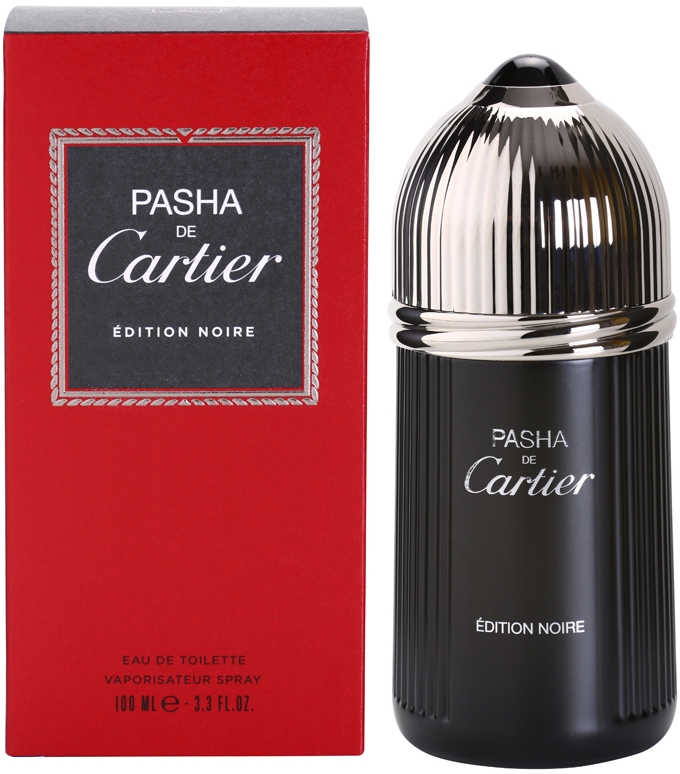
Among the house's better-known scents is La Panthère, a women's eau de parfum launched in 2014, again created by Laurent [5]. The fragrance ties back to Cartier's emblem, the panther, and to Jeanne Toussaint, the house's Director of Fine Jewellery from 1933, who was nicknamed "La Panthère". The earlier men's fragrance Pasha de Cartier, introduced in 1992, took its name in turn from the Pasha watch of 1985 [7].
Recognition
Cartier has been ranked among the world's most valuable brands. Forbes placed it 56th on its 2020 Most Valuable Brands list, citing a brand value of 12.2 billion dollars and revenue of 6.2 billion dollars [1]. In a 2018 assessment of fifteen Swiss watch and jewellery manufacturers, the World Wide Fund for Nature ranked Cartier — as part of Richemont — second, placing it in the "Upper Midfield" and noting that it had taken first steps to address the environmental impact of its manufacturing.
Current status
Cartier is an active global luxury house and the flagship maison of Richemont, with more than 200 stores in 125 countries. Its in-house fragrance line, Cartier Parfums, remains current and ongoing, and is the reason the house is listed as a beauty brand. According to the company's own environmental document, it is committed to conducting business "in an environmentally responsible manner" and to "minimising negative environmental impacts" [1].
Facts & evidence
Documented facts from Glowpedia's fact base — every row carries a source.
Timeline#
Louis-François Cartier founds the firm in Paris, taking over the workshop of his master Adolphe Picard.↗ en.wikipedia.org
King Edward VII issues a royal warrant to Cartier; calls it 'the jeweller of kings and the king of jewellers'. Warrants from Spain, Portugal, Serbia, Russia and the House of Orléans follow.↗ en.wikipedia.org
Launch of the Santos de Cartier wristwatch (Cartier's first men's wristwatch).↗ en.wikipedia.org
Launch of the Tank watch, designed by Louis Cartier.↗ en.wikipedia.org
Creation of the Love bracelet.↗ en.wikipedia.org
Robert Hocq, with investors led by Joseph Kanoui, buys Cartier Paris; Cartier London and New York repurchased 1974 and 1976.↗ en.wikipedia.org
Launch of Cartier's first perfumes: Must de Cartier and Santos de Cartier.↗ en.wikipedia.org
Launch of the Panthère de Cartier perfume.↗ en.wikipedia.org
Richemont consolidates control of Cartier by acquiring the shares it did not already own; Cartier becomes flagship maison of Compagnie Financière Richemont SA.↗ skyjems.ca
Cartier celebrates its 150th anniversary.↗ en.wikipedia.org
Launch of the Déclaration fragrance (men), composed by Jean-Claude Ellena.↗ fragrantica.com
Launch of La Panthère fragrance (women) by in-house perfumer Mathilde Laurent.↗ fragrantica.com
Signature products#
Cartier Declaration perfume for men, composed by Jean-Claude Ellena in 1998, used cedarwood, cardamom, and bergamot↗ fragrantica.com
La Panthère is the new fragrance for women from Cartier, launching in March of 2014.↗ fragrantica.com
Pasha de Cartier, a classic fougere fragrance of lavender and patchouli, was introduced in 1992, named after the Pasha watch, the legendary Cartier jewelry piece from 1985.↗ fragrantica.com
1981 – Launch of the Must de Cartier and Santos de Cartier perfumes.↗ en.wikipedia.org
Since 2006, she has been the in-house perfumer for Cartier, creating perfumes like Baiser Volé.↗ en.wikipedia.org
Proprietary technologies & patents#
“1933 – Cartier filed a patent for the "invisible mount", a stone-setting technique in which the metal of the mount disappears to show only the stones. This method, known as the Mystery Setting, became a signature element of Cartier's high jewelry.”
Mentioned in#
Forbes — Ranked Cartier 56th on its Most Valuable Brands list, with a brand value of $12.2 billion and revenue of $6.2 billion.↗ en.wikipedia.org
Where to buy
Where the brand is sold according to Glowjakt's price data, per market.
Prices come from Glowjakt and are updated daily. Glowpedia receives no payment for clicks.
Ingredients across the range
Key ingredients across Cartier's range, from the ingredient lists of 45 of 93 products in Sweden.
Share of products with a known ingredient list. “None identified” means nothing matched our ingredient groups, not that the product is free of them.
Related brands


Sources
T1 primary · T2 secondary · T3 note- [1]T3en.wikipedia.org/wiki/Cartier_(jeweler)Wikipedia
- [2]T3en.wikipedia.org/wiki/Mathilde_LaurentWikipedia
- [3]T3perfumesociety.org/exclusive-interview-cartiers-house-perfumer-mathilde-laurent-2/perfumesociety.org
- [4]T3skyjems.ca/pages/encyclopedia-cartier-owned-by-richemontskyjems.ca
- [5]T3fragrantica.com/perfume/Cartier/La-Panthere-23295.htmlfragrantica.com
- [6]T3fragrantica.com/perfume/Cartier/Declaration-307.htmlfragrantica.com
- [7]T3fragrantica.com/perfume/Cartier/Pasha-Cartier-315.htmlfragrantica.com