Overview
Claus Porto is a Portuguese soap and fragrance house founded in 1887 in the city of Porto. It began as Claus & Schweder, a venture of two German entrepreneurs, Ferdinand Claus and Georges Ph. Schweder, who settled in Porto and opened what the company and editorial accounts describe as Portugal's first national soap and perfume factory [8]. Today the brand is the international luxury line of the Ach. Brito & Cª group, known for milled vegetable-oil soaps wrapped by hand in colourful lithographic labels.
The company remains active, trading through its own e-commerce and three boutiques in Portugal, with running 2026 promotions and an ongoing product range. Its physical retail abroad has narrowed since the late 2010s, but the brand continues to ship internationally.
Origin and founders
Ferdinand Claus and Georges Schweder were German nationals who established their soap and perfume factory in Porto in 1887, trading under the name Claus & Schweder. The factory building on Rua Serpa Pinto was constructed in 1891. Within its first two decades the firm won gold medals at the Paris Universal Exhibition in 1900 and the Universal Exhibition in Saint Louis, in the United States, in 1904.
The founders' tenure ended with the First World War. According to The Portuguese List, the founders were forced to leave Portugal during the war, and Achilles de Brito "safeguarded the company and gave it the name we know today: Claus Porto" [8]. Brito had been associated with the business as an accountant and later partner before the takeover.
History and milestones
Sources differ on exactly when the Ach. Brito group took over the Claus & Schweder factory. The company's own heritage page dates the acquisition to 1924, while Wikipedia and a Fendrihan editorial history both record 1925, the year after the German founders returned to Germany [6][7]. The one-year discrepancy aside, the accounts agree that Brito absorbed the original business and continued it under the Claus Porto name.
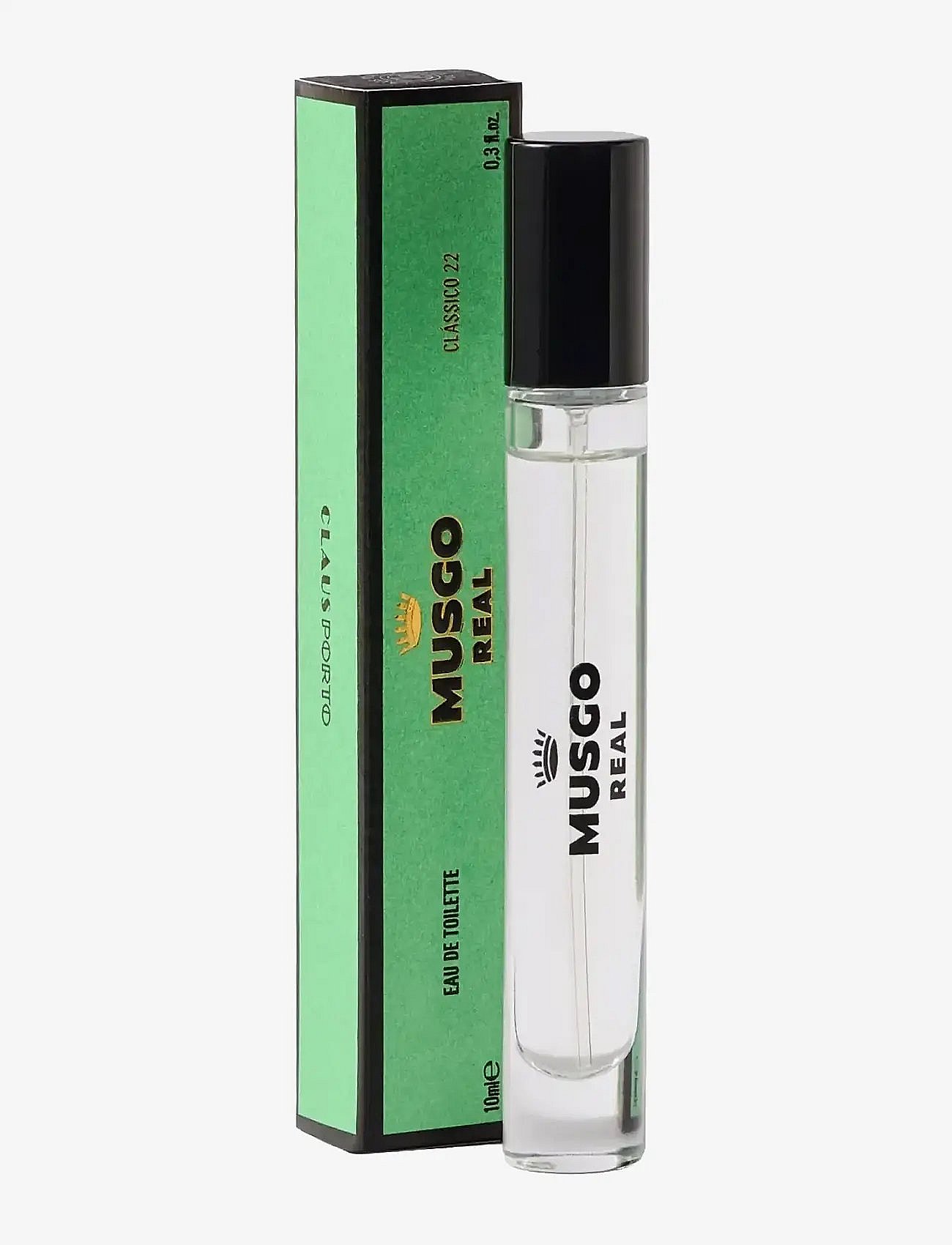
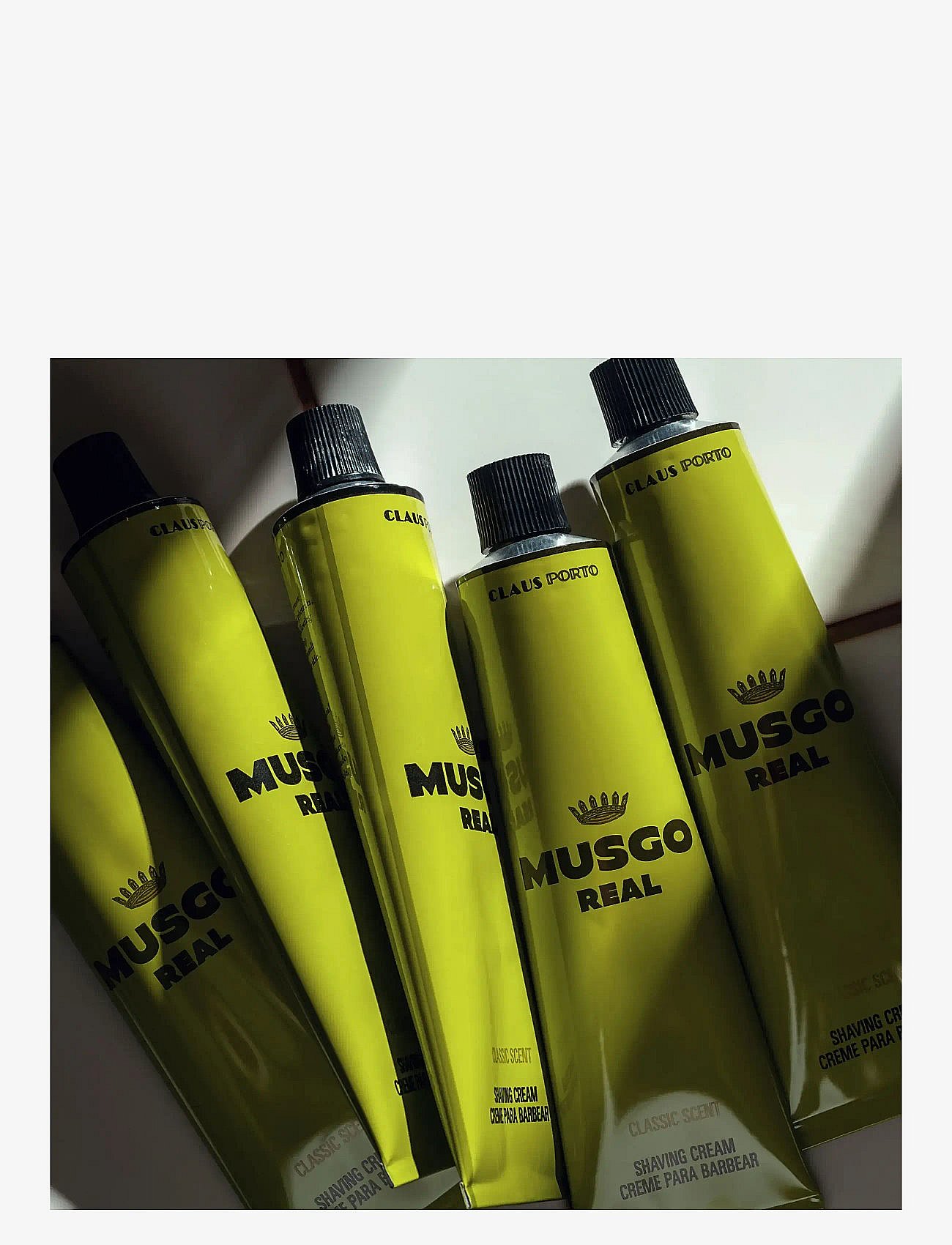
The men's grooming line Musgo Real is a defining part of the house's later history, though its launch date is also recorded inconsistently. Claus Porto's heritage page and The Portuguese List place its creation in 1936, whereas Fendrihan dates it to 1939 [7]. The line grew from fine soaps into shaving creams, aftershaves, colognes and fragrances.
A further milestone shaped the brand's visual signature: in 1953 Ach. Brito established an in-house lithography and printing studio, which has since produced the illustrated labels that distinguish the products. In 1993, Aquiles and Sónia Brito expanded Claus Porto into the international luxury market, reaching the United States, Canada and England. Production facilities were relocated from Porto to Vila do Conde in 1999, and the brand undertook a rebranding with a new visual identity in 2016.
In 2018 Claus Porto opened its first international flagship store at 230 Elizabeth Street in New York, described in the announcement as the Portuguese brand's first international store [9]. That location has since closed [10].
Ownership
Claus Porto is owned by Ach. Brito & Cª, a Portuguese personal-care and fragrance company that took over the founders' original factory in the 1920s [6]. Within the group, Claus Porto functions as the international luxury brand; Musgo Real is its men's grooming line, and the more traditional Portuguese range trades under the Ach. Brito and Confiança names. Wikipedia treats Ach. Brito as the corporate entity, with Claus Porto covered as the group's brand.
Philosophy and positioning
Claus Porto presents itself as a house built on Portuguese craft heritage spanning more than 130 years and four generations. The company frames its identity around "a philosophy of authenticity" and a portfolio of hand-made labels and design patterns, each described as having its own personality. Hand-finishing is central to how the brand positions its soaps; according to the company, traditions "perfected for more than a century" account for the products' durability and quality.
The brand is positioned at the luxury end of the market and was described in press coverage of its New York opening as a Portuguese luxury brand [9]. Editorial profiles associate it with heritage craft and "quiet luxury," and link its label artwork to the Belle Époque and Art Deco eras.
Products and innovation
The range covers soaps, fragrances, bath and body products, scented candles, home diffusers and men's grooming. Its soap collections include Deco, with patterned labels the company calls a bold statement, and Classico, presented as a reflection of the brand's nineteenth-century roots. According to The Portuguese List, the soaps use a 100 percent vegetable-oil base enriched with pistachio and mango seed oils, produced by traditional milling methods [8]. Production has historically been carried out in Portugal, in Porto and later Vila do Conde.
Manufacturing is described as hand-led, involving milling, lamination, extrusion, cutting, moulding and hand-wrapping of each soap in illustrated paper with a manual seal. The eau de toilette line was created by perfumer Lyn Harris, framed by the company as an olfactive journey through Portugal.
Recognition
Beyond its early exhibition gold medals in 1900 and 1904, the brand gained wider attention in 2007 when Oprah Winfrey featured Claus Porto soaps on her Favorite Things list, describing them as "a labor of love" [6]. The 2018 New York boutique opening drew coverage in design press, including Wallpaper* [11].
Current status
Claus Porto is an active, trading brand. It operates direct e-commerce shipping to the United States and Europe and runs three boutiques in Portugal — one in Porto and two in Lisbon — with current 2026 promotions and an ongoing catalogue [4]. Its international physical footprint contracted after the late-2010s expansion: the 2018 New York flagship has closed [10], and a Tokyo store referenced in editorial coverage no longer appears on the brand's store list. The company nonetheless remains globally distributed through its online store.
Its headquarters is recorded as Fajozes, in Vila do Conde, where group production moved in 1999; the original founding city of Porto remains home to the brand's heritage flagship [6].
Facts & evidence
Documented facts from Glowpedia's fact base — every row carries a source.
Timeline#
Ferdinand Claus and Georges Schweder found Claus & Schweder, Portugal's first national soap and perfume factory, in Porto.↗ clausporto.com
Factory building constructed on Rua Serpa Pinto, Porto.↗ clausporto.com
Gold medal at the Paris Universal Exhibition.↗ clausporto.com
Gold medal at the Universal Exhibition in Saint Louis, USA.↗ clausporto.com
Ach. Brito took over the Claus & Schweder factory after its German founders returned to Germany.↗ blog.fendrihan.com
Claus & Schweder (Claus Porto's predecessor) acquired by Ach. Brito & Cª.↗ en.wikipedia.org
Musgo Real brand created for men's grooming products.↗ clausporto.com
Ach. Brito establishes its in-house lithography and printing studio (produces the brand's label artwork).↗ clausporto.com
Aquiles and Sónia Brito expand Claus Porto into the international luxury market (USA, Canada, England).↗ clausporto.com
Production facilities relocated to Vila do Conde.↗ clausporto.com
Brand rebranding with new visual identity.↗ clausporto.com
Opens first international flagship store at 230 Elizabeth Street, New York (now closed).↗ prnewswire.com
Awards#
Gold medal, Paris Universal Exhibition↗ clausporto.com
Gold medal, Universal Exhibition Saint Louis (USA)↗ clausporto.com
Signature products#
Claus Porto's Deco assortment makes a bold statement, with charming, patterned labels.↗ clausporto.com
Classico's soaps are a reflection of Claus Porto's heritage, and echo its 19th Century roots.↗ clausporto.com
Musgo Real has kept its legacy alive since 1887... evolved into a collection of shaving creams, aftershaves, colognes, and fragrances.↗ clausporto.com
8741 Pear Sandalwood Soap - $26↗ clausporto.com
Key ingredients#
Mentioned in#
Oprah Winfrey Show (Oprah's Favorite Things) — Claus Porto soaps (distributed by Lafco New York) featured on Oprah's 2007 Favorite Things list; described as 'a labor of love.'↗ en.wikipedia.org
Wallpaper* — Coverage of Claus Porto opening its first global boutique in NYC.↗ wallpaper.com
Where to buy
Where the brand is sold according to Glowjakt's price data, per market.
Prices come from Glowjakt and are updated daily. Glowpedia receives no payment for clicks.
Sources
T1 primary · T2 secondary · T3 note- [4]T2clausporto.com/us/our-storesclausporto.com (brand site)
- [6]T3en.wikipedia.org/wiki/Claus_PortoWikipedia
- [7]T3blog.fendrihan.com/2022/02/history-of-claus-porto/blog.fendrihan.com
- [8]T3theportugueselist.com/the-magazine/claus-porto/theportugueselist.com
- [9]T3prnewswire.com/news-releases/portuguese-luxury-brand-claus-porto-opens-its-first-international-store-in-new-york-300739196.htmlprnewswire.com
- [10]T3yelp.com/biz/claus-porto-new-york-2yelp.com
- [11]T3wallpaper.com/lifestyle/claus-porto-opens-first-global-boutique-nycwallpaper.com