Overview
Eucerin is a German dermatological skincare brand owned by Beiersdorf AG and sold mainly through pharmacies. It traces its origins to the emulsifier Eucerit, patented by the chemist Isaac Lifschütz, which made stable water-in-oil emulsions possible and became the foundation for a line of medical skincare. The brand site dates this origin to 1900 [2], while Wikipedia records 1902 as the year the German patent for Eucerit was granted and the Eucerin trademark introduced [7]. Beiersdorf bought the patent in 1911 and built its skincare portfolio around it [7][8].
The brand remains active and global. Its parent company runs localized sites internationally, markets recent ingredient ranges such as Thiamidol and Epicelline, and published a sustainability program in 2025 [5].
Origin and founders
Eucerin's story begins with the Hamburg company Beiersdorf, founded in 1882 by the pharmacist Paul C. Beiersdorf, who had patented a new type of medical bandage. In 1890 Oscar Troplowitz acquired the firm and began manufacturing under the Beiersdorf name, working with the dermatologist Paul Gerson Unna.
The decisive step came in 1900, when Lifschütz patented Eucerit, a consistency agent whose name the company traces to a Greek phrase for "beautiful wax". The substance allowed water and oil to be combined into a stable emulsion that, in the parent company's account, produced "a hydrophilic ointment base that could be stored indefinitely". Unna praised the resulting Eucerin Ointment as pleasant for the pharmacist and easy for the physician to prescribe. When Lifschütz sold the patent to Beiersdorf in 1911 and joined as a chemist, the emulsifier became foundational to the company's skincare work [8].
History and milestones
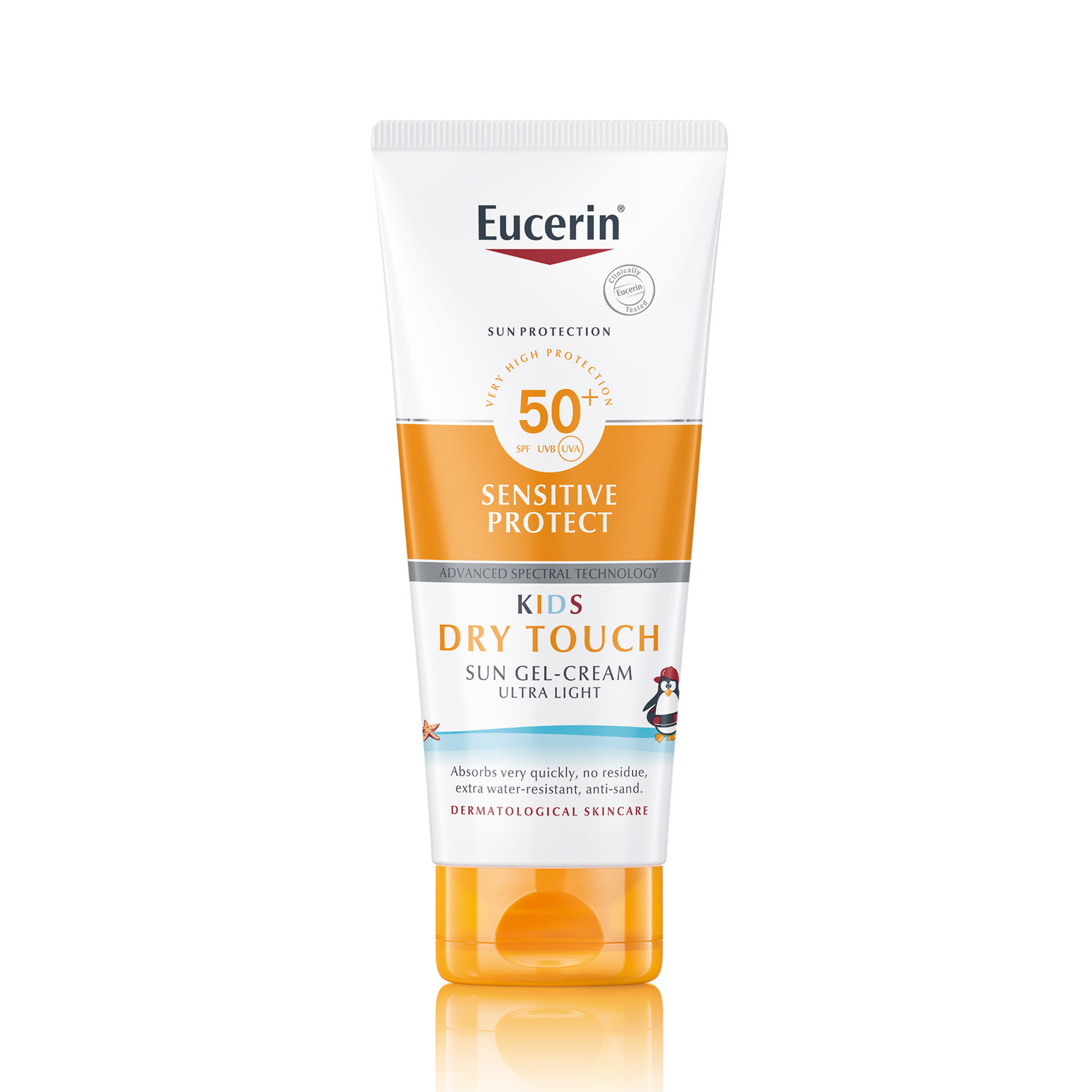
For much of the twentieth century Eucerin developed as a pharmacy skincare line tied to specific skin conditions. In 1950 it launched pH5, which the company describes as its first product built around preserving and restoring the skin's acid mantle; Beiersdorf calls it "the first product to highlight the significance of stabilizing the skin's pH value" [8]. A urea-based range, Laceran, followed in 1992 for very dry skin, and a sun-care line arrived in 1991.
The mid-1990s marked Eucerin's entry into facial dermocosmetics, with Hydro Balance and Lipo-Balance in 1996. In that decade the brand also introduced a Q10 cream that, in the parent company's account, was "the first clinically documented anti-wrinkle cream" [8]. Later milestones reflected a research-led approach: the Hyaluron-Filler series in 2006, inspired by dermatological hyaluronic-acid injections; the AQUAporin ACTIVE range in 2010, which the company links to the Nobel Prize-winning discovery of aquaporins, alongside a dedicated Eucerin Men line; and in 2012 the opening of the Eucerin Skin Institute in Hamburg. Beiersdorf extended the line to full-body care in 1977.
Ownership
Eucerin is owned by Beiersdorf AG, the Hamburg-based group that acquired the founding Eucerit patent in 1911 [7][8]. Within Beiersdorf's portfolio it sits alongside brands including Nivea, Labello, Atrix, La Prairie and Chantecaille.
Philosophy and positioning
The company positions Eucerin as medical skincare grounded in dermatological research and a long collaboration between pharmacists and dermatologists, with the stated aim of addressing the root causes of skin conditions rather than only their symptoms. According to the brand, it draws on more than a century of skin research, and it summarizes its values as being pioneers in skincare, dedicated to innovation, and recommended by dermatologists.
A defining feature is distribution. In its corporate history, Beiersdorf states that it "decided to continue selling its Eucerin products via pharmacies to ensure that consumers received the necessary competent advice", and describes the brand as "the skin care icon from the pharmacy" [8]. The pharmacy channel remains central to how Eucerin is positioned.
Products and innovation
Eucerin's range spans facial care, body care and sun protection, organized largely around targeted skin concerns such as ageing, pigmentation, dryness, redness and sensitivity. Recurring hero ingredients include hyaluronic acid, urea, ceramides, coenzyme Q10 and Licochalcone A, an anti-inflammatory agent the brand uses across several lines.
The brand's most prominent recent innovation is Thiamidol, a patented ingredient for uneven skin tone that Eucerin presents as "clinically and dermatologically proven to reduce pigment spots and prevent their reappearance" [6]. The company describes it as the result of ten years of research and more than 50,000 tested ingredients, and explains that it works by blocking tyrosinase, the enzyme that converts the amino acid tyrosine into melanin. Eucerin states that researchers isolated the human form of the enzyme for testing rather than relying on the mushroom enzyme commonly used in laboratories. Among the brand's efficacy claims, it reports that visible results appear after two weeks of regular use, that within twelve weeks its serum showed a reduction in hyperpigmentation of up to 75 percent, and that the ingredient is clinically proven to reduce post-acne marks by up to 80 percent [6]. The brand presents Thiamidol as gentle enough for sensitive skin and effective across skin of any ethnicity or age.
Sustainability
Eucerin frames its environmental commitments largely through its parent company. The brand states that Beiersdorf is among the first companies in its industry to set a target of Net Zero emissions by 2045, validated by the Science Based Targets initiative, and that its cosmetic formulations have been free of microplastics, as defined by the United Nations Environment Programme, since the end of 2023 [5]. The company also says it joined the EcoBeautyScore Association in 2022 to improve transparency around products' environmental impact, and it describes a social commitment to reducing stigma for people affected by visible skin conditions.
Current status
Eucerin is an active, globally distributed brand. Its most recent visible activity includes a 2025 sustainability page and the continued marketing of its Thiamidol and Epicelline ranges [5]. It is sold internationally through pharmacies and operates localized websites beyond.
Facts & evidence
Documented facts from Glowpedia's fact base — every row carries a source.
Timeline#
Paul C. Beiersdorf patents a new type of medical bandage and founds Beiersdorf Company in Hamburg.↗ eucerin.se
Oscar Troplowitz acquires the Beiersdorf company; collaborates with dermatologist Paul Gerson Unna.↗ eucerin.se
Isaac Lifschütz patents Eucerit, enabling stable water-in-oil emulsions; basis for Eucerin.↗ eucerin.se
Beiersdorf buys the Eucerit patent; Lifschütz joins as chemist; first Eucerin products introduced.↗ en.wikipedia.org
Beiersdorf acquires the Eucerit patent from Isaac Lifschütz.↗ en.wikipedia.org
Eucerin pH5 launched — first product to stabilize/restore the skin's acid mantle.↗ eucerin.se
Eucerin Sun Care line launched.↗ eucerin.se
Entry into facial dermocosmetics (Hydro Balance, Lipo-Balance).↗ eucerin.se
Hyaluron-Filler series launched, inspired by dermatological hyaluronic acid injections.↗ eucerin.se
AQUAporin ACTIVE series launched (inspired by Nobel Prize-winning aquaporin discovery); Eucerin Men launched.↗ eucerin.se
Eucerin Skin Institute (Hamburg) established; DermoCapillaire and Even Brighter launched.↗ eucerin.se
Signature products#
2006: Hyaluron-Filler revolutionary series inspired by dermatological hyaluronic acid injections.↗ eucerin.se
1950: pH5 Eucerin Ointment launched, the first product guaranteeing preservation and restoration of skin's acid mantle.↗ eucerin.se
Thiamidol is a patented ingredient developed by Eucerin... clinically and dermatologically proven to reduce pigment spots and prevent their reappearance.↗ int.eucerin.com
Aquaphor Soothing Skin Balm (45ml)↗ eucerin.se
1991: Eucerin Sun Care products clinically proven to strengthen skin against UV stress.↗ eucerin.se
Anti-Pigment range / Thiamidol — Beiersdorf describes Eucerin as 'the skin care icon from the pharmacy'; Thiamidol products widely reviewed as a dermatologist-recommended hyperpigmentation treatment with efficacy compared to 4% hydroquinone.↗ beiersdorf.com
Key ingredients#
Proprietary technologies & patents#
“recommended by dermatologists and offers ranges with Thiamidol® and Epicelline®”
“Dr. Isaac Lifschütz developed the theoretical groundwork for Eucerit in 1898, filing a patent in 1900 (granted 1902).”
Certification pass
What each certification and self-stated claim rests on: the source, whose website it's on, and what needs review.
“Alternative testing methods (no animal testing)”↗ eucerin.se
None of these statements has been checked against the certifying bodies' registers. The statements were observed on 14 Jun 2026.
Where to buy
Where the brand is sold according to Glowjakt's price data, per market.
Prices come from Glowjakt and are updated daily. Glowpedia receives no payment for clicks.
Ingredients across the range
Key ingredients across Eucerin's range, from the ingredient lists of 312 of 336 products in Sweden.
Share of products with a known ingredient list. “None identified” means nothing matched our ingredient groups, not that the product is free of them.
Related brands


Sources
T1 primary · T2 secondary · T3 note- [2]T2eucerin.se/about-eucerin/historiaeucerin.se (brand site)
- [5]T2eucerin.se/sustainability-2025eucerin.se (brand site)
- [6]T2int.eucerin.com/skin-concerns/uneven-skin/thiamidolint.eucerin.com (brand site)
- [7]T3en.wikipedia.org/wiki/EucerinWikipedia
- [8]T3beiersdorf.com/brands/brand-history/eucerinbeiersdorf.com