Overview
Feather, formally FEATHER Safety Razor Co., Ltd., is a Japanese maker of precision blades founded in 1932. It began as a producer of razor blades for the home and grew into a manufacturer whose cutting edges now reach into barbering, surgery and industry. The company is still active, manufacturing in Japan and distributing internationally.
Among wet-shaving enthusiasts and professional barbers, Feather is best known for two things: double-edge blades widely regarded as the sharpest available, and the Artist Club system, a straight-razor-style handle that takes a disposable blade. The company describes itself as the first Japanese company to make replaceable-blade razors [1], and frames its identity around keeping every stage of production inside its own Japanese factories.
Origin & founders
The company was established in July 1932 under the name Seki Safety Razor, a reference to Seki in Gifu Prefecture, a city long associated with the forging of samurai swords. It took the Feather name in February 1953, becoming FEATHER Safety Razor Co., Ltd. [2]. Some accounts render the original name as the Japan Safety Razor Company; both refer to the same pre-1953 entity [9].
Accounts of who founded the company differ. Feather's own marketing identifies Toshio Kosaka as founder and chief executive, a businessman said to have started the firm with help from local cutlery distributors and makers [9]. An alternative story, attributed to the Kamisori Club and recounted by the wet-shaving site Sharpologist, holds that two German prisoners of war from the First World War, who remained in Japan after their release, were behind the company. Sharpologist suggests the discrepancy may stem from the difficulty of foreign business ownership in Japan at the time, which would have required a Japanese representative to appear as the official founder [9]. The brand-confirmed account naming Kosaka is the more commonly cited.
History & milestones
Feather's history is largely a record of moving its blade technology into new fields. After introducing stainless-steel double-edge blades in 1964, the company began applying disposable-blade engineering well beyond shaving: disposable haircutting blades in 1967, surgical blades in 1969 and disposable scalpels in 1970. Barber shaving blades followed in 1971, and through the 1970s and 1980s the range extended to microtome blades, autopsy blades, interchangeable-blade scissors and, in 1984, a micro scalpel for eye surgery. The Styling Razor for haircutting arrived in 1992.
The company's commercial fortunes in its home market followed a sharp arc. By 1965 Feather held 72.7 percent of the Japanese home-razor market, but the entry of competing systems eroded that position dramatically: its share fell to 42.7 percent by 1970 and to 9.4 percent by 1980 [9]. In response, the company shifted its emphasis from mass consumer razors toward professional and specialist tools.
Later milestones are mostly infrastructure: a research-and-development centre completed in 1984, a company museum established around 1999, a second plant at Mino built in 2002, and a rebuilt Seki plant and head office completed in 2013.
Philosophy & positioning
Feather positions itself as a precision-blade specialist rather than a conventional grooming brand, with a stated commitment to domestic production. According to the company, it carries out thorough management of every process from production through shipping at its own factories in Japan, without relying on overseas manufacturing [1]. That message is paired with the corporate tagline "All for Your Smile". The same sharpening expertise underpins the firm's presence across consumer grooming, professional barber and beauty supply, medical instruments and industrial blades.
Products & innovation
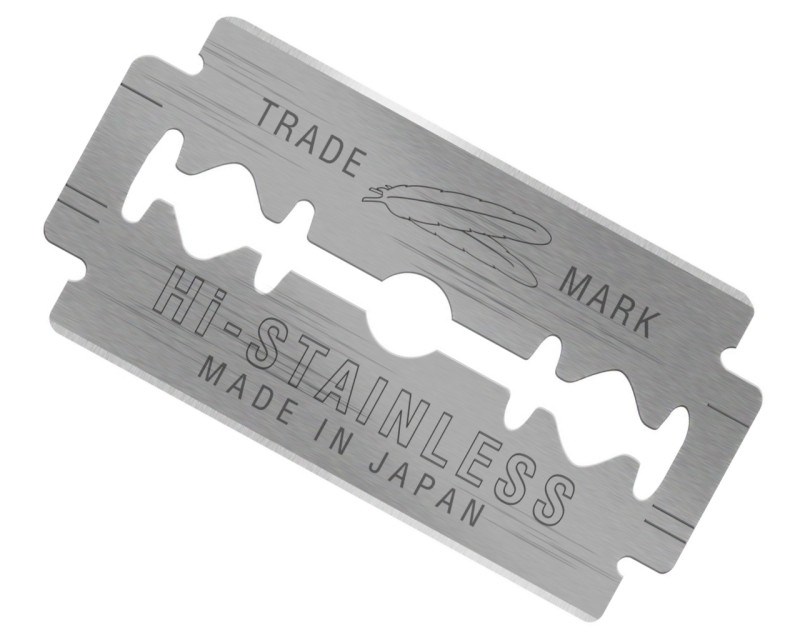
Feather's reputation rests above all on its Hi-Stainless double-edge blades, platinum-coated steel blades that editorial reviewers describe as the benchmark for sharpness; Prim & Prep called them "almost universally regarded as the sharpest" [11]. That sharpness comes with a noted caveat: the blades are thin and less forgiving, with a relatively short usable life, and are generally not recommended for beginners.
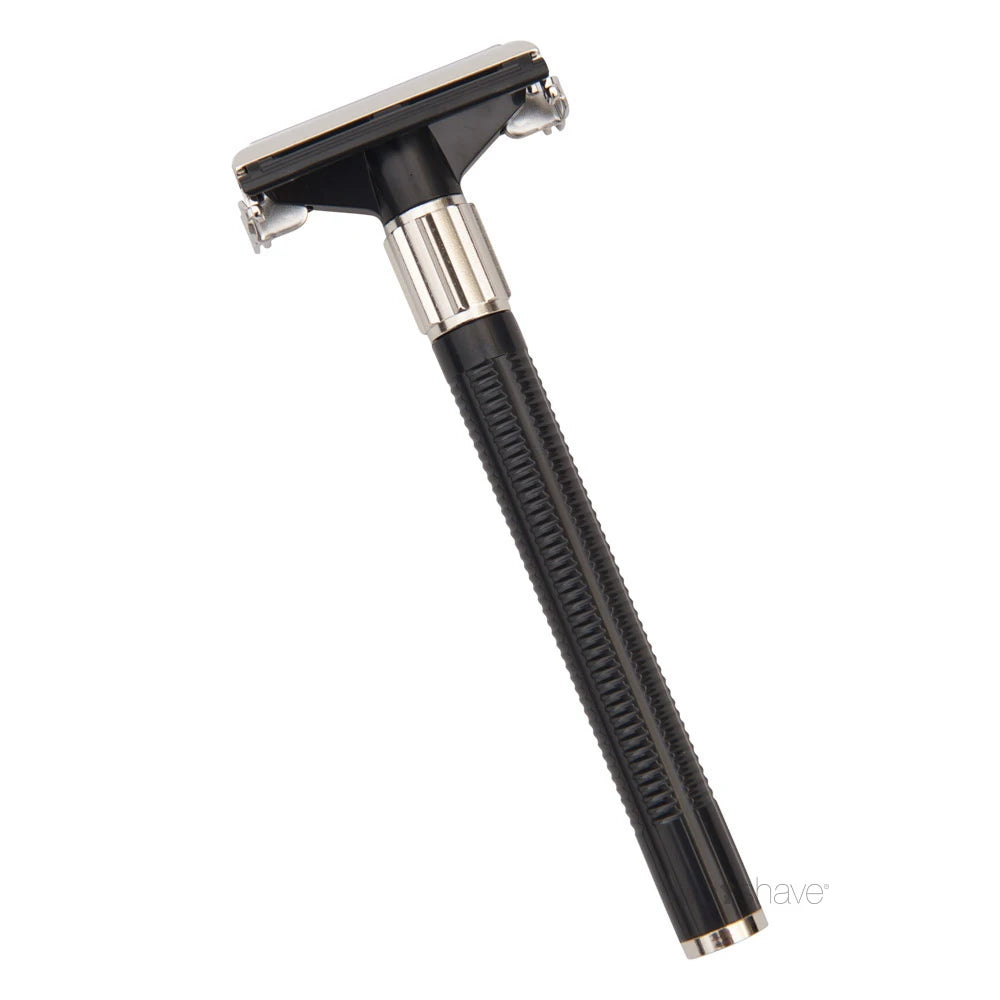
The Artist Club system is the company's other signature line. It pairs a handle shaped like a traditional straight razor with a replaceable single-edge blade, a design Wikipedia describes as a straight-razor form fitted with a disposable blade. According to Sharpologist, the Artist Club achieved near-total domination of the professional barber market [9]. Other products in the range include the AS-D2 all-stainless safety razor, the lightweight twist-to-open Popular DE razor, and the Styling Razor used in hairdressing. Consumer lines extend to trimmers, nail clippers and the "Piany" body-shaving series.
Manufacturing is concentrated at the company's plants in Seki and Mino, both in Gifu Prefecture. Feather holds ISO 9001 certification for its shaving, grooming, barber, beauty and industrial products, and ISO 13485 certification covering its medical products [4].
Recognition
Feather is listed by Wikipedia among the better-known manufacturers of double-edge safety razors, alongside names such as Edwin Jagger, Mühle and Merkur [7]. Within wet-shaving media its standing is more pronounced: Sharpologist has published a dedicated brand history, and the Hi-Stainless blade has a cult-like following among experienced shavers, frequently cited as the sharpest widely available double-edge blade [9]. The distributor Jatai markets the Feather Styling Razor as the "world's number one haircutting razor."
Current status
Feather remains an active, independently operating company more than ninety years after its founding. It continues to manufacture in Seki and Mino and maintains a current news and exhibition presence on its official site. Its centre of gravity has shifted over the decades from the mass home-razor market it once led toward professional, medical and enthusiast segments.
Facts & evidence
Documented facts from Glowpedia's fact base — every row carries a source.
Timeline#
Company established as 'Seki Safety Razor' in Japan↗ feather.co.jp
Renamed FEATHER Safety Razor Co., Ltd.↗ feather.co.jp
Stainless steel double edge razor blades introduced↗ feather.co.jp
Reached 72.7% share of the Japanese home-razor market↗ sharpologist.com
Disposable haircutting blades launched↗ feather.co.jp
Disposable surgical blades introduced↗ feather.co.jp
Disposable scalpels introduced↗ feather.co.jp
Disposable shaving blades for barbers introduced↗ feather.co.jp
Twin-blade system razor 'FII' introduced; disposable microtome blades and autopsy blades launched↗ feather.co.jp
Scissors with interchangeable blades introduced↗ feather.co.jp
FEATHER R&D Center completed; micro scalpel for ophthalmic surgery introduced↗ feather.co.jp
'Styling razor' for haircutting introduced↗ feather.co.jp
Seki Plant expansion completed; Museum established; ISO certifications achieved↗ feather.co.jp
Mino Plant constructed↗ feather.co.jp
Signature products#
The legendary Feather 'New Hi Stainless' razor blade is known far-and-wide in the wet shaving world as one of the 'sharpest' double edge (DE) razor blades for shaving on the market.↗ sharpologist.com
Feather Artist Club shaving products are trusted by professional barbers and experienced shavers around the world, and are designed and manufactured in Japan with a premium replaceable blade shaving system ... near total domination of the professional market.↗ sharpologist.com
Not long ago the Feather AS-D2 All Stainless Steel razor was considered the high end double edge razor.↗ sharpologist.com
Feather Styling Razor being described as 'World's #1 haircutting razor' and 'Made in Japan'↗ jatai.net
The Feather Popular DE razor is a lightweight, plastic (handle) and metal (head) twist-to-open (TTO) razor↗ sharpologist.com
Feather Hi-Stainless Double Edge Blades — Cult-like following among experienced wet shavers; widely cited as the benchmark / 'sharpest' DE blade in the world↗ sharpologist.com
Feather Artist Club system — Achieved 'near total domination of the professional [barber] market' according to Sharpologist↗ sharpologist.com
Proprietary technologies & patents#
“designed and manufactured in Japan with a premium replaceable blade shaving system ... platinum coated and retain their sharpness”
Mentioned in#
Sharpologist — Dedicated brand history feature; Hi-Stainless described as 'one of the sharpest' double-edge blades on the market with a cult-like following among wet shavers.↗ sharpologist.com
Prim & Prep — Editorial review describes Feather as the industry benchmark for sharpness: 'Feather razor blades are almost universally regarded as the sharpest'↗ primandprep.com
Wikipedia (Safety razor) — Listed among 'better known manufacturers' of double-edge safety razors alongside Edwin Jagger, Mühle, Merkur↗ en.wikipedia.org
Where to buy
Where the brand is sold according to Glowjakt's price data, per market.
Prices come from Glowjakt and are updated daily. Glowpedia receives no payment for clicks.
Sources
T1 primary · T2 secondary · T3 note- [1]T1feather.co.jp/en/feather.co.jp (brand site)
- [2]T1feather.co.jp/en/company/history.htmlfeather.co.jp (brand site)
- [4]T2feather.co.jp/en/company/quality.htmlfeather.co.jp (brand site)
- [7]T3en.wikipedia.org/wiki/Safety_razorWikipedia
- [9]T3sharpologist.com/feather-facts-for-feather-fans/sharpologist.com
- [11]T3primandprep.com/feather-razor-blades-review/primandprep.com