Overview
Grès is a French fragrance brand that grew out of one of the twentieth century's most respected Paris couture houses. The fashion house was founded in 1942 by Madame Grès, the couturière born Germaine Émilie Krebs, who was celebrated for her floor-length draped gowns and known as the "master of the wrapped and draped dress" [1]. The couture business eventually closed — its last Paris store shut in 2012 — but the associated perfume house, Parfums Grès, continues independently and is now based in Switzerland.
Today Parfums Grès operates under Lalique Group (formerly Art & Fragrance), having passed through several owners since the founder sold the perfume side in 1982. The brand remains active: its official Instagram account was posting within days of a May 2026 review, though recent activity has centred on marketing, repackaging and distribution rather than new launches.
Origin and founders
The house traces back to Germaine Émilie Krebs (1903–1993), a Paris-born designer who trained as a sculptor before turning to fashion. Through the 1930s she worked under the name Alix, designing at Maison Alix from 1934 until 1940. In 1942, after marrying the Russian painter Serge Czerefkov, she relaunched her own house under the name Grès — a partial anagram of her husband's first name [4]. He left the business shortly after it was created.
Krebs became one of the defining couturiers of her era. Working directly on live models, she was famous for the classical, draped Grecian gowns that earned her the nickname "queen of drapery." Her clientele included the Duchess of Windsor, Marlene Dietrich, Greta Garbo and Jacqueline Kennedy. For years she resisted ready-to-wear, reportedly dismissing the format as a "prostitution," and did not launch ready-to-wear collections until 1980.
During the German occupation of France, Krebs — who was Jewish — defied orders to produce plain wartime clothing and instead made garments in the colours of the French flag. The authorities closed her couture house, citing her lavish use of fabric, and she fled to the Pyrenees until Paris was liberated [4].
History and milestones
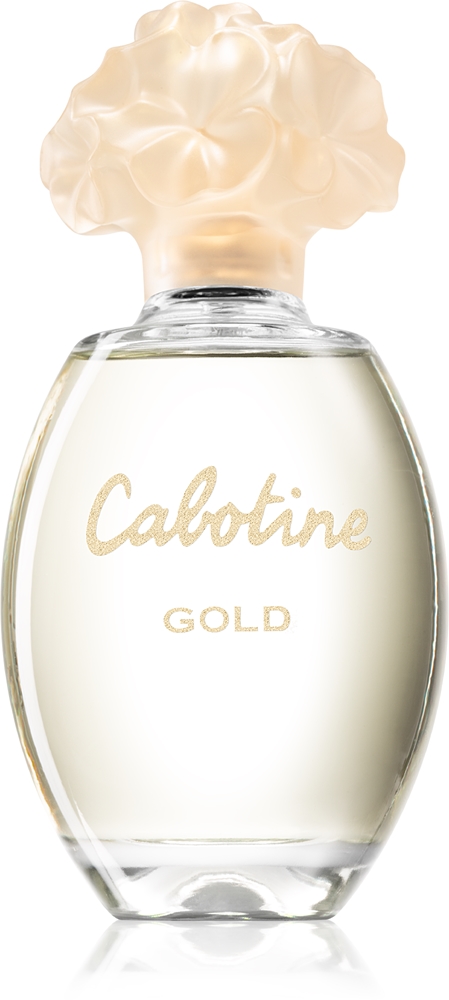
The brand's best-known product, the fragrance Cabochard, appeared at the end of the 1950s, created by perfumer Bernard Chant. Its launch year is recorded slightly differently across sources: Fragrantica's product page and Wikipedia give 1959, while Fragrantica's designer page describes it as created in 1958 and launched the following year [9][8]. The name, chosen by Krebs herself, means "stubborn" or "headstrong" in French. A second signature scent, Cabotine, followed in 1990, composed by Jean-Claude Delville of IFF and conceived as a lighter "daughter" of Cabochard. Later releases included Folie Douce (1997), Cabaret (2003) and Caline (2005).
Krebs was widely honoured during her career. She was made a Chevalier of the Legion of Honour in 1947, served as president of the Chambre Syndicale de la Couture Parisienne from 1972, and received Cartier's Dé d'Or (Golden Thimble) in 1976. She retired in the late 1980s and died in southern France in 1993, a death not publicly disclosed until December 1994 [6]. In 1994 the Metropolitan Museum of Art mounted a retrospective of her work.
Ownership
To protect the couture house financially, Krebs sold the perfume business in 1982 [8]. The couture house itself changed hands repeatedly thereafter: it was bought by Bernard Tapie in 1984 and, following bankruptcy, acquired by the Japanese company Yagi Tsusho, which appointed Lloyd Klein as head designer [4]. Sources differ on the timing of that Japanese acquisition — the dedicated article on the founder records it as 1993, while the article on the house places the sale to Yagi Tsusho in the 1980s [4][3].
The perfume line followed a separate path. Parfums Grès passed through several owners before being bought by the Swiss businessman Silvio Denz in 2001 [8]. In 2008 it was folded into Denz's company Art & Fragrance, later renamed Lalique Group [8]. Lalique Group operates as a portfolio holding whose brands each maintain their own consumer-facing presence; alongside Grès it lists fragrance names such as Lalique, Jaguar, Bentley and Mikimoto [7].
Philosophy and positioning
Parfums Grès presents itself as a heritage house rooted in the couture legacy of Madame Grès and her tradition of classical, draped elegance. On its official Instagram the brand describes itself with the line "Parisian chic made global" [11]. Editorial coverage positions it as a prestige French fragrance label aimed at enthusiasts drawn to classic French perfumery, with Cabochard treated as its leather classic.
Current status
Parfums Grès is active. The brand is owned by Lalique Group, whose shares were delisted from the SIX Swiss Exchange in September 2024 [7]. Its products are distributed internationally through perfumeries and online retailers, including a brand page at the French retailer Nocibé. A 2026 review found the official Instagram account posting within days of verification, indicating ongoing marketing activity; the most recent documented new releases on record, however, date to 2019, suggesting that recent activity has been driven by social marketing and distribution rather than new product launches.
Facts & evidence
Documented facts from Glowpedia's fact base — every row carries a source.
Timeline#
Madame Grès opens La Maison Alix, her first couture house in Paris↗ en.wikipedia.org
Couture house relaunched under the name Grès in Paris↗ en.wikipedia.org
Second couture house opened in Paris after WWII closure of the first house↗ en.wikipedia.org
Cabochard launched — signature fragrance, by perfumer Bernard Chant↗ fragrantica.com
Accessory line introduced; Madame Grès awarded Dé d'Or / Golden Thimble by Cartier↗ encyclopedia.com
First ready-to-wear collections launched↗ en.wikipedia.org
Madame Grès sold the perfume business (Parfums Grès) to preserve the couture house↗ fragrantica.com
Couture house purchased by Bernard Tapie↗ en.wikipedia.org
Madame Grès retires from design↗ encyclopedia.com
Cabotine fragrance launched by perfumer Jean Claude Delville (IFF)↗ fragrantica.com
Madame Grès dies in southern France (not publicly disclosed until December 1994)↗ encyclopedia.com
Couture house acquired by Yagi Tsusho Limited (Japanese company) after bankruptcy; Lloyd Klein appointed head designer↗ en.wikipedia.org
Parfums Grès acquired by Silvio Denz↗ fragrantica.com
Parfums Grès folded into Art & Fragrance (renamed Lalique Group)↗ fragrantica.com
Awards#
Chevalier of the Legion of Honour — French national award (to founder Madame Grès)↗ en.wikipedia.org
President of Chambre Syndicale Paris Couture — Industry leadership (founder Madame Grès)↗ en.wikipedia.org
Dé d'Or (Golden Thimble) by Cartier — Couture (founder Madame Grès)↗ en.wikipedia.org
NYU Creative Leadership Award — Lifetime / creative leadership (founder Madame Grès)↗ en.wikipedia.org
Metropolitan Museum of Art retrospective exhibition — Museum retrospective (couture work of Madame Grès)↗ encyclopedia.com
Signature products#
Cabochard by Grès is a Leather fragrance for women that was launched in 1959. The nose behind this fragrance is Bernard Chant. The name, chosen by Madame Grès herself, means 'stubborn' or 'headstrong' in French.↗ fragrantica.com
Cabotine by Grès is a Floral fragrance for women that was launched in 1990. The nose behind this fragrance is Jean Claude Delville. In the creator's imagination, Cabotine is a daughter of Cabochard, a younger generation perfume which has preserved the elegance and distinction of Cabochard.↗ fragrantica.com
Folie Douce (1997)↗ en.wikipedia.org
Cabaret (2003)↗ en.wikipedia.org
Caline (2005)↗ en.wikipedia.org
Cabochard — Signature heritage fragrance from 1959; described as a leather classic that 'won the hearts of refined perfume enthusiasts'↗ fragrantica.com
Mentioned in#
LIFE magazine — Cited as reference in Wikipedia entry on Grès couture house↗ en.wikipedia.org
Vogue — Cited as reference in Wikipedia entry on Grès couture house↗ en.wikipedia.org
The New York Times — Cited as reference in Wikipedia entry on Grès couture house↗ en.wikipedia.org
Where to buy
Where the brand is sold according to Glowjakt's price data, per market.
Prices come from Glowjakt and are updated daily. Glowpedia receives no payment for clicks.
Ingredients across the range
Key ingredients across Grès's range, from the ingredient lists of 7 of 18 products in Sweden.
Share of products with a known ingredient list. “None identified” means nothing matched our ingredient groups, not that the product is free of them.
Sources
T1 primary · T2 secondary · T3 note- [1]T1grescollections.comgrescollections.com (brand site)
- [3]T3en.wikipedia.org/wiki/Gr%C3%A8sWikipedia
- [4]T3en.wikipedia.org/wiki/Madame_Gr%C3%A8sWikipedia
- [6]T3encyclopedia.com/fashion/news-wires-white-papers-and-books/gres-madameencyclopedia.com
- [7]T3en.wikipedia.org/wiki/Silvio_DenzWikipedia
- [8]T3fragrantica.com/designers/Gres.htmlfragrantica.com
- [9]T3fragrantica.com/perfume/Gres/Cabochard-1060.htmlfragrantica.com
- [11]T1instagram.com/parfumsgres/instagram.com (brand site)