Overview
Helia-D is a Hungarian cosmetics brand whose products are built around sunflower-derived actives and ingredients drawn from the Tokaj wine region. It originated with a home-made face cream developed in the late 1970s and was industrialised by the Biogal Pharmaceutical Factory in Debrecen, a connection preserved in its name: "Helia" comes from the sunflower's Latin name Helianthus annuus, and "D" stands for Debrecen. The company describes itself as combining "traditional wisdom with modern science," and its own surveys position it as the cosmetics brand that comes first to mind for many Hungarian women.
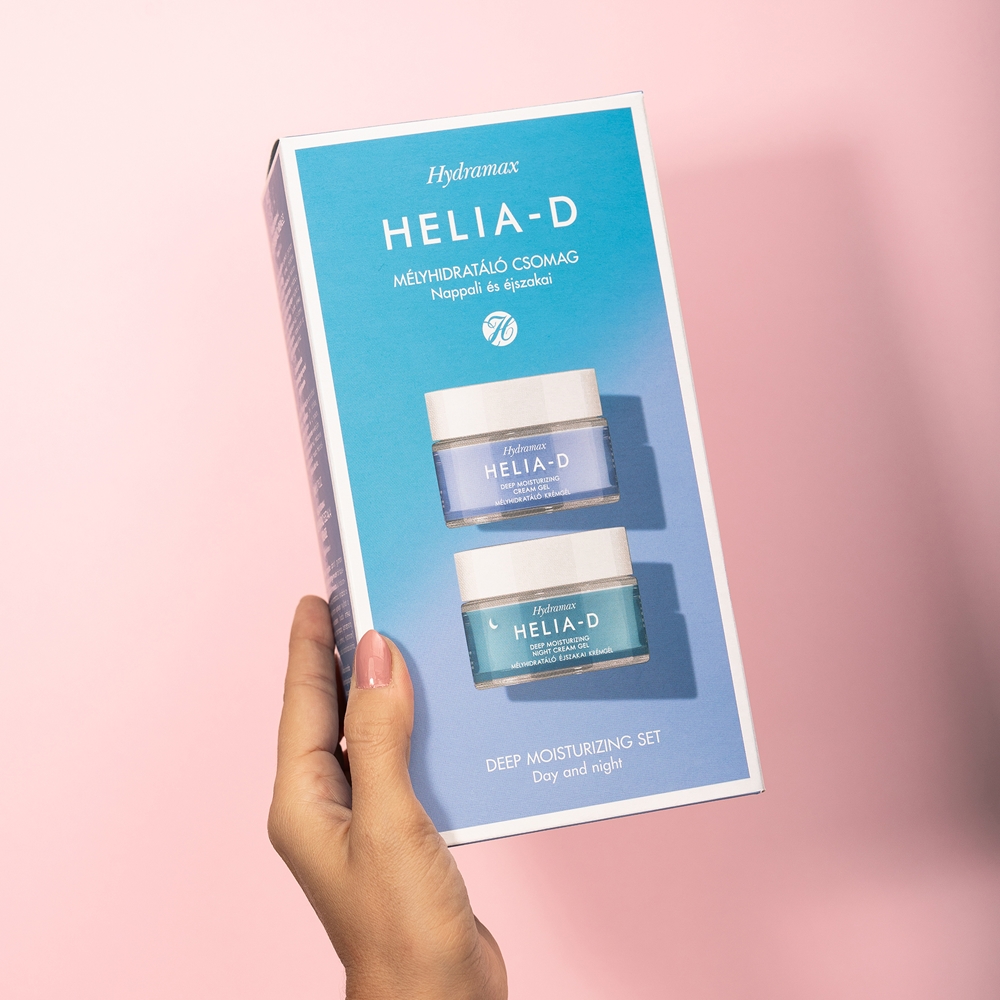
The brand remains active. It launched its Hydramax line in 2023 and 2024, won two reader-voted Krémmánia awards in 2024, and continues to maintain editorial coverage and brand-ambassador deals; its most recent dated activity is from April 2024 [6]. Today it is owned by the independent Hungarian company Helia-D Kereskedelmi Kft., which acquired the brand in 2004.
Origin & founders
The story begins with Nedeczky Jenőné, born Margit Gardi, who made face creams from sunflower stem extract at her home on Csepel Island, in the town of Szigethalom. According to Hungarian Wikipedia she filed a patent in 1978 titled "Body care ointment and method for its manufacture," and word of her "miracle creams" spread through local press and television [8]. The Origo news feature recounts that long queues formed outside her home for the creams.
In 1981 the General Innovation Financial Institute, INNOFINANCE, approached the Biogal Pharmaceutical Factory in Debrecen to industrialise the formula; a development team led by the biologist János Kristóf reportedly took the product from concept to market within a year. Helia-D face cream launched in December 1982, on the pre-Christmas shopping day known in Hungary as Silver Sunday. By Wikipedia's account, 22,000 jars sold on the first day in Budapest with no advertising [8]. The brand's inventor, Nedeczky Jenőné, died in November 1982, shortly before the launch.
There is some divergence over the founding date. This article follows the December 1982 launch recorded by Hungarian Wikipedia, supported by the 1978 patent and the 1981 INNOFINANCE deal [8]. The company's own site instead frames the brand around a round "40-year history," which read against its 2022–2024 anniversary marketing would imply a start closer to 1984 [2]. The specific 1982 date is used here as the founding year.
The brand's origins are similarly described in more than one place. The company's account centres on Szigethalom, the inventor's home town, while Wikipedia distinguishes the inventor's home from the site of industrial production, the Biogal factory in Debrecen; the Origo feature refers to nearby Szigetszentmiklós. The accounts describe different stages of the same story rather than contradicting one another.
History & milestones
Through the 1980s the range expanded quickly, from the original three face-cream formulations for dry, normal and oily skin to body lotions, eye and lip creams, propolis products and more; by 1987 it comprised eighteen product-family members. The brand also pushed abroad early, setting up a foreign-trade arm, Helia International, in 1986 and reaching markets including the United States, Switzerland, France and Malaysia by 1987. A 1988 launch in Moscow is reported to have sold 50,000 units within hours.
A notable boost to the brand's American profile came from the Hungarian-born Hollywood actress Zsa Zsa Gábor, who said in a 1980s television interview that she owed her youthful skin to Helia-D, lifting interest in the US market [10].
The brand changed hands several times. Following the Biogal era, it passed through corporate ownership: Caola acquired it in 1996, with Unilever handling distribution and marketing. In 2004 an investment consortium led by Péter Budaházy bought the brand back from Unilever, returning it to Hungarian ownership for what he described as "a few hundred million forints" [9]. Budaházy has said the company held "nine different patents altogether" from the earlier era. Under the new owner the portfolio grew further, with the acquisition of the Fabulon brand in 2012.
Ownership
Helia-D is owned by Helia-D Kereskedelmi Kft., an independent Hungarian company established in 2004 and led by Péter Budaházy, who acquired the brand from Unilever that year. Beyond the core Helia-D range, the company operates a Helia-D Professional line and, per Hungarian Wikipedia, manages several other brands including Fabulon (acquired 2012), Zelka, Officina, Geek & Gorgeous and Aden [8].
Philosophy & positioning
The company frames its approach as "the marriage of tradition and innovation," pairing Hungarian botanical heritage — particularly Tokaj wine-region ingredients and sunflower-derived actives — with modern dermatological science. It says it creates "clean, natural formulas, avoiding parabens, artificial colorants and mineral oil," and uses the tagline "Skincare what you deserve."
In positioning, Helia-D is an accessible domestic brand rather than a prestige one. It is sold through direct e-commerce, the dm drugstore chain and professional salons, and Budaházy has framed its designs as well suited to the Hungarian market. The brand's audience is described in its own survey as Hungarian women across age groups with loyalty to domestic heritage cosmetics; the company reports being the cosmetics brand most Hungarian women name first, and the fourth most-bought brand on the market [16]. In its choice of ambassadors the company has leaned on older faces, signing the model Ágnes Pataki in 2019 at the age of 70 — a decision Budaházy compared to L'Oréal's use of Jane Fonda and Helen Mirren [9] — and later the Olympic swimmer Zsuzsanna Jakabos for the Hydramax line in 2023.
Products & innovation
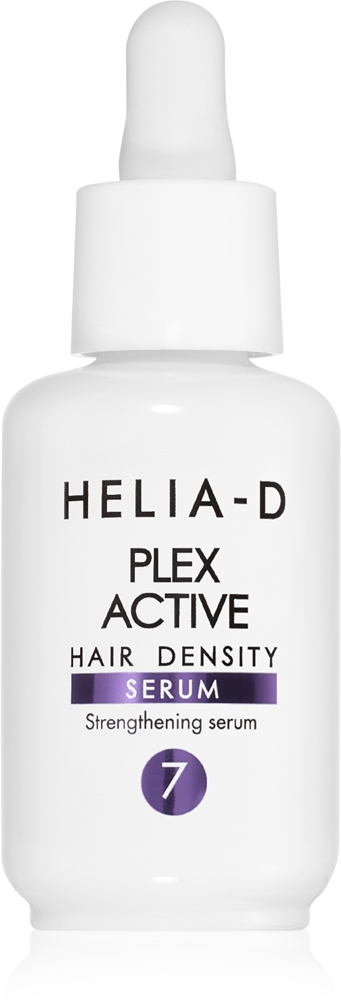
Helia-D's products centre on a set of recurring actives: hyaluronic acid, bakuchiol, vitamin C, retinol, plant stem cells and Tokaj aszú essence, a grape-derived ingredient from the Tokaj wine region. Signature ranges include Botanic Concept, a vegan line built around Tokaj aszú essence, and Cell Concept, which uses plant stem-cell technology. The Botanic Concept Tokaji Aszú hydrating cream has been described across several Hungarian beauty editorials as the most popular moisturising cream in the country. Among the newest products, the Hydramax line produced two 2024 award winners, a vitamin-C-and-hyaluronic serum and an SPF 50+ facial sun protection. The company also markets a Plex Active haircare line.
The brand presents several named technologies and proprietary actives, among them stem-cell complexes, Vin-upLift and a Hydra Complex, alongside trademarked or branded ingredients such as Gladback (an extract of the Poria cocos mushroom), Homeostatine and Vitasource. On formulation, Budaházy has said that active ingredients "typically only make up between 0.1 and 2%" of a cosmetic, adding that one of them, Copper Tripeptide-1, "is more expensive than gold" [9].
On ethics, the company states that neither its finished products nor their ingredients have ever been tested on animals [3]. It does not appear to hold a formal third-party cruelty-free or vegan certification; the vegan claim is specific to the Botanic Concept line rather than the whole brand. Manufacturing is in Hungary, in Veszprém.
Recognition
The brand accumulated international awards in the 1980s, including an Asia Prize in Singapore and a Eurostar prize in The Hague in 1985, and in 1986 a Worldstat packaging-design award in New Delhi together with Grand Prizes at the Leipzig and Budapest international fairs. More recently it received Superbrands recognition in 2005 and a Magyarbrands consumer-brand award in 2021. In 2024 two of its Hydramax products won reader-voted Krémmánia Favorite Awards, for "serum innovation of the year" and "sunscreen innovation of the year" [12].
The brand has also drawn press attention. The Budapest Business Journal profiled Budaházy in 2022 under the headline "Rejuvenating the Crème de la Crème of Hungarian Cosmetics," and Origo published a feature the same year on the brand's history and its reach from Hungary to Hollywood.
Current status
Helia-D is an active brand. It maintains live official websites and ongoing distribution, and its activity through 2023 and 2024 — new Hydramax products, a brand ambassador, award wins and participation in the Cosmoprof trade fair in Bologna — confirms continued operation, with the most recent dated news from April 2024 [6]. Hungary is its primary market; the company has also reported international sales in markets including Russia, the United States, Taiwan, Azerbaijan and Albania [9]. Within the Nordic region it is carried in Finland.
Facts & evidence
Documented facts from Glowpedia's fact base — every row carries a source.
Timeline#
Nedeczky Jenőné files patent for 'Body care ointment and method for its manufacture' using sunflower stem extract↗ hu.wikipedia.org
INNOFINANCE (General Innovation Financial Institute) approaches Biogal Pharmaceutical Factory to industrialize the cream↗ hu.wikipedia.org
Helia-D face cream launches December 1982 in Budapest on Silver Sunday — 22,000 jars sold first day with no advertising↗ hu.wikipedia.org
Wins four Budapest International Fair (BNV) Grand Prizes (eye cream, lip cream, makeup remover, very dry skin cream); Worldstat Award New Delhi; Leipzig Grand Prize; establishes Helia International for exports↗ hu.wikipedia.org
Moscow launch sells 50,000 units in hours↗ hu.wikipedia.org
Brand acquired by Caola (Unilever handling distribution/marketing) for ~200 million HUF revenue base↗ hu.wikipedia.org
Péter Budaházy consortium acquires brand from Unilever for 'a few hundred million forints'↗ bbj.hu
Acquired by Péter Budaházy investment consortium from Unilever, returning to Hungarian ownership↗ bbj.hu
Receives Superbrands recognition↗ hu.wikipedia.org
Helia-D Kft. acquires Fabulon brand, expanding portfolio↗ hu.wikipedia.org
Awarded Magyarbrands consumer brand award↗ hu.wikipedia.org
Olympic swimmer Zsuzsanna Jakabos signed as brand ambassador for Hydramax line↗ helia-d.com
Wins two Krémmánia Favorite Awards (Hydramax serum + Hydramax SPF 50+); participates Cosmoprof Bologna↗ helia-d.com
Awards#
Asia Prize — Cosmetics innovation (Singapore)↗ hu.wikipedia.org
Eurostar — Cosmetics (The Hague)↗ hu.wikipedia.org
Worldstat Award — Packaging design (New Delhi)↗ hu.wikipedia.org
Budapest International Fair Grand Prize — Four products: eye cream, lip cream, cleanser, extra-dry cream↗ hu.wikipedia.org
Leipzig International Fair Grand Prize↗ hu.wikipedia.org
Superbrands recognition↗ hu.wikipedia.org
Magyarbrands consumer brand award↗ hu.wikipedia.org
Krémmánia Favorite Award — Serum innovation of the year — Hydramax C-vitamin & Hialuron Duo↗ helia-d.com
Krémmánia Favorite Award — Sunscreen innovation of the year — Hydramax SPF 50+↗ helia-d.com
Signature products#
Helia-D Botanic Concept is one of their Vegan and unique product ranges enriched with Tokaj aszú essence↗ helia-d.com
Cell Concept - Stem cell technology↗ helia-d.com
Helia-D Hydramax C-vitamin & Hialuron Duo 30 ml — Krémmánia 'serum innovation of the year' 2024↗ helia-d.com
Helia-D Hydramax SPF 50+ Facial Sun Protection 40 ml — Krémmánia 'sunscreen innovation of the year' 2024↗ helia-d.com
Plex Active - Haircare line↗ helia-d.com
Botanic Concept Tokaji Aszú Hydrating Cream — Described as 'most popular moisturizing cream in Hungary' across multiple Hungarian beauty editorials (Topsmink, VoilaMode, Retikül)↗ topsmink.hu
Key ingredients#
Proprietary technologies & patents#
“Three named technologies: Stem Cells, Vin-upLift, Hydra Complex; plus proprietary actives Gladback™, Homeostatine, Vitasource”
“Patent filed 1978 — 'Body care ointment and method for its manufacture'; Budaházy: 'These were good quality products, using plant-based ingredients, and had, I think, nine different patents altogether'”
Mentioned in#
Budapest Business Journal — Feature interview with Péter Budaházy: 'Rejuvenating the Crème de la Crème of Hungarian Cosmetics'↗ bbj.hu
Origo.hu — 'The fairy-tale story of Helia-D: how the miracle product from Szigetszentmiklós reached Hollywood'↗ origo.hu
HVG — Business profile of Helia-D cosmetics company (note: 403 on direct fetch but indexed in search results)↗ hvg.hu
Retikül.hu — Editorial product test of Botanic Concept with Tokaji aszú and bakuchiol — '40 éve a nők szépségét szolgálja a Helia-D'↗ retikul.hu
Certification pass
What each certification and self-stated claim rests on: the source, whose website it's on, and what needs review.
“Helia-D final products nor its ingredients have ever been tested on animals!”↗ helia-d.com
“avoiding parabens, artificial colorants and mineral oil”↗ helia-d.com
“We are combining traditional wisdom with modern science and creating clean, natural formulas, avoiding parabens, artificial colorants and mineral oil.”↗ helia-d.com
“Helia-D Botanic Concept is one of their Vegan and unique product ranges (range-specific, not full brand)”↗ helia-d.com
“Manufactured in Veszprém, Hungary (EU member state)”↗ bbj.hu
None of these statements has been checked against the certifying bodies' registers. The statements were observed on 29 May 2026.
Where to buy
Where the brand is sold according to Glowjakt's price data, per market.
Prices come from Glowjakt and are updated daily. Glowpedia receives no payment for clicks.
Ingredients across the range
Key ingredients across Helia-D's range, from the ingredient lists of 73 of 73 products in Sweden.
Share of products with a known ingredient list. “None identified” means nothing matched our ingredient groups, not that the product is free of them.
Sources
T1 primary · T2 secondary · T3 note- [2]T1helia-d.com/our-company/helia-d.com (brand site)
- [3]T2helia-d.com/cruelty-free/helia-d.com (brand site)
- [6]T2helia-d.com/news/helia-d.com (brand site)
- [8]T3hu.wikipedia.org/wiki/Helia-DWikipedia
- [9]T3bbj.hu/business/people/interview/rejuvenating-the-creme-de-la-creme-of-hungarian-cosmetics/bbj.hu
- [10]T3origo.hu/gazdasag/2022/04/a-helia-d-torteneteorigo.hu
- [12]T3helia-d.com/kremmania-favorite-award-won-by-two-helia-d-products/helia-d.com
- [16]T3helia-d.com/helia-d-is-hungarys-number-one-cosmetics-brand/helia-d.com