

Overview
Kneipp is a German wellness and body-care company based in Würzburg, built on the naturopathy of the nineteenth-century Bavarian priest Sebastian Kneipp. It dates the birth of the brand to 1891, when Kneipp granted a Würzburg pharmacist the exclusive rights to make and sell remedies under his name [1]. Its range centres on bath salts and crystals, bath oils, lotions and shower products, drawing on water and selected medicinal plants in the tradition of its namesake.
The company is no longer independent. Since 2008 it has been wholly owned by the German healthcare group Paul Hartmann AG, having first sold a majority stake in 2001 [5]. It continues to trade actively as the Kneipp Group, with around 650 employees and distribution across Europe and the United States.
Origin and founders
The brand takes its name and its philosophy from Sebastian Kneipp, born on 17 May 1821 in Stephansried, Bavaria. He trained for the priesthood and studied philosophy and theology rather than medicine. According to the company, he contracted tuberculosis as a young man and treated himself with cold-water baths in the Danube from 1849, recovering and soon treating others; the version recorded by Wikipedia places his recovery through water treatments during his seminary years [2]. He became known as the "water doctor," and the Bavarian town of Bad Wörishofen grew into a renowned spa around his cure. His books Meine Wasserkur (1886) and So sollt ihr leben (1889–1890) spread his method and set out his health system.
His reputation reached well beyond Germany. In 1894 he was appointed a papal chamberlain and travelled to Rome, where, the company recounts, he treated Pope Leo XIII's sciatica with cold washes and a change of diet [1]; Wikipedia lists Archduke Franz Ferdinand among those associated with his cure. The treatments were not without critics — a contemporary 1893 account quoted by Wikipedia described methods such as ice-cold baths and walking barefoot in snow as "dangerous in most cases" [2]. Kneipp died on 17 June 1897. The same year, 1891, also marks the founding of the Kneipp Bund, a separate membership association that still promotes water healing [2].
The commercial brand began in 1891, when Kneipp gave the Würzburg pharmacist Leonhard Oberhäußer the sole right to develop, produce and market pharmaceutical and cosmetic products and dietetic foods "with the name and image of Father Sebastian Kneipp" — what the company calls "the birth of the Kneipp brand" [1]. The first product to leave the resulting "Kneipp-Mittel-Zentrale" was a remedy for constipation. The commercial enterprise and the Kneipp Bund share the founding year but are distinct.
Philosophy and positioning
Kneipp's approach rests on Sebastian Kneipp's five-pillar health concept, set out in So sollt ihr leben: water, plants and medicinal herbs, movement, nutrition, and balance, or an ordered way of life. Wikipedia frames the same five elements as hydrotherapy, phytotherapy, exercise, nutrition and a balanced "order of life" [2]. The system is one of preventive naturopathy and closeness to nature, and the company describes it as dominated by the power of water and selected medicinal plants. The natural-cosmetics retailer Ecco Verde positions Kneipp as combining nature and science, developing its products with a team of researchers and natural scientists in an effort to reconcile effectiveness with skin tolerance [3]. The brand is associated with natural-wellness and "slow beauty" themes that trace back to its nineteenth-century naturopathy heritage.
Products
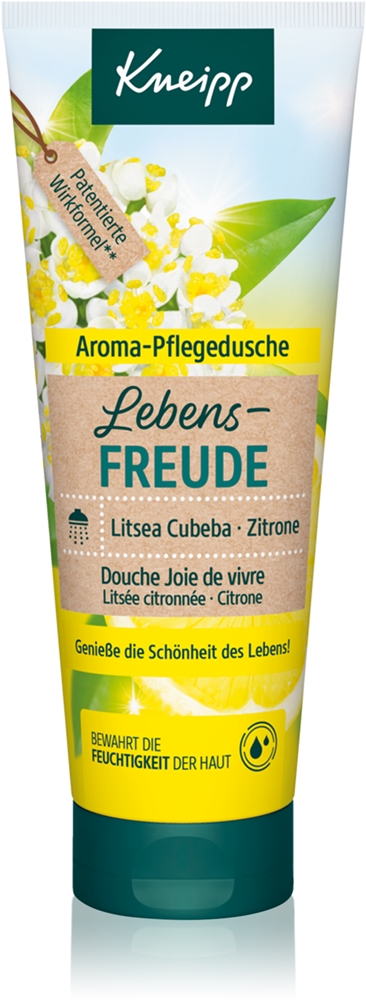
The beauty-relevant range covers herbal bath essentials, body oils, lotions, shower foams and related body care, with bath salts and crystals as the signature, heritage product. According to the company, its mineral-enriched bath salts and crystals are intended to relax the muscles and soothe the mind [7]. The formulas draw on water, medicinal plants and herbs, essential oils and minerals. Beyond its body-care line, the company is registered as a maker of medicines, health products, food and nutrition supplements developed according to Sebastian Kneipp's teachings, and it grants trademark licences for use of the name [4]. Products are made for the most part in Germany [6].
Ownership
Kneipp is part of the HARTMANN GROUP. The healthcare manufacturer Paul Hartmann AG, based in Heidenheim, acquired 80 percent of Kneipp in 2001 and took over the remaining shares in 2008 to become sole owner [5]. The business has operated under names including Kneipp-Werke and Kneipp-Werke Kneipp-Mittel-Zentrale GmbH & Co. KG, and is registered as Kneipp GmbH in Würzburg [4]. Within the group it sits alongside Paul Hartmann's medical and consumer-care operations.
Current status
Kneipp's status is that of an acquired brand: independent in origin but, since 2008, a wholly owned part of Paul Hartmann AG. Commercially it remains active. The brand operates an international business as the Kneipp Group, employing roughly 650 people worldwide and selling across multiple markets, including the United States [5].
Facts & evidence
Documented facts from Glowpedia's fact base — every row carries a source.
Timeline#
Sebastian Kneipp publishes 'Meine Wasserkur', the book that spread his hydrotherapy method (includes a chapter on herbal medicine).↗ kneipp.com
Sebastian Kneipp publishes 'So sollt ihr leben' (1889/1890), describing the holistic five-pillar (5-Säulen) health concept.↗ kneipp.com
Birth of the Kneipp brand ('die Geburtsstunde der Marke Kneipp'): Sebastian Kneipp grants Würzburg pharmacist Leonhard Oberhäußer the exclusive rights to make and market 'Kneippsche Heilmittel und Spezialitäten' under his name and image; first product from the 'Kneipp-Mittel-Zentrale'.↗ kneipp.com
Sebastian Kneipp appointed papal Geheimkämmerer/Monsignore and travels to Rome, treating Pope Leo XIII's sciatica with cold washes and a dietary regimen.↗ kneipp.com
Paul Hartmann AG (Heidenheim) acquires 80% of Kneipp shares.↗ hartmann.info
Paul Hartmann AG takes over the remaining shares, becoming 100% owner of Kneipp.↗ hartmann.info
Acquired by Paul Hartmann AG (HARTMANN GROUP) — 100% ownership (80% in 2001, remaining 20% in 2008).↗ hartmann.info
Signature products#
Bath salts and crystals offer a mineral-enriched bath to relax muscles and soothe the mind, providing deep relaxation and helping to revitalize skin.↗ kneipp.com
Key ingredients#
Certification pass
What each certification and self-stated claim rests on: the source, whose website it's on, and what needs review.
“All offerings are cruelty-free, and the manufacturer refrains from conducting tests on animals, ensuring the ethical production of their products.”↗ soin-et-nature.com
“Produced for the most part in Germany, Kneipp products comply with strict standards to guarantee their effectiveness and safety.”↗ soin-et-nature.com
“Kneipp offers vegan-friendly bath salts designed to promote better sleep, reduce stress, and nourish skin.”↗ ebay.com
ethics_and_sustainability.value_claims (vegan, cruelty_free — retailer-sourced, not brand-site-verified)
Additional reservations in the source data: ethics_and_sustainability.value_claims (vegan, cruelty_free — retailer-sourced, not brand-site-verified)
None of these statements has been checked against the certifying bodies' registers. The statements were observed on 20 Jun 2026.
Where to buy
Where the brand is sold according to Glowjakt's price data, per market.
Prices come from Glowjakt and are updated daily. Glowpedia receives no payment for clicks.
Ingredients across the range
Key ingredients across Kneipp's range, from the ingredient lists of 119 of 123 products in Sweden.
Share of products with a known ingredient list. “None identified” means nothing matched our ingredient groups, not that the product is free of them.
Related brands

Sources
T1 primary · T2 secondary · T3 note- [1]T1kneipp.com/de_de/kneipp-wissen/sebastian-kneipp/kneipp.com (brand site)
- [2]T3en.wikipedia.org/wiki/Sebastian_KneippWikipedia
- [3]T3ecco-verde.com/kneippecco-verde.com
- [4]T4northdata.com/Kneipp%20GmbH,%20W%C3%BCrzburg/HRB%2012254northdata.com
- [5]T4hartmann.info/en-gb/articles/4/e/ascendancy-1945-until-presenthartmann.info
- [6]T4soin-et-nature.com/en/39_kneippsoin-et-nature.com
- [7]T2kneipp.com/us_en/products/body-care/kneipp.com (brand site)