Overview
Philips is a Dutch multinational health-technology company founded in Eindhoven in 1891 [7]. Once one of the world's best-known consumer-electronics makers, it now describes itself as a focused leader in health technology, and the part of its business relevant to beauty sits inside its Personal Health division: electric shavers, grooming trimmers, the OneBlade, Lumea IPL hair-removal devices, Sonicare electric toothbrushes and female hair care. The company remains active and global; in 2024 it reported revenue of €18.02 billion and about 68,400 employees [7].
The brand's founding city, Eindhoven, is still its Benelux base, but Philips moved its global headquarters to Amsterdam in 1997. It received its royal honorary title in 1998, and its full legal name is Koninklijke Philips N.V. — "Royal Philips."
Origin and founders
Philips was started in 1891 by Gerard Philips and his father, Frederik, who set up a factory in Eindhoven to make cost-effective, reliable incandescent light bulbs [3]. Light was the whole of the business at first, and it grew quickly: by the early 1900s the company had become the largest private employer in the Netherlands, with more than 2,000 employees.
History and milestones
The company's move beyond lighting began in 1914, when it opened its NatLab research laboratory; work on X-ray tubes there marked its first step into health technology [3]. Its entry into personal care came in 1939 with the Philishave, a rotary electric shaver that became a long-running success — Philips has said the Philishave sold at an average of 700 units an hour, every day [3].
Through the mid-twentieth century the company built much of its reputation on consumer electronics. It introduced the compact cassette in the 1960s, launched an early video cassette recorder in 1971, and co-developed the Compact Disc in the 1980s. In 2013 it dropped "Electronics" from its name, becoming Royal Philips N.V., reflecting a decisive shift toward health technology [7].
Ownership
Royal Philips N.V. is a publicly listed company and the top-level parent of the group; the earlier name Royal Philips Electronics N.V. was retired in 2013. In 2021 Philips sold its Domestic Appliances arm — kitchen and home appliances — to Hillhouse Capital for $4.4 billion. That business was renamed Versuni and continues to sell small appliances under the Philips name under licence [7]. The Personal Health segment, which covers shavers, grooming, Lumea and Sonicare, was not part of that sale and stayed with Royal Philips.
Philosophy and positioning
Philips frames its work around health and well-being. According to the company, its purpose is "to improve people's health and well-being through meaningful innovation," and it has set a target of improving 2.5 billion lives a year by 2030, including 400 million in underserved communities. Within its consumer range, the personal-care products are positioned around gentleness and skin comfort.
Products and innovation
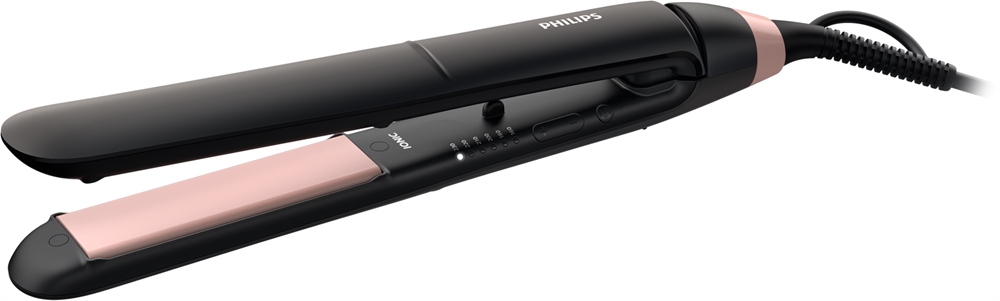
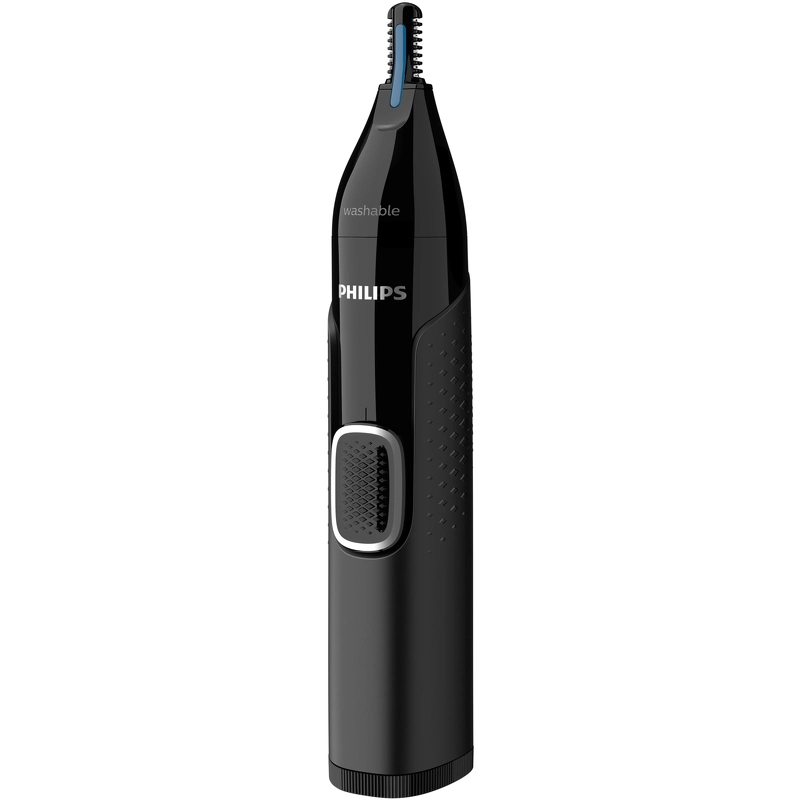
For beauty and grooming, the company's current line-up centres on its shaver ranges, led by the i9000 Prestige Ultra series, alongside the OneBlade trimmer-shaver, beard, hair and body trimmers, the Lumea IPL hair-removal devices and Sonicare electric toothbrushes. Several of these carry proprietary technologies: the patent-protected Lift&Cut system, which lifts hairs before cutting, and the SkinIQ and app-based SkinAI features used in the higher shaver and Lumea models.
Research and development is central to how Philips presents itself. The company says it invested about 9% of sales in R&D in 2024, with roughly half of that directed at software and data science, and it reports holding 50,500 patent rights across the group [4]. Philips describes an innovation approach that starts from the patient or consumer, works with clinicians, and prioritises ideas that can reach large numbers of people.
Recognition
Philips has been named a Clarivate Top 100 Global Innovator for 13 consecutive years [4]. In beauty specifically, the US edition of Who What Wear named the Philips Lumea 9900 Series "Best Overall" among at-home IPL hair-removal devices in 2025; the reviewer wrote that the device "slots into my routine so seamlessly" and called it "one of the best beauty investments I've made" [8].
Sustainability
Philips ties its sustainability messaging to its health mission. The company says it is working "towards reducing our absolute environmental impact and delivering more resilient care," and lists four focus areas: improving health and well-being, reducing environmental impact, governance for sustainable value creation, and collaborative sustainable healthcare [5]. Its published overview does not set out specific numeric or carbon-neutrality targets, directing readers to separate resources instead.
Controversies
In 2021 Philips became the subject of a major recall involving its Respironics respiratory-care division, which makes CPAP machines and ventilators [7]. The recall concerns respiratory medical devices and is unrelated to the company's personal-care and grooming lines.
Current status
Philips is active and operating globally. As of 2024 it runs three divisions — Diagnosis and Treatment, Connected Care, and Personal Health — under CEO Roy Jakobs [7]. The Personal Health division continues to sell current-generation grooming and beauty devices worldwide, with the Lumea 9900 Series reviewed as recently as 2025 [8].
Facts & evidence
Documented facts from Glowpedia's fact base — every row carries a source.
Timeline#
Philips founded in Eindhoven by Gerard Philips and his father Frederik, producing incandescent light bulbs↗ philips.com
Philips NatLab research laboratory opened; X-ray tube breakthroughs began health technology involvement↗ philips.com
Philishave rotary electric shaver introduced (entry into grooming/personal care)↗ philips.com
Global headquarters relocated to Amsterdam↗ en.wikipedia.org
Removed 'Electronics' from name, becoming Royal Philips N.V.↗ en.wikipedia.org
Philips Domestic Appliances purchased by Hillhouse Capital for $4.4 billion; renamed Versuni, continues selling small (kitchen) appliances under the Philips brand under license. Personal Health (shavers/grooming/Lumea/Sonicare) was NOT part of this divestment and remains with Royal Philips.↗ en.wikipedia.org
Signature products#
Philishave rotary electric shaver introduced; 'has sold an average of 700 Philishaves an hour everyday'↗ philips.com
OneBlade ... 'trimma, styla och raka alla hårlängder'↗ philips.se
Lumea IPL - Få tolv månader hårfri och len hud↗ philips.se
Sonicare Eltandborstar - Samma borstning, 20x mer effektivt↗ philips.se
i9000 Prestige Ultra Series: 'Vårt närmaste rakning – även på de svåraste ställena att raka'↗ philips.se
Philips Lumea IPL — Editorial 'Best Overall' at-home IPL device; reviewer: 'I can confidently say it's been one of the best beauty investments I've made.'↗ whowhatwear.com
Proprietary technologies & patents#
“Lift&Cut System: Patent-protected technology that lifts hairs before clipping at -0.08mm depth ... SkinIQ: Referenced in i9000 series for skin protection”
“50,500 patent rights held by the organization”
Mentioned in#
Who What Wear — Named Philips Lumea 9900 Series 'Best Overall' among best at-home IPL hair-removal devices.↗ whowhatwear.com
Clarivate — Clarivate Top 100 Global Innovator designation for 13 consecutive years.↗ philips.com
Where to buy
Where the brand is sold according to Glowjakt's price data, per market.
Prices come from Glowjakt and are updated daily. Glowpedia receives no payment for clicks.
Ingredients across the range
Key ingredients across Philips's range, from the ingredient lists of 1 of 142 products in Sweden.
Share of products with a known ingredient list. “None identified” means nothing matched our ingredient groups, not that the product is free of them.
Sources
T1 primary · T2 secondary · T3 note- [3]T2philips.com/a-w/about/our-history.htmlphilips.com (brand site)
- [4]T2philips.com/a-w/about/innovation.htmlphilips.com (brand site)
- [5]T2philips.com/a-w/about/environmental-social-governance.htmlphilips.com (brand site)
- [7]T3en.wikipedia.org/wiki/PhilipsWikipedia
- [8]T3whowhatwear.com/beauty/skin/best-at-home-ipl-hair-removal-deviceswhowhatwear.com