Overview
Phyto, styled Phyto Paris, is a French haircare brand founded in Paris in 1969 by the hairstylist Patrick Alès [2]. It built its reputation on plant-based hair and scalp treatments sold through pharmacies, an approach the company calls phytothérapie capillaire — botanical hair therapy. The brand remains actively sold and marketed internationally in 2026, operating regional e-commerce sites for France, the rest of Europe and the United States, though the corporate group behind it went through a restructuring in 2020.
Phyto began as Laboratoires Phytosolba, and its early products reached customers under the Phyto name before the wider company itself was eventually renamed [6]. Its tagline, "Soin des cheveux et du cuir chevelu depuis 1969" (hair and scalp care since 1969), reflects the founding date the brand consistently gives.
Origin & founders
Patrick Alès trained as a hairstylist and, during the 1960s, developed the "brushing" technique — a way of combining brush work with blow-drying to build volume and movement. According to Wikipedia's article on the parent company, Alès invented blow-drying as a styling method in 1964, and set up the business after an earlier salon venture failed [6].
His conviction was that botany, supported by laboratory research, could be put to work on hair and scalp care. In 1968 he introduced Phyto 7, described as the first daily hair cream formulated from seven plant extracts, and the following year he established the Phytosolba laboratory to demonstrate the efficacy of plants scientifically. The company sold its plant-based treatments through pharmacies, a channel that has remained central to how Phyto positions itself.
History & milestones
Through the 1970s and 1980s the brand extended botanical formulation into new product types. Phytoplage, launched in 1974, was presented as the first hair oil made to protect hair from sun, salt and chlorine. In 1979 the brand introduced Phytolaque, a hairspray without propellant gas. Phytophanère, a dietary supplement for hair and nails combining vitamins, minerals and other actives, followed in 1980, and in 1992 the company released Phytocyane, an anti-hair-loss treatment aimed at women dealing with hormonal changes, stress and fatigue.
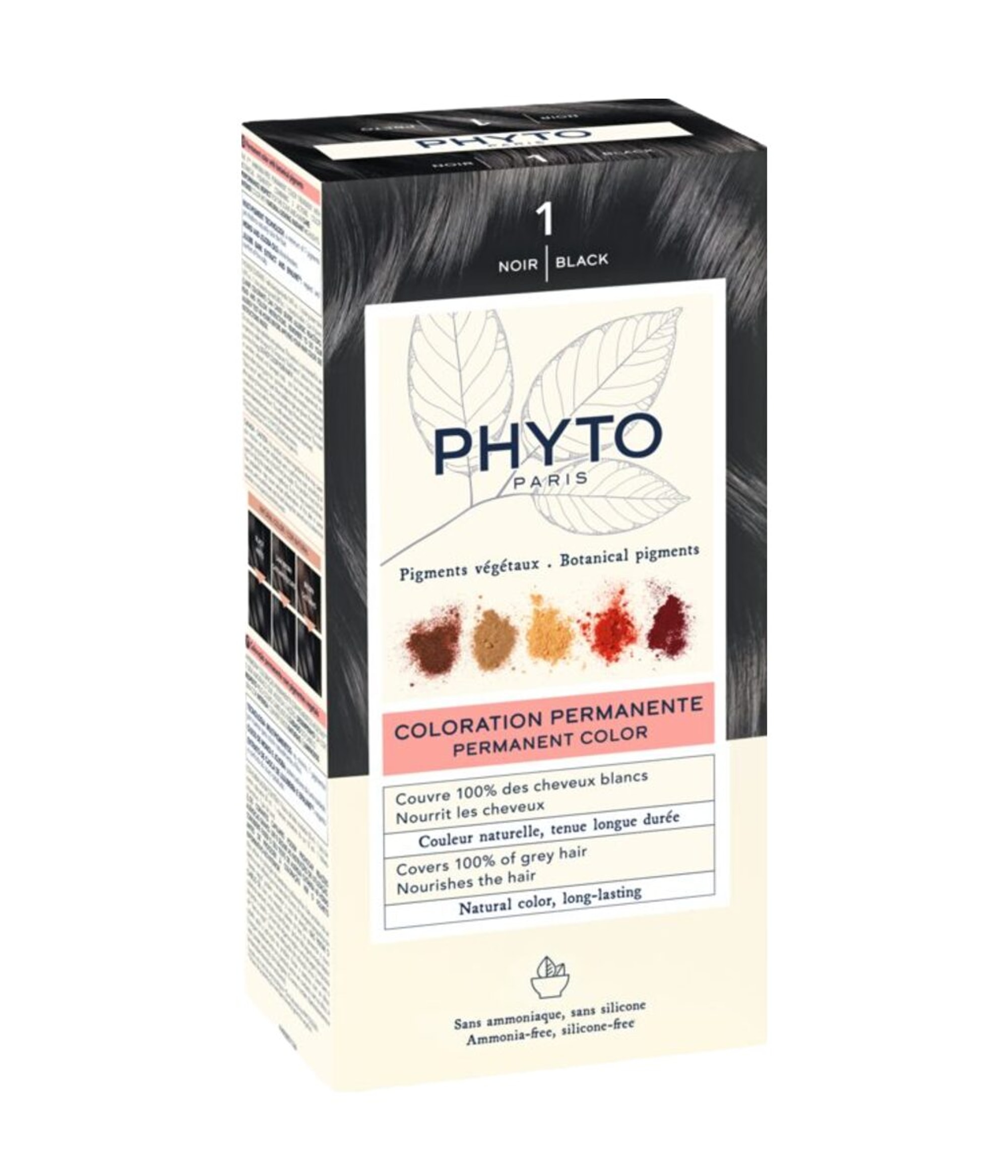
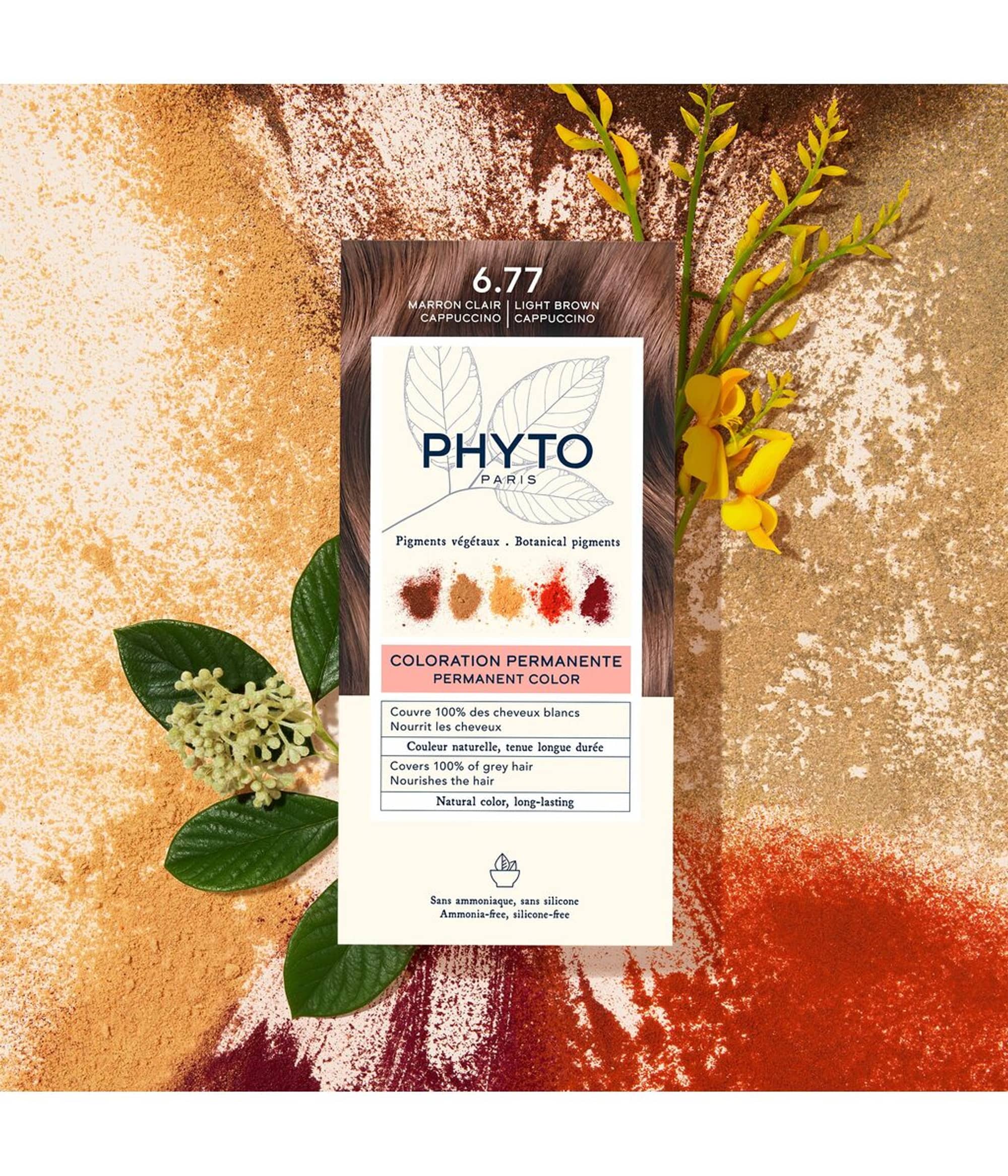
Later milestones widened the range further: a 1998 line dedicated to curly, coily and relaxed hair (the PhytoSpecific lineage), and in 2004 Phytocolor, a plant-pigment hair colour the company says gives full grey coverage using ingredients such as jojoba oil, monoi and jujube extract.
Ownership
The ownership history runs alongside the product history. In 1979 L'Oréal purchased a 49% stake in the company; Patrick Alès bought those shares back in 1995 for what Wikipedia records as 90 million francs, and the parent group, Ales Groupe, went public on the Paris Stock Exchange in 1996 [6].
The parent company behind Phyto has changed since. Wikipedia and trade press report that Ales Groupe — which also owned the dermocosmetics brand Lierac — entered administration in July 2020 and filed for bankruptcy proceedings [6][7]. Its cosmetics division was subsequently sold to the holding company Impala for 13.5 million euros, while the haircare operation was taken over by managers [6]. Phyto's own site in 2026 names its operating legal entity as Laboratoire Native [3]. Both descriptions are accurate for different points in time: Ales Groupe was the historical owner, and Laboratoire Native is the entity the brand states as current, with Lierac remaining a sister brand.
The company's founder, Patrick Alès, died at the end of May 2019 [6].
Philosophy & positioning
Phyto frames its work as a meeting of botanical science and professional hairstyling. Its formulas are, in the company's words, "hautement actives" (highly active) and built to reveal "botanical power in the service of care and style." The brand cites the pharmaceutical principle primum non nocere — first, do no harm — as a guiding idea.
Positioning has consistently emphasised the pharmacy channel and salon credibility: Phyto describes itself as the brand recommended by pharmacists and approved by hairstylists, and reports partnerships with more than a thousand salons worldwide. The company says its care products are formulated without silicone and its shampoos without sulfate, with water replaced in many formulas by botanical extracts such as white mallow, used for shine, and rosemary, used to protect the scalp.
Products & innovation
Several product families have anchored the range over the decades: Phyto 7, Phytophanère, Phytocyane, Phytocolor and the PhytoSpecific textured-hair line. Phytophanère, the hair-and-nail supplement introduced in 1980, is presented by the brand as a long-standing signature; Phyto cites a clinical test in which 95% of volunteers reported positive results after three months [8].
On the research side, the company says it has filed more than 50 patents and worked with over ten experts and institutions, naming the French research bodies CNRS and INSERM, the perfumery and cosmetics school ISIPCA, and the Sabouraud centre at Saint-Louis Hospital in Paris [5]. It describes its botanical library as drawing on dozens of natural-origin extracts across many plant species.
Current status
Phyto is active. The brand operates live regional e-commerce sites for France, wider Europe and the United States as of 2026, with current promotions and recent product marketing, and it remains sold through pharmacies and dermatological retailers. The 2020 administration of its former parent, Ales Groupe, was a corporate and financial event affecting the group rather than a product-safety issue for Phyto, and the brand has continued trading under the Laboratoire Native entity since the restructuring [3][7].
Facts & evidence
Documented facts from Glowpedia's fact base — every row carries a source.
Timeline#
Launch of Phyto 7, the first daily hair cream formulated from 7 plant extracts↗ fr.phyto.com
Creation of the Phytosolba laboratory to scientifically demonstrate plant efficacy on hair↗ fr.phyto.com
Launch of Phytoplage, first hair oil to protect hair from sun, salt and chlorine↗ fr.phyto.com
Launch of Phytolaque, first hairspray without propellant gas; same year L'Oreal purchased a 49% stake↗ fr.phyto.com
L'Oreal purchased a 49% stake in the company↗ en.wikipedia.org
Launch of Phytophanere dietary supplement for hair and nails↗ fr.phyto.com
Launch of Phytocyane anti-hair-loss treatment for women↗ fr.phyto.com
Patrick Ales repurchased L'Oreal's 49% stake for 90 million francs↗ en.wikipedia.org
Patrick Ales repurchased L'Oreal's shares for 90 million francs↗ en.wikipedia.org
Parent company (Ales Groupe) went public on the Paris Stock Exchange↗ en.wikipedia.org
Launch of first complete range dedicated to curly, coily and relaxed hair (PhytoSpecific lineage)↗ fr.phyto.com
Launch of Phytocolor plant-pigment hair color with 100% gray coverage↗ fr.phyto.com
Parent Ales Groupe entered administration (July 2020); cosmetics division sold to holding company Impala for 13.5 million euros, haircare taken over by managers↗ en.wikipedia.org
Signature products#
1968 - Phyto 7 Launch: the first creme de jour capillaire formulee a partir de 7 extraits de plantes↗ fr.phyto.com
1980 - Phytophanere Launch. Dietary supplement for hair and nails with 15 vitamins, minerals, and essential actives↗ fr.phyto.com
1992 - Phytocyane Launch. Anti-hair loss treatment targeting women's specific needs related to hormonal changes, stress, and fatigue↗ fr.phyto.com
1974 - Phytoplage Launch: la premiere huile capillaire concue pour proteger les cheveux du soleil, du sel et du chlore↗ fr.phyto.com
2004 - Phytocolor Launch. Plant-pigment hair color with 100% gray coverage, jojoba oil, monoi, and jujube extract↗ fr.phyto.com
Key ingredients#
Proprietary technologies & patents#
“phytotherapie capillaire - combining Greek roots: phyto (plants) + thera (care) + trichie (hair)”
“Avec plus de 50 brevets deposes”
Mentioned in#
Cosmetics Business — Reported that Phyto and Lierac owner Ales Groupe entered administration / filed for bankruptcy proceedings at the Tribunal de Commerce.↗ cosmeticsbusiness.com
Certification pass
What each certification and self-stated claim rests on: the source, whose website it's on, and what needs review.
“Nos soins sont formules sans silicone, et nos shampooings sans sulfate, afin de respecter l'equilibre naturel du cheveu et du cuir chevelu.”↗ fr.phyto.com
None of these statements has been checked against the certifying bodies' registers. The statements were observed on 11 Jun 2026.
Where to buy
Where the brand is sold according to Glowjakt's price data, per market.
Prices come from Glowjakt and are updated daily. Glowpedia receives no payment for clicks.
Ingredients across the range
Key ingredients across Phyto's range, from the ingredient lists of 79 of 98 products in Sweden.
Share of products with a known ingredient list. “None identified” means nothing matched our ingredient groups, not that the product is free of them.
Related brands
Sources
T1 primary · T2 secondary · T3 note- [2]T1fr.phyto.com/cms/l-histoirefr.phyto.com (brand site)
- [3]T2fr.phyto.com/cms/la-marquefr.phyto.com (brand site)
- [5]T2fr.phyto.com/cms/la-science-des-plantesfr.phyto.com (brand site)
- [6]T3en.wikipedia.org/wiki/Ales_GroupeWikipedia
- [7]T3cosmeticsbusiness.com/phyto-and-lierac-beauty-brand-owner-al-s-groupe-enters-administration--167778cosmeticsbusiness.com
- [8]T2en.phyto.com/cms/phytophanere-before-after-results-hair-nailsen.phyto.com (brand site)