Overview
Pitralon is a men's grooming brand best known for its aftershave, with roots in interwar Germany. The name was registered as a trademark in 1919 [3], and the product reached market maturity in 1927 as an antiseptic "shaving water" — an alcohol-and-camphor eau de toilette developed in Dresden by the Lingner-Werke [1]. The line has since passed through a long chain of corporate owners; since 2014 it has belonged to the Dutch company Labori International B.V., based in Breda [3]. The brand remains active, with a full range of pre- and aftershave products still in distribution.
Over nearly a century Pitralon shifted from a pharmaceutical antiseptic into a cosmetic grooming line. The company presents it as a heritage product built on tradition and a realistic price-to-quality balance, summed up in the tagline "Real values don't lie" [2].
Origin & founders
The formulation came from the Lingner-Werke, the firm founded by Karl August Lingner (1861–1916) [3]. Pitralon's own account spells the name "Linger" and credits him with founding the brand in 1927 [2]; because he had died in 1916, the product was in fact developed and brought to market by his company rather than by Lingner in person [3]. In its earliest years the preparation was sold as a medical antiseptic — marketed for fungal skin infections, eczema and infected wounds — and only after 1950 did it move decisively toward a cosmetic aftershave.
History & milestones
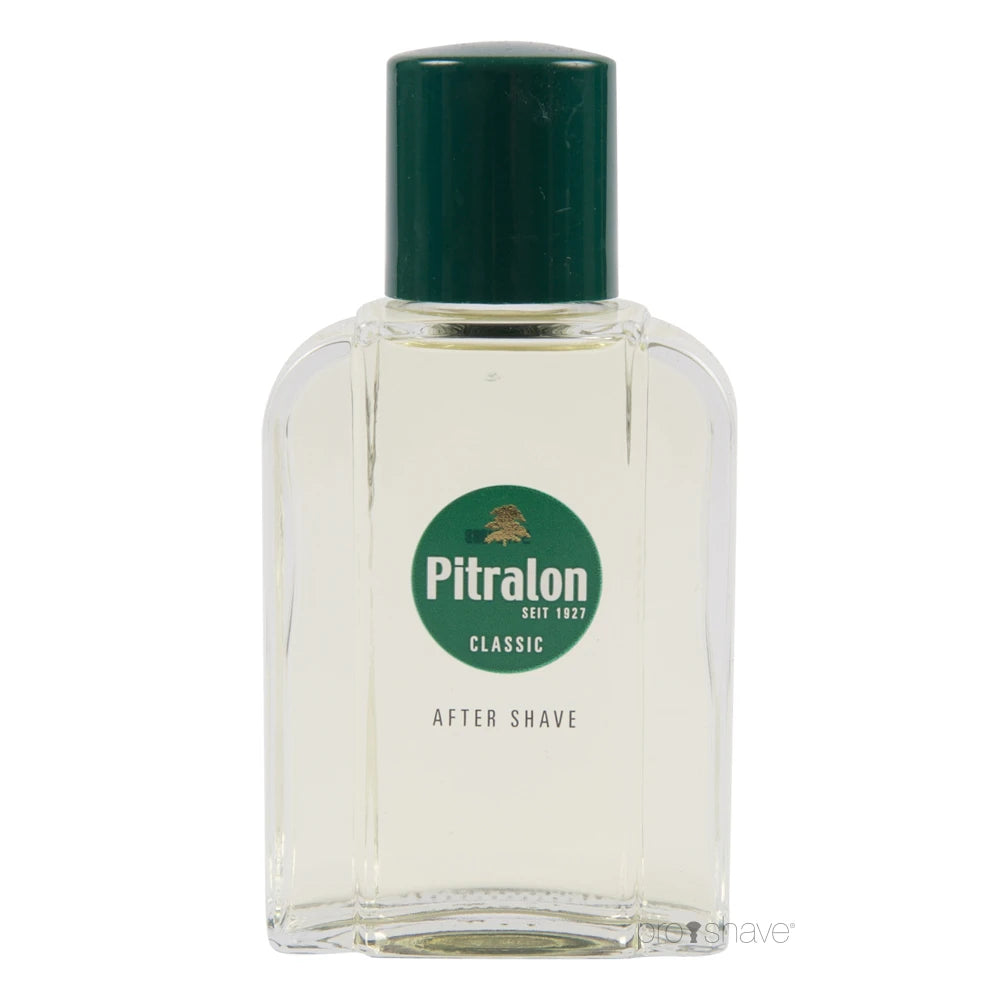
The original 1927 formula combined isopropanol, menthol, boric acid and camphor, giving it an intense, medicinal scent. A lighter direction arrived with Pitralon Classic, which German records date to 1964 while the brand site places it more loosely in the 1960s [2][3]; it added cedar oil and fresh citrus notes and became the range's most recognisable variant. In 1993, under Sara Lee ownership, the Pitralon Pure aftershave was developed.
The brand also had a public moment in advertising: in 1982 the German footballer Paul Breitner fronted a campaign for Pitralon, trimming his full beard to a moustache for the shoot, for a reported fee of 150,000 Deutschmarks [3].
Ownership
Pitralon's ownership traces a series of post-war corporate changes. After the Lingner-Werke, its successor Lingner und Fischer held the brand from 1950. It then passed to SmithKline Beecham in 1990, to Sara Lee Deutschland in 1993, and — through the sale of Sara Lee's personal-care division — to Unilever in 2010 [3]. In 2014 Labori International B.V. of Breda acquired the brand and remains its current owner [3].
Philosophy & positioning
The company describes its audience as "men who are not swayed by the flavour of the month, but want pure, no nonsense products," emphasising authenticity, quality and a long tradition [2]. Positioned as an accessible drugstore product rather than a prestige line, it leans on longevity and consistency rather than novelty.
Products & innovation
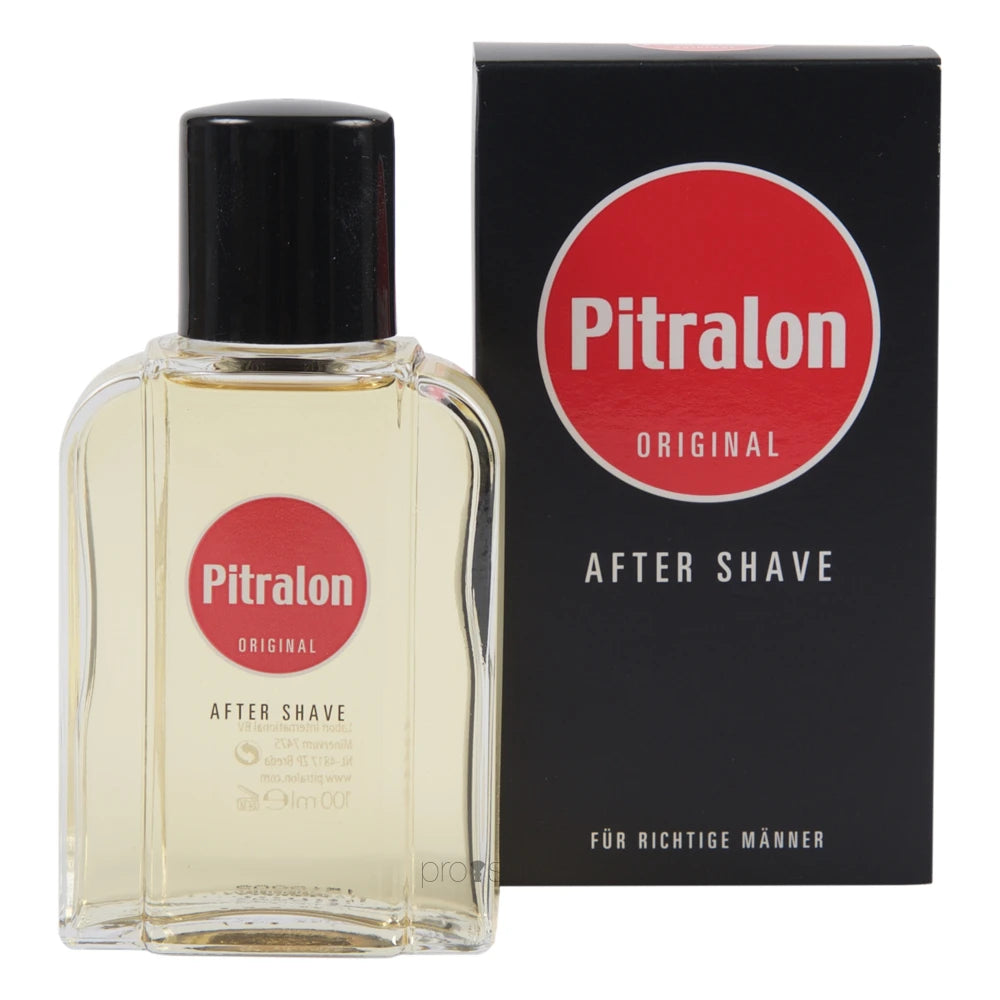
The current range centres on aftershaves — Classic, Pure and the citrus-forward Polar — alongside the Pitrell pre-shave. The original 1927 recipe survives as a 160ml bottle produced in Switzerland (Thayngen) and positioned as the "Swiss Original" at a marked price premium, a version sought out by traditional wet-shaving enthusiasts. Manufacturing today is centred in the Netherlands, with the Swiss-made 160ml variant and a separate "Ralon" line made in Croatia that keeps the original boric-acid-and-camphor formula [3].
Current status
Pitralon is active. Its official website is live in German, Dutch and English, and its product range continues to be distributed, chiefly across German-speaking Europe. The brand dates its history to 1927, putting it close to a centenary in 2027 [1].
Facts & evidence
Documented facts from Glowpedia's fact base — every row carries a source.
Timeline#
Pitralon trademark registered at the German patent office↗ de.wikipedia.org
Pitralon reaches market maturity in Germany as an antiseptic 'shaving water' (Dresden, Lingner-Werke)↗ pitralon.com
Owned/developed by Lingner-Werke (Dresden, Germany)↗ de.wikipedia.org
Lingner und Fischer (Düsseldorf), post-war legal successor↗ de.wikipedia.org
Pitralon Classic introduced, with a spicy cedar-wood signature and citrus notes↗ de.wikipedia.org
Advertising campaign featuring German footballer Paul Breitner (fee 150,000 DM)↗ de.wikipedia.org
SmithKline Beecham (Hamburg)↗ de.wikipedia.org
Pitralon Pure developed under Sara Lee ownership↗ de.wikipedia.org
Sara Lee Deutschland GmbH (Mainz)↗ de.wikipedia.org
Unilever (via Sara Lee personal-care division sale)↗ de.wikipedia.org
Brand acquired by Labori International B.V. (Breda, Netherlands)↗ de.wikipedia.org
Labori International BV (Breda, Netherlands) – current owner↗ de.wikipedia.org
Signature products#
the original, first version of Pitralon is still available in the 160 ml bottle↗ pitralon.com
In the 1960s Pitralon Classic was introduced and became a real classic with a robust image, characterized by a spicy signature of cedar wood.↗ pitralon.com
Pitralon Pure After-Shave↗ pitralon.com
Pitralon Polar After-Shave↗ pitralon.com
Pitrell Pre-Shave↗ pitralon.com
Pitralon Original 160ml (Swiss) — The original 1927 formula, produced in Switzerland (Thayngen) and positioned as the 'Swiss Original' at roughly a 4x price premium; sought by traditional wet-shaving enthusiasts.↗ de.wikipedia.org
Key ingredients#
Where to buy
Where the brand is sold according to Glowjakt's price data, per market.
| Market | products | in stock | stores | Price range |
|---|---|---|---|---|
| Denmark | 6 | 2 | 1 | 80.50 DKK – 145 DKK |
Prices come from Glowjakt and are updated daily. Glowpedia receives no payment for clicks.
Sources
T1 primary · T2 secondary · T3 note- [1]T1pitralon.compitralon.com (brand site)
- [2]T1pitralon.com/about-pitralon/pitralon.com (brand site)
- [3]T3de.wikipedia.org/wiki/PitralonWikipedia