Overview
Prada is an Italian luxury fashion house founded in 1913 in Milan by Mario Prada and his brother Martino [4]. Originally a seller of leather goods, imported English trunks and travel accessories, it grew over the following century into a publicly listed group whose reach now extends from ready-to-wear and handbags to fragrance, makeup and skincare. The company is owned by Prada S.p.A., which trades on the Hong Kong Stock Exchange under the ticker 1913 [3].
Its beauty business runs on two tracks. Prada fragrances date back decades, while a full makeup and skincare range arrived only in 2023, developed under a licensing arrangement with L'Oréal. The house remains active on every front, reporting 2024 revenue of about 5.4 billion euros across roughly 609 boutiques, and in December 2025 it completed the acquisition of Versace.
Origin and founders
The brand began in 1913, when Mario Prada and his brother Martino opened their first store in Milan's Galleria Vittorio Emanuele II under the name "Fratelli Prada," meaning Prada Brothers [4]. The shop sold leather goods, imported English steamer trunks and handbags, and assorted travel accessories, alongside beauty cases, jewellery and other luxury objects. In 1919 the firm was appointed Official Supplier to the Italian Royal Household.
Leadership passed through the family over the following decades. Mario's daughter Luisa ran the company for close to twenty years before her own daughter, Miuccia Prada, joined in 1970 and took control in 1978 [3]. Miuccia's partnership with Patrizio Bertelli, whom she met in 1977, reshaped the company; the brand site describes their meeting as the moment "Miuccia Prada's creativity meets Patrizio Bertelli's entrepreneurial spirit, giving life to a new business model." Bertelli later merged his leather business into Prada and served as chief executive.
History and milestones
Under Miuccia's direction the house rose to prominence in world fashion during the 1990s. It launched its first menswear collection and established both the Miu Miu label and the Fondazione Prada arts foundation in 1993. In 2011 Prada listed on the Hong Kong Stock Exchange, raising about 2.14 billion US dollars. Andrea Guerra was appointed chief executive in January 2023.
The company has expanded through acquisitions over the years, taking stakes in houses such as Church's and, in 2025, buying Versace from Capri Holdings for 1.25 billion euros in a deal completed that December [3].
Ownership
Prada is owned by Prada S.p.A., the publicly traded parent known as the Prada Group. Beyond the main label, the group's brands include Miu Miu, Church's, Car Shoe and, since 2025, Versace [3]. The beauty lines are not produced in-house: they operate under license, with fragrance, makeup and skincare created and distributed by L'Oréal Luxe.
Philosophy and positioning
Prada Beauty presents itself as a project of reinvention. On its licensee's corporate page it is described as "a precursor and pioneer to open new perspectives on fragrances and beauty driven by tech, creativity and responsibility," and the company frames the line under the phrase "rethinking beauty" [7]. The design language of the fashion house carries directly into the products, drawing on Prada's Saffiano leather texture and Re-Nylon fabric. The makeup was developed with reference to the brand's archive of 27,000 textiles and patterns, with creative makeup artist Lynsey Alexander summarising the intent as being "about enhancing, celebrating, and empowering, rather than masking and covering."
Products and innovation
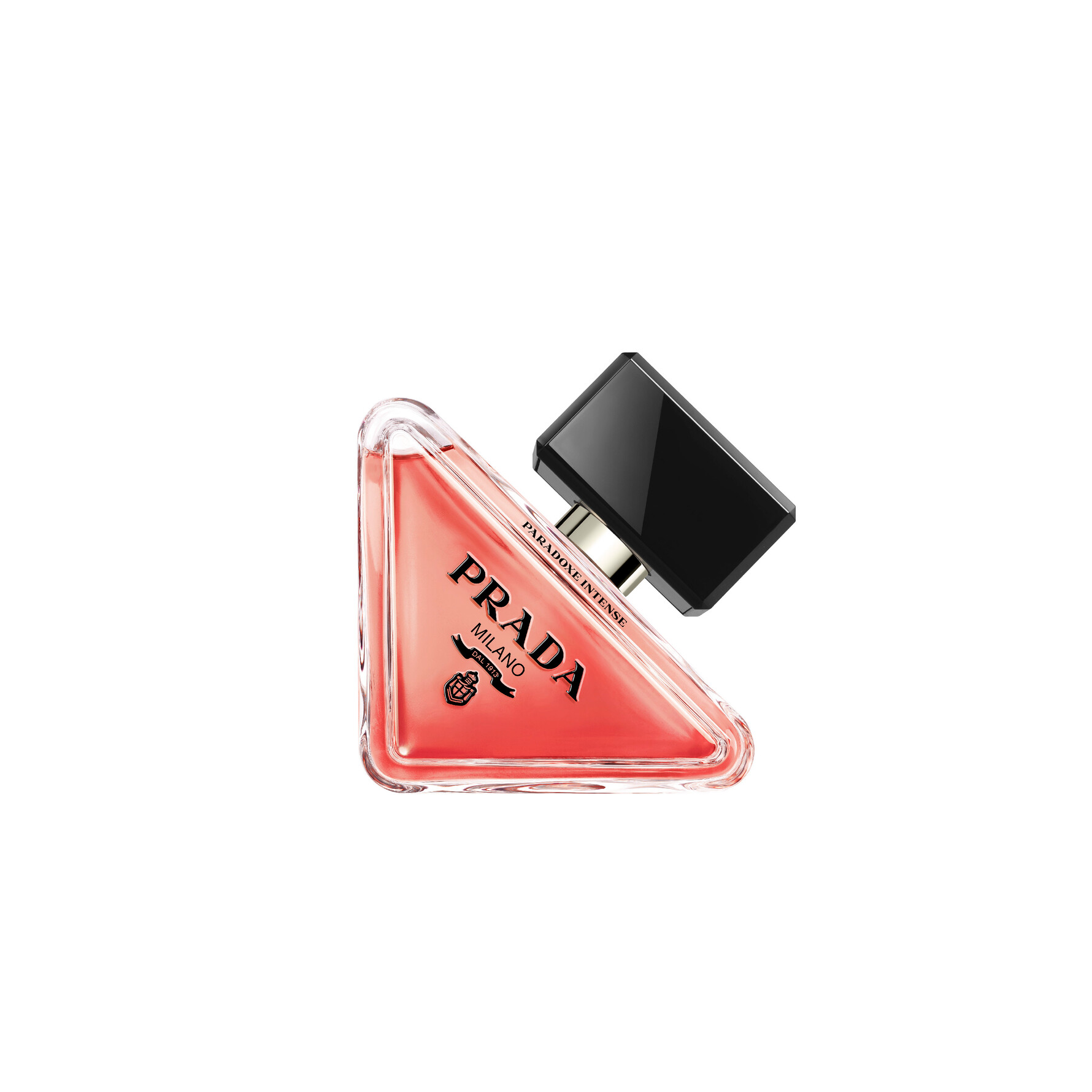
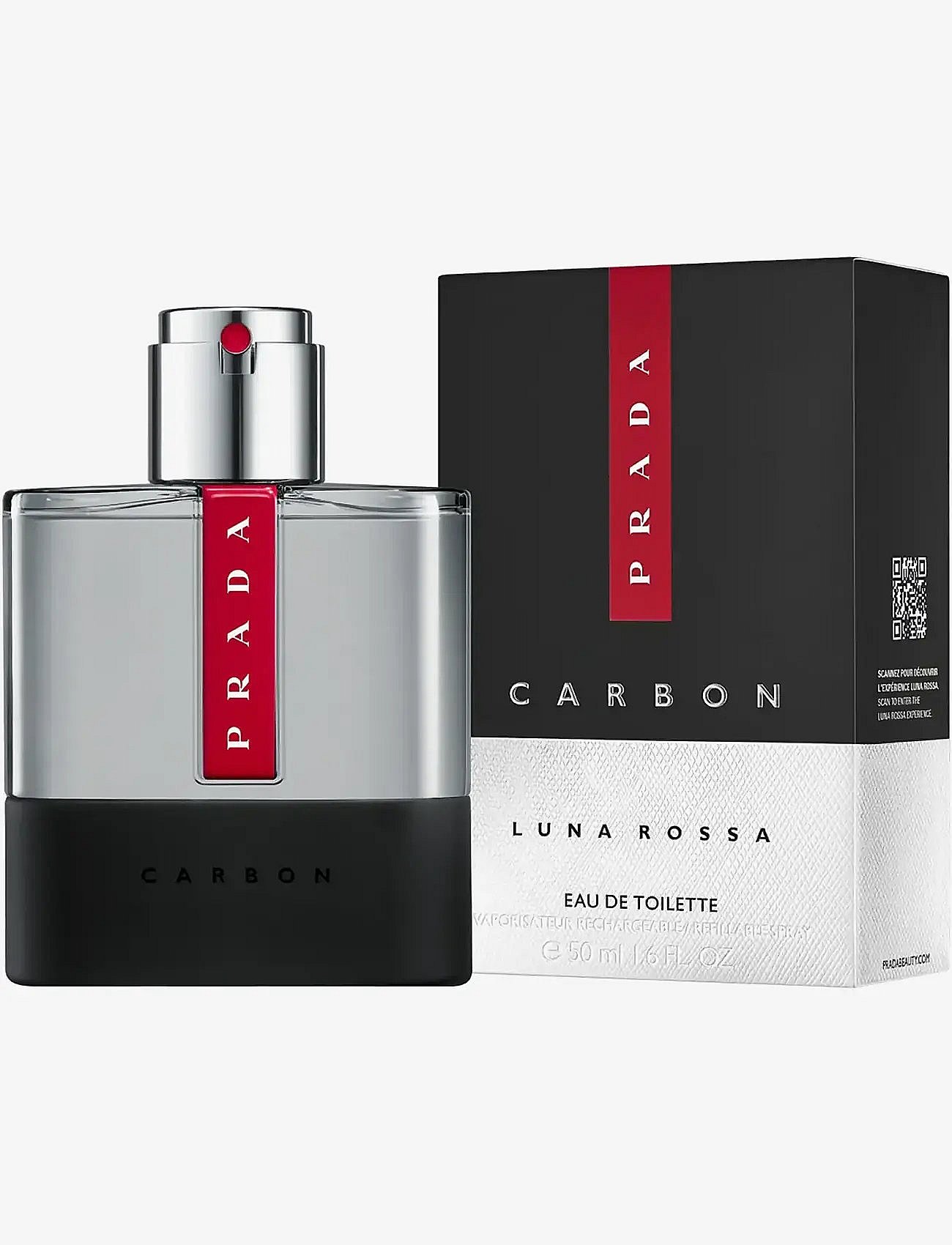
Fragrance is the oldest part of the beauty business. The Prada Candy series launched in August 2011, and the Luna Rossa line, named after the brand's sailing team, followed in 2012. More recent releases include Prada Paradoxe, described by trade press as a leading US women's fragrance launch of 2022, and Luna Rossa Ocean, the first scent issued after the L'Oréal license took effect.
The makeup and skincare ranges are newer. The Prada Color line spans foundation offered in 33 refillable shades and 26 matte lipsticks, the latter housed in triangular logo-shaped bullets textured to recall Saffiano leather. The skincare range, marketed as Augmented Skin, comprises a cream, a serum and a cleanser. Refillable packaging runs across all three categories as a stated design principle. Among the tools, the company highlights the Pradascope 180-degree Lift and Grip Brush, a flat-backed mascara brush it says "transcends mascara brush tradition."
The fragrance and beauty license has changed hands over time, and the two arrangements are sometimes conflated. Puig held the Prada beauty license through a 50-50 joint venture established in May 2003, running until around 2018 [6]. L'Oréal then signed a long-term agreement in December 2019 that became effective in 2021 [6]. The makeup and skincare lines are a separate, later development: while some accounts associate Prada Beauty with 2021, that date marks the L'Oréal license and the fragrance reboot, whereas the makeup and skincare ranges did not launch until 1 August 2023 [5]. The 2023 range debuted online first, followed by counters at retailers including Harrods and Selfridges, with US brick-and-mortar distribution arriving in January 2024.
Recognition
Prada's beauty debut drew coverage across fashion and trade press. NONE WWD covered the 2023 launch of the makeup and skincare lines under the L'Oréal Luxe license, and BeautyMatter reported on L'Oréal securing the long-term beauty license previously held by Puig.
Controversies
Prada has faced several public controversies, most tied to the wider fashion house rather than its beauty lines. In 2018 the company withdrew an accessory line featuring blackface imagery after criticism, and subsequently established a diversity council co-chaired by Ava DuVernay and Theaster Gates [3]. In 2014, Italian prosecutors investigated possible tax evasion; the company reached a settlement of roughly 420 million euros with the tax agency [3]. A discrimination case brought by former Prada Japan employee Rina Bovrisse, alleging sex, age and appearance-based discrimination, was pursued from around 2009 and escalated to the UN Committee on Economic, Social and Cultural Rights. More recently, in 2025, Prada showed sandals resembling traditional Indian Kolhapuri chappals without credit, prompting a Public Interest Litigation seeking an apology and compensation for artisans [3].
Current status
Prada is an active, globally operating luxury house. It is publicly listed on the Hong Kong Stock Exchange, reported about 5.4 billion euros in revenue in 2024 with some 15,000 employees and 609 boutiques, and closed its purchase of Versace in December 2025 [3]. Its beauty arm continues to expand under the L'Oréal Luxe license, with fragrance, makeup and skincare launches spanning 2021 to 2025.
Facts & evidence
Documented facts from Glowpedia's fact base — every row carries a source.
Timeline#
First Prada store opens in Milan's Galleria Vittorio Emanuele II↗ pradagroup.com
Appointed Official Supplier to the Italian Royal Household↗ en.wikipedia.org
Prada launches first Men's collection and the Miu Miu brand; Fondazione Prada established↗ pradagroup.com
Listed on the Hong Kong Stock Exchange (ticker 1913)↗ en.wikipedia.org
L'Oréal Luxe beauty license becomes effective (signed Dec 2019); first new-license fragrance Luna Rossa Ocean↗ beautymatter.com
Prada Beauty launches makeup (Prada Color) and skincare (Prada Skin / Augmented Skin), Aug 1, 2023↗ wwd.com
Prada Group acquired Versace from Capri Holdings for €1.25 billion (completed December 2025)↗ en.wikipedia.org
Signature products#
Prada Paradoxe (top U.S. women's fragrance launch in 2022)↗ wwd.com
Prada introduced Luna Rossa in September 2012, a masculine fragrance named after the sailboat and sailing team 'Red Moon'↗ fragrantica.com
Prada Candy was launched in August 2011.↗ fragrantica.com
Prada Augmented Skin (The Cream, The Serum, The Cleanser & Makeup Remover)↗ wwd.com
Lipsticks: 26 matte shades ... featuring triangular logo-shaped bullets with Saffiano leather texture↗ voguescandinavia.com
Proprietary technologies & patents#
“The Pradascope 180° Lift & Grip Brush exemplifies the brand's innovation approach, featuring a unique flat-backed design that "transcends mascara brush tradition.”
Mentioned in#
Vogue Scandinavia — Verdict on Prada's beauty line: 'the definition of Prada's understated-but-interesting aesthetic in a beauty look – and it's a yes from us.'↗ voguescandinavia.com
WWD — Exclusive coverage of Prada Beauty launching makeup and skin care under L'Oréal Luxe license↗ wwd.com
BeautyMatter — Reported L'Oréal securing the long-term Prada beauty license, previously held by Puig↗ beautymatter.com
Certification pass
What each certification and self-stated claim rests on: the source, whose website it's on, and what needs review.
“Foundation: 33 stretchable shades, refillable ... Packaging features refillable chunky silver and gold containers.”↗ voguescandinavia.com
None of these statements has been checked against the certifying bodies' registers. The statements were observed on 19 Jun 2026.
Where to buy
Where the brand is sold according to Glowjakt's price data, per market.
Prices come from Glowjakt and are updated daily. Glowpedia receives no payment for clicks.
Ingredients across the range
Key ingredients across Prada's range, from the ingredient lists of 153 of 225 products in Sweden.
Share of products with a known ingredient list. “None identified” means nothing matched our ingredient groups, not that the product is free of them.
Sources
T1 primary · T2 secondary · T3 note- [3]T3en.wikipedia.org/wiki/PradaWikipedia
- [4]T3en.wikipedia.org/wiki/Mario_PradaWikipedia
- [5]T3wwd.com/beauty-industry-news/beauty-features/prada-beauty-launch-makeup-skin-care-1235753531/wwd.com
- [6]T3beautymatter.com/articles/loreal-scores-long-term-prada-beauty-licensebeautymatter.com
- [7]T3voguescandinavia.com/articles/the-vogue-verdict-on-pradas-sleek-new-beauty-linevoguescandinavia.com