Overview
Victor Vaissier is a soap and home-fragrance brand founded in Paris in 1889 [7] and revived in Sweden a century after its founder's death. The original house built its reputation on olive-oil soaps scented with perfumes drawn from far-flung travels, and counted several European royal households among its clients. After lapsing when its founder died in 1923, the name was acquired in 2014 by the Swedish entrepreneur Pål Hodann, who relaunched it as a modern fragrance company [7].
The brand today operates an active webshop and sells through resellers across Estonia, France, Germany and Italy. It is owned and run from Sweden, where its team works in retail, branding and marketing.
Origin & founders
The house takes its name from Victor Vaissier, a French soap and perfume manufacturer of the late nineteenth century. According to the company, he set up the brand in Paris in the late 1800s, and in 1889 opened his first shop on Boulevard 4, Place de l'Opéra [7]. Contemporary accounts describe him as one of the most successful soap and perfume makers in France at the close of the century, whose factory employed several hundred workers and whose products were sold in shops abroad, including in Johannesburg and Tunis.
Sources differ on his early biography. Wikipedia's account of the Palais Vaissier records that he was born in Roubaix in 1851 [6], while the brand site and Scandinavia Standard give his birth year as 1857 [7]. All sources agree, however, on the 1889 Paris shop opening and on his death in 1923.
Vaissier sought scents beyond the traditional French floral notes, and travelled to find new fragrance material; the brand cites Japan, Congo and Samoa among his sources of inspiration. Historical blends carried names such as Princes du Congo, Rose de Kyoto and Violettes de Samos, and one of his best-known products was Savon du Congo.
History & milestones
Around the turn of the twentieth century the house became, in its own telling, official soap supplier to the King of Belgium, the Tsar of Russia and the royal courts of Romania [2]. Wikipedia's account extends the list of patrons to Leopold II of Belgium, the Royal Court of Spain and the Bey of Tunis [6]. In 1891–92 Vaissier built the Palais Vaissier, an ornate mansion in Tourcoing crowned with an onion-shaped dome; it was demolished in 1929.
Vaissier died in 1923, and the original brand ceased trading soon after [6]. It remained dormant until 2014, when Pål Hodann, then working in finance, came across a well-preserved vintage soap box bearing the Victor Vaissier name at a Parisian flea market. After research showed the founder had left no heirs and the trademark was unprotected, he bought the name to relaunch it [7].
Ownership
Victor Vaissier is owned by Pål Hodann, who acquired the lapsed name in 2014 after it had fallen into the public domain following the founder's death [7]. The modern company is Swedish, and its team is based in Sweden. No parent company or affiliated sister brands are documented.
Philosophy & positioning
The company presents itself as a modern fragrance house that honours the founder's tradition of olive-oil soaps and exotic scents. In its own words, it is "a modern fragrance brand constantly seeking new scents and actively pursuing sustainable solutions." Hodann has described the revival as a contemporary version of what the original was in its day: an accessible product built on an olive-oil base with exotic fragrances.
The stated guiding value is "kindness to animals, people and nature." Positioning it between mass-market and niche fragrance houses, Hodann has said he saw a gap in the market "between Palmolive and Molton Brown." The brand's tagline is "Make an impression on your senses."
Products & innovation
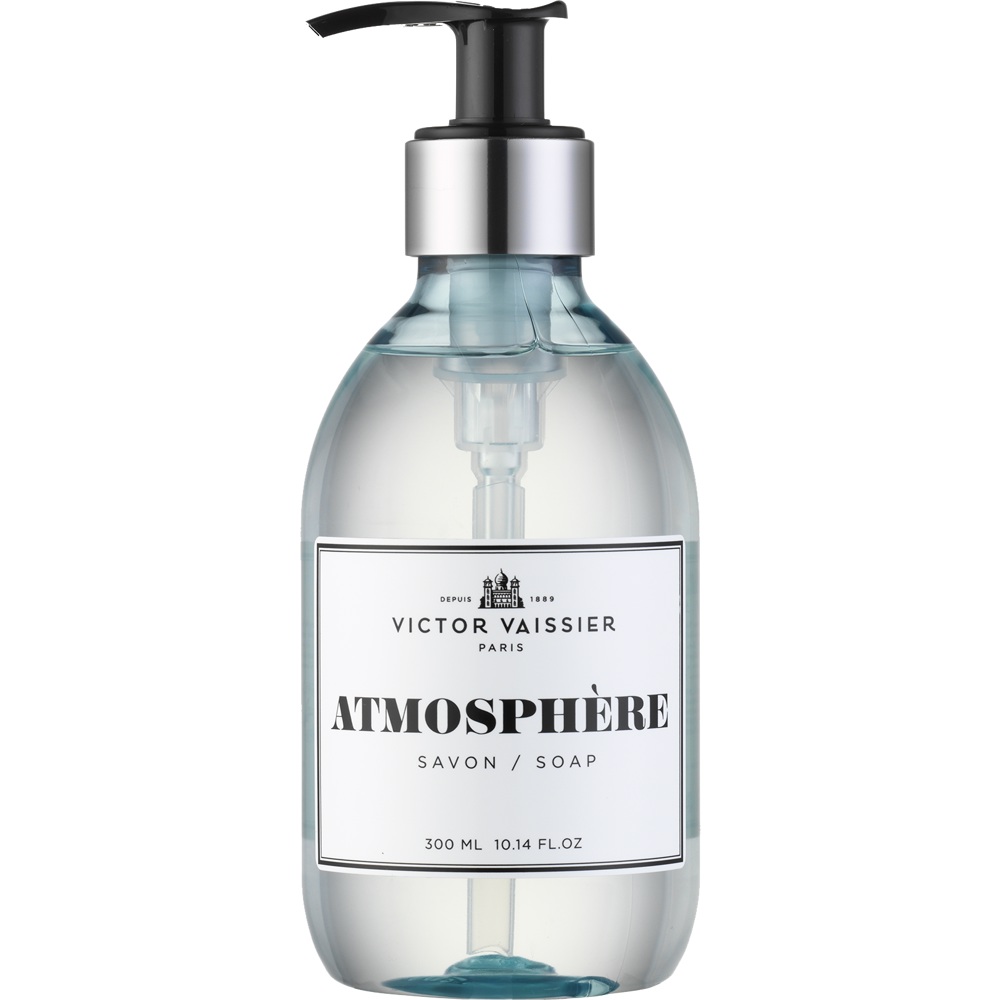
The range centres on soaps, candles, room diffusers, room mists and gift boxes. The soaps use a base of organic olive oil blended with what the company calls exotic flowers and French herbs, with notes such as lavender, eucalyptus and thyme. Named best-sellers include ICÔNE, ATMOSPHÈRE and D'eau Citron, with later additions such as Figue de Japon combining fig and vetiver. Rather than reissue the originals unchanged, the company says it recreates nineteenth-century recipes using period botanicals, working from antique boxes and bottles found in Paris.
According to the company, all its products are vegan and cruelty-free, with no animal-derived ingredients. Its philosophy page lists materials it excludes, among them parabens, mineral oils, certain silicones, microplastics, MIT and CIT preservatives and artificial colorants, and states that its packaging is fully recyclable [3]. The brand says it follows European Union cosmetics regulations.
Recognition
Current status
The brand is active. It runs an e-commerce operation at vaissier.com with a current catalogue of soaps, candles, diffusers, room mists and gift boxes, and distributes through named resellers in four countries [5]. It has traded under Swedish ownership since the 2014–2015 relaunch.
Facts & evidence
Documented facts from Glowpedia's fact base — every row carries a source.
Timeline#
Victor Vaissier opens his first soap shop at Boulevard 4, Place de l'Opera, Paris.↗ scandinaviastandard.com
Palais Vaissier mansion built (1891-92) in Tourcoing, France.↗ en.wikipedia.org
Victor Vaissier dies; original brand subsequently ceases operations.↗ en.wikipedia.org
Pål Hodann discovers vintage Victor Vaissier soap box at a Parisian flea market and acquires the brand name to relaunch it.↗ scandinaviastandard.com
Brand name acquired by Pål Hodann (Sweden) after lapsing into the public domain following the founder's death in 1923; modern company is Swedish-owned.↗ scandinaviastandard.com
Relaunched Victor Vaissier products begin shipping in Sweden.↗ scandinaviastandard.com
Signature products#
Best Sellers: ICÔNE (soap & room mist)↗ vaissier.com
Atmosphere! En blå flaska med Doft av eucalyptus och timjan↗ elinfagerberg.se
Best Sellers: D'eau Citron↗ vaissier.com
The text mentions exotically-named blends such as 'Des Princes du Congo' alongside fragrances like 'Heliotrope' and 'Smyrne.'↗ scandinaviastandard.com
latest: Figue de Japon (fig and vetiver)↗ elinfagerberg.se
Key ingredients#
Mentioned in#
Scandinavia Standard — Feature article 'French Soap Gets a Scandi Update with Victor Vaissier' covering the heritage and the Swedish revival by Pål Hodann.↗ scandinaviastandard.com
Skönhetsredaktörerna — Article 'Svensk blåser liv i anrikt franskt tvålmärke – Vaissier' on the Swedish relaunch.↗ skonhetsredaktorerna.se
Elin Fagerberg — Editorial profile on Victor Vaissier as a French-Swedish success story.↗ elinfagerberg.se
New Day Interior — Interview with Pål Hodann about the brand revival and its modern sustainability focus.↗ newdayinterior.se
Certification pass
What each certification and self-stated claim rests on: the source, whose website it's on, and what needs review.
“Products are certified vegan and cruelty-free.”↗ vaissier.com
“Victor Vaissier adheres to European Union cosmetics regulations.”↗ vaissier.com
“Specifically prohibited materials include: ... Mineral oils”↗ vaissier.com
“Specifically prohibited materials include: ... Parabens”↗ vaissier.com
“All packaging (boxes, bottles, glass) is 100% recyclable.”↗ vaissier.com
“All our products are vegan – there are no animal derived ingredients in any of our products.”↗ vaissier.com
None of these statements has been checked against the certifying bodies' registers. The statements were observed on 2 Jun 2026.
Where to buy
Where the brand is sold according to Glowjakt's price data, per market.
Prices come from Glowjakt and are updated daily. Glowpedia receives no payment for clicks.
Ingredients across the range
Key ingredients across Victor Vaissier's range, from the ingredient lists of 14 of 14 products in Sweden.
Share of products with a known ingredient list. “None identified” means nothing matched our ingredient groups, not that the product is free of them.
Sources
T1 primary · T2 secondary · T3 note- [2]T1vaissier.com/en-se/pages/about-usvaissier.com (brand site)
- [3]T2vaissier.com/en-se/pages/our-philosophyvaissier.com (brand site)
- [5]T2vaissier.com/pages/select-resellersvaissier.com (brand site)
- [6]T3en.wikipedia.org/wiki/Palais_VaissierWikipedia
- [7]T3scandinaviastandard.com/french-soap-gets-a-scandi-update-with-victor-vaissier/scandinaviastandard.com