Overview
L'Occitane en Provence is a French beauty company founded in 1976 and based in Manosque, in the Provence region of southern France [4]. It makes skincare, body care, hair care and fragrance built around botanical ingredients from the region, and sells them through its own boutiques and other retailers. The company describes its purpose as sharing "nature's wonders with the world," and it remains an active, globally distributed business, operating more than 3,000 stores across over 90 countries.
The brand sits within a wider corporate group. While the L'Occitane en Provence label is operationally rooted in Manosque, the parent holding entity, L'OCCITANE International (Suisse) SA, is domiciled in Switzerland [3].
Origin and founders
The company was founded by Olivier Baussan. According to Wikipedia, in 1976 the 23-year-old Baussan began producing essential oil from wild rosemary and lavender using steam distillation, selling it at open-air markets in his native Provence [4]. The following year he revived the traditional craft of Marseille soap-making in Manosque, working from an old soap factory [4]. From the start the venture was tied to the plants and methods of the surrounding countryside, a thread that has run through the brand's identity since.
History and milestones
In 1981 the first L'Occitane factory and boutique opened in Volx, in Provence. Ownership shifted over the following decades: Reinold Geiger acquired a 33% stake in 1994 and became the majority shareholder in 1996; in 2001 the French group Clarins came in as a financial investor [4].
In 2006 the company established the L'Occitane Foundation, which supports visually impaired people and women's economic empowerment. The business was listed on the Hong Kong Stock Exchange in 2010, and in 2024 the controlling shareholder, Reinold Geiger, moved to take the company private, delisting it from the Hong Kong exchange [4].
Ownership
L'Occitane en Provence is owned by the L'Occitane Group, whose listed holding entity is L'OCCITANE International (Suisse) SA in Switzerland [3]. The group's portfolio includes a number of sister brands, among them Melvita, Elemis, Erborian and Sol de Janeiro. Reinold Geiger built his position over the 1990s before taking the company private again in 2024.
Philosophy and positioning
The company presents itself as a maker of botanical beauty and well-being products rooted in Provence, governed by sustainable agriculture and fair-trade sourcing. According to the brand, its formulas are produced "with the ambition to share nature's wonders with the world," and it states that "every aspect of our business is carefully considered." Its stated values centre on sustainable agriculture, fair-trade cooperatives with farming partners, biodiversity protection and transparency, expressed under the tagline "Cultivators of Change." Ingredient sourcing is part of this story: the brand draws lavender and almonds from Provence, immortelle from Corsica, and shea butter from women's cooperatives in Burkina Faso [4].
Products and innovation
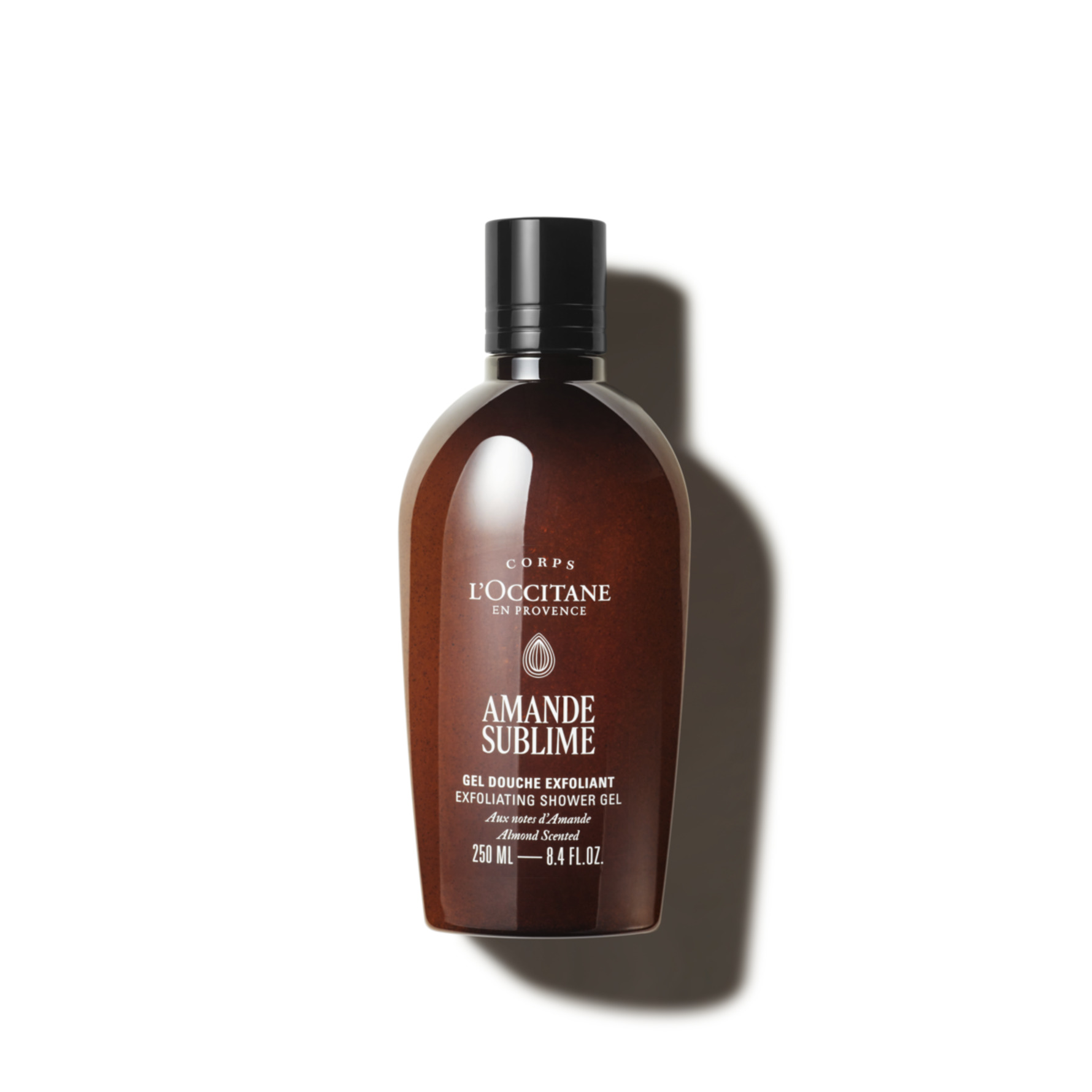
The range is organised largely around signature botanical ingredients, with Immortelle, shea butter, almond, lavender and verbena among the most prominent. Well-known products include the Immortelle Youth Hand Cream, the Immortelle Overnight Reset Serum and the Almond Shower Oil. The Immortelle Hand Cream is sold by retailer Cult Beauty as having an "award-winning serum-in-cream formula," and Marie Claire UK has referred to a "bestselling" Immortelle line.
Formulation is governed by the company's "Clean Charter," which it describes as a framework guaranteeing transparency across production. Under that charter, the company states that its leave-on products contain at least 95% natural-origin ingredients, measured against the ISO 16128 standard, and that its rinse-off products contain at least 95% readily biodegradable ingredients, based on OECD guidelines [10].
Sustainability
L'Occitane en Provence is a certified B Corporation, a status it notes on its own site [1]. The company links its recycling efforts to its origins, saying a commitment to recycling has been part of its make-up "since 1976, when they launched with a return system for glass bottles" [9]. It reports that its refill packaging saves around 200 tons of plastic globally each year [9]. At group level, the company has committed to becoming a carbon net-zero business by 2050, following the Science-Based Targets initiative's Net-Zero Standard [3].
Current status
L'Occitane en Provence is active. It operates a global retail network of more than 3,000 stores in over 90 countries [4], and its products continued to receive editorial coverage into 2025. Its corporate structure changed most recently in 2024, when its controlling shareholder took the company private.
Facts & evidence
Documented facts from Glowpedia's fact base — every row carries a source.
Timeline#
Olivier Baussan (age 23) began producing essential oils from rosemary and lavender via steam distillation, sold at Provence open-air markets↗ en.wikipedia.org
Revived the traditional art of Marseille soap-making in Manosque↗ en.wikipedia.org
First L'Occitane factory and boutique opened in Volx, Provence↗ en.wikipedia.org
Reinold Geiger acquired a 33% stake in the company↗ en.wikipedia.org
Reinold Geiger became majority shareholder↗ en.wikipedia.org
Clarins became a financial investor↗ en.wikipedia.org
L'Occitane Foundation established, supporting visually impaired persons and women's economic empowerment↗ en.wikipedia.org
Listed on the Hong Kong Stock Exchange↗ en.wikipedia.org
Controlling shareholder Reinold Geiger moved to take the company private (delisting from Hong Kong Stock Exchange)↗ en.wikipedia.org
Awards#
American Foundation for the Blind Access Award — Accessibility (Braille on packaging)↗ portersfiveforce.com
Signature products#
an "award-winning serum-in-cream formula" that harnesses "the power of shea butter and the age-defying technology of the Immortelle flower."↗ cultbeauty.com
often overshadowed by the bestselling Overnight Reset Serum↗ marieclaire.co.uk
mentioning specific popular products like hand creams and the Almond Shower Oil↗ marieclaire.co.uk
Immortelle Hand Cream — Sold and described by retailer Cult Beauty with an 'award-winning serum-in-cream formula'; also flagged as a 'bestselling' line by Marie Claire↗ cultbeauty.com
Key ingredients#
Mentioned in#
Marie Claire UK — Beauty editor review of the Immortelle Precious Emulsion; reviewer describes herself as 'a long-standing fan of the French brand'↗ marieclaire.co.uk
Certification pass
What each certification and self-stated claim rests on: the source, whose website it's on, and what needs review.
“we are proud to be a B-Corp™ certified company”↗ se.loccitane.com
“a commitment to recycling has been in L'Occitane's DNA since 1976, when they launched with a return system for glass bottles”↗ uk.loccitane.com
“Around 200 tons of plastic is saved globally each year with L'OCCITANE's beauty refills.”↗ uk.loccitane.com
None of these statements has been checked against the certifying bodies' registers. The statements were observed on 12 Jun 2026.
Where to buy
Where the brand is sold according to Glowjakt's price data, per market.
Prices come from Glowjakt and are updated daily. Glowpedia receives no payment for clicks.
Ingredients across the range
Key ingredients across L'Occitane en Provence's range, from the ingredient lists of 234 of 387 products in Sweden.
Share of products with a known ingredient list. “None identified” means nothing matched our ingredient groups, not that the product is free of them.
Related brands

Sources
T1 primary · T2 secondary · T3 note- [1]T1se.loccitane.comse.loccitane.com (brand site)
- [3]T2group.loccitane.com/commitments/sustainabilitygroup.loccitane.com (brand site)
- [4]T3en.wikipedia.org/wiki/L'Occitane_en_ProvenceWikipedia
- [9]T3uk.loccitane.com/sustainabilityuk.loccitane.com
- [10]T3loccitane.com/en-us/clean-charterloccitane.com