Overview
Shiseido is a Japanese beauty company founded in Tokyo in 1872 [4]. It began not as a cosmetics house but as Japan's first Western-style pharmacy, opened in the Ginza district by Arinobu Fukuhara, a 23-year-old pharmacist trained in the Imperial Japanese Navy. Over the following decades the business shifted from medicine to cosmetics, and today the Shiseido name is carried by both the flagship skincare and makeup line and its corporate parent, Shiseido Company, Limited.
The company remains active and is one of the largest beauty firms in the world. Its namesake brand is one of roughly 31 brands owned by the publicly traded parent (Tokyo Stock Exchange ticker 4911), a portfolio that also includes Clé de Peau Beauté and NARS [11]. Shiseido positions itself at the prestige end of the market and is closely associated with the wider J-beauty movement.
Origin and founders
Arinobu Fukuhara established the original pharmacy, first known as Shiseido Pharmacy, in 1872 [4][9]. Fukuhara is credited with introducing Japan's first system separating the clinic from the pharmacy, importing a Western pharmaceutical model into a market that had relied on traditional practice. The pivot toward cosmetics came in stages: in 1897 the company introduced Eudermine, a skincare essence that it describes as its first cosmetic product and one designed to activate the skin's self-restoring power. A dedicated cosmetics operation was later spun off as a separate business, and the company formally incorporated as Shiseido Co., Ltd. in 1927.
The name itself has an unusual origin for a Western-style pharmacy. Shiseido drew it from the Yi Jing, the Chinese Book of Changes among the classics of Confucianism. The company renders the source passage in more than one way in its own materials: its corporate site translates it as "Praise the virtues of the Earth, which nurtures new life and brings forth significant values" [5], while other Shiseido histories and Wikipedia give the wording "How wonderful is the virtue of the earth, from which all things are born" [9]. Both are the company's own English versions of the same passage rather than a dispute over the facts. Shiseido frames the name as the root of its identity, describing a deliberate blend of "Western science and Eastern wisdom."
History and milestones
The early twentieth century saw Shiseido build the visual and commercial identity it still uses. In 1915 Shinzo Fukuhara, the founder's son and the company's first president, designed the camellia logo that remains largely unchanged today [8]; a photographer influenced by Art Nouveau, he intended the mark to signal ambitions for cosmetics made in Tokyo. Product launches followed steadily: Rainbow Face Powder, offered in seven shades, arrived in 1917, and in 1923 the company introduced Uviolin, described as a predecessor to modern sunscreen, alongside the start of a nationwide chain-store network.
International expansion began in 1957, when Shiseido entered its first overseas market in Taiwan and gradually extended into Europe and North America over the following decades. A more recent milestone came in 2014 with Ultimune, a serum the company says was developed from research on "increasing the power of beauty." Shiseido marked its 150th anniversary in 2022.
Ownership
The flagship Shiseido brand is owned by Shiseido Company, Limited, an independent, publicly listed company headquartered in the Minato ward of Tokyo. The parent operates a portfolio of around 31 brands, among them Clé de Peau Beauté, NARS, Serge Lutens, Drunk Elephant and Narciso Rodriguez [11]. Recent portfolio activity has included the acquisition of Dr. Dennis Gross Skincare.
Philosophy and positioning
Shiseido's stated philosophy centers on the idea that "beauty is not an image, it is a feeling," extending beyond appearance to nature, light and the senses. Its corporate mission is phrased as "Beauty Innovations for a Better World." The company presents its work as a meeting of Japanese tradition and modern science, a framing that runs through its marketing under lines such as "Modern Tradition. Thoughtful Technology. Timeless Beauty." According to Shiseido, its heritage rests on 150 years of research, and it cites figures of some 2,500 patents and 28,000 clinical trials in support of that claim [2].
Products and innovation
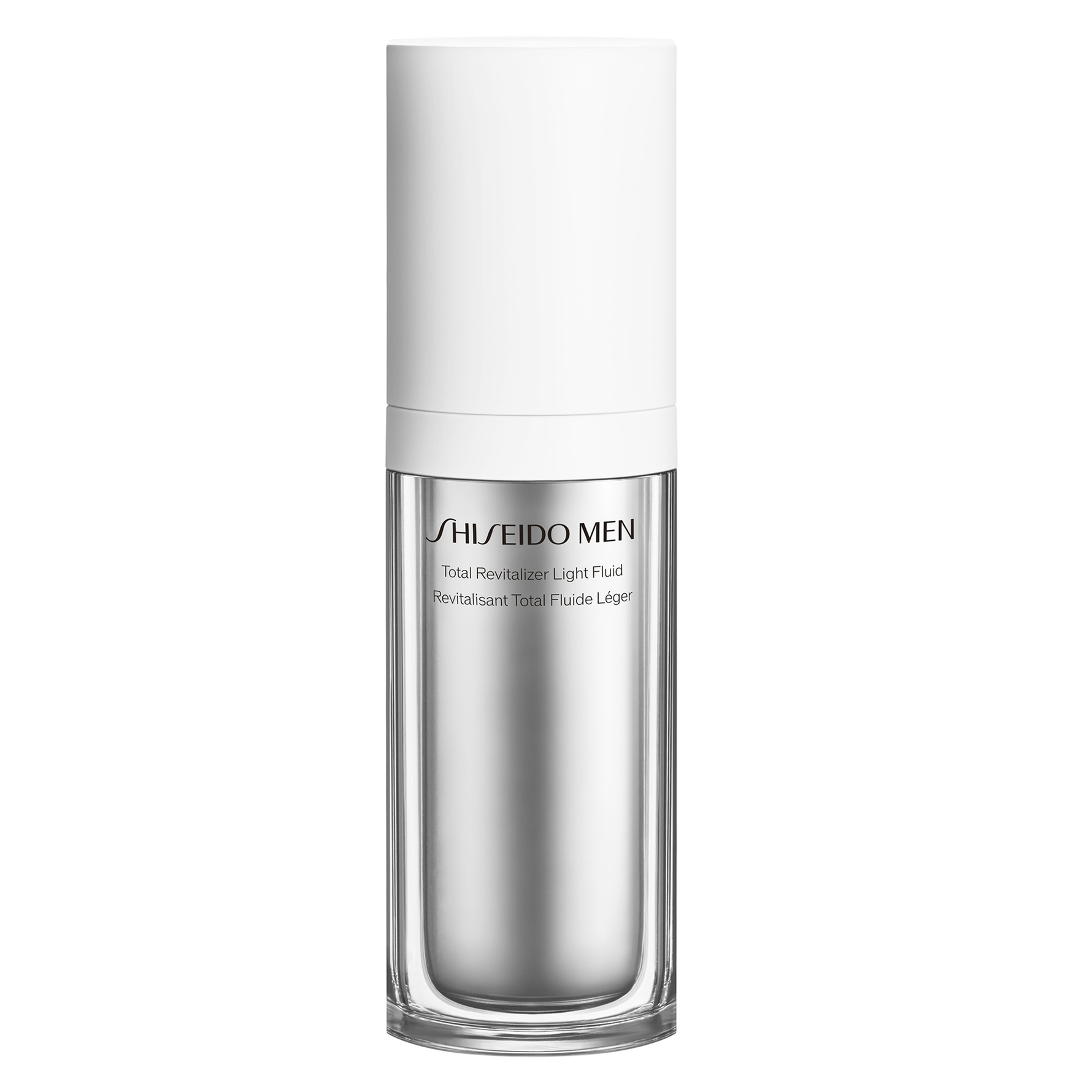
The brand's range spans skincare, makeup and fragrance, with additional lines for suncare and men's products. Alongside the long-running Eudermine, current signature products include the Ultimune Power Infusing Serum, the Future Solution LX and Vital Perfection lines, and the Synchro Skin Self-Refreshing Foundation. Ultimune is the brand's best seller and has been widely reviewed as a "holy grail" serum; marketing material credits it with winning more than 179 beauty awards and reports one sold every seven seconds [13].
Much of Shiseido's recent innovation story is built on skin-aging research. Through a collaboration of more than 30 years with the Cutaneous Biology Research Center, a facility established in 1989 by Harvard Medical School and Massachusetts General Hospital with Shiseido's support, the company has studied the role of so-called Memory T cells in the skin. It describes a 2023 finding that these cells selectively remove aged cells and that a protein, CXCL9, helps recruit them; the research was published in the scientific journal Cell [3]. Shiseido has translated this into a proprietary Fermented Camellia Seed Extract, which it markets as "the world's first technology to promote the expression of CXCL9" [3]. Hero ingredients across the range also include reishi mushroom and iris root.
Products are sold in roughly 120 countries through department stores, specialty retailers, pharmacies and e-commerce.
Recognition
Beyond product-level beauty awards, Shiseido's most notable third-party recognition is scientific: its Memory T cell research, conducted with the Cutaneous Biology Research Center, appeared in the peer-reviewed journal Cell in 2023.
Controversies
Shiseido's animal-testing stance has drawn criticism. The company states that it ended animal testing for cosmetic products in April 2013, except where mandated by law or where no alternative method exists for guaranteeing safety. In 2017 its subsidiary NARS announced that it would resume animal testing to comply with Chinese market regulations, saying its products would be tested "except where required by law" [9]. Because Shiseido continues to sell in markets such as mainland China, where animal testing can be legally required, animal-welfare organizations including PETA classify it as not cruelty-free and place it on their list of companies to avoid [10].
Current status
Shiseido remains active and is described as the largest cosmetics firm in Japan and among the largest globally. The parent company reported net sales of 990.6 billion yen for the 2024 financial year and has been undergoing structural reforms while making new acquisitions [11]. The brand is sold worldwide.
Facts & evidence
Documented facts from Glowpedia's fact base — every row carries a source.
Timeline#
Arinobu Fukuhara opens Japan's first Western-style pharmacy in Ginza, Tokyo (founding of Shiseido)↗ corp.shiseido.com
Introduced Eudermine, its first cosmetic product (skincare essence)↗ en.wikipedia.org
Camellia (Hanatsubaki) logo designed by first president Shinzo Fukuhara↗ shiseido.ca
Launched Rainbow Face Powder (seven colors)↗ en.wikipedia.org
Introduced Uviolin, a predecessor to modern sunscreen; began store/chain expansion↗ shiseido.com
Incorporated as Shiseido Co., Ltd. (kabushiki gaisha)↗ corp.shiseido.com
Entered first international markets, starting with Taiwan↗ corp.shiseido.com
Launched Ultimune, developed based on research on 'increasing the power of beauty'↗ shiseido.com
Signature products#
Ultimune Power Infusing Serum (best seller)↗ shiseido.com
1897 | Eudermine | "Skincare essence known for its ability to activate the skin's self-restoring power"↗ shiseido.com
Future Solution LX↗ shiseido.com
SYNCHRO SKIN SELF-REFRESHING Foundation SPF 30↗ shiseido.com
Vital Perfection Uplifting Advanced Cream↗ shiseido.com
Ultimune Power Infusing Serum/Concentrate — Marketed as having won over 179 beauty awards globally with 1 Ultimune sold every 7 seconds; widely reviewed as a 'holy grail' serum↗ projectvanity.com
Key ingredients#
Proprietary technologies & patents#
“the world's first technology to promote the expression of CXCL9”
Mentioned in#
Cell (journal) — Shiseido / CBRC Memory T Cells research published in the journal Cell (Hasegawa T et al., 2023)↗ shiseido.com
Where to buy
Where the brand is sold according to Glowjakt's price data, per market.
Prices come from Glowjakt and are updated daily. Glowpedia receives no payment for clicks.
Ingredients across the range
Key ingredients across Shiseido's range, from the ingredient lists of 574 of 710 products in Sweden.
Share of products with a known ingredient list. “None identified” means nothing matched our ingredient groups, not that the product is free of them.
Related brands
Sources
T1 primary · T2 secondary · T3 note- [2]T1shiseido.comshiseido.com (brand site)
- [3]T1shiseido.com/us/en/memory-t-cells/shiseido.com (brand site)
- [4]T2corp.shiseido.com/en/company/history/corp.shiseido.com (brand site)
- [5]T2corp.shiseido.com/en/company/company-name/corp.shiseido.com (brand site)
- [8]T2shiseido.ca/about-the-shiseido-brand.htmlshiseido.ca (brand site)
- [9]T3en.wikipedia.org/wiki/ShiseidoWikipedia
- [10]T3crueltyfree.peta.org/company/shiseido-cosmetics/crueltyfree.peta.org
- [11]T3tipranks.com/news/company-announcements/shiseido-reports-2024-earnings-amid-strategic-transitiontipranks.com
- [13]T3projectvanity.com/projectvanity/why-shiseido-ultimune-is-my-hg-serum-a-review-of-the-new-ultimune-defense-refresh-mistprojectvanity.com