Overview
Bumble and bumble is a New York professional haircare brand that grew out of a Manhattan salon opened in 1977 by the hairdresser and entrepreneur Michael Gordon [2]. Built on salon craft and backstage editorial styling, it is best known for Surf Spray, an early sea-salt texturising spray. The company has been owned by The Estée Lauder Companies since the early 2000s, making it one of that group's stable of professional and prestige beauty brands.
The brand still operates flagship salons in New York City and distributes its products through retailers in the United States, but it is no longer independent: it is a wholly owned Estée Lauder label rather than a standalone company.
Origin & founders
The brand traces its stated origin to a salon on Hairdresser's Row in New York City in 1977 [3]. Founder Michael Gordon had trained at established prestige salons in Mayfair, London, and chose the disarming, slightly silly name deliberately. As he later put it, the grander salons "were kind of uncomfortable and pretentious-sounding," whereas "Bumble made it OK for everyone" [4].
There is a wrinkle in the geography. According to an Into The Gloss interview with Gordon, he had earlier run a salon of the same name in Johannesburg, South Africa, before the New York chapter began [4]. The brand's own timeline and the Estée Lauder corporate page place the canonical Bumble and bumble origin at the 1977 New York salon [3]; the South African salon is part of Gordon's personal history, with the name carried over to Manhattan.
From the start the salon drew an editorial crowd. Watching session stylists at work pushed Gordon toward making products that professionals would actually want to use, and the company moved into product development through the 1990s, rolling out a full haircare line in 1995 after years of mixing custom formulas for clients.
Ownership
Bumble and bumble is owned by The Estée Lauder Companies, the American beauty group whose portfolio also includes Estée Lauder, Clinique, M·A·C, Aveda, La Mer, Jo Malone London and Bobbi Brown. Wikipedia lists it as one of 27 brands under the group [2].
The acquisition came in two stages, and sources differ on when full ownership was reached. Leonard Lauder bought a majority stake in 2000, a figure quote-verified in Gordon's Into The Gloss interview [4]. The Estée Lauder Companies is then reported to have completed full ownership in 2006, buying out the remaining minority holders [2]; that later date is drawn from secondary summaries rather than a primary filing, so it is best treated as the reported completion of a process that began in 2000.
Philosophy & positioning
The company positions itself as a professional brand rooted in salon and runway work. Its corporate description states that it is "deeply, passionately, and fearlessly dedicated to the craft of hair" and offers "high-performing products and techniques to serve every hair type, texture, and styling preference" [3]. Estée Lauder's brand page frames this heritage with the shorthand "45+ Years on the floor," "30+ Years of product innovation" and "20+ Years backstage."
Products & innovation
The brand's first product was Brilliantine, a styling pomade, followed by early staples such as its Seaweed Shampoo and Conditioner, which the founder noted were still in the range decades later.
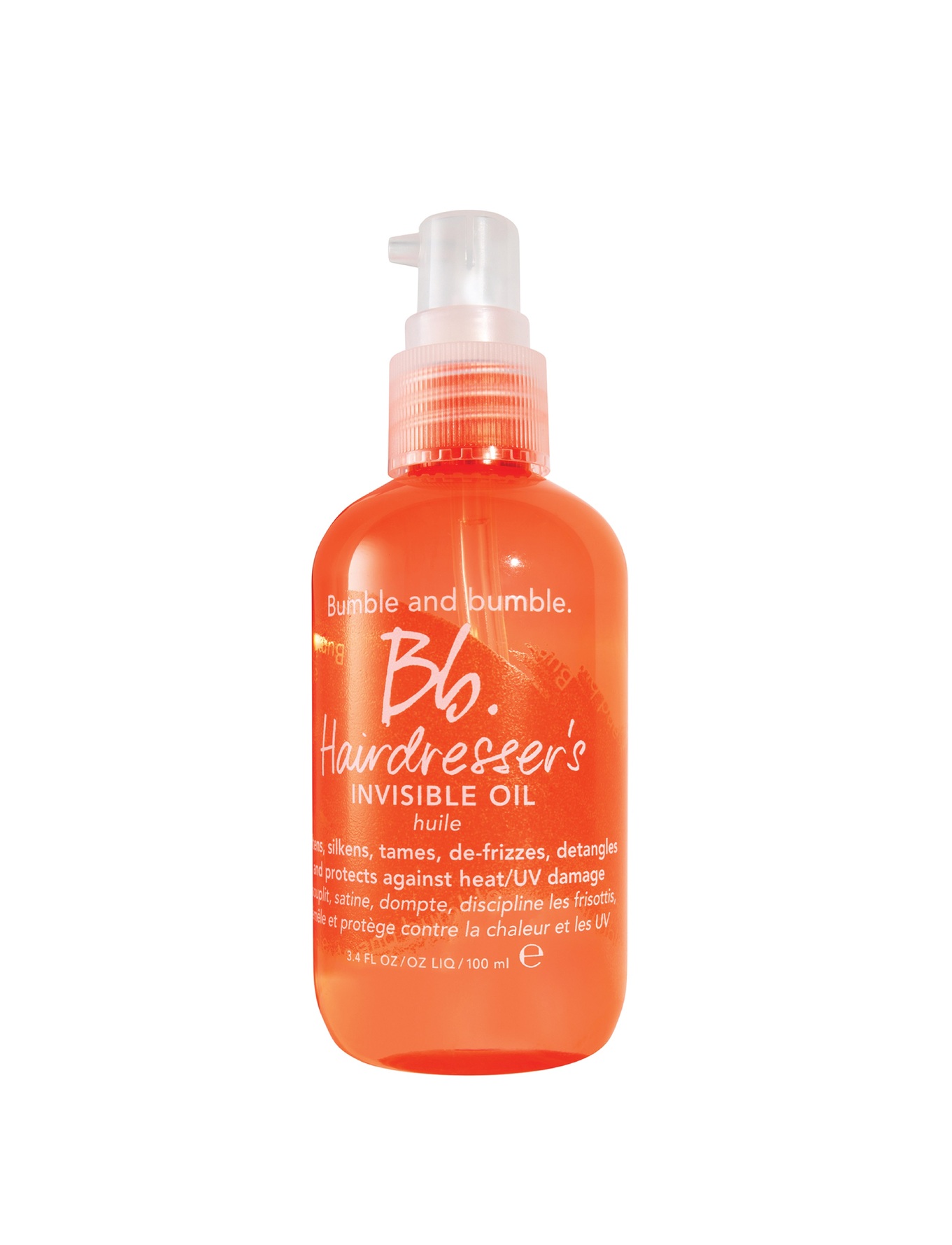
Its signature product is Surf Spray, which the company describes as the first-ever salt-infused spray and credits with winning a CEW Product of the Year award [1]. The formula pairs sea salt with softening oils to add texture without stiffness. Refinery29, reviewing a later "Malibu Beach" version, called it a "cult-favorite" and praised its "rope-y texture that looks messy in the best way" [5]. Other notable launches include Bb.Band, a bra-strap-inspired hairband shown at the Moschino runway in Milan, developed alongside the brand's backstage styling work.
Recognition
Bumble and bumble earned an early reputation through fashion media: it appeared on Vogue's list of the top ten New York salons, and the magazine described the "Bad Bob" cut the salon created for the model Karen Elson as the "haircut of the year" [1]. Surf Spray has been repeatedly framed in the beauty press as a category-defining sea-salt product.
Controversies
In 2012, founder Michael Gordon was the subject of a tax case; The New York Times reported under the headline "Salon Tycoon Is Accused of Hiding $29.6 Million From the I.R.S." [2]. The matter concerned Gordon personally rather than the brand's operations, by then already under Estée Lauder ownership.
Current status
Bumble and bumble remains an active professional haircare label, but as an acquired brand rather than an independent company. It operates flagship salons in New York City and sells through retailers including Sephora, Ulta and Macy's. Its last individually noted brand activity in the source record is a 2020 advertising campaign featuring professional athletes [2].
Facts & evidence
Documented facts from Glowpedia's fact base — every row carries a source.
Timeline#
Bumble and bumble salon opens on Hairdresser's Row in New York City↗ elcompanies.com
Leonard Lauder / Estée Lauder Companies buys a majority stake in Bumble and bumble↗ intothegloss.com
Acquired (majority stake) by Estée Lauder Companies↗ intothegloss.com
The Estée Lauder Companies completes full acquisition, buying the remaining minority stake from Michael Gordon and partners (per search summary; not independently quote-verified — see audit)↗ en.wikipedia.org
Awards#
CEW Product of the Year — Surf Spray↗ bumbleandbumble.com
Signature products#
We invent the first-ever salt-infused spray, Surf Spray; it wins CEW Product of the Year.↗ bumbleandbumble.com
Our first product, Brilliantine, hits shelves.↗ bumbleandbumble.com
Our bra strap-inspired hairband, Bb.Band, launches at the Moschino show in Milan.↗ bumbleandbumble.com
Seaweed Shampoo and Seaweed Conditioner, which still exist↗ intothegloss.com
Surf Spray — Described as a cult-favorite/iconic sea salt spray that pioneered the salt-spray category↗ refinery29.com
Key ingredients#
Mentioned in#
Vogue — Bumble and bumble landed on Vogue's seminal list of Top 10 New York Salons; Vogue called the brand's 'Bad Bob' cut for Karen Elson the 'haircut of the year'↗ bumbleandbumble.com
Refinery29 — Reviewed the 'cult-favorite Surf Spray' (Malibu Beach iteration), praising its 'rope-y texture that looks messy in the best way'↗ refinery29.com
Where to buy
Where the brand is sold according to Glowjakt's price data, per market.
Prices come from Glowjakt and are updated daily. Glowpedia receives no payment for clicks.
Ingredients across the range
Key ingredients across Bumble and bumble's range, from the ingredient lists of 127 of 157 products in Sweden.
Share of products with a known ingredient list. “None identified” means nothing matched our ingredient groups, not that the product is free of them.
Related brands
Sources
T1 primary · T2 secondary · T3 note- [1]T1bumbleandbumble.com/about-bumblebumbleandbumble.com (brand site)
- [2]T3en.wikipedia.org/wiki/Bumble_and_bumbleWikipedia
- [3]T3elcompanies.com/en/our-brands/bumble-and-bumbleelcompanies.com
- [4]T3intothegloss.com/2016/01/michael-gordon-hairintothegloss.com
- [5]T3refinery29.com/en-us/2018/05/198449/bumble-and-bumble-surf-spray-reviewrefinery29.com