Overview
Helena Rubinstein is a prestige skincare and makeup house founded in 1902 and named after its founder, the Polish-born entrepreneur of the same name. The business began in Melbourne, Australia, expanded across Europe and the United States over the following decades, and is today a French-headquartered brand owned by L'Oréal, which has held it in full since 1988 [3]. The company no longer operates as an independent firm; it functions as an ultra-premium label within L'Oréal's luxury division, marketed chiefly in Asian and European markets and notably absent from the United States.
The brand positions itself as a science-led skincare specialist and uses the tagline "Avant-Garde Skincare Since 1902." Its identity draws heavily on its founder, who built one of the first international cosmetics companies and is remembered for two maxims the brand still invokes: that beauty owes everything to science, and that beauty is power [4].
Origin and founder
The founder was born Chaja Rubinstein in Kraków in 1872, the eldest of eight daughters in a Polish Jewish family. According to L'Oréal's corporate history, she emigrated alone to Australia at the age of 24 to live with an uncle, having rejected an arranged marriage. There she reformulated a face cream her mother had given her into a product she called Crème Valaze — described by L'Oréal as her first success [4]. Wikipedia's account adds that she identified lanolin, plentiful from Australian sheep, as a key ingredient and used lavender and pine bark to mask its odour.
She opened her first salon on Collins Street in Melbourne in 1902, an enterprise later described as one of the world's first cosmetics companies [3]. From the salon she diagnosed customers' skin and prescribed treatments, an approach that prefigured the brand's later emphasis on tailored skincare.
History and milestones
In 1908, leaving the Melbourne shop to her sister, Rubinstein moved to London with about $100,000 and began building an international business. A Paris salon followed in 1912, where her clients included the actresses Colette and Sarah Bernhardt, and in 1915 she opened her first American salon on West 49th Street in Manhattan. In the United States she competed directly with Elizabeth Arden, a rivalry that became one of the defining stories of the early cosmetics trade.
The company changed hands twice during her lifetime through her own dealings. She sold the American business to Lehman Brothers in 1928 for $7.3 million, then bought it back for a fraction of that price after the Great Depression and rebuilt its value, a turn that made her one of the wealthiest women in America [2].
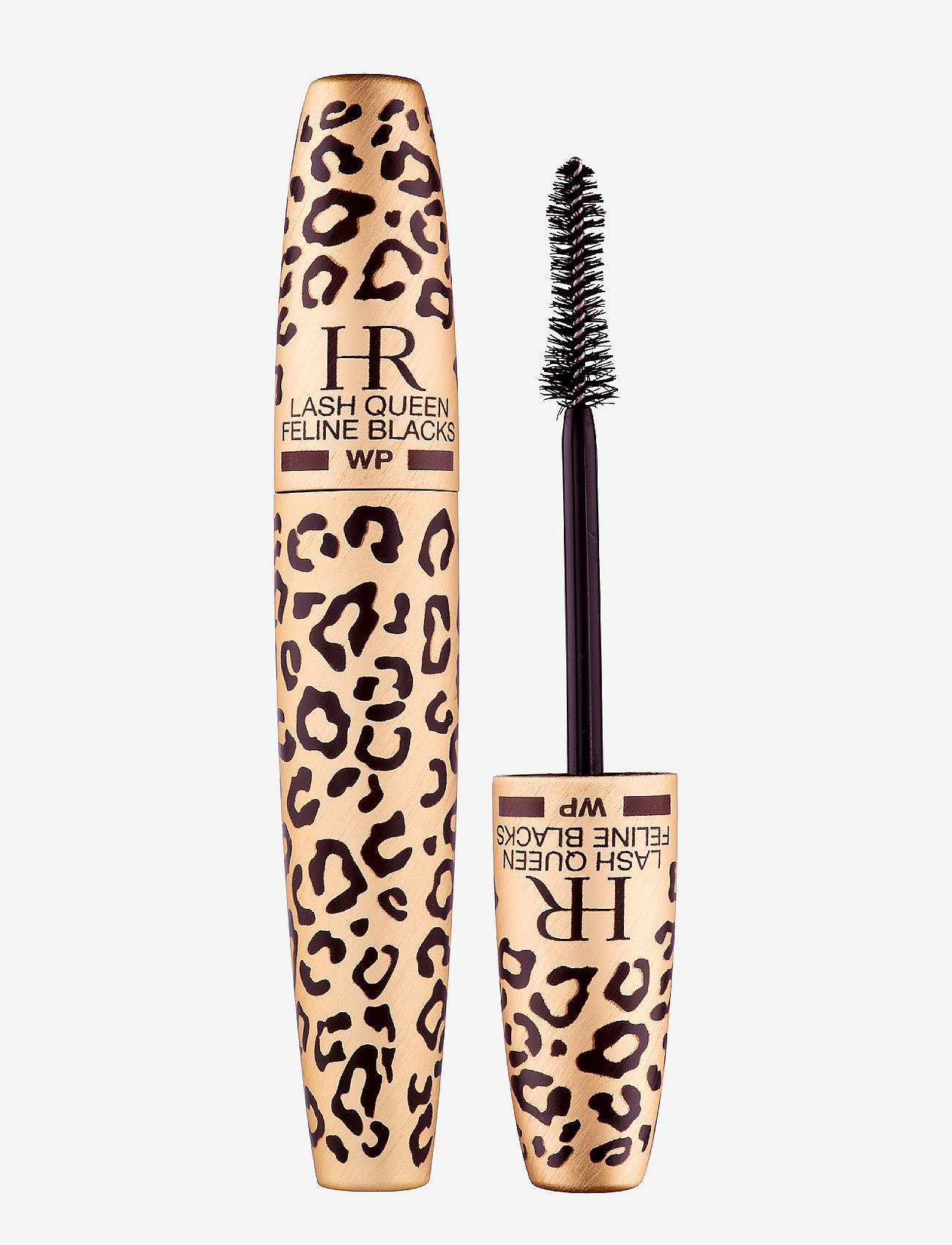
Several of the brand's innovations date from this period and are still cited in its heritage. The company says Rubinstein was the first to classify skin types — oily, combination and dry — in 1910, and the first to submit products to rigorous scientific testing [4]. In 1939 she acquired the patent for the first waterproof mascara, which was demonstrated during an aquatic ballet. In 1956 the brand introduced Mascara-Matic, described as the first refillable mascara in a tube. Helena Rubinstein died in New York City on 1 April 1965, aged 92 [2].
Ownership
After the founder's death the company passed through several owners. It was sold to Colgate-Palmolive in 1973 [2], and later came under Albi International. L'Oréal's acquisition unfolded in two stages, which sources record slightly differently. Wikipedia's biography of the founder and L'Oréal's own corporate history state simply that L'Oréal acquired the brand in 1984 [2][4]; the company-history record clarifies that in 1984 L'Oréal took only part of the business — its Japanese and Latin American divisions — through a joint arrangement with Albi International, and that full ownership followed in 1988 [3]. The brand is now operated from Levallois-Perret, near Paris, as part of L'Oréal's portfolio, alongside other luxury labels in the group such as Lancôme and Kiehl's.
Philosophy and positioning
The house presents itself as a prestige brand built on the conviction that effective beauty depends on science, summarised in the founder's statement that "beauty owes everything to science." Its trade messaging extends this with the line "beauty without science is nothing," paired with claims of collaboration with dermatologists and scientists. Female empowerment is the second pillar the brand attaches to its founder, who is credited with championing the idea that beauty is a form of power. The current positioning is explicitly ultra-premium, with hero products priced in the hundreds of euros and a clientele the brand describes as affluent and VIP-oriented, concentrated in Asian and European luxury markets.
Products and innovation
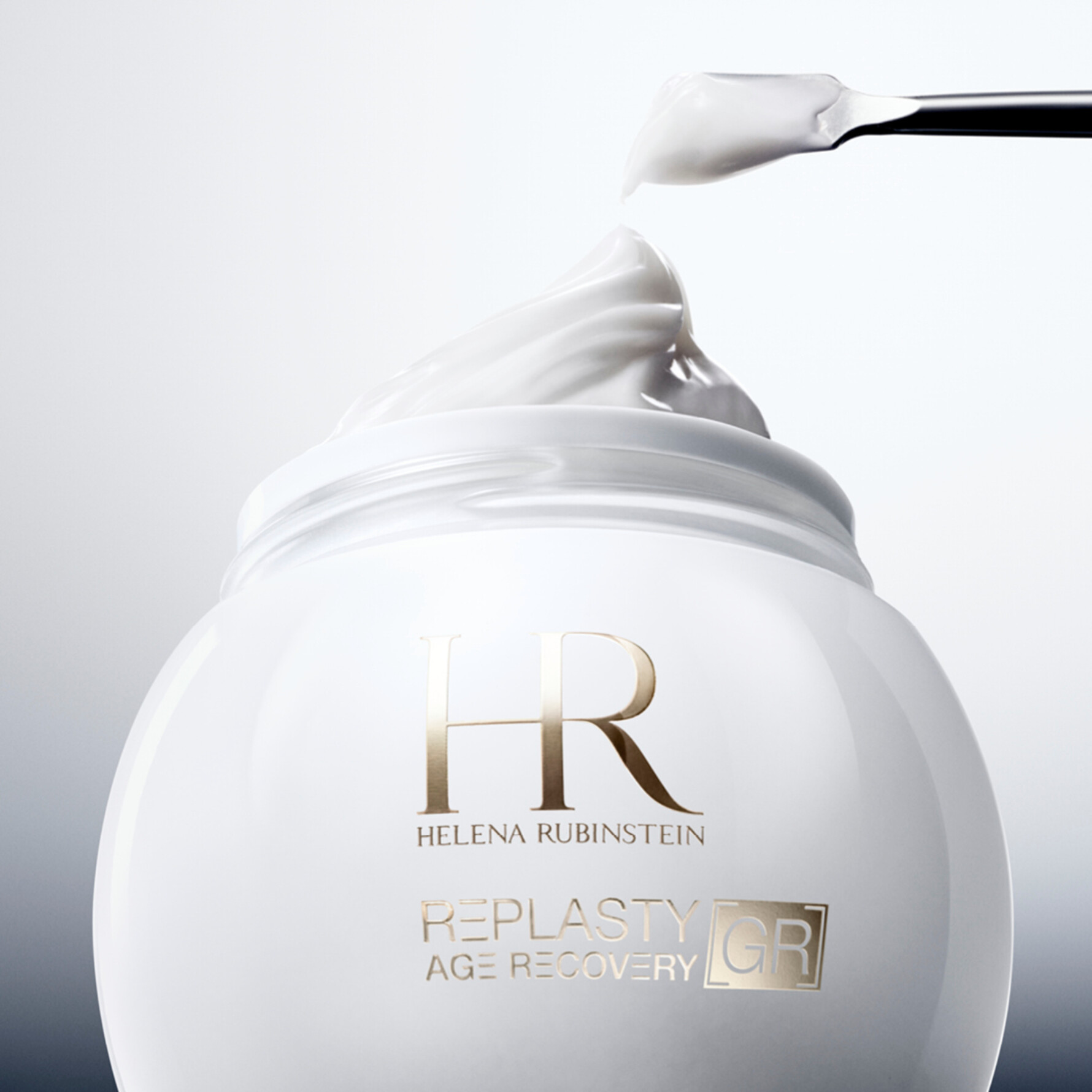
Beyond the historical Crème Valaze and Mascara-Matic, the brand's modern range centres on a few skincare franchises. Replasty, its hero line launched in 2011, includes an Age Recovery night cream; Powercell draws on what the company calls green science using samphire plant stem cells; and Prodigy Cellglow makes anti-ageing and brightening claims and incorporates edelweiss cells. A higher Life Pearl tier reaches still more premium price points. The brand also lists Demi Moore, Michelle Yeoh and Adriana Lima among its ambassadors.
Recognition and press
The trade publication WWD covered the brand in 2023 as a case study in its repositioning, reporting that its Replasty night cream had been a top-selling super-premium cream in Japan and Hong Kong in the first half of that year, and quoting L'Oréal chief executive Nicolas Hieronimus describing it as one of the greatest transformation stories inside the group [5]. The founder herself has been the subject of museum attention: the Jewish Museum in Manhattan staged an exhibition titled "Helena Rubinstein: Beauty Is Power" in 2014–2015, described as the first museum show devoted to her.
Controversies
L'Oréal's takeover of the brand drew criticism on historical grounds. L'Oréal's founder, Eugène Schueller, had been a wartime collaborator, and Jacques Corrèze, who engineered the Helena Rubinstein acquisition, had earlier been active in expropriating Jewish property in Paris [2]. Separately, the brand's Israeli manufacturing facility prompted an Arab League boycott of all L'Oréal products [3]. Bloomberg reported in 2011 on a book examining whether anti-Semitism had played a part in L'Oréal's pursuit of the company.
Current status
Helena Rubinstein is an acquired brand rather than an independent company, wholly owned by L'Oréal since 1988. It is operated as an active ultra-premium skincare franchise within the group's luxury division and, by 2023, was reported to have crossed €1 billion in annual sales and ranked among the top brands in that division [7]. Its commercial focus is firmly on Asia and Europe, while it remains unavailable in the United States, where its operation was closed in 2003 and not restored.
Facts & evidence
Documented facts from Glowpedia's fact base — every row carries a source.
Timeline#
Opened first beauty salon in Melbourne on Collins Street, Australia↗ en.wikipedia.org
Moved to London with ~$100,000 and began an international enterprise↗ en.wikipedia.org
Opened a salon in Paris; known to actresses such as Colette and Sarah Bernhardt↗ en.wikipedia.org
Opened first American cosmetics salon in New York City (West 49th Street, Manhattan)↗ en.wikipedia.org
Sold the American business to Lehman Brothers for $7.3 million↗ en.wikipedia.org
Repurchased the company from Lehman Brothers for ~$1.5 million after the Great Depression↗ loreal.com
Created Mascara-Matic, the first refillable mascara in a tube↗ en.wikipedia.org
Helena Rubinstein died April 1, aged 92, in New York City↗ en.wikipedia.org
Helena Rubinstein, Inc. sold to Colgate-Palmolive↗ en.wikipedia.org
L'Oréal acquired part of the company (Japanese and Latin American divisions) from Albi International↗ en.wikipedia.org
L'Oréal acquired full ownership of Helena Rubinstein Incorporated↗ en.wikipedia.org
L'Oréal began repositioning the brand as an ultra-premium skin care franchise (Replasty hero line launched)↗ en.wikipedia.org
Signature products#
she reformulated a face cream her mother had given her, creating Valaze cream ("gift from heaven" in Hungarian)—her brand's first success story↗ loreal.com
Replasty (hero line, launched 2011): Age Recovery night cream at €400/50ml↗ wwd.com
Powercell: Green science using samphire plant stem cells↗ wwd.com
Prodigy Cellglow: Antiaging and brightening claims↗ wwd.com
She invented the mascara tube and created "Mascara Matic" in 1956—"the first refillable mascara in a tube" with silk fiber enrichment.↗ en.wikipedia.org
Replasty Age Recovery Night Cream — Top-selling superpremium cream in Japan and Hong Kong (H1 2023); hero line at €400/50ml↗ wwd.com
Proprietary technologies & patents#
“Powercell: Green science using samphire plant stem cells”
“1939: Purchased patent for first waterproof mascara, demonstrated during aquatic ballet”
Mentioned in#
WWD (Women's Wear Daily) — Case study on Helena Rubinstein's comeback as an ultra-premium skincare brand under L'Oréal; CEO Nicolas Hieronimus called it 'one of the greatest transformation stories inside L'Oréal'↗ wwd.com
Bloomberg — Coverage of whether anti-Semitism drove L'Oréal's takeover of Helena Rubinstein (book review)↗ bloomberg.com
Where to buy
Where the brand is sold according to Glowjakt's price data, per market.
Prices come from Glowjakt and are updated daily. Glowpedia receives no payment for clicks.
Ingredients across the range
Key ingredients across Helena Rubinstein's range, from the ingredient lists of 58 of 66 products in Sweden.
Share of products with a known ingredient list. “None identified” means nothing matched our ingredient groups, not that the product is free of them.
Related brands


Sources
T1 primary · T2 secondary · T3 note- [2]T3en.wikipedia.org/wiki/Helena_RubinsteinWikipedia
- [3]T3en.wikipedia.org/wiki/Helena_Rubinstein_IncorporatedWikipedia
- [4]T3loreal.com/en/news/group/helena-rubinstein-a-champion-of-the-beauty-industry/loreal.com
- [5]T3wwd.com/beauty-industry-news/skin-care/helena-rubinstein-roaring-comeback-1235961009/wwd.com
- [7]T3businessoffashion.com/articles/beauty/why-the-worlds-biggest-beauty-company-is-moving-upmarket/businessoffashion.com