Overview
Lancôme is a French perfume and cosmetics house, founded in 1935 and headquartered in Paris. It spans three product areas — makeup, skincare and fragrance — and has been a subsidiary of the French group L'Oréal since 1964 [4]. Within L'Oréal's luxury arm, the company describes itself as the leading selective beauty brand across roughly 130 markets, with annual sales reported by trade press at about 4.5 billion euros in 2025.
The brand was built around the figure of its founder, the perfumer Armand Petitjean, and a golden rose emblem drawn from the place that gave the house its name. Although it has belonged to a larger group for six decades, Lancôme continues to operate as a distinct brand and marked its 90th year in 2025.
Origin & founders
Lancôme was established in 1935 by Armand Petitjean, who had come to perfumery through the mentorship of François Coty. Petitjean launched the house when he was over 50 years old, with international ambitions from the start. According to L'Oréal, he chose a name that echoed the Paris landmark Place Vendôme — something with a clear French sound and pedigree. The name itself was inspired by the forest and château of Lancosme in the Brenne region of France's Indre valley, and the roses growing nearby shaped the brand's golden rose symbol.
There is some disagreement over who founded the company. L'Oréal, as the present owner, and the trade publication WWD credit Armand Petitjean as the founder [2][4]. Wikipedia instead names two co-founders, Guillaume d'Ornano and Armand Petitjean, and records that d'Ornano's wife Elisabeth chose the brand's name [3]. By that account the two men later fell out; d'Ornano went on to help found the houses Orlane and Sisley, while Petitjean remained the figure associated with the Lancôme that survives today.
To introduce the house, Petitjean presented five fragrances — Tropiques, Conquête, Kypre, Tendres Nuits and Bocages — at the 1935 Universal Exposition in Brussels, where they were awarded medals. Rather than relying on advertising in the early years, he trained beauty advisers through an in-house school during the Second World War, in the belief that customers could become product ambassadors through word of mouth.
History & milestones
Lancôme moved into skincare in 1936 with Nutrix, described as an all-purpose repair cream. The brand expanded through the following decades and joined L'Oréal in 1964.
A turning point came in 2009 with the launch of the Génifique serum and the start of what the company calls its Beauty Tech work — combining scientific research with personalised skincare and makeup. In 2012 the house released the fragrance La Vie Est Belle. Cyril Chapuy, global president of L'Oréal Luxe, later said its success was what made Lancôme "a three-axes-strong powerhouse" across skincare, makeup and scent; before it, the brand had only a limited global fragrance presence [5]. In 2019 the company introduced Idôle, which it presents as its first range designed deliberately for a Gen Z audience. In 2020 it acquired the Domaine de la Rose, an estate in Grasse — a town long tied to French perfumery — which it renovated to preserve fragrance know-how.
Ownership
L'Oréal acquired Lancôme in 1964, and the brand has operated as part of the group ever since [4]. It sits within the L'Oréal Luxe division alongside other houses owned by the group, including Kiehl's, Biotherm, Helena Rubinstein, Carita and the more recently acquired Creed. As of 2025 the company reports the brand holds the top position among selective beauty brands worldwide, ranking first in China and most of Europe and second in the United States; trade press put its annual sales near 4.5 billion euros.
Philosophy & positioning
The company positions Lancôme as a luxury house whose central idea is that happiness is a source of beauty. Its leadership has framed this as the view that "beauty is more than appearance; it is a source of happiness, confidence, and self-expression," and the brand uses the tagline "Happiness is a powerful source of beauty" [1]. Roughly 40 percent of its business is now transacted online.
Products & innovation
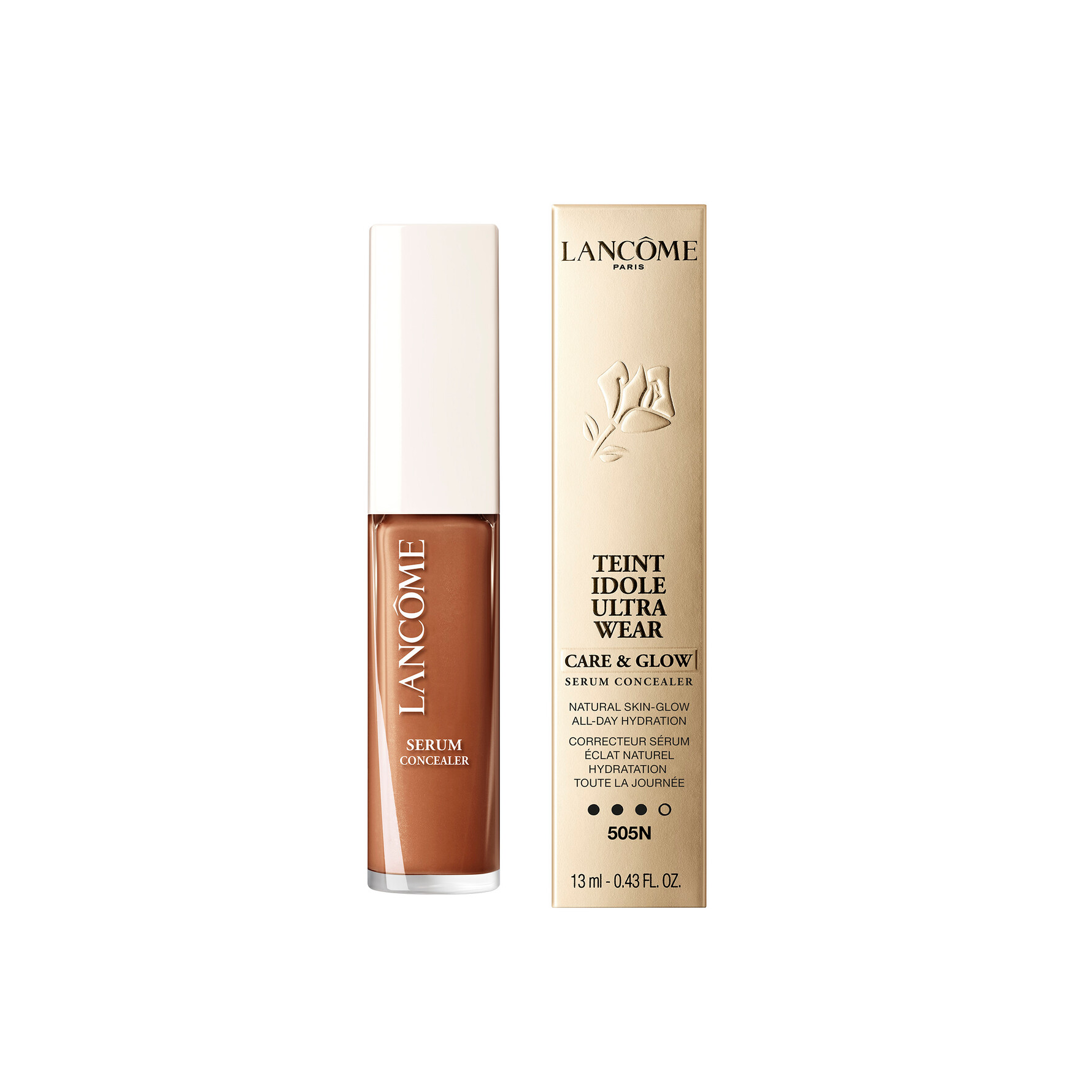
Lancôme works across makeup, skincare and fragrance. In skincare its best-known line is Advanced Génifique, a serum the company associates with microbiome science; the reformulated version is built around ingredients including a Bifidus prebiotic, hyaluronic acid and a vitamin C derivative, and is claimed to improve radiance visibly within seven days [6]. The Absolue range sits at the top of its skincare offering and, according to WWD, generates more than a billion dollars in annual sales on its own [4]. In makeup, the Teint Idôle foundation and Hypnôse mascara are among its long-running products.
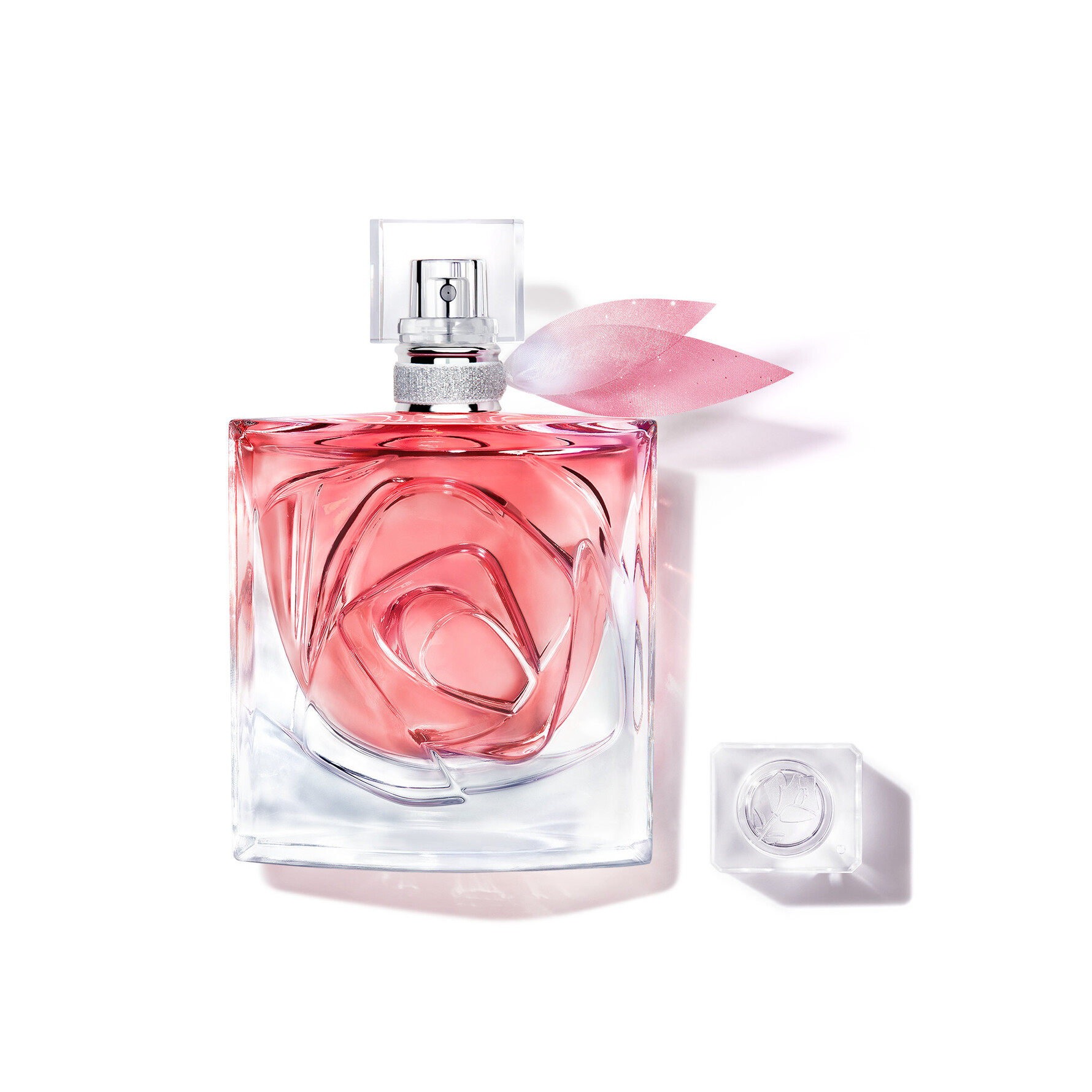
Fragrance is anchored by La Vie Est Belle, created by the IFF perfumers Olivier Polge, Dominique Ropion and Anne Flipo from 63 ingredients — fewer than many perfumes use. WWD reports it ranked first in Europe for the eleventh consecutive year as of 2024 and among the top five worldwide [5].
The company has continued to invest in what it calls Beauty Tech. Recent examples include Cell BioPrint, a lab-on-chip device the brand says reads skin protein markers to estimate biological age and tailor recommendations, and HAPTA, which it describes as a motion-stabilising makeup applicator launched in September 2025.
Recognition
The Génifique serum has drawn editorial recognition, including an Allure Reader's Choice award and a New Beauty readers' award for best anti-aging serum. W Magazine, in a multi-editor review, called it "a hero product of the classic beauty brand for years," with mixed but largely positive verdicts from its testers [6]. Over the brand's history its public face has included Isabella Rossellini, who served as the international face of Lancôme for 14 years and returned in 2016, and Clive Owen, who in 2006 became the brand's first male spokesperson. Julia Roberts has been the face of La Vie Est Belle since its 2012 launch.
Controversies
In 2016 Lancôme cancelled a planned June concert in Hong Kong by the pro-democracy singer Denise Ho, following a boycott campaign, and stated that Ho was not a spokesperson for the brand [3]. The decision drew protests in Hong Kong and led some local merchants to cut ties with the company, with some stores closing during the protests.
Current status
Lancôme has been owned by L'Oréal since 1964 and remains fully active as a brand within the group's luxury division [4]. Its most recent activity includes its 90th-anniversary year in 2025 and the rollout of new Beauty Tech products such as Cell BioPrint and HAPTA.
Facts & evidence
Documented facts from Glowpedia's fact base — every row carries a source.
Timeline#
Lancôme founded by Armand Petitjean; debuted five fragrances (Tropiques, Conquête, Kypre, Tendres Nuits, Bocages) at the 1935 Universal Expo in Brussels.↗ loreal.com
Entered skincare with Nutrix, an 'all-purpose repair cream'.↗ en.wikipedia.org
Lancôme joined / was acquired by L'Oréal.↗ loreal.com
Acquired by L'Oréal↗ wwd.com
Launched Génifique serum (original formula); also began pioneering Beauty Tech.↗ wmagazine.com
Launched La Vie Est Belle fragrance, which transformed Lancôme into a 'three-axes-strong powerhouse'.↗ wwd.com
Launched Idôle, the first range deliberately designed for Gen Z.↗ wwd.com
Acquired Domaine de la Rose in Grasse, France, to preserve fragrance savoir-faire.↗ loreal.com
Awards#
Allure Reader's Choice award (Génifique) — Serum / anti-aging↗ wmagazine.com
New Beauty Readers' Choice — Best Anti-Aging Serum (Génifique) — Anti-aging serum↗ wmagazine.com
Signature products#
The brand emphasizes Advanced Génifique, enhanced with microbiome science.↗ loreal.com
La Vie Est Belle (2012): Fragrance that crystallized brand purpose↗ wwd.com
Notable offerings include the Absolue range (ultra-premium luxury skincare)↗ loreal.com
Teint Idôle: Foundation franchise ranking top 3 in U.S., top 2 in Europe↗ wwd.com
Hypnôse mascara and Absolue lipstick: Historic iconic products↗ wwd.com
Advanced Génifique Youth Activating Serum — Hero product 'for years' with 'millions of people' who swear by it; over 40,000 'loves' and 4.5/5 on Sephora.↗ wmagazine.com
La Vie Est Belle — Blockbuster fragrance, #1 in Europe for 11 consecutive years (as of 2024), top 5 worldwide.↗ wwd.com
Key ingredients#
Proprietary technologies & patents#
“Lancôme is launching Cell BioPrint lab-on-chip technology to read skin protein biomarkers and provide personalized skincare recommendations based on biological age. Other devices include the Rénergie Nano-Resurfacer with 400 nano-tips.”
Mentioned in#
WWD (Women's Wear Daily) — 90-year anniversary feature: 'How 90-Year-Old Lancôme Pioneers for L'Oréal' — leading luxury beauty brand worldwide, ~4.5 billion euros annual sales.↗ wwd.com
WWD (Women's Wear Daily) — Feature on La Vie Est Belle as blockbuster fragrance, #1 in Europe for 11th consecutive year.↗ wwd.com
W Magazine — Multi-editor honest review of Génifique anti-aging serum, calling it 'a hero product of the classic beauty brand for years'.↗ wmagazine.com
Certification pass
What each certification and self-stated claim rests on: the source, whose website it's on, and what needs review.
“The brand makes bestselling skincare and fragrances refillable, benefiting the environment, consumers (through lower prices), and the brand's reputation.”↗ wwd.com
None of these statements has been checked against the certifying bodies' registers. The statements were observed on 16 Jun 2026.
Where to buy
Where the brand is sold according to Glowjakt's price data, per market.
Prices come from Glowjakt and are updated daily. Glowpedia receives no payment for clicks.
Ingredients across the range
Key ingredients across Lancôme's range, from the ingredient lists of 1,074 of 1,279 products in Sweden.
Share of products with a known ingredient list. “None identified” means nothing matched our ingredient groups, not that the product is free of them.
Related brands
Sources
T1 primary · T2 secondary · T3 note- [1]T2loreal.com/en/luxe-division/lancome/loreal.com (brand site)
- [2]T2loreal.com/en/articles/group/visionaries-armand-petitjean/loreal.com (brand site)
- [3]T3en.wikipedia.org/wiki/Lanc%C3%B4meWikipedia
- [4]T3wwd.com/beauty-industry-news/beauty-features/what-makes-lancome-pioneer-loreal-90-year-anniversary-1238092978/wwd.com
- [5]T3wwd.com/beauty-industry-news/fragrance/long-live-lancome-la-vie-est-belle-blockbuster-fragrance-1238107905/wwd.com
- [6]T3wmagazine.com/beauty/lancome-genefique-anti-aging-serum-reviewwmagazine.com