Overview
La Roche-Posay is a French dermatological skincare brand built around the selenium-rich thermal spring water of the spa town of the same name in western France. It develops products for sensitive skin in partnership with dermatologists, and its core ranges span dry skin, sun protection, acne and skin repair. The brand has been owned by the L'Oréal Group since 1989, where it sits within the company's Dermatological Beauty Division (formerly the Active Cosmetics Division) [7][8].
According to L'Oréal, La Roche-Posay has worked closely with dermatologists since its creation in 1975 and describes itself as the world's leading dermatological skincare brand. Sources differ on the starting date: L'Oréal and several editorial accounts give 1975 as the brand's founding, while the trade title Cosmetics Business reports that dermal products formulated with the town's thermal water were first produced in 1928, with pharmacist René Levayer establishing the La Roche-Posay laboratory and its first skincare range in 1975 [7].
Origin & founders
The brand takes its name and its central ingredient from the commune of La Roche-Posay in the Vienne department of western France, whose thermal spring water has long been associated with the treatment of skin conditions. Editorial accounts describe the water as rich in selenium, an antioxidant mineral, with soothing and protective properties. The thermal facility in the town predates the brand: a L'Oréal press release dates its creation to 1921 and calls it the first thermal station in Europe dedicated to treating dermatological diseases.
The skincare brand itself was founded in 1975 by the pharmacist René Levayer. Several editorial profiles name the dermatologist Frédéric Chéreau as a co-founder alongside Levayer, while Cosmetics Business credits Levayer alone [8][7]. The early range applied the town's thermal water to formulas aimed at sensitive and eczema-prone skin.
Ownership
The L'Oréal Group acquired the brand in 1989, shortly after the La Roche-Posay foundation was set up to support dermatological research [7]. One editorial profile states that the brand is wholly owned by L'Oréal S.A. and notes that, although the company emphasises its dermatologist partnerships, product development takes place within L'Oréal's research centres rather than with outside clinicians who "do not own the brand nor run the labs" [8]. Within L'Oréal, La Roche-Posay is grouped with other dermatological and skincare names such as Vichy, CeraVe, Kiehl's and Lancôme.
In 2018, L'Oréal moved to acquire the company operating the town's thermal spa, the Société des Thermes de La Roche-Posay, in an offer announced that August; the spring water was declared to be of public interest the same year [5]. The brand had been acquired decades earlier, so this transaction concerned the spa facility rather than the skincare business itself.
Philosophy & positioning
La Roche-Posay positions itself as a specialist in sensitive skin, with formulas built on its thermal water and developed for use under dermatological guidance. The company frames its work in activist terms, stating that it fights "so that skin pathologies won't scar lives forever" and calling itself "more than skincare … a brand of greater good" [2]. In its 2019 annual report, L'Oréal described the brand's aim as improving "the lives of people with all skin types and concerns by placing its expertise at the heart of its products." Its brand sites carry the tagline "Life changing skincare prescribed by dermatologists."
In retail terms, editorial coverage places the brand in a middle tier of skincare — above mass-market options such as CeraVe but below luxury lines — and notes that it is sold largely through pharmacies. It is widely identified with the "French pharmacy" skincare category. with the "French pharmacy" skincare category.
Products & innovation
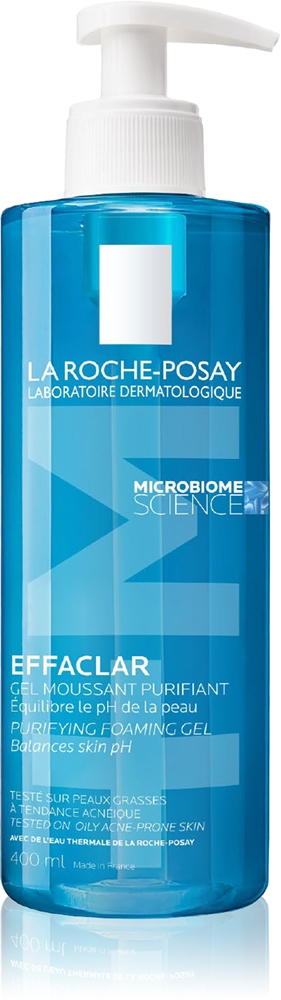
The brand's catalogue is organised around several long-running ranges: Lipikar for dry and atopic skin, Anthelios for sun protection, Effaclar for oily and acne-prone skin, Toleriane for sensitive skin, and Cicaplast for skin repair. Recurring ingredients include the La Roche-Posay thermal spring water itself, along with selenium, niacinamide, vitamin B5, hyaluronic acid and salicylic acid.
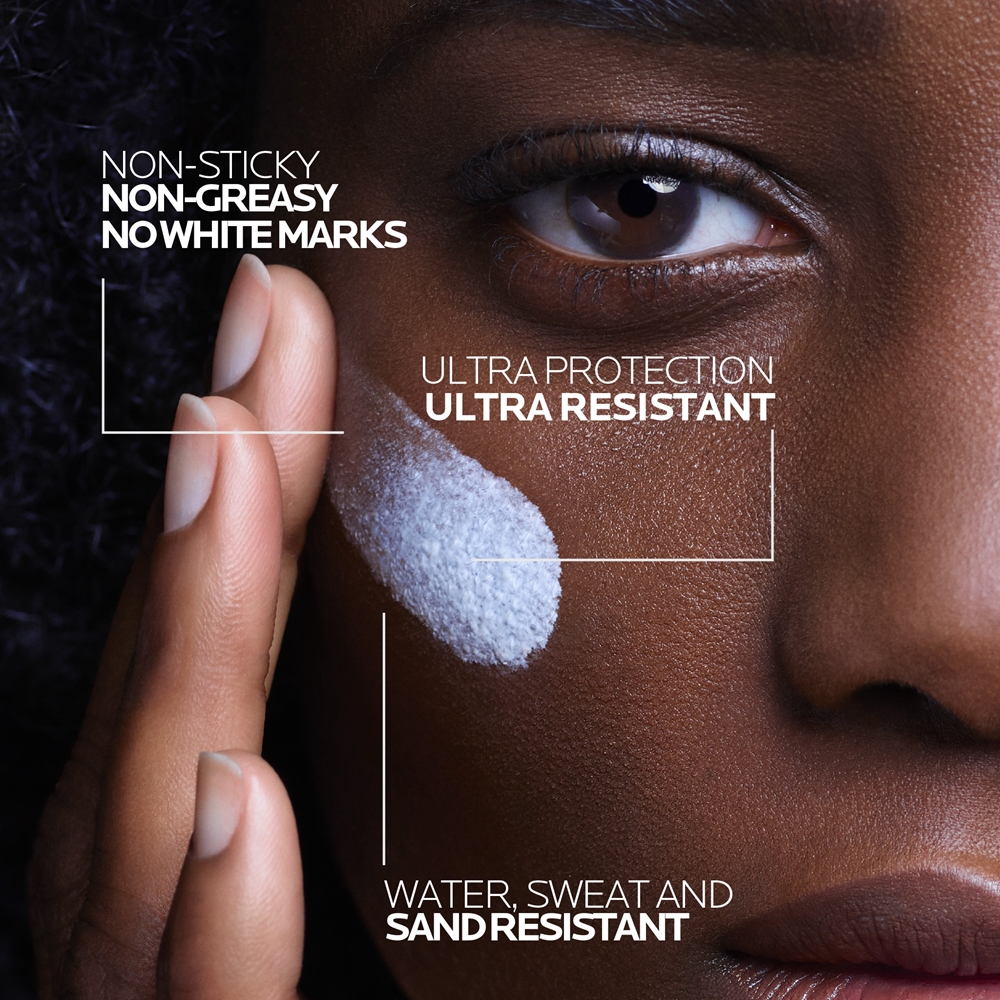
Among its signature products, the Cicaplast Baume B5 repair balm is frequently cited in editorial "cult" product lists, described by one profile as a long-standing bestseller and noted as suitable for babies, children and adults. The Anthelios sun-protection line is the brand's other widely recognised product family. In 2006, according to Cosmetics Business, the company launched an Anthelios sunscreen containing the filter Mexoryl SX, described as a sun filter offering protection against both short and long UVA rays [10]. Later innovations associated with the brand include the UVMune 400 filter and the proprietary Netlock technology, as well as SPOTSCAN+, a free AI-based skin-analysis tool the company says is available in more than 40 countries.
L'Oréal states that the brand has conducted more than 600 clinical studies on 90,000 patients ranging from newborns to centenarians, and describes it as recommended by over 100,000 dermatologists worldwide [2]. The Fondation La Roche-Posay, established in 1995, supports dermatological science and social outreach, including programmes for children with cancer.
Controversies
The brand's acne and sun-care products have been the subject of benzene-contamination concerns in the United States. In 2021, the independent laboratory Valisure reported finding benzene, a known carcinogen, in a range of sunscreens, including some La Roche-Posay Anthelios aerosol lots; certain products were voluntarily withdrawn or reformulated without a formal FDA-mandated recall at the time [11].
Subsequent testing focused on benzoyl peroxide acne treatments. Valisure reported that such products, including La Roche-Posay's, could generate benzene at levels far above the FDA limit of two parts per million, and in 2024 filed a petition with the FDA requesting recalls. In March 2025, L'Oréal said that, in coordination with the FDA, it had removed the current formula of La Roche-Posay's Effaclar Duo from US retailers, citing a new formula in development; six class-action lawsuits were filed against L'Oréal over benzene in La Roche-Posay and CeraVe products [9].
Current status
La Roche-Posay remains an active, globally distributed brand, but it has been owned by L'Oréal since 1989 and operates as part of the company's Dermatological Beauty Division [8]. Its recent activity includes current product lines such as Anthelios UVMune 400, Cicaplast Baume B5+ and the Mela B3 serum, and the 2025 news around the Effaclar Duo reformulation in the United States. In 2022 the brand reopened its thermal centre in the French town, where patients with skin diseases receive dermatological care, and it marked its 50th anniversary in 2025.
Facts & evidence
Documented facts from Glowpedia's fact base — every row carries a source.
Timeline#
La Roche-Posay Laboratoire Dermatologique founded by pharmacist René Levayer (with dermatologist Frédéric Chéreau); first skincare range based on thermal spring water created.↗ loreal.com
L'Oréal Group acquired the brand and folded it into its Active Cosmetics Division (now Dermatological Beauty Division).↗ markskinexpert.com
Acquired by L'Oréal Group (majority stake).↗ cosmeticsbusiness.com
Fondation La Roche-Posay established, focusing on dermatological science and social outreach.↗ loreal-finance.com
Launched Anthelios sunscreen containing Mexoryl SX, protecting against short and long UVA rays.↗ cosmeticsbusiness.com
L'Oréal made an offer to acquire Société des Thermes de La Roche-Posay (the thermal spa); the source water was declared of public interest.↗ loreal-finance.com
L'Oréal announced acquisition of Société des Thermes de La Roche-Posay (thermal spa company).↗ loreal-finance.com
Reopened its iconic thermal centre in France, where patients with skin diseases receive dermatological care.↗ loreal.com
Signature products#
There's a handful of products that sit in the beauty hall of fame—bestsellers that people use and love year after year and always top those cult lists, and La Roche-Posay Cicaplast Baume B5 is one of them.↗ markskinexpert.com
In 2006, the company revolutionized the sunscreen market with the creation of their innovative sunscreen, Anthelios, which contained Mexoryl SX™, the only sun filter in a sunscreen formula to protect against both short and long UVA rays.↗ cosmeticsbusiness.com
Effaclar: formulated for oily and acne-prone skin based on skin physiology understanding↗ loreal-finance.com
Toleriane range: high-tolerance formulas minimizing allergic reaction risks↗ loreal-finance.com
Its key product ranges are: Lipikar (dry skin), Anthélios (photoprotection), Effaclar (acne), Tolériane (sensitive skin) and Cicaplast (skin repair).↗ loreal.com
Cicaplast Baume B5 — Described as a beauty 'hall of fame' bestseller that consistently tops cult lists.↗ markskinexpert.com
Anthelios (sunscreen) — Dermatologist-recommended cult sunscreen line featuring proprietary Mexoryl/Netlock UV filters.↗ markskinexpert.com
Key ingredients#
Proprietary technologies & patents#
“featuring proprietary UV filters like Mexoryl and Netlock technology”
Mentioned in#
Cosmetics Business — Reported L'Oréal's US recall of Effaclar Duo current formula over benzene/benzoyl peroxide concerns, in coordination with the FDA.↗ cosmeticsbusiness.com
Cosmetics Business — Brand-history feature 'Something in the water for La Roche-Posay' covering thermal-water origins, 1975 founding by René Levayer, and 1989 L'Oréal acquisition.↗ cosmeticsbusiness.com
Where to buy
Where the brand is sold according to Glowjakt's price data, per market.
Prices come from Glowjakt and are updated daily. Glowpedia receives no payment for clicks.
Ingredients across the range
Key ingredients across La Roche-Posay's range, from the ingredient lists of 220 of 240 products in Sweden.
Share of products with a known ingredient list. “None identified” means nothing matched our ingredient groups, not that the product is free of them.
Related brands
Sources
T1 primary · T2 secondary · T3 note- [2]T1loreal.com/en/dermatological-beauty-division/la-roche-posay/loreal.com (brand site)
- [5]T2loreal-finance.com/eng/news-release/loreal-announces-project-acquisition-societe-thermes-roche-posayloreal-finance.com (brand site)
- [7]T3cosmeticsbusiness.com/something-in-the-water-for-la-roche-posay-99029cosmeticsbusiness.com
- [8]T3markskinexpert.com/brands/la-roche-posay/markskinexpert.com
- [9]T3cosmeticsbusiness.com/lor%C3%A9al-sa-recalls-effaclar-duo-us-benzene-cancer-fears-acne-treatementcosmeticsbusiness.com
- [10]T3cosmeticsbusiness.com/untold-story-of-la-roche-posay-s-anthelios-spfcosmeticsbusiness.com
- [11]T3dermatologytimes.com/view/breaking-news-benzene-found-in-various-acne-products-valisure-files-petition-with-fda-to-recall-treatmentsdermatologytimes.com