Overview
Le Labo is a niche fragrance house founded in 2006 in New York City. Its two founders, Fabrice Penot and Edouard Roschi, set out to create what they called "a scented revolution in a world of conventional perfumery," opening their first lab at 233 Elizabeth Street in the Nolita neighbourhood of Manhattan [4]. The company built its identity around "slow perfumery": fragrances are hand-blended fresh for each customer on-site and finished with a label bearing the location, date and client's name [6]. Since 2014 Le Labo has been owned by The Estée Lauder Companies, which acquired it for a reported $60 million [5]; the founders stayed on, and the brand has continued to operate under its own name.
The house is best known for Santal 33, an eau de parfum that became one of the most recognisable scents of the 2010s. The New York Times described it in 2015 as "the most ubiquitous scent in fashion." Le Labo today runs a global network of standalone boutiques and department-store counters, sells its fragrances and home and body lines online, and is a certified B Corporation.
Origin and founders
Le Labo was created in 2006. On its own about page the company describes itself simply as the work of "two friends" and does not name them [2]; Wikipedia and several editorial sources identify the founders as Fabrice Penot and Eddie (Edouard) Roschi, who met working in the fragrance industry. The pair opened the first lab at 233 Elizabeth Street in Nolita, New York City.
Accounts of the brand's origin carry a deliberate double meaning. The company is legally founded and headquartered in New York, but Wikipedia also frames it as "a slow perfumery brand born in Grasse, France" [4] — a reference to the southern French town long associated with perfumery rather than to the firm's actual founding place. The brand site itself makes no mention of Grasse.
From the start, the concept set itself against mass-market perfumery. According to the company, "there are too many bottles of perfume and not enough soulful fragrances," and it frames its work around "the soulful power of thoughtful hands: hand-picked roses, hand-poured candles, hand-formulated perfumes."
Products and positioning
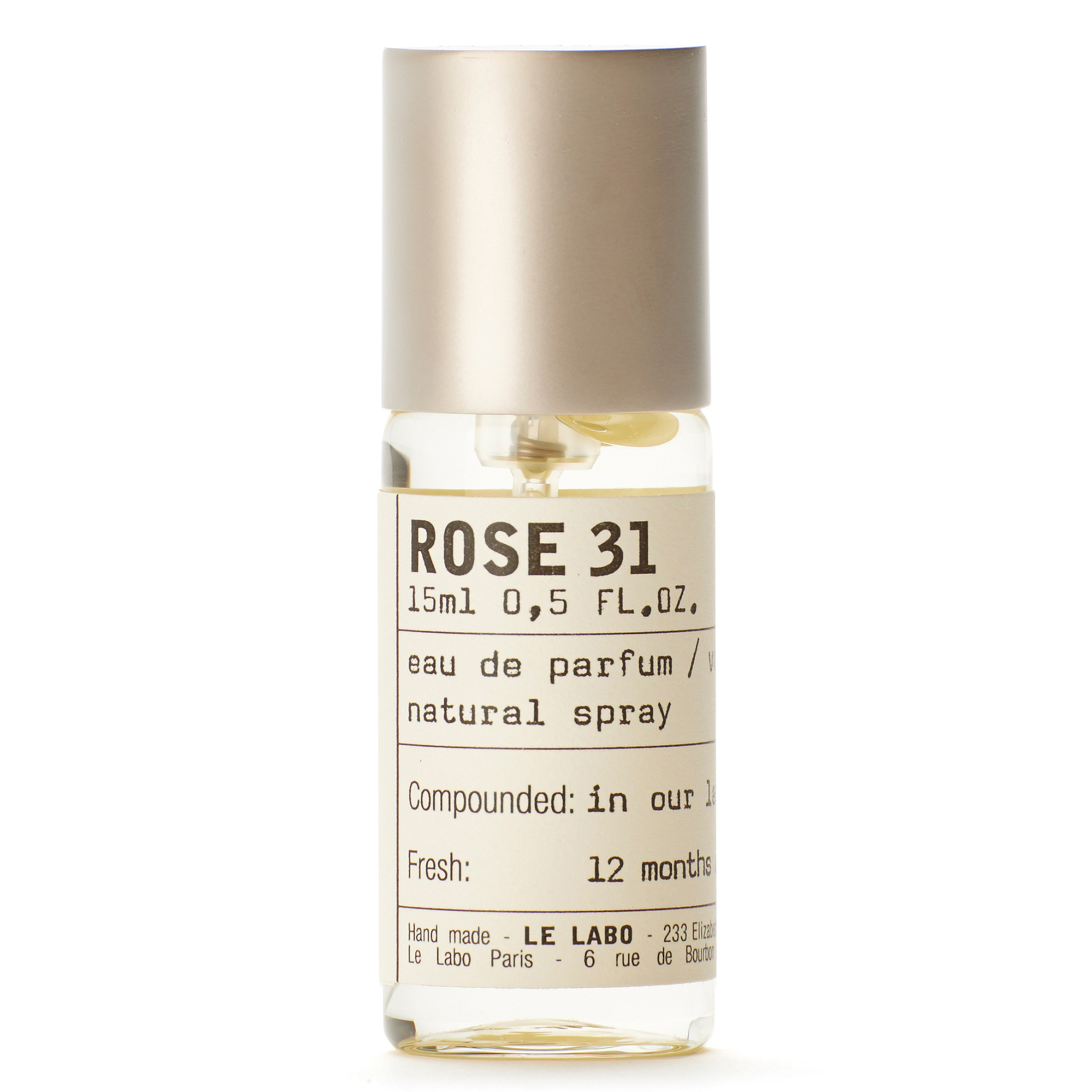
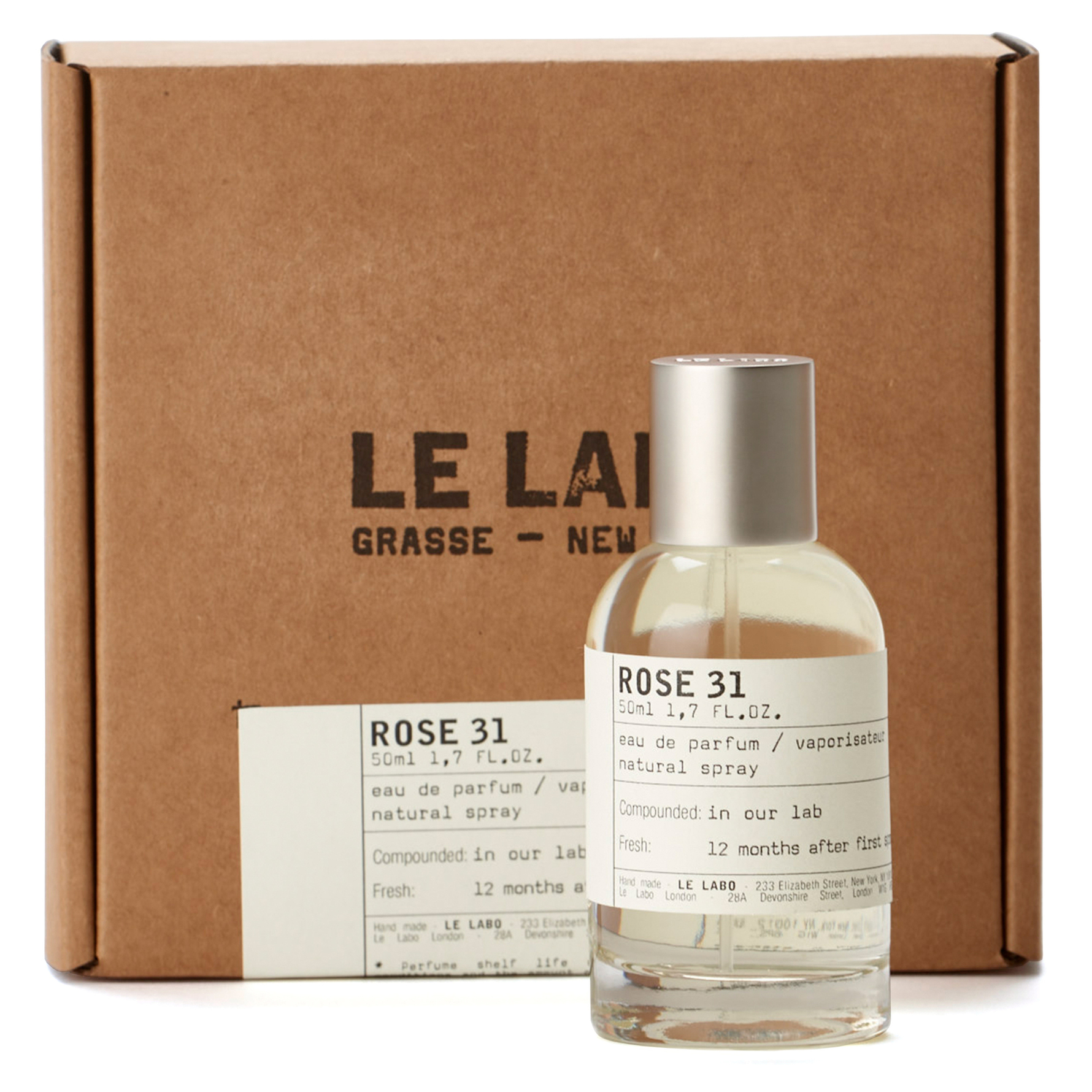
Le Labo names each fragrance after its principal scent note and the total number of ingredients used to make it [4] — hence Rose 31, Thé Noir 29 and Bergamote 22. Alongside the fine-fragrance "Classic Collection," the house sells a home line of candles, diffusers and incense, and a body, hair and face range described by the company as "sensorial creations." A City Exclusives collection ties certain scents to particular cities, such as Tubéreuse 40 for New York and Gaïac 10 for Tokyo, and these are normally sold only in their associated city [4].
The brand's signature is Santal 33. It grew out of a fragrance concept the founders first rejected: perfumer Frank Voelkl proposed it as a personal scent in 2006, but Penot and Roschi judged it too weak and turned it into a candle, Santal 26, instead. The candle sold far beyond expectations — Penot estimated it made up about 70% of turnover in the brand's first few years [5]. After sustained customer demand, Voelkl was asked to reformulate the scent, and following two years and some 400 prototypes, Santal 33 launched as an eau de parfum in 2011. Other widely cited scents include Thé Noir 29 and Thé Matcha 26.
The company positions its products at the luxury end of the market; one retailer review described its "luxurious apothecary vibe" [7]. Le Labo operates a refill programme for its fragrances and home products, which it presents as part of its approach to sustainability, and it holds B Corporation certification.
Ownership
The Estée Lauder Companies acquired Le Labo in 2014 for a reported $60 million, with the founders remaining to continue creating scents. The brand sits within Lauder's portfolio of fragrance and beauty houses, alongside sister labels including Jo Malone London, Aveda, La Mer and M·A·C. It has continued to trade under its own name and to expand its boutique network internationally; its homepage still lists the holding entity as Le Labo Holding LLC.
Recognition
Santal 33 attracted unusual press attention for a fragrance. Beyond the 2015 New York Times line calling it "the most ubiquitous scent in fashion," the paper returned to it in 2020, with Melissa Kirsch writing that "the uptown 2 train to Times Square on weekdays at 8 a.m. in the fall was the Santal Express" [5]. The same year, Vogue's Maya Singer examined a backlash against the scent through the sociologist Pierre Bourdieu's idea of distinction, noting that its very popularity had stripped away the status-signalling that once made it appealing. An Estée Lauder executive called it "the icon fragrance of an entire generation."
The scent has been linked to a range of public figures, including Alexa Chung, Justin Bieber, Emma Roberts and Emily Weiss. Beyoncé featured Le Labo's Santal 26 candles in the "Sandcastles" sequence of her 2016 visual album Lemonade [4].
Current status
Le Labo remains in active operation as a subsidiary of The Estée Lauder Companies, which has owned it since 2014. It runs a live e-commerce site and a global network of boutiques and department-store counters across North and South America, Europe, the Middle East, Asia and Australia [4], and continues its City Exclusives programme.
Facts & evidence
Documented facts from Glowpedia's fact base — every row carries a source.
Timeline#
Le Labo founded by Fabrice Penot and Edouard Roschi; first lab opened at 233 Elizabeth Street, Nolita, New York City.↗ lelabofragrances.eu
Santal 33 Eau de Parfum launched after reformulating the Santal 26 candle (perfumer Frank Voelkl; ~400 prototypes over two years).↗ en.wikipedia.org
Acquired by The Estée Lauder Companies for $60 million.↗ en.wikipedia.org
Acquired by The Estée Lauder Companies for $60 million; founders remained to continue creating scents.↗ en.wikipedia.org
Signature products#
Most popular scents include Santal 33, Thé Noir 29, and Thé Matcha 26.↗ en.wikipedia.org
Most popular scents include Santal 33, Thé Noir 29, and Thé Matcha 26.↗ en.wikipedia.org
Most popular scents include Santal 33, Thé Noir 29, and Thé Matcha 26.↗ en.wikipedia.org
Signature fragrances include: Violette 30, Santal 33, Another 13, Eucalyptus 20, Lavande 31, Thé Matcha 26, Thé Noir 29, Rose 31, Bergamote 22↗ lelabofragrances.eu
Penot estimates the candle represented 70% of their turnover in the first few years.↗ en.wikipedia.org
Santal 33 — The New York Times (2015) called the unisex fragrance "the most ubiquitous scent in fashion"; it became a cult secret and an Estée Lauder executive called it "the icon fragrance of an entire generation."↗ en.wikipedia.org
Mentioned in#
The New York Times — Called Santal 33 "the most ubiquitous scent in fashion"; described it as "an antidote to the obsession with hype" that "quickly became a sort of cult secret."↗ en.wikipedia.org
The New York Times — Melissa Kirsch wrote: "the uptown 2 train to Times Square on weekdays at 8 a.m. in the fall was the Santal Express."↗ en.wikipedia.org
Vogue — Maya Singer analyzed the Santal 33 backlash through Pierre Bourdieu's concept of distinction, noting wide popularity stripped away its status-signaling function.↗ en.wikipedia.org
Certification pass
What each certification and self-stated claim rests on: the source, whose website it's on, and what needs review.
“Certification: B Corporation”↗ lelabofragrances.eu
“Footer includes: Store Locator, Contact Us, Privacy Policy, Terms & Conditions, Refill Program”↗ lelabofragrances.eu
“Their approach was to create pure, clean fragrances without the typical preservatives and animal testing relied upon by some commercial competitors”↗ gcimagazine.com
None of these statements has been checked against the certifying bodies' registers. The statements were observed on 12 Jun 2026.
Where to buy
Where the brand is sold according to Glowjakt's price data, per market.
Prices come from Glowjakt and are updated daily. Glowpedia receives no payment for clicks.
Ingredients across the range
Key ingredients across Le Labo's range, from the ingredient lists of 95 of 125 products in Sweden.
Share of products with a known ingredient list. “None identified” means nothing matched our ingredient groups, not that the product is free of them.
Related brands

Sources
T1 primary · T2 secondary · T3 note- [2]T1lelabofragrances.eu/se/en/about-uslelabofragrances.eu (brand site)
- [4]T3en.wikipedia.org/wiki/Le_LaboWikipedia
- [5]T3en.wikipedia.org/wiki/Santal_33Wikipedia
- [6]T3gestalten.com/blogs/journal/le-labo-on-customized-creationsgestalten.com
- [7]T3purewow.com/beauty/le-labo-santal-33-reviewpurewow.com