
Overview
Bourjois is a French makeup and fragrance house founded in Paris in 1863 [1]. It began as a supplier of theatrical makeup for the city's actors and cabaret performers and grew into one of France's longest-running cosmetics names, associated above all with its baked powder blush in a small round pot and with the fragrance Soir de Paris. The company has been owned by the American group Coty since 2015 [4], following nearly a century of control by the Wertheimer family, and operates today as an active Coty brand sold in around 80 countries.
Origin & founders
The business traces to the actor and cosmetologist Joseph-Albert Ponsin, who made stage makeup for performers in the Paris theatre district. Wikipedia records that Ponsin created an initial product in 1862 to whiten performers' faces, then "launched his makeup company" the following year [4]; the brand's own site and editorial histories date the founding to 1863 [1]. Ponsin's early line included theatrical sticks given playful names such as "Jaloux" (jealous) and "Amoureux" (in love). In the same period the company began producing its baked blush — a powder-and-water paste poured into curved moulds and oven-set — which became its signature format.
The name comes not from Ponsin but from Alexandre-Napoléon Bourjois, the chemist and manager who took over the firm in 1868 after Ponsin's bankruptcy [5]. According to the cosmetics historian Cosmetics and Skin, Bourjois financed the purchase partly through his wife's dowry. The founder's name is rendered as "Joseph-Albert Ponsin" by Wikipedia and editorial sources, while the brand's own site writes it "Joseph Albert-Ponsin," a difference of hyphen placement [1][4].
History & milestones
Bourjois moved beyond the theatre into the mass market in 1879 with Poudre de Riz de Java, a face powder marketed as Java rice powder that sold in large volumes; the firm also began industrial rouge production around this time. It became a perfumer in 1890, when A. Bourjois et Cie was formally established, and went on to build an international footprint, founding companies in New York, London and Sydney over the following decades.
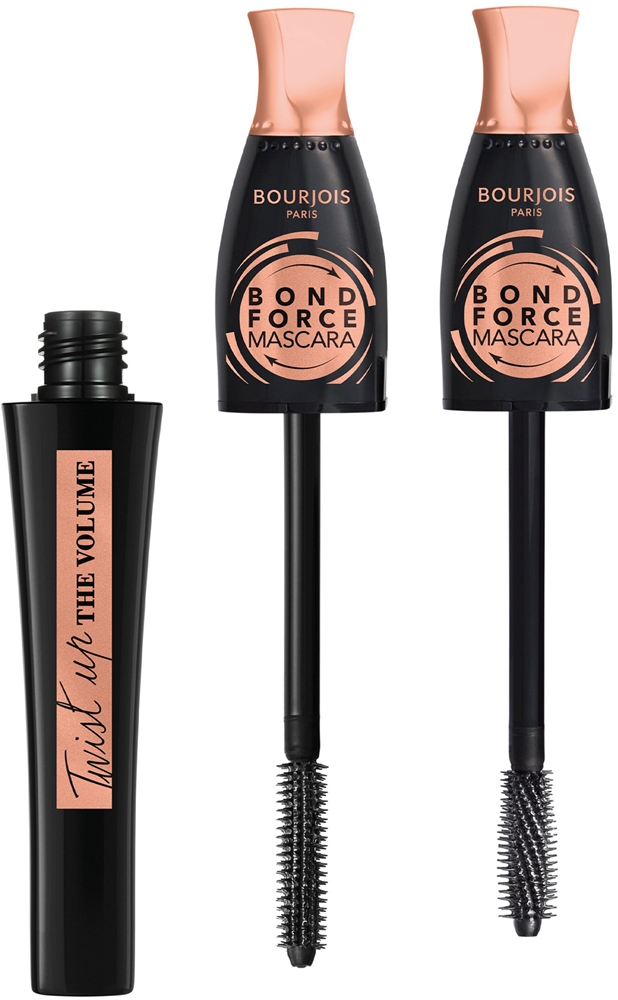
The brand's best-known fragrance, Soir de Paris, was created by the perfumer Ernest Beaux — also the nose behind Chanel No. 5 — and reached the French market around 1929, having launched a few months earlier in the United States as Evening in Paris. Cosmetics and Skin notes its sapphire-blue bottle was designed by Jean Helleu. Bourjois marketed makeup as a tool for personal expression and women's independence in the 1920s and 1930s, a positioning the company still references. In 2001 it introduced the Coup de Théâtre mascara, which it describes as the first dual-ended mascara.
Ownership
Bourjois passed under the control of the Wertheimer family, who took directorship in 1917. The same family later held a controlling interest in Parfums Chanel, and according to Wikipedia they would own Bourjois "for nearly 100 years" [4]. Earlier, Ernest Wertheimer had invested in the firm in 1898 and taken management control [5].
In 2015 the American group Coty acquired Bourjois from the Wertheimer brothers for approximately 239 million US dollars [4]. The seller of record was the Wertheimer family rather than Chanel itself. Under Coty, Bourjois sits alongside other mass-market and licensed beauty names in the group's portfolio, including Rimmel, Max Factor, Sally Hansen, Manhattan and Lancaster.
Philosophy & positioning
The company frames makeup as play rather than obligation, summed up in its motto "La beauté est un jeu" ("Beauty is a game") and the invitation to "have fun with colours and play with your style" [1]. Bourjois cites Parisian women and their style as its central inspiration and describes its core expertise as colour, simplicity and playful makeup. The playfulness extends to product naming: shade names are built on wordplay such as "Abrico'dabra" and "Don't pink of it."
Products & innovation
Across its history Bourjois has spanned complexion products, eyes, lips, nails and fragrance. Its most recognisable item is the Little Round Pot blush (petit pot rond), a compact baked powder the company likens to oven-baked macarons. Other recurring products include the Healthy Mix foundation, which the brand markets as a vitamin-enriched formula offering a radiant finish and hydration for up to 24 hours [3], and the Java rice powder that drove its nineteenth-century expansion. In fragrance, Soir de Paris remains its most celebrated scent.
Controversies
Bourjois is not certified cruelty-free. Specialist assessment sites including Cruelty-Free Kitty report that the brand is not considered cruelty-free, sells its products in mainland China — where animal testing has been legally required for imported cosmetics — and is not vegan, and that it holds no Leaping Bunny or PETA certification [6]. These sources also note that its parent, Coty, engages in animal testing. Bourjois makes no cruelty-free, vegan or sustainability claims on its own website.
Current status
Bourjois remains commercially active as a Coty brand. It runs a current e-commerce storefront and continues to launch products, with distribution reported across roughly 80 countries and more than 26,000 retail points. Its headquarters location is given inconsistently across sources: the brand's site lists an address on rue du Quatre Septembre in central Paris [1], while Wikipedia records the headquarters as Puteaux, in the Paris area [4].
Facts & evidence
Documented facts from Glowpedia's fact base — every row carries a source.
Timeline#
Joseph-Albert Ponsin founds the makeup business in the Paris theatre district and creates the first 'Little Round Pot' baked blush↗ bourjois.fr
Alexandre-Napoléon Bourjois takes over Ponsin's entire activity (after Ponsin's bankruptcy)↗ cosmeticsandskin.com
Poudre de Riz de Java (Java rice powder) launches and expands the brand to the mass market; rouge (baked-disk) manufacturing begins↗ en.wikipedia.org
Bourjois becomes a parfumeur; A. Bourjois et Cie founded↗ bourjois.fr
Pierre and Paul Wertheimer assume directorship of Bourjois (the Wertheimer family, later owners of the Chanel group, would own Bourjois for nearly 100 years)↗ en.wikipedia.org
Soir de Paris / Evening in Paris fragrance launches (Ernest Beaux), becoming the brand's most celebrated fragrance↗ en.wikipedia.org
Coup de Théâtre mascara launches as the first dual-ended mascara↗ bourjois.fr
Coty acquires Bourjois from the Wertheimer family for ~$239 million↗ en.wikipedia.org
Acquired by Coty from the Wertheimer brothers for approximately $239 million↗ en.wikipedia.org
Awards#
London exhibition award (Poudre de Riz de Java) — Face powder↗ cosmeticsandskin.com
Signature products#
the brand pioneered its signature "little round pot" (petit pot rond) blush through a unique baking process↗ bourjois.fr
Soir de Paris (1929 in France): Released earlier as Evening in Paris in American market (November 1928), packaged in "a distinctive sapphire-blue bottle designed by Jean Helleu"↗ cosmeticsandskin.com
Fond de Teint Healthy Mix (foundation)↗ bourjois.fr
"Coup de théâtre" mascara (2001): first dual-ended mascara↗ bourjois.fr
Java rice powder (2 million boxes sold annually)↗ bourjois.fr
Little Round Pot blush — Described as an iconic, century-plus bestseller still loved worldwide; Bourjois is credited with pioneering the compact powder blush format.↗ beautycrew.com.au
Where to buy
Where the brand is sold according to Glowjakt's price data, per market.
Prices come from Glowjakt and are updated daily. Glowpedia receives no payment for clicks.
Ingredients across the range
Key ingredients across Bourjois's range, from the ingredient lists of 349 of 367 products in Sweden.
Share of products with a known ingredient list. “None identified” means nothing matched our ingredient groups, not that the product is free of them.
Related brands
Sources
T1 primary · T2 secondary · T3 note- [1]T1bourjois.fr/pages/a-propos-de-bourjoisbourjois.fr (brand site)
- [3]T2bourjois.fr/pages/le-journal-de-bourjoisbourjois.fr (brand site)
- [4]T3en.wikipedia.org/wiki/BourjoisWikipedia
- [5]T3cosmeticsandskin.com/companies/bourjois.phpcosmeticsandskin.com
- [6]T3crueltyfreekitty.com/brands/bourjois/crueltyfreekitty.com