Overview
L'Oréal Paris is a French mass-market beauty brand and the flagship consumer label of the L'Oréal Group, sold across roughly 150 countries. It spans makeup, skincare, haircare, hair colour and men's grooming, and the company describes it as the number-one beauty brand in the world. The brand is not a standalone company: its name and heritage belong to L'Oréal, the personal-care group founded in Paris in 1909 by the chemist Eugène Schueller [7], and it sits within the group's Consumer Products Division alongside labels such as Maybelline New York and Garnier.
Within the group's portfolio, L'Oréal Paris occupies the accessible end of the market. According to the brand, its purpose is to combine scientific research with affordable products, an idea it sums up as making "luxury beauty at mass" available to a broad audience.
Origin and founders
The L'Oréal story begins in 1909, when Eugène Schueller, a French chemist, developed a hair-dye formula he considered safe to use and sold it to Parisian hairdressers [6][7]. He registered the business under the name Société Française de Teintures Inoffensives pour Cheveux, or the Safe Hair Dye Company of France, and the early product was marketed as l'Auréale, the root of the later L'Oréal name [7]. From these origins in hair colour, the company grew into the broad personal-care group whose name the L'Oréal Paris brand now carries.
The brand's own account of its founding year is not entirely consistent with the wider record. Its L'Oréal Group brand page describes L'Oréal Paris as "founded in 1907," citing "120 years of pioneering science" and the line "Since 1907" [2]. Wikipedia, the L'Oréal Group corporate page and the brand's own history page all date the company's founding to 1909 [6][7]. The 1907 figure most plausibly refers to Schueller's earliest formulation work before the company was formally incorporated; 1909 is the year cited as the founding of the company across cross-checked sources.
History and milestones
L'Oréal Paris took shape as the group's eponymous consumer brand and expanded outward from hair colour. By its own history, the 1980s and 1990s brought a move into makeup and skincare aimed partly at women entering the workplace, and the 2000s saw the launch of L'Oréal Men Expert, which the brand describes as the first mass-market anti-ageing line for men.
The brand's most lasting cultural marker is its advertising line. In 1971 the slogan "Because I'm Worth It" was written by Ilon Specht, a 23-year-old copywriter at the New York agency McCann, for the Préférence home hair-colour line [8][9]. The phrasing later shifted to "Because You're Worth It" and, around 2009, to "Because We're Worth It" [7]. The brand frames the line less as marketing copy than as a statement of intent: the company's Global Brand President, Delphine Viguier-Hovasse, has said that "when we say 'Because You're Worth It', it's not a tagline, it's a brand mission" [9]. The slogan has been translated into 40 languages, and the brand marked its fiftieth anniversary in 2021 [9].
Ownership
L'Oréal Paris is owned by the L'Oréal Group and operates within its Consumer Products Division. The group's wider portfolio places it among sister brands including Maybelline New York, Garnier, NYX Professional Makeup and Mixa in the same division, with other labels such as Lancôme, Kiehl's, Vichy and Biotherm held in the group's luxury and dermatological divisions. The brand itself does not carry an independent acquisition history; its corporate parent expanded over the decades through purchases including Helena Rubinstein and The Body Shop [7].
Philosophy and positioning
The brand positions itself around accessibility and science. The company says its mission is to "advance the role of every woman in society, in all her diversity," and it organises its identity around three stated pillars: pioneering science, the feminine, and the feminist. The long-running slogan is presented as the centre of this positioning, and the brand has tied it to women's self-worth and empowerment campaigns, including its Stand Up programme against street harassment and its Women of Worth initiative.
L'Oréal Paris is a drugstore-tier brand distributed through multiple retail channels rather than a selective or boutique network. The company frames this breadth as a deliberate pairing of "luxury and accessibility."
Products and innovation
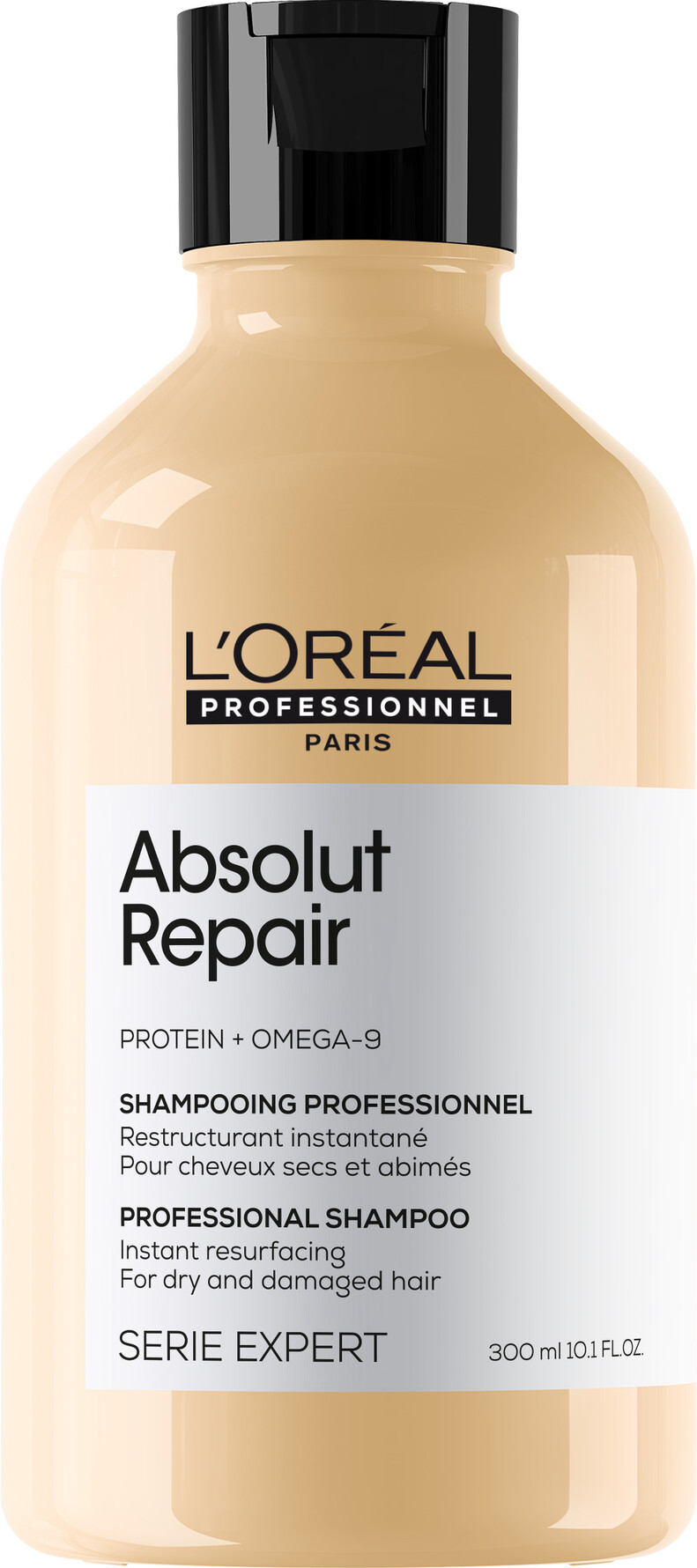
The brand's range is organised across hair colour, hair care, hair styling, skincare and cosmetics. Signature lines include Superior Preference and Excellence in home hair colour, Elnett hairspray, the Revitalift and Age Perfect skincare ranges, and cosmetics such as True Match foundation and the Voluminous and Telescopic mascaras.
On the research side, the brand cites the scale of its parent group's science operation, reporting 4,200 researchers across 21 research centres and access to 18,000 active patents. It highlights Episkin, a reconstructed human-skin model the company says it pioneered in 1989 as an alternative to animal testing, ahead of regulation [2]. The brand also states that it has not tested its products or ingredients on animals since 1989 [4].
Sustainability
L'Oréal Paris operates under its parent group's sustainability framework, L'Oréal for the Future, which addresses climate, nature and circularity. At brand level it promotes an initiative styled "Because Our Planet Is Worth It," which the company links to a commitment to sustainable growth through 2030.
Recognition
The slogan has drawn outside commentary as an example of early feminist advertising. A 2024 Euronews Culture feature examined its cultural significance, quoting Viguier-Hovasse that "it was at the beginning of feminism in the US, and claiming the self-worth of a woman in an advert, it was really the first time it happened" [8]. The brand also maintains a roster of celebrity ambassadors, among them Viola Davis, Eva Longoria, Helen Mirren, Kate Winslet and Andie MacDowell.
Controversies
The controversies attached to L'Oréal are largely group-level and predate or sit outside the consumer brand itself. Founder Eugène Schueller has been documented as a Nazi sympathiser and a member of the pro-fascist organisation La Cagoule, and the company is recorded as having hired executives with fascist ties after the Second World War [7]. More recent reporting has raised concerns over child labour in fragrance-ingredient sourcing, alongside historical discrimination lawsuits, criticism of animal-testing claims and false-advertising settlements [7].
Current status
L'Oréal Paris is active. It is described as the L'Oréal Group's flagship consumer brand, operating in around 150 countries, with continuing global ambassador campaigns and a 2025 documentary on the origins of its slogan among its recent visible activity.
Facts & evidence
Documented facts from Glowpedia's fact base — every row carries a source.
Timeline#
L'Oréal founded by chemist Eugène Schueller with a safe hair-colour formula↗ lorealparisusa.com
"Because I'm Worth It" slogan created by copywriter Ilon Specht (McCann) for the Préférence hair color line↗ loreal.com
Pioneered Episkin reconstructed human skin model as an alternative to animal testing (14 years ahead of regulation)↗ loreal.com
Signature products#
Skin Care: Revitalift®, Youth Code, Age Perfect®, Men Expert, Pure-Clay, Pure-Sugar↗ lorealparisusa.com
Cosmetics: Colour Riche®, True Match™, Voluminous®, Telescopic® mascaras, Lash Paradise↗ lorealparisusa.com
Cosmetics: Colour Riche®, True Match™, Voluminous®, Telescopic® mascaras, Lash Paradise↗ lorealparisusa.com
Hair Color: Superior Preference®, Excellence, Excellence Age Perfect, Magic Root, Feria, Colorista↗ lorealparisusa.com
Hair Styling: Elnett, Studio Line↗ lorealparisusa.com
Telescopic mascara — Listed among the brand's signature cosmetics (Voluminous®, Telescopic® mascaras, Lash Paradise)↗ lorealparisusa.com
Proprietary technologies & patents#
“Episkin®, their reconstructed human skin model, pioneered alternatives to animal testing in 1989—14 years ahead of regulation.”
Mentioned in#
Euronews Culture — Feature on the cultural and feminist significance of the "Because I'm Worth It" slogan, with commentary from Global Brand President Delphine Viguier-Hovasse↗ euronews.com
Certification pass
What each certification and self-stated claim rests on: the source, whose website it's on, and what needs review.
“the company "has not tested any of its products or ingredients on animals since 1989.”↗ lorealparisusa.com
None of these statements has been checked against the certifying bodies' registers. The statements were observed on 16 Jun 2026.
Where to buy
Where the brand is sold according to Glowjakt's price data, per market.
Prices come from Glowjakt and are updated daily. Glowpedia receives no payment for clicks.
Ingredients across the range
Key ingredients across L'Oréal Paris's range, from the ingredient lists of 1,626 of 2,728 products in Sweden.
Share of products with a known ingredient list. “None identified” means nothing matched our ingredient groups, not that the product is free of them.
Related brands
Sources
T1 primary · T2 secondary · T3 note- [2]T2loreal.com/en/consumer-products-division/loreal-paris/loreal.com (brand site)
- [4]T2lorealparisusa.com/about-uslorealparisusa.com (brand site)
- [6]T2lorealparisusa.com/our-historylorealparisusa.com (brand site)
- [7]T3en.wikipedia.org/wiki/L'Or%C3%A9alWikipedia
- [8]T3euronews.com/culture/2024/06/25/because-im-worth-it-why-loreal-boss-is-afraid-slogan-will-last-another-50-yearseuronews.com
- [9]T3loreal.com/en/articles/brands/loreal-paris-celebrating-womens-worth/loreal.com