Overview
Rexona is a personal-care brand best known for antiperspirants and deodorants, created in Australia in 1908 [2]. It has been owned by Unilever since around 1930, when Lever Brothers, one of the companies that would soon form Unilever, bought it to expand the brand beyond Australia [2][3]. Today it is sold worldwide, and under several different names depending on the market: Sure in the United Kingdom, Ireland and India; Degree in the United States and Canada; Rexena in Japan and South Korea; and Shield in South Africa.
Because it operates as a Unilever brand rather than an independent company, Rexona's history is closely tied to that of its parent. It remains commercially active across body and deodorant categories, with recent product innovation and sports sponsorships, but it is no longer an independent business.
Origin and founders
Rexona was created in 1908 in Australia by Alice Sheffer, described by Unilever as an Australian physician and by Wikipedia as the wife of Samuel Fuller, who ran the Sheldon Drug Company [3]. The original Rexona product was a personal-care ointment, which according to Unilever quickly became the founding firm's top-selling product.
The brand's "about" page tells the story differently, saying that "in the 1960s the world met Rexona antiperspirants," which later became Sure in the United Kingdom [1]. That date refers to the launch of the antiperspirant line and its international rollout rather than the company's founding: independent sources place the founding in 1908, while Unilever describes the 1960s as the start for the antiperspirants, followed by the rest of the world in the 1980s [2].
Ownership
Around 1930, Lever Brothers acquired Rexona; the company became Unilever after merging with the Dutch firm Margarine Unie [2]. Unilever has owned the brand ever since and used it as the basis for a family of regionally named deodorant brands. Within Unilever, Rexona sits alongside personal-care and beauty siblings such as Dove, Vaseline, Lux, TRESemmé, Clear, St. Ives and Dermalogica.
The regional naming reflects local market history. In India, for example, Hindustan Unilever already used Rexona as a soap brand, so the deodorant was sold under the Sure name instead when it launched there in 1947.
Products and innovation
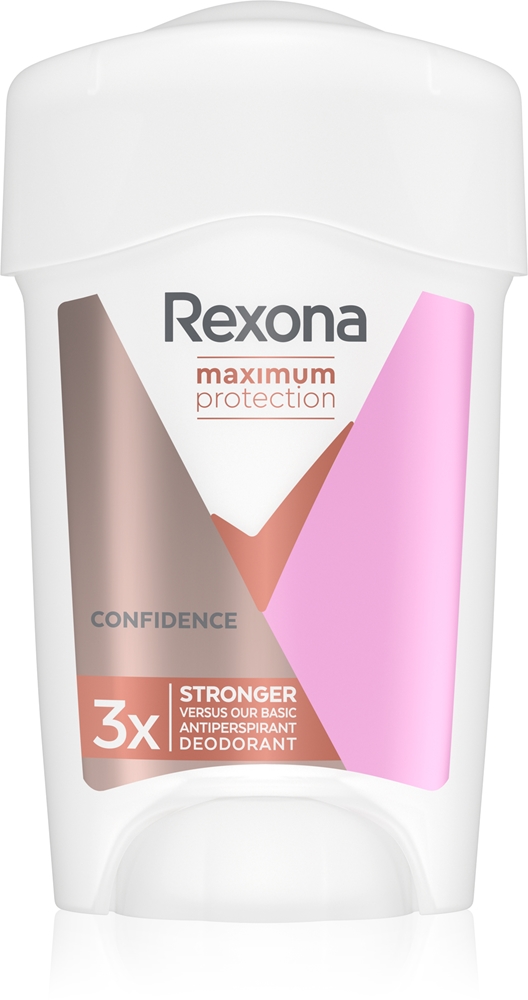
Rexona sells antiperspirant deodorants in a range of formats, including aerosols, pumps, roll-ons, sticks and creams. Manufacturing is split across regions: according to Wikipedia, aerosol sprays are made in Australia while roll-ons and other formats are produced in the Philippines [2].
The brand's signature technology is MotionSense, which it describes as a patented system exclusive to Rexona. The company explains that microcapsules sit on the surface of the skin and burst as the body moves, releasing bursts of freshness in response to friction under the arm. Rexona markets products offering up to 48 hours of sweat and odour protection, with some advanced formulations claiming up to 72 hours [4]. One example, Rexona Invisible On Black + White Clothes, is described by the company as giving 48-hour protection without leaving marks on clothing [1]. More recently the brand has extended into a "whole body" deodorant line reaching beyond underarm care.
Philosophy and positioning
Rexona positions itself around the idea of movement. In campaign materials it states that its purpose is to inspire people to move more in their own way, and that it wants to challenge narrow ideas of what "an acceptable mover" looks like in order to make movement inclusive [5]. Its #MoveYourWay campaign is framed as an effort to break down barriers and make sport accessible to a wider range of people, and a related "Movement for Movement" project launched an app addressing mobility challenges for disabled people in Indonesia. The brand's long-standing tagline is "It won't let you down".
Recognition and press
In a 2022 "Behind the brand" feature, Unilever described Rexona as "the world's No.1 antiperspirant" and recounted its 1908 Australian origin and later global expansion [3]. As this account is published by the brand's owner, the No.1 description is Unilever's own claim rather than an independent assessment. In 2024, the trade publication Cosmetics & Toiletries covered Rexona's work on 72-hour deodorant protection technology [7].
The brand has also invested heavily in sports sponsorship. Its associations have included Formula One teams Lotus (2012–2014) and Williams (2015–2019), English football clubs such as Southampton, Chelsea, Wolverhampton Wanderers and Manchester City, La Liga in several regions, and partnerships around the 2026 FIFA World Cup and the 2023 and 2027 Women's World Cups.
Current status
Rexona is an acquired brand rather than an independent company: it has been part of Unilever since around 1930. Commercially it remains highly active worldwide, sold under Rexona and its regional aliases, with continuing product development such as the 72-hour protection and whole-body deodorant lines and sponsorship activity extending to the 2026 FIFA World Cup.
Facts & evidence
Documented facts from Glowpedia's fact base — every row carries a source.
Timeline#
Rexona created in Australia by Alice Sheffer as a personal-care ointment.↗ en.wikipedia.org
Acquired by Lever Brothers (which became Unilever after merging with Margarine Unie).↗ en.wikipedia.org
Launched in India by Hindustan Unilever; deodorant sold as 'Sure' to avoid clash with existing Rexona soap brand.↗ en.wikipedia.org
Signature products#
Rexona Invisible On Black + White Clothes — överlägset skydd i 48 timmar utan att lämna spår↗ rexona.com
Rexona MotionSense is a breakthrough patented technology exclusive to Rexona containing smart capsules which respond directly to movement.↗ rexona.com
Proprietary technologies & patents#
“Rexona MotionSense is a breakthrough patented technology exclusive to Rexona containing smart capsules which respond directly to movement.”
Mentioned in#
Unilever — Unilever's 'Behind the brand' feature describes Rexona as 'the world's No.1 antiperspirant' and recounts its 1908 Australian origin and global expansion.↗ unilever.com
Cosmetics & Toiletries — Coverage of Rexona innovators on 72-hour deodorant protection technology.↗ cosmeticsandtoiletries.com
Where to buy
Where the brand is sold according to Glowjakt's price data, per market.
Prices come from Glowjakt and are updated daily. Glowpedia receives no payment for clicks.
Ingredients across the range
Key ingredients across Rexona's range, from the ingredient lists of 118 of 139 products in Sweden.
Share of products with a known ingredient list. “None identified” means nothing matched our ingredient groups, not that the product is free of them.
Related brands
Sources
T1 primary · T2 secondary · T3 note- [1]T1rexona.com/se/om-oss.htmlrexona.com (brand site)
- [2]T3en.wikipedia.org/wiki/RexonaWikipedia
- [3]T3unilever.com/news/news-search/2022/behind-the-brand-rexona-the-worlds-no1-antiperspirant/unilever.com
- [4]T3rexona.com/ph/innovation/motion-sense.htmlrexona.com
- [5]T3warc.com/content/paywall/article/warc-awards/rexona-movement-for-movement/125415warc.com
- [7]T3cosmeticsandtoiletries.com/formulas-products/formulating-basics/news/22249159/unilever-unilever-highlights-rexona-innovators-on-72hr-deodorant-protectioncosmeticsandtoiletries.com