Overview
Vaseline is an American personal-care brand built around petroleum jelly, sold today in more than 70 countries and owned by the British-Dutch multinational Unilever. Its origins trace to the chemist Robert Augustus Chesebrough, who refined a purified petroleum jelly and began selling it under the Vaseline name in 1870. The brand still centres on the same core product — a translucent occlusive jelly — now sold alongside lotions and lip-care lines. It remains an active, global drugstore staple, and has seen renewed attention through the social-media "slugging" skincare trend.
Origin & founders
Vaseline grew out of Chesebrough's interest in an unrefined petroleum residue that oil workers called "rod wax." According to editorial accounts of the brand's history, the 22-year-old chemist learned of the waxy substance during travels to the oil fields of Titusville, Pennsylvania, where workers scraped it from pumping equipment and used it on cuts and burns. Chesebrough took samples back to his laboratory in Brooklyn, New York, and spent roughly a decade developing a distillation process that yielded a clear, odourless gel.
Sources differ on which year marks the beginning. Chesebrough's company, the Chesebrough Manufacturing Company, is recorded as founded in 1859, the year his research began [3]. Vaseline itself dates its founding to 1870, the year the purified jelly was first formulated and sold; the company describes the product as "born in Brooklyn in 1870" [1]. The name was registered in a U.S. patent (U.S. Patent 127,568) in 1872, and patented in England in 1877 [2].
History & milestones
Chesebrough's first manufacturing plant for the jelly was in Perth Amboy, New Jersey [3]. The product was sold as "Vaseline Petroleum Jelly," and the Vaseline name went on to become the company's flagship.
In June 1955, the Chesebrough Manufacturing Company merged with Pond's to form Chesebrough-Pond's [3]. That combined company, together with the Vaseline brand, was later acquired by Unilever in a $3.1 billion all-cash deal at $72.50 per share. Sources disagree on the exact year: the acquisition is reported as closing in 1987, though other accounts date it to 1986, reflecting a deal announced in late 1986 [2][3].
Ownership
Philosophy & positioning
Vaseline positions itself around what it calls the "healing efficacy" of its petroleum jelly. The company markets the jelly as a "Wonder Jelly" that has been used to soothe dry skin for over 150 years, and states that the same base can be found across its modern products. Its tagline, "Helping to Heal Skin Through The Centuries," frames the brand around longevity and skin repair rather than cosmetic transformation [1]. The brand is priced and distributed as a mass-market drugstore product, widely available through general retailers.
Products & innovation
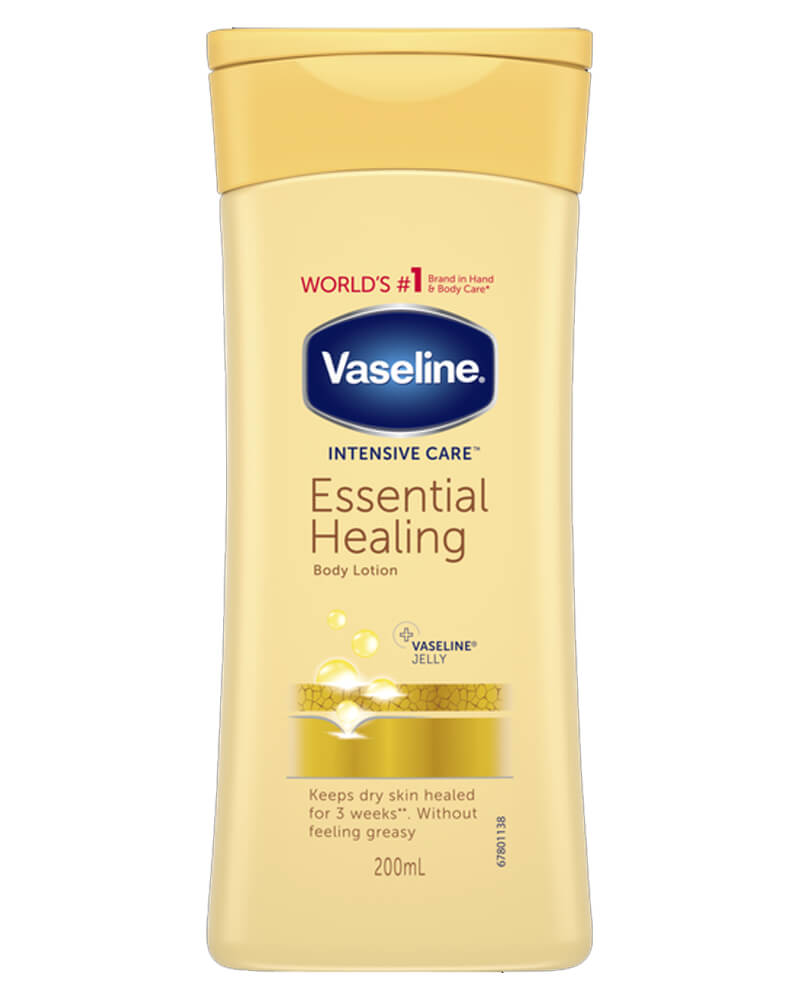
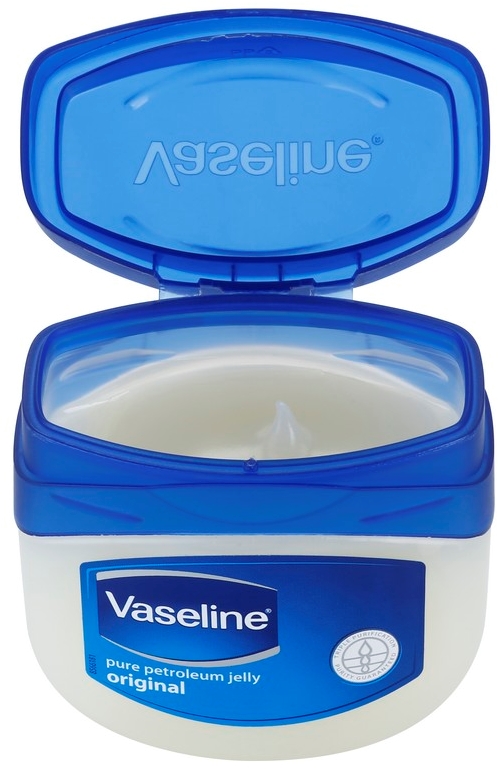
The brand's foundation is its original petroleum jelly, sold today as Vaseline Healing Jelly. From that single product the range has expanded to include Vaseline Intensive Care lotions and Vaseline Lip Therapy tins. Petroleum jelly (petrolatum) remains the hero ingredient across the line; editorial coverage has described the product as a "triple-purified petroleum jelly."
Petrolatum is widely regarded in dermatology as a reference standard for occlusive moisturisation — sealing the skin to slow moisture loss — and Vaseline's jelly carries a comedogenic rating of zero in human testing, meaning it is not shown to clog pores [6]. The American Academy of Dermatology recommends petroleum jelly for uses including moisturising dry skin, helping injured skin heal, and preventing chafing.
Recognition
The brand has been the subject of feature press coverage, including a Cosmetics Business article on the history of its original petroleum jelly, which cited some 155 years of operation and a presence in more than 1.5 billion households. Consumer Reports covered the resurgence of petroleum jelly through the "slugging" trend — applying a thin layer as the final step of a nighttime skincare routine to seal in other products — noting that dermatologists had long recommended the practice but that it gained wider popularity through TikTok [6].
Controversies
Wikipedia notes a safety caveat rather than a corporate controversy: petroleum jelly should not be used as a sexual lubricant, because it can degrade latex condoms and raise infection risk [2].
Current status
Vaseline is an active, globally distributed brand. It is sold in over 70 countries, and recent activity includes marketing tied to the slugging trend and to its 150-plus-year heritage, alongside its continuing Intensive Care and Lip Therapy product lines [4].
Facts & evidence
Documented facts from Glowpedia's fact base — every row carries a source.
Timeline#
Robert Chesebrough (age 22) travels to Titusville, Pennsylvania and discovers oil workers using 'rod wax' on cuts and burns.↗ cosmeticsbusiness.com
Vaseline Petroleum Jelly first formulated and sold; first Vaseline factory opens.↗ vaseline.com
Name 'Vaseline' patented/trademarked in the U.S. (U.S. Patent 127,568).↗ en.wikipedia.org
Vaseline patented in England.↗ en.wikipedia.org
Queen Victoria knighted Chesebrough for creating her favorite treatment for dry skin.↗ secureyourtrademark.com
Explorer Robert Peary brought Vaseline on his North Pole expedition (it does not freeze).↗ secureyourtrademark.com
Chesebrough and Pond's merged (June 1955) to form Chesebrough-Pond's.↗ en.wikipedia.org
Chesebrough Manufacturing merged with Pond's to form Chesebrough-Pond's.↗ en.wikipedia.org
Chesebrough-Pond's (and the Vaseline brand) acquired by Unilever for $3.1 billion. [Date disputed: some sources say 1986 — see conflicts.]↗ en.wikipedia.org
Acquired by Unilever ($3.1 billion, $72.50/share all-cash). Date disputed (1986 vs 1987).↗ en.wikipedia.org
Signature products#
what started with a jar of Vaseline® Healing Jelly has grown into an expansive product portfolio↗ vaseline.com
an expansive product portfolio that includes Vaseline® Intensive Care™ Lotions↗ vaseline.com
Vaseline® Lip Therapy™ tins↗ vaseline.com
Vaseline Healing Jelly (petroleum jelly) — Modern resurgence driven by the TikTok 'slugging' trend — applying a thin layer as the final nighttime skincare step.↗ consumerreports.org
Key ingredients#
Proprietary technologies & patents#
“The product is described as "triple-purified petroleum jelly" with "ultra-hydrating and healing properties.”
“The first known reference to the name Vaseline was by the Chesebrough Manufacturing Company in the U.S. patent (U.S. Patent 127,568) in 1872.”
Mentioned in#
Cosmetics Business — Feature on the 'untold story' of Vaseline Original Petroleum Jelly, citing 155 years of history and presence in 1.5 billion households.↗ cosmeticsbusiness.com
Consumer Reports — Coverage of the 'slugging' trend with petroleum jelly; petrolatum described as the reference standard for occlusive moisturization.↗ consumerreports.org
Where to buy
Where the brand is sold according to Glowjakt's price data, per market.
Prices come from Glowjakt and are updated daily. Glowpedia receives no payment for clicks.
Ingredients across the range
Key ingredients across Vaseline's range, from the ingredient lists of 98 of 114 products in Sweden.
Share of products with a known ingredient list. “None identified” means nothing matched our ingredient groups, not that the product is free of them.
Related brands
Sources
T1 primary · T2 secondary · T3 note- [1]T1vaseline.com/us/en/who-we-are/our-history.htmlvaseline.com (brand site)
- [2]T3en.wikipedia.org/wiki/VaselineWikipedia
- [3]T3en.wikipedia.org/wiki/Chesebrough_Manufacturing_CompanyWikipedia
- [4]T3cosmeticsbusiness.com/the-untold-story-of-vaseline-original-petroleum-jellycosmeticsbusiness.com
- [6]T3consumerreports.org/health/slugging-with-petroleum-jelly-healing-dry-skin-a6544983402/consumerreports.org