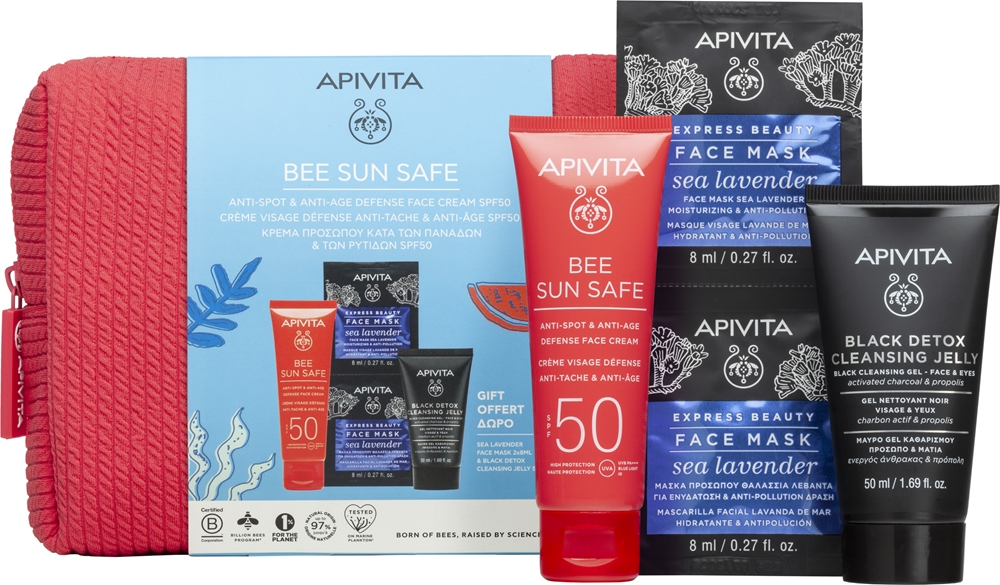

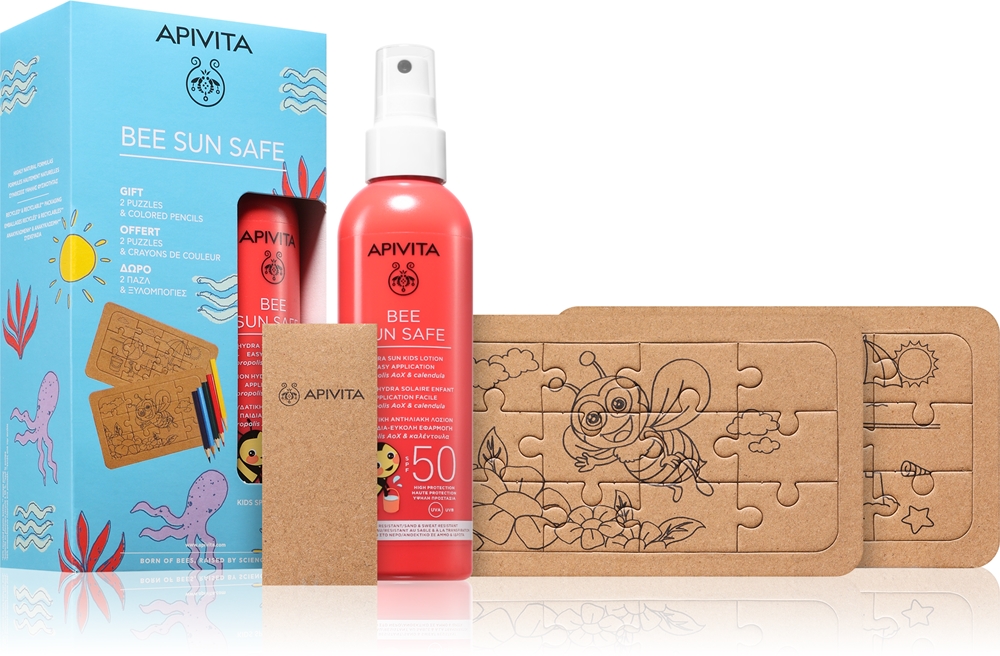
Overview
Apivita is a Greek natural-cosmetics company founded in 1979 by the pharmacist couple Nikos and Niki Koutsianas [5]. Built around bee products such as propolis, honey and royal jelly alongside Greek herbal extracts, it describes itself as the first Greek natural cosmetics company [5]. The name comes from the Latin for "life of the bee", reflecting a philosophy modelled on the honeybee community and on the holistic approach to health and beauty attributed to Hippocrates.
The company remains headquartered in Greece but is now owned by the Spanish group Puig, which took a majority stake in 2017 [3] and acquired the remaining shares in 2023 [1]. It continues to operate under its own name, with a multi-region webstore covering its Greek home market, the United States and several European countries.
Origin and founders
Nikos and Niki Koutsianas met in an Athens pharmacy in 1972 and married there. Working behind the counter, the couple grew uneasy about selling chemical-heavy products to customers; Nikos was, by his own account, fascinated by honeybees, while Niki was drawn to aromatherapy. Their first product was a black soap made from propolis, the resinous substance bees use to seal their hives, which the founders credited with mild antiseptic properties. Its success with pharmacy customers led to the founding of Apivita in 1979.
The 1972 and 1979 dates are sometimes conflated. The trade publication WWD gives 1972 as the founding year [3], but that is the year the founders met and married in the pharmacy; the brand's own account, the certifying body B Lab Global and a feature in The Globe and Mail all place the company's founding in 1979 [5]. This article treats 1979 as the founding year and 1972 as the year the founders met.
History and milestones
Apivita expanded internationally over the following decades, entering Spain in 2003 through pharmacies, department stores and branded shops. In 2008 it received an innovation award presented jointly by Bill Gates and the Association of Greek Industries [4]. In 2013 the company opened a new headquarters and factory near Athens airport, built on a former olive grove, which it valued at 14.5 million euros. By the mid-2010s the business reported annual sales of roughly 33 million euros and employed around 220 people in Greece.
Ownership
In March 2017 the Puig family holding company acquired a majority stake in Apivita; financial terms were not disclosed [3]. Nikos Koutsianas remained a shareholder and president, and Hervé Lesieur took a minority stake. In 2023 Puig acquired the remaining shares, taking full ownership and positioning the Greek operation as a production site for several of its brands [1]. Within the wider group, Apivita sits alongside fragrance and beauty houses including Penhaligon's, Rabanne, Carolina Herrera, Nina Ricci, Jean Paul Gaultier and the dermatological brands Uriage and ISDIN.
Philosophy and positioning
Apivita frames its work around what its co-founder called the "common good" rather than commercial sales alone. "My goal is to produce useful products not to produce a product that sells, sells, sells," Nikos Koutsianas told The Globe and Mail; "we have to be interested in the common good, not just money" [4]. The company links this outlook to the cooperative behaviour of bees, the biodiversity of Greek plant life and Hippocratic ideas about plants and well-being. In 2017 it was certified as a B Corporation by B Lab Global, with a reported B Impact Score of 155.2 [5].
Products and innovation
According to WWD, the range spans facial care, hair care, body care, grooming, baby and child care, and well-being items [3]. Formulations draw on propolis, honey, royal jelly and beeswax together with Greek plant extracts and essential oils such as rosemary, St John's wort, pomegranate, almond and myrrh. Beyond the original propolis soap, recognisable lines include the Queen Bee anti-ageing range and the honey-based Express Beauty face masks. Marketing copy for the Queen Bee cream cites consumer-test figures — 90 percent of users reporting fewer wrinkles after eight days and 97 percent after four weeks — though these are company and retailer claims that have not been independently verified [6].
The company also emphasises a research function, citing scientific collaborations with more than 70 universities and research institutions across 23 countries [3].
Sustainability
Apivita's headquarters and factory near Athens were designed as an eco-friendly site, with herb gardens and an on-site apiary; the founders placed a living olive tree at the entrance [4]. The company sources botanical ingredients from herb gardens and farms across Greece. Its B Corp certification, first granted in October 2017, has since been renewed.
Current status
Apivita is active and currently selling. It is wholly owned by Puig, following the group's majority investment in 2017 and full acquisition in 2023, and operates as a Greek-based production hub within the group while keeping its own brand identity. Its multi-region online store remains in operation across Greece, the United States and several European markets.
Facts & evidence
Documented facts from Glowpedia's fact base — every row carries a source.
Timeline#
Founders Nikos and Niki Koutsianas meet (and marry) in an Athens pharmacy.↗ theglobeandmail.com
Apivita founded as the first Greek natural cosmetics company; first product a black soap made from propolis.↗ bcorporation.net
Entered Spain (pharmacies, department stores, branded shops).↗ theglobeandmail.com
Won an innovation award jointly presented by Bill Gates and the Association of Greek Industries.↗ theglobeandmail.com
Opened a €14.5-million eco-friendly HQ/factory with herb gardens and an apiary, on a former olive grove near Athens airport.↗ theglobeandmail.com
Certified as a B Corporation (October 2017).↗ bcorporation.net
Puig acquired a majority stake; Koutsianas family retained a minority stake and leadership.↗ wwd.com
Acquired (majority stake) by Puig family holding company; Nikos Koutsianas remained shareholder and president, Hervé Lesieur took a minority stake.↗ wwd.com
Awards#
Innovation award presented by Bill Gates and the Association of Greek Industries — Innovation↗ theglobeandmail.com
Signature products#
They developed their first product—black soap made from propolis with 'mild antiseptic qualities'—which succeeded with customers.↗ theglobeandmail.com
APIVITA Queen Bee Anti-Aging Cream | Regenerates & Nourishes, Rich Texture↗ amazon.com
Part of Apivita's Express Beauty collection ... formula containing Golden Honey, Greek Thyme, Jojoba Oil, Shea Butter, and Avocado extracts↗ whatsinmyjar.com
Key ingredients#
Mentioned in#
WWD — Reported Puig's acquisition of a majority stake in Greece's Apivita; detailed founders, products, revenue (~€40M), and research collaborations.↗ wwd.com
The Globe and Mail — Feature on Apivita as a rare Greek success story built on 'common good' values, profiling its founders and B-Corp-style ethos.↗ theglobeandmail.com
Certification pass
What each certification and self-stated claim rests on: the source, whose website it's on, and what needs review.
“Certification Date: 'October 2017' ... Current Status: Certified B Corporation ... Overall B Impact Score: 155.2”↗ bcorporation.net
“The business remains headquartered in Greece ... established in 1979 by two pharmacists ... 'the first Greek natural cosmetics company.'”↗ bcorporation.net
None of these statements has been checked against the certifying bodies' registers. The statements were observed on 9 Jun 2026.
Where to buy
Where the brand is sold according to Glowjakt's price data, per market.
Prices come from Glowjakt and are updated daily. Glowpedia receives no payment for clicks.
Ingredients across the range
Key ingredients across Apivita's range, from the ingredient lists of 271 of 274 products in Sweden.
Share of products with a known ingredient list. “None identified” means nothing matched our ingredient groups, not that the product is free of them.
Related brands





Sources
T1 primary · T2 secondary · T3 note- [1]T1apivita.com/usa/apivita.com (brand site)
- [3]T3wwd.com/business-news/mergers-acquisitions/feature/puig-family-holding-company-acquires-greeces-apivita-10841197/wwd.com
- [4]T3theglobeandmail.com/report-on-business/international-business/european-business/slow-and-steady/article19406734/theglobeandmail.com
- [5]T3bcorporation.net/en-us/find-a-b-corp/company/apivita-sa/bcorporation.net
- [6]T3amazon.com/APIVITA-Absolute-Anti-Aging-Regenerating-Texture/dp/B07KQ1Q7YRamazon.com