Overview
Antonio Puig is the founding name of the Spanish beauty and fashion company that today trades as Puig Brands, S.A., and it survives as a live attribution for a small group of heritage Spanish fragrances. The business was established in Barcelona in 1914 by Antonio Puig Castelló [3], and it has stayed under the control of the founding family across three generations. The same name still appears on classic men's eau de cologne lines such as Agua Brava and Quorum, which remain in distribution across Europe.
The brand is therefore best understood in two layers. "Antonio Puig" was the original corporate identity of a family importing house that grew into one of the largest fragrance and fashion groups in the world; the company simplified its name to Puig in 2009 [4]. It is also the perfumer credit under which several long-running Spanish scents are still sold. Both layers are active: the parent group is publicly listed and operating in more than 140 countries, and a new Agua Brava release appeared in 2025.
Origin & founders
Antonio Puig Castelló, a Barcelona native and the son of a wealthy businessman, travelled to France and England before returning to Spain. In 1914 he set up Antonio Puig S.A. as a distributor of foreign cosmetics and perfumes, importing French houses such as D'Orsay and Ricci. The company moved from importing to making its own products in 1922, when it launched Milady, described as the first lipstick manufactured in Spain [5].
The founder's four sons — Antonio, Mariano, José María and Enrique Puig Planas — joined during the 1950s, forming the second generation of family management. According to a family-business profile in Tharawat Magazine, trade restrictions during the Spanish Civil War pushed the company toward local manufacturing, and the lavender-based cologne Agua Lavanda became, in the magazine's words, "an instant classic" that established Puig in the fragrance industry. The company's own history page dates Agua Lavanda Puig to 1940 [3]; an external company history, FundingUniverse, records 1939 for "Lavanda Puig" [5].
History & milestones
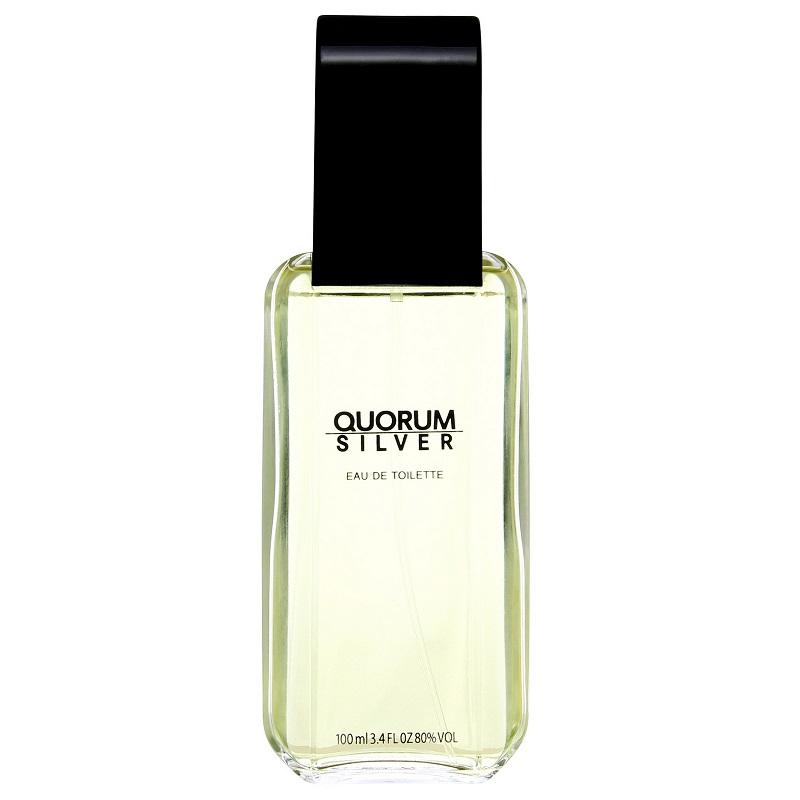
The post-war decades were a period of international expansion and a steady move into prestige perfumery. In 1968 the company created a Paco Rabanne perfume division in France and launched Agua Brava, an aromatic fougère built around Mediterranean herbs. The men's scent Quorum followed in the early 1980s and became one of the company's most international lines; it won Best Packaging of the Year at the FiFi Awards in New York in 1982.
From the late 1980s the company shifted decisively from licensing toward ownership. It acquired the entire Paco Rabanne business, including fashion and accessories, in 1987, took the Carolina Herrera New York fashion division in 1995, and bought the Nina Ricci fragrance and fashion business in 1998. The acquisition of Myrurgia in 2000 brought in brands including Adolfo Domínguez and Agatha Ruiz de la Prada.
The third generation took the helm when Marc Puig was named chief executive in 2004 and chairman and CEO in 2007 [7]. Under his leadership the group repositioned around prestige beauty, a strategy that WWD reported had built a portfolio where over 90 percent of sales come from brands the company owns. A second wave of acquisitions followed: a majority stake in Jean Paul Gaultier in 2011, the British fragrance houses Penhaligon's and L'Artisan Parfumeur in 2015, a majority of the makeup and skincare brand Charlotte Tilbury in 2020, a majority of Byredo in 2022, and a majority of Dr. Barbara Sturm in 2024 [3]. The company marked its centenary in 2014 with the opening of its Barcelona headquarters, the Puig Tower.
Ownership
The business is the parent company itself rather than a subsidiary: it operates today as Puig Brands, S.A., headquartered in Barcelona at the Torre Puig in Plaza Europa, Hospitalet de Llobregat. The corporate name changed twice along the way — to Puig Beauty & Fashion Group in 1999 and then to simply Puig in 2009. By 2023 the company employed more than 11,000 people worldwide and reported annual revenue of about €4.3 billion.
For most of its history the company was wholly family-owned. In May 2024 it carried out an initial public offering on the Spanish stock exchanges and joined the IBEX 35 index, with the listing valuing the company at roughly €14 billion; the Puig family retained more than 90 percent of voting control after going public [4]. The group's portfolio spans owned fashion and fragrance houses (Carolina Herrera, Rabanne, Jean Paul Gaultier, Nina Ricci, Dries Van Noten), niche perfumers (Byredo, Penhaligon's, L'Artisan Parfumeur), and cosmetics and skincare brands (Charlotte Tilbury, Uriage, Apivita, Dr. Barbara Sturm, ISDIN), alongside licensed and celebrity lines.
Philosophy & positioning
Puig describes itself as a "home of Love Brands, within a family company, that furthers wellness, confidence and self-expression while leaving a better world" [2], and it uses the tagline "Home of Creativity". The company frames its five stated values — Restless Curiosity, Contagious Enthusiasm, Fairness and Respect, Entrepreneurial Audacity, and Shaping Tomorrow — as principles passed down through the founding family [2].
A recurring theme in the family's public statements is stewardship rather than ownership. Marc Puig has summarised the company's mission as the idea that, since 1914, "every generation of the Puig family has endeavored to leave behind a better and stronger company than the one they inherited." The same approach shapes how the group treats its acquisitions: as Tharawat Magazine reported, each acquired brand keeps its own identity, with Puig acting as an umbrella that supplies shared infrastructure without overriding a brand's character. The group positions itself in the premium segment [1], and a 2004 strategic refocus narrowed it toward its two core competencies, fashion and fragrance.
Products & innovation
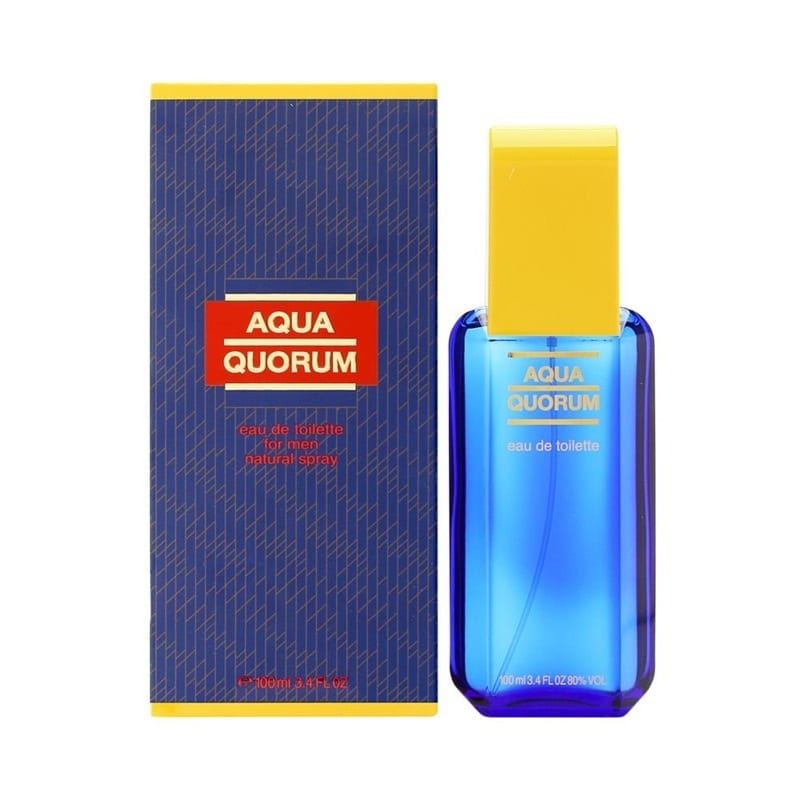
Within the wider portfolio, the products tied directly to the Antonio Puig name are a set of classic Spanish fragrances. The earliest milestones are Milady, the 1922 lipstick, and Agua Lavanda Puig, the lavender cologne of around 1940. The best known of the modern scents is Agua Brava (1968), followed by Quorum (1981) and the aquatic Aqua Quorum (1994), all positioned as men's aromatic fougère colognes. Fragrantica describes Quorum as a classic men's fragrance that has remained in continuous distribution since its launch, and notes a fresh Agua Brava release in 2025 — the basis for treating the Antonio Puig name as still commercially live rather than purely historical.
The parent group reports manufacturing across roughly ten centres in Spain, France (including Chartres) and Mexico, with distribution in more than 150 countries. On the corporate side, the company has worked with outside institutions on research and analysis, including a Harvard University case study and a Creative Potential Gap Report produced with Oxford Economics.
Recognition
Beyond the 1982 FiFi packaging award for Quorum, the company received WWD's 2023 Honor as Best-Performing Beauty Company, Large Cap, in a feature that profiled its expansion across beauty and fashion. Over the years the name has also been linked to celebrity fragrance ventures, including a 1997 licensing agreement with the actor Antonio Banderas and a 2008 joint venture with the musician Shakira.
Sustainability
Puig publishes a 2030 ESG agenda that targets a 50 percent reduction in absolute Scope 1 and 2 greenhouse-gas emissions by 2030 against a 2019 baseline, together with a 30 percent reduction in Scope 3 emissions, aligned to the United Nations Sustainable Development Goals and Global Compact. Third-party assessments cited on the company's Wikipedia entry include an EcoVadis Gold rating (80/100) and a 2024 CDP climate score of A [4].
Current status
Antonio Puig is active. As the parent group, Puig Brands, S.A. is a publicly listed premium-beauty company operating globally, and it reported record annual sales above €5 billion in its most recent results [1]. In 2026 the company announced a leadership change: Jose Manuel Albesa was appointed chief executive while Marc Puig moved to the role of executive chairman [2]. This reflects a more recent corporate announcement than some third-party references, where Wikipedia still listed Marc Puig as chairman and CEO [4]. The heritage Antonio Puig fragrances, meanwhile, remain in active distribution, including across Nordic retailers.
Facts & evidence
Documented facts from Glowpedia's fact base — every row carries a source.
Timeline#
Antonio Puig Castelló founds Antonio Puig S.A. in Barcelona↗ puig.com
Launch of Milady Lipstick — first lipstick manufactured in Spain↗ puig.com
Launch of Agua Lavanda Puig, a landmark fragrance↗ puig.com
Creation of Paco Rabanne Parfums division in France; launch of Agua Brava↗ puig.com
Quorum wins Best Packaging of the Year at the FiFi Awards (New York)↗ puig.com
Puig acquires the entire Paco Rabanne business (fashion and accessories)↗ puig.com
Acquired Paco Rabanne (fashion and accessories)↗ puig.com
Launch of the first Carolina Herrera designer fragrance↗ puig.com
Acquired Carolina Herrera New York fashion division↗ puig.com
Acquisition of the Nina Ricci fragrance and fashion business↗ puig.com
Acquired Nina Ricci fragrance and fashion business↗ puig.com
Acquired Myrurgia (Adolfo Dominguez, Agatha Ruiz de la Prada, Mango)↗ puig.com
Marc Puig is named CEO↗ puig.com
Company simplified its name to 'Puig'↗ en.wikipedia.org
Awards#
FiFi Awards — Best Packaging of the Year (Quorum) — fragrance packaging↗ puig.com
WWD Honor — Best-Performing Beauty Company, Large Cap — beauty company↗ wwd.com
Signature products#
1968: Creation of the Paco Rabanne Parfums division in France. Launch of Agua Brava.↗ puig.com
1982: Quorum, the company's most international line, wins Best Packaging of the Year at the FiFi Awards (New York).↗ puig.com
Aqua Quorum | 1994 | Aromatic-fougère aquatic for men↗ fragrantica.com
1922: Launch of Milady Lipstick (first lipstick manufactured in Spain).↗ puig.com
1940: Launch of Agua Lavanda PUIG, a landmark fragrance.↗ puig.com
Quorum — Classic men's fragrance in continuous distribution since 1981; described as a long-standing reference men's scent.↗ fragrantica.com
Mentioned in#
WWD — Featured in WWD Honors as 'Puig Builds a Beauty and Fashion Dynamo'; named Best-Performing Beauty Company, Large Cap.↗ wwd.com
Tharawat Magazine — Family-business profile 'Puig: A Family of Fragrances' covering the dynasty's stewardship philosophy.↗ tharawat-magazine.com
Certification pass
What each certification and self-stated claim rests on: the source, whose website it's on, and what needs review.
“2024 CDP scores: Climate A, Water A-, Forest B (paper) / B (palm oil)”↗ en.wikipedia.org
“Sustainalytics: 19.8 (low risk); EcoVadis: Gold (80/100)”↗ en.wikipedia.org
None of these statements has been checked against the certifying bodies' registers. The statements were observed on 21 Jun 2026.
Where to buy
Where the brand is sold according to Glowjakt's price data, per market.
Prices come from Glowjakt and are updated daily. Glowpedia receives no payment for clicks.
Ingredients across the range
Key ingredients across Antonio Puig's range, from the ingredient lists of 4 of 12 products in Sweden.
Share of products with a known ingredient list. “None identified” means nothing matched our ingredient groups, not that the product is free of them.
Related brands
Sources
T1 primary · T2 secondary · T3 note- [1]T1puig.com/en/puig.com (brand site)
- [2]T1puig.com/en/who-we-are/puig.com (brand site)
- [3]T1puig.com/en/history/puig.com (brand site)
- [4]T3en.wikipedia.org/wiki/Puig_(company)Wikipedia
- [5]T3fundinguniverse.com/company-histories/puig-beauty-and-fashion-group-s-l-history/fundinguniverse.com
- [7]T3wwd.com/beauty-industry-news/beauty-features/wwd-honors-puig-builds-beauty-fashion-dynamo-1235884041/wwd.com