Overview
L'Artisan Parfumeur is a French niche-perfumery house founded in Paris in 1976 by Jean Laporte, a chemist and botanist who turned to fragrance in the early 1970s [14]. It is widely cited as the first house of its kind: in Perfumes: The A-Z Guide (2010), critics Luca Turin and Tania Sanchez identify it as "the first niche firm" [15], the brand that established the small-batch, selectively distributed model later adopted across the sector. Its early creations — the blackberry-and-white-musk scent Mûre et Musc and a fig perfume, Premier Figuier — are regularly named among the compositions that opened those categories in mainstream perfumery.
Since January 2015 the company has been owned by the Spanish group Puig, which acquired it alongside the British house Penhaligon's [20]. It remains an active, independently run label within Puig's prestige-fragrance portfolio, with continued product launches and a 2022 boutique relaunch.
Origin & founders
According to the company's own account, Jean Laporte studied chemistry from a young age and went on to study botany, pairing a working knowledge of the natural world with formal training before turning both interests toward perfumery in the early 1970s. The brand frames his central insight as a gap in the craft: "with the exception of citrus, fruit was rarely part of the perfumers' vocabulary," and by taking fruit seriously he "lay the foundations of a new style." That approach produced Mûre et Musc, which L'Artisan Parfumeur describes as one of the first times white musk was used "not in a supporting role, but as the main subject."
A detail of the founder's name differs across sources. The brand site spells it "Jean Laporte" [2], while perfume databases including LuckyScent and Fragrantica use the fuller "Jean-François Laporte" [19]. Laporte left the company in 1982 and later founded the rival house Maître Parfumeur et Gantier in 1988.
The house dates its origin to 1976, the year Laporte — by the brand's telling — came across a carved amber sphere on the shores of the Bosphorus, an object that became the Boule d'Ambre, a terracotta diffuser released through fragranced crystals. He opened the first boutique on Rue de Grenelle in Paris in 1979, initially selling perfumes alongside the hand-carved spheres.
History & milestones
Mûre et Musc followed in 1978. The company recounts that Laporte first built a blackberry-and-musk accord in 1977, then consulted three Grasse perfumers — Jean-Claude Ellena, Lucien Ferrero and Jean-Claude Gigodot — to balance it; Ellena described the result as "a skin fragrance, neither feminine nor masculine, but terribly human." A more intense reading, Mûre et Musc Extrême, was added in 1993 by perfumer Karine Dubreuil.
Through the 1990s and 2000s the house worked with a series of named perfumers, a practice it treats as part of its identity. Olivia Giacobetti created Premier Figuier in 1994 — described as the first perfume built on the fig note — and both Passage d'Enfer and Dzing! in 1999. Bertrand Duchaufour contributed Timbuktu in 2004 and Dzongkha in 2006. His 2012 fragrance Seville à l'aube was documented in The Perfume Lover, a memoir by Denyse Beaulieu about the scent's development.
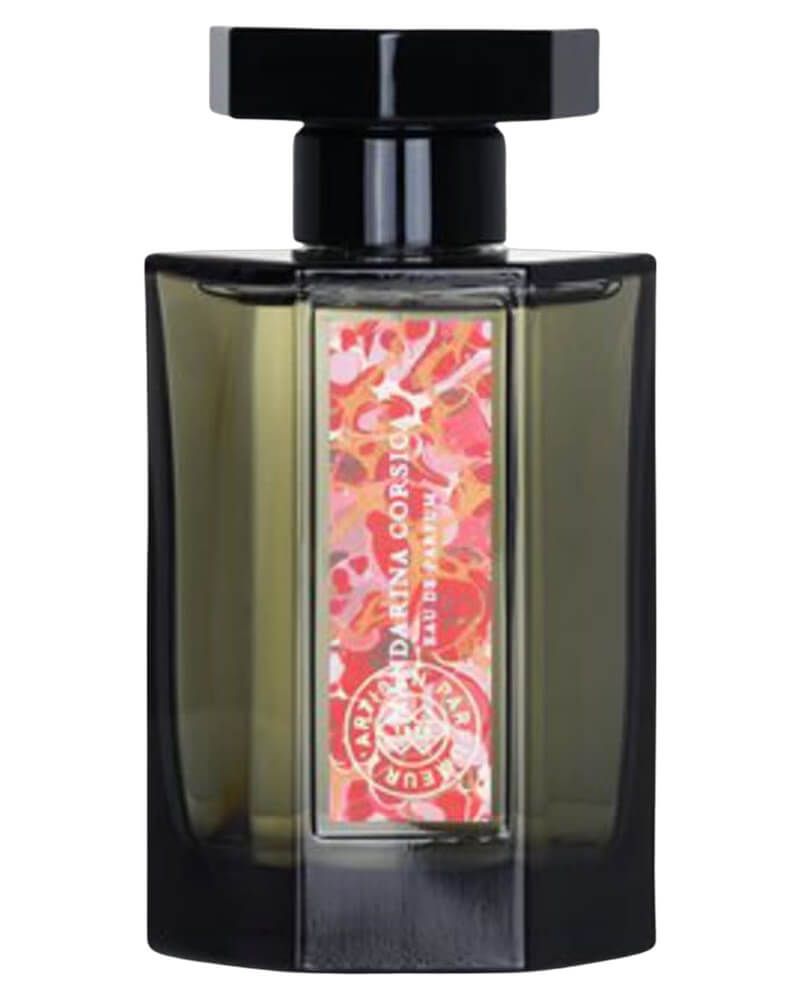
In 2022 the house undertook a relaunch led by the Paris studio Studio be-poles, which redesigned the remaining boutiques in black-stained wood and simplified the packaging. According to Wallpaper, the classic fragrances were preserved without reformulation, keeping the seven-sided dark-grey glass bottle, after a period the magazine characterised as "a slight sense of drift and overextension" [17].
Ownership
L'Artisan Parfumeur is owned by Puig, a family-controlled Spanish group, which bought it in January 2015 from the private-equity firm Fox Paine & Company together with Penhaligon's; terms were not disclosed [20]. Puig framed the purchase as a move into "the growing exclusive, high-end perfumery category," adding the two niche houses to a portfolio that already included Paco Rabanne, Nina Ricci, Carolina Herrera and Jean Paul Gaultier.
One discrepancy is worth noting. Most sources — the WWD deal report, the brand's own Wikipedia entry and Wallpaper — place the acquisition in January 2015 [17][20]. Wikipedia's separate article on niche perfume instead gives 2016; this is best read as an internal inconsistency contradicted by the dedicated L'Artisan Parfumeur article [14][15].
Philosophy & positioning
The house positions itself as an artisanal French perfumer that, in its words, "translates botanical treasures into precious fragrances," favouring underused natural materials — blackberry, fig, incense, orange blossom — over conventional mass-market accords. It links this directly to Laporte's botanical training, which the brand credits for the breadth of its plant-led collections.
L'Artisan Parfumeur also extended the idea from personal scent to the home. Describing the move from fragrance "Sur Soi" (on the skin) to "Chez Soi" (in the home) as a natural step for its founder, the company built out a La Maison line of candles, diffusers and bath-and-body products made, it says, to the same standard as its perfumes. The editorial outlet Sortiraparis describes the range as refined fragrances aimed at discerning buyers rather than heavy, attention-seeking scents.
Products & innovation
The brand's signature creation is Mûre et Musc, which it calls "the House's icon" and its long-standing bestseller. Premier Figuier (1994) is treated as a turning point both for the house and for its perfumer, Olivia Giacobetti, as the first fig-centred fragrance. Other widely listed scents include Passage d'Enfer, an incense composition, and Timbuktu.
More recent work includes Abyssae, an eau de parfum by Daphné Bugey built on rose, eucalyptus and cashmeran, which the brand presents as an award-winning bestseller. Collections continue to credit individual noses — among them Marie Salamagne, Nathalie Lorson and Quentin Bisch — and recent releases include L'Amant, Fables d'Orient L'Extrait, Les Baies and La Rose. Products are sold through the brand's own boutiques in France, its direct online store and niche fragrance retailers internationally.
Recognition
Abyssae was named Best Niche Fragrance in 2023, according to the brand. Beyond awards, the house is most often cited for its historical position: the niche-perfume reference works and editorial coverage that describe it as the first niche firm [15], and Wallpaper's characterisation of it as "one of the first really successful niche perfume brands" [17].
Current status
The house is active and trades as an independent label under Puig [20]. Its most recent visible activity includes 2026 launches and seasonal collections, the 2022 boutique relaunch and the 2023 award for Abyssae, supported by an online store, boutiques and active social channels. Founded in 1976, it approaches its 50th anniversary in 2026.
Facts & evidence
Documented facts from Glowpedia's fact base — every row carries a source.
Timeline#
L'Artisan Parfumeur founded by Jean Laporte in Paris↗ en.wikipedia.org
Jean Laporte discovered the Amber Boule on the shores of the Bosphorus, becoming a signature artisanal product↗ artisanparfumeur.com
Mûre et Musc launched — first blackberry-and-white-musk scent duo, the brand's iconic creation↗ artisanparfumeur.com
First boutique opened on Rue de Grenelle in Paris↗ en.wikipedia.org
Jean Laporte departed L'Artisan Parfumeur↗ en.wikipedia.org
Mûre et Musc Extrême launched by perfumer Karine Dubreuil↗ artisanparfumeur.com
Premier Figuier launched by Olivia Giacobetti — first perfume based on the fig scent↗ wallpaper.com
Passage d'Enfer and Dzing! launched by Olivia Giacobetti↗ artisanparfumeur.com
Timbuktu launched by Bertrand Duchaufour↗ wallpaper.com
Dzongkha launched by Bertrand Duchaufour↗ wallpaper.com
Seville à l'aube launched (Bertrand Duchaufour) — inspired Denyse Beaulieu's memoir The Perfume Lover↗ en.wikipedia.org
Acquired by Puig from Fox Paine & Company on January 23, 2015 (alongside Penhaligon's)↗ wwd.com
Acquired by Puig from Fox Paine & Company (alongside Penhaligon's) on January 23, 2015↗ wwd.com
Brand relaunch led by Studio be-poles — boutique redesign in black-stained wood, simplified packaging, classic fragrances preserved without reformulation↗ wallpaper.com
Awards#
Best Niche Fragrance — Niche fragrance (for Abyssae)↗ artisanparfumeur.com
Signature products#
The Mûre et Musc collection was created in 1978 by Jean Laporte, founder of L'Artisan Parfumeur. He developed 'the world's first blackberry and white musk scent duo'↗ artisanparfumeur.com
Premier Figuier by L'Artisan Parfumeur is a Woody Aromatic fragrance... launched in 1994, created by perfumer Olivia Giacobetti. Premier Figuier is the first perfume based upon the fig scent↗ en.wikipedia.org
Passage d'Enfer is a small alleyway in Paris. Giacobetti created this fragrance to commemorate the transition into the new millennium.↗ artisanparfumeur.com
Popular fragrances include: Mûre et Musc Extreme, Timbuktu, Passage d'Enfer, Bana Banana, L'Ete en Douce↗ en.wikipedia.org
an award-winning best-seller that blends rose, eucalyptus and cashmeran in an enigmatic floral scent.↗ artisanparfumeur.com
Mûre et Musc — Brand's iconic, all-time-bestselling fragrance — described as 'The House's icon' (brand site) and the founding fragrance of the niche perfumery category.↗ artisanparfumeur.com
Premier Figuier — Considered groundbreaking in niche perfumery — first fig-based perfume — that 'put Olivia Giacobetti on the map'↗ en.wikipedia.org
Key ingredients#
Mentioned in#
Wallpaper* — Coverage of the 2022 brand relaunch by Studio be-poles — characterizes L'Artisan as 'one of the first really successful niche perfume brands.'↗ wallpaper.com
WWD — Coverage of Puig's January 2015 acquisition of L'Artisan Parfumeur and Penhaligon's from Fox Paine & Co.↗ wwd.com
Luca Turin & Tania Sanchez, Perfumes: The A-Z Guide — Identifies L'Artisan Parfumeur as 'the first niche firm' — establishing its historical position in fragrance.↗ en.wikipedia.org
Where to buy
Where the brand is sold according to Glowjakt's price data, per market.
Prices come from Glowjakt and are updated daily. Glowpedia receives no payment for clicks.
Related brands




Sources
T1 primary · T2 secondary · T3 note- [2]T1artisanparfumeur.com/us/en_US/Jean-Laporteartisanparfumeur.com (brand site)
- [14]T3en.wikipedia.org/wiki/L'Artisan_ParfumeurWikipedia
- [15]T3en.wikipedia.org/wiki/Niche_perfumeWikipedia
- [17]T3wallpaper.com/lifestyle/parisian-pedigree-lartisan-parfumeur-relaunches-its-classic-fragrance-brandwallpaper.com
- [19]T3luckyscent.com/perfumers/jeanfrancois-laporteluckyscent.com
- [20]T3wwd.com/business-news/financial/puig-acquires-penhaligons-lartisan-parfumeur-8134646/wwd.com