Overview
Penhaligon's is a British perfume house founded in London around 1870 by William Henry Penhaligon, a barber from Penzance, Cornwall. Built on fragrance alongside grooming and body products, it is known for a storytelling approach to scent, apothecary-style bottles finished with a signature bow, and a long association with the British royal court. Since 2015 the house has been wholly owned by the Spanish fashion and fragrance company Puig, under which it continues to trade as an active luxury brand [7].
The company markets itself as "Established London 1870," the year William Penhaligon became hairdresser and perfumer at the Turkish Hammam on Jermyn Street. Wikipedia dates the founding slightly earlier, to the late 1860s, referring to Penhaligon's arrival in London around 1869 [7]. Both accounts describe the same short period at the start of the 1870s.
Origin and founders
William H. Penhaligon was born on 27 January 1837 in the parish of Madron, near Penzance in Cornwall. He apprenticed under a local barber in the early 1850s and later ran his own grooming salon in Penzance. He married in 1862 and had four surviving children before the family moved to London around 1869, settling in Westminster [3].
In 1870 Penhaligon took up work as hairdresser and perfumer at the Turkish Hammam on Jermyn Street, in the St James's district, and drew on the neighbouring Turkish baths for inspiration. His first fragrance, Hammam Bouquet, followed in 1872 and remains in the range today. The business grew into a full salon and perfumery: by 1880 he had taken a partner, briefly trading as "Penhaligon & Jeavons," his son Walter joined in 1887, and by 1891 the firm occupied premises at 33 St James's Street and 66 Jermyn Street, fitted with early electric lighting. According to the company's account, it went on to supply perfume to "practically every European court" [3].
History and milestones
Penhaligon's received its first Royal Warrant in 1903, from Queen Alexandra, consort of Edward VII. The brand's own pages differ on the year of the founder's death, which bears on that detail: its "our story" page records April 1901, while the more detailed "our founder" page gives 1902 and notes the warrant was awarded posthumously [2][3].
The twentieth century brought repeated changes of ownership and location. Wikipedia records that the business moved to Bury Street in the late 1920s, that its original premises were destroyed during the Blitz in 1941, and that it was bought by the grooming firm Geo. F. Trumper in the mid-1950s, after which manufacturing continued from Trumper's Curzon Street basement. A revival came in 1977 with a new shop in Wellington Street, Covent Garden [7].
Later milestones reflect a renewed focus on narrative fragrance. Blenheim Bouquet, commissioned by the Duke of Marlborough and named for Blenheim Palace, dates to 1902 and is described by Wikipedia as the company's longest-surviving bespoke scent [7]. Bluebell launched in 1978. The Portraits Collection, framed around a cast of fictional aristocratic characters, opened in 2016, and a Potions & Remedies collection followed in 2023. In 2025, under Puig, the house marked 155 years of perfumery [9].
Ownership
Penhaligon's is wholly owned by Puig, the Spanish fashion and fragrance group, which acquired the brand in 2015 [7][10]. Within Puig it sits alongside sister fragrance and beauty houses that include L'Artisan Parfumeur, Nina Ricci, Rabanne, Jean Paul Gaultier and Carolina Herrera. Following the acquisition, and in a departure from the brand's British-heritage narrative, production moved from the United Kingdom to Spain and other countries, according to Wikipedia [7].
Philosophy and positioning
The house places eccentricity, British heritage and storytelling at the centre of its identity. It describes itself as "Celebrating Britain's Eccentric & Creative Heritage" and says that "eccentricity is at the core of our fragrances, our heritage and our values" [5]. Many of its scents are built around narrative characters, most visibly in the Portraits Collection, which Marie Claire UK describes as weaving "a web of scandal and intrigue around a central scent" and paying homage to a "stuffy" British heritage "with a nod and a wink."
Craftsmanship is a recurring theme in the brand's own presentation. The company says it collaborates with The Queen Elizabeth Scholarship Trust to recognise skilled artisans, and it has commissioned work from a sculptor, an illustrator, a jeweller and a leather artisan for its boutiques and packaging. Marie Claire UK characterises the house as "steeped in British heritage, yet appeal[ing] to modern sensibilities thanks to its playful storytelling, quirky bottles, and utterly unique olfactory creations."
Products and innovation
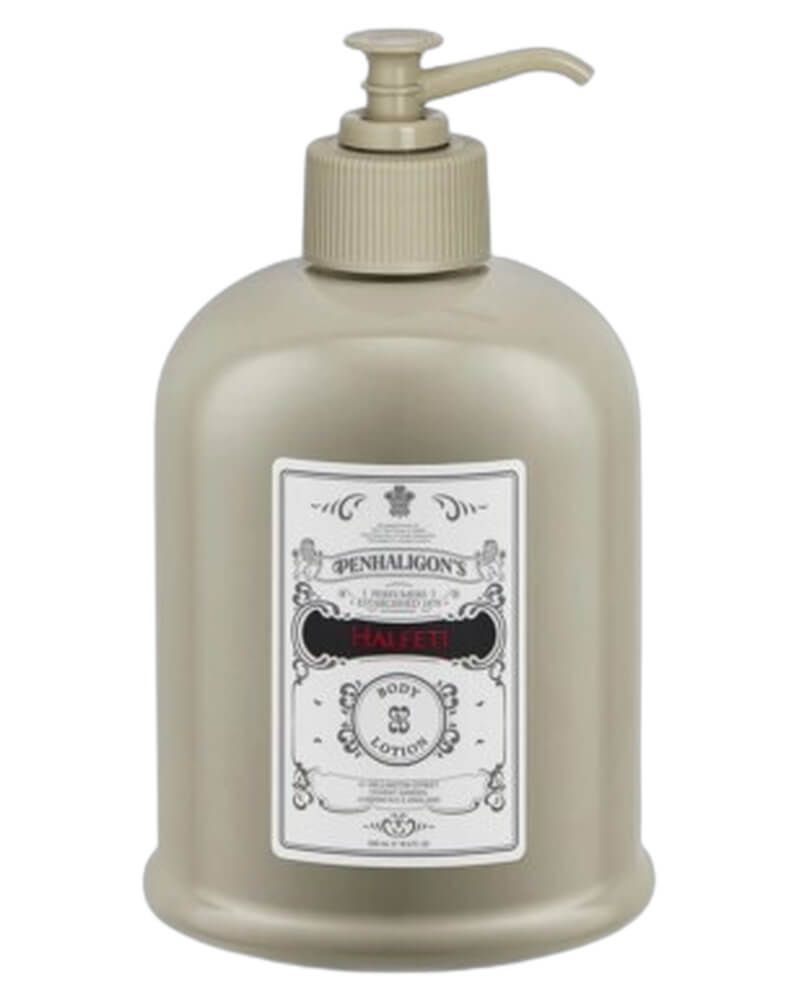
Fragrance is the core of the range, supported by bath and body products such as washes, lotions, soaps and hair perfume — a category the company links to its origins as a grooming business, and which it presents in the same theatrical register, describing its triple-milled soaps and layered scents as everyday indulgences. Signature perfumes include Hammam Bouquet (1872), Blenheim Bouquet (1902) and Bluebell (1978), alongside contemporary best-sellers such as Halfeti. Marie Claire UK named Halfeti its "best intoxicating scent" and placed the house's fragrances, priced roughly between £85 and £245, in the luxury segment, stocked through premium retailers including Selfridges and Sephora as well as Penhaligon's own stores.
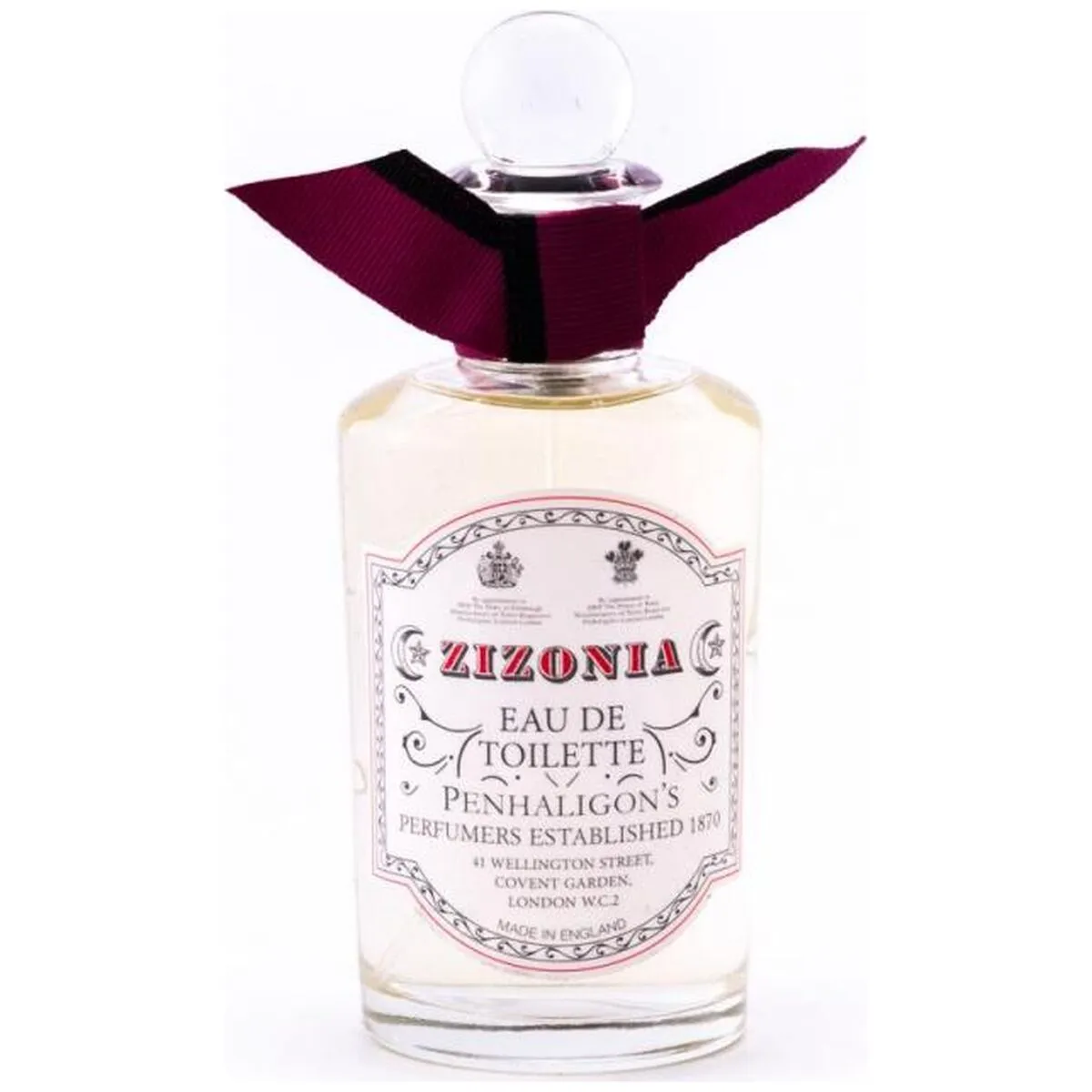
Packaging is treated as part of the product. The brand's bottles have, in its words, "changed very little over the past 150 years," keeping a rounded stopper and the signature bow first designed by William Penhaligon; the bow originally sealed the stopper to the bottle before becoming decorative. The company recounts that squared stoppers were corrected to round in the 1970s after a family descendant brought an original bottle into its Wellington Street store. The Portraits Collection adds hand-finished metal animal heads to distinguish each character.
Recognition
Penhaligon's appears on the list of British royal warrant holders by appointment to King Charles III [7]. Marie Claire UK cites Oscar Wilde and Maria Callas as historical patrons of the house and Ryan Gosling and Marina Abramović as contemporary figures associated with the brand.
Current status
The house remains an active, trading luxury fragrance brand with current e-commerce and recent collection launches, and its site carries a 2025 copyright notice. It is not independent: it has operated as a wholly owned Puig brand since the 2015 acquisition.
Facts & evidence
Documented facts from Glowpedia's fact base — every row carries a source.
Timeline#
William Penhaligon becomes hairdresser and perfumer at the Turkish Hammam on Jermyn Street, London↗ penhaligons.com
Hammam Bouquet, the first fragrance, launches↗ penhaligons.com
Blenheim Bouquet commissioned by the 9th Duke of Marlborough↗ penhaligons.com
Bluebell launches↗ penhaligons.com
Acquired by Puig↗ en.wikipedia.org
Portraits Collection opens↗ penhaligons.com
Potions & Remedies collection launches↗ penhaligons.com
Signature products#
His first fragrance, Hammam Bouquet, debuted in 1872.↗ penhaligons.com
Blenheim Bouquet (1902): "the company's longest surviving bespoke fragrance, created for the Duke of Marlborough and named for Blenheim Palace"↗ en.wikipedia.org
Halfeti - €245.00 (100ml EDP) [Best seller badge]↗ penhaligons.com
1978: Bluebell launches↗ penhaligons.com
The Tragedy of Lord George - €275.00 (75ml EDP)↗ penhaligons.com
Halfeti — Named 'Best intoxicating scent' and flagged as a best seller; 'musky, sexy and sensual'↗ marieclaire.co.uk
Mentioned in#
Marie Claire UK — Ranking of the best Penhaligon's perfumes; brand described as 'steeped in British heritage, yet appeals to modern sensibilities'↗ marieclaire.co.uk
Where to buy
Where the brand is sold according to Glowjakt's price data, per market.
Prices come from Glowjakt and are updated daily. Glowpedia receives no payment for clicks.
Ingredients across the range
Key ingredients across Penhaligon's's range, from the ingredient lists of 20 of 71 products in Sweden.
Share of products with a known ingredient list. “None identified” means nothing matched our ingredient groups, not that the product is free of them.
Related brands
Sources
T1 primary · T2 secondary · T3 note- [2]T1penhaligons.com/eu/en/our-storypenhaligons.com (brand site)
- [3]T2penhaligons.com/eu/en/our-founderpenhaligons.com (brand site)
- [5]T2penhaligons.com/eu/en/celebrating-britains-eccentric-creative-heritagepenhaligons.com (brand site)
- [7]T3en.wikipedia.org/wiki/Penhaligon'sWikipedia
- [9]T3puig.com/en/newsroom/celebrating-years-of-penhaligons-perfumery/puig.com
- [10]T3premiumbeautynews.com/en/puig-acquires-niche-fragrance,7719premiumbeautynews.com