
Overview
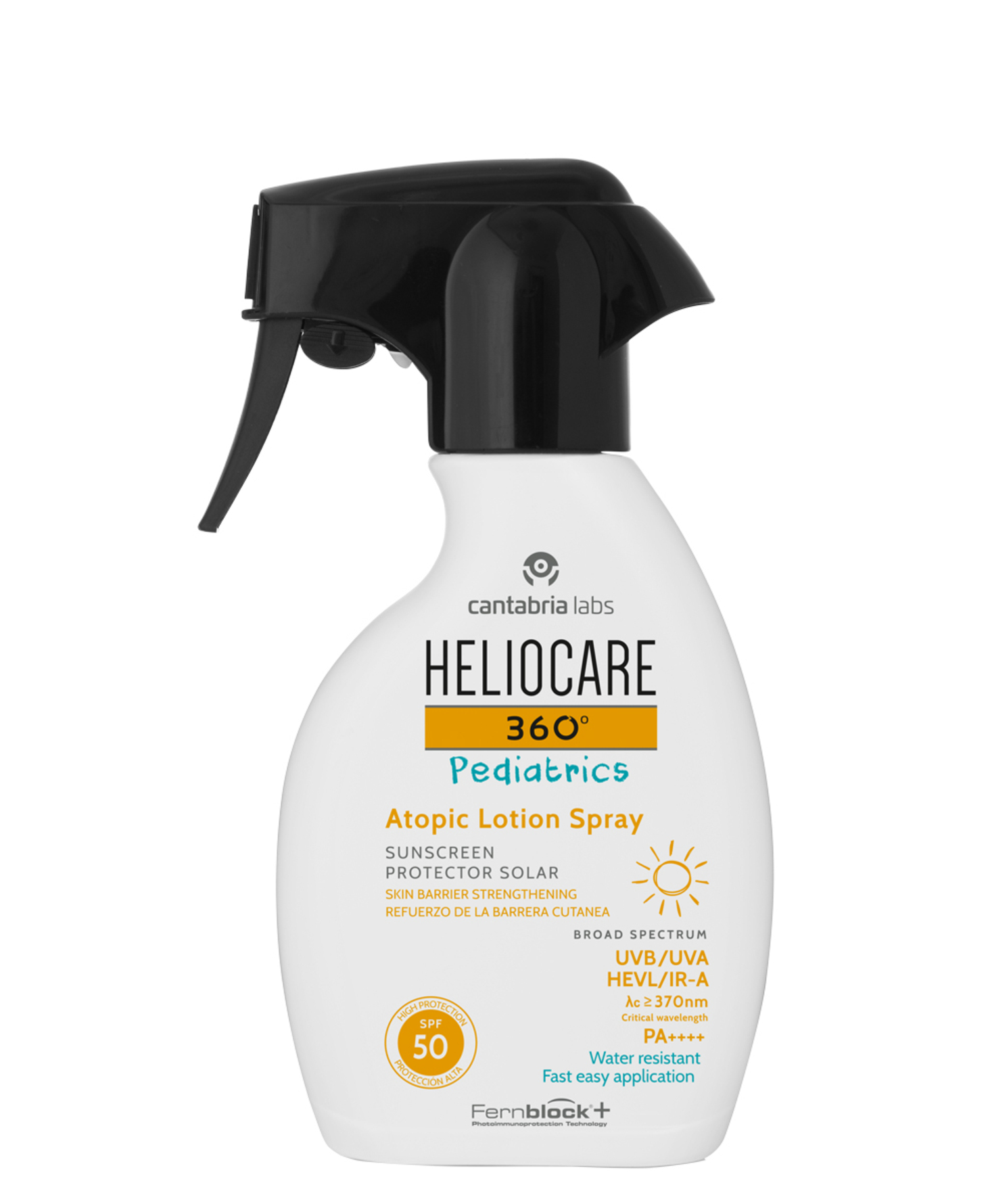
Heliocare is a Spanish photoprotection brand owned by the Madrid-based dermatological company Cantabria Labs, for which it serves as the flagship sunscreen line. It is built around Fernblock, a patented extract of the fern Polypodium leucotomos, and is sold in both topical and oral forms — the latter making Heliocare one of the early names associated with the idea of an oral sunscreen supplement. The brand remains active and is distributed internationally through its parent's network.
Heliocare's positioning sits at the meeting point of skincare and dietary supplement. The company markets it as "medical-grade" sun protection developed alongside dermatologists, and it has drawn repeated attention in dermatology press as an evidence-backed complement to conventional sunscreen rather than a replacement for it.
Origin
Heliocare grew out of the research activity of Industrial Farmacéutica Cantabria (IFC), the company later renamed Cantabria Labs. The brand's effective origin is usually placed in 1995, the year IFC reports discovering oral sunscreens in collaboration with Harvard University and patenting Fernblock, the plant-based extract that became the technological core of the Heliocare range [3]. A slightly earlier date also appears in the company's own history: 1994 is recorded as the year the firm acquired full ownership of IFC, then described as "a small family-run laboratory" based in Cantabria [3]. The 1994 figure refers to that corporate acquisition, while 1995 marks the scientific work from which Heliocare itself emerged.
The company does not publicly name the brand's individual founders. Its account of these years centres on the science — the patenting of Fernblock and the wider claim to have pioneered the oral photoprotection concept — rather than on personalities.
Ownership
Heliocare is owned by Cantabria Labs, headquartered in Madrid and operating laboratories in both Madrid and Santander [1]. The parent company adopted the name "Cantabria Labs" in 2018, having previously traded as Industrial Farmacéutica Cantabria [3]. Within its portfolio, Heliocare is described as the flagship sunscreen brand and sits alongside sister labels including Endocare (anti-ageing), Neoretin (dark spots) and Biretix (acne-prone skin).
Cantabria Labs states that it distributes products in more than 85 countries through seven direct subsidiaries — in Spain, Italy, France, Portugal, Mexico, Morocco, China and the United States — supplemented by distributor networks. In the United States, Heliocare's oral supplement is sold to consumers under a separate distribution arrangement; some dermatology coverage has referred to "Ferndale Healthcare's Heliocare" in that market, reflecting the US distributor rather than a change of ownership [10].
Philosophy & positioning
The brand frames sun damage as a year-round, indoor-and-outdoor concern, claiming protection across four types of radiation: UVB, UVA, visible light and infrared. Its stated tagline is "All the protection that science can give you," and the company positions the line as personalised, medical-grade sun care spanning both oral and topical formats.
This sits within Cantabria Labs' broader outlook, which presents skin health as part of overall health and emphasises working "hand-in-hand" with dermatologists. The parent company describes its guiding mission as offering "products that boost quality of life and look after what's most important: our health," and identifies innovation, entrepreneurship and a sense of community as its core values.
Products & innovation
The defining technology behind Heliocare is Fernblock, an extract of Polypodium leucotomos — a fern native to Central and South America. According to the company, the extract works across all sun-protection levels to "protect, neutralise and repair," and a polyphenol-rich variant marketed as ASPA-Fernblock adds antioxidant and photoprotective properties. The oral version of the active is built on Polypodium leucotomos extract (PLE), which the brand describes as an antioxidant that helps the skin resist free-radical damage.
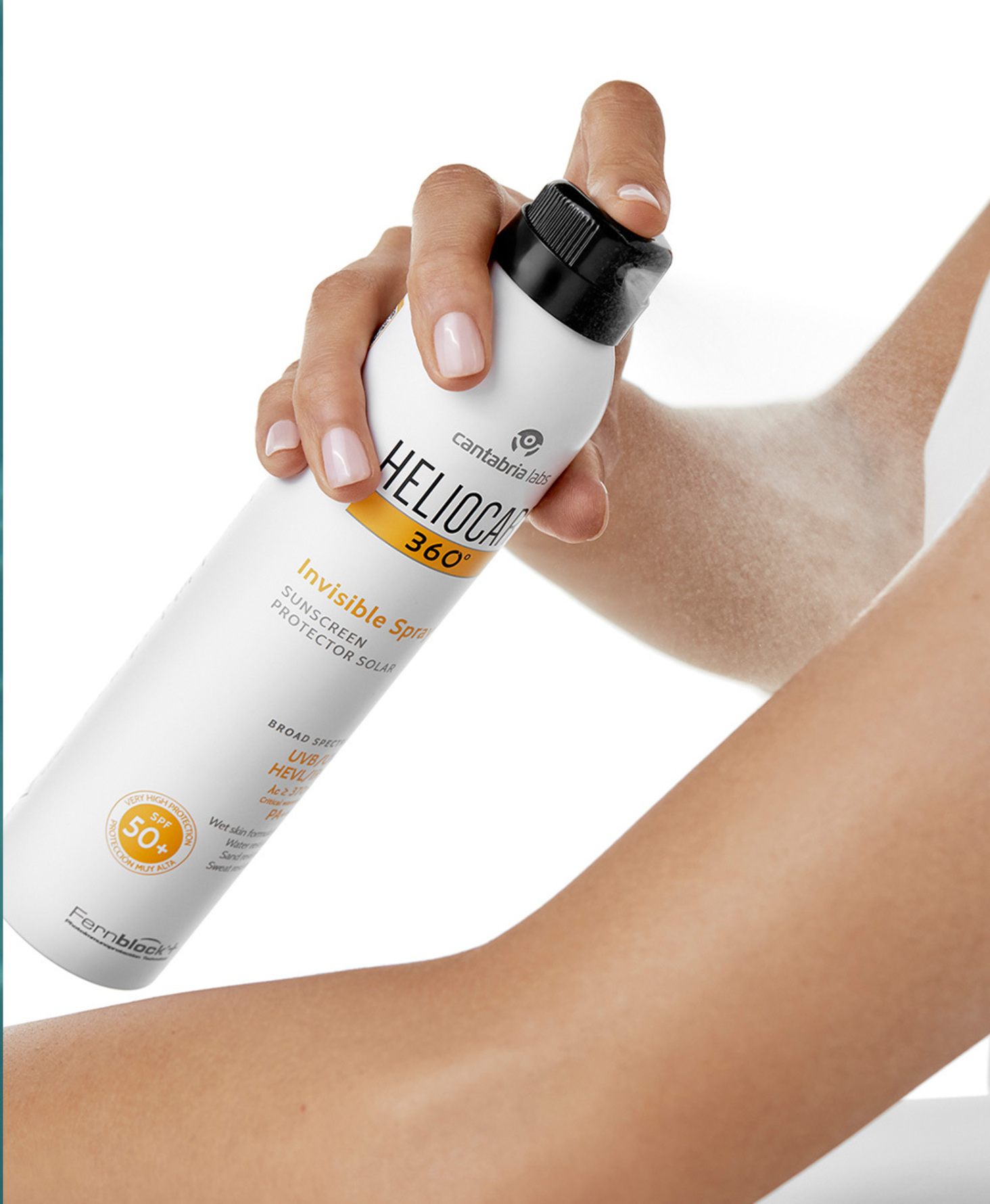
The range spans oral capsules (including the D Plus line), facial sunscreens such as Sensation, Age Active Fluid and Water Gel, and body products including an invisible spray and an after-sun repair cream. The oral supplement, sold in the United States as a vegan, gluten-free and soy-free capsule, is the product most associated with the brand in consumer media [8]. Independent dermatology literature anchors the timeline of the underlying extract: Fernblock was introduced in Europe in 2000 in both topical and oral forms, and became available in the United States as a dietary supplement in 2006, by which point it was distributed in more than 26 countries [11].
The company emphasises a scientific foundation for the line, citing more than 50 supporting publications and endorsement by dermatologists in some 60 markets, and reports "30+ years of brand experience" consistent with its mid-1990s origin.
Recognition
Heliocare's oral supplement has been named a "Best Supplement" winner twice by InStyle [8]. In dermatology media it is frequently singled out among oral photoprotection products: Dr. Joel Schlessinger, writing in Practical Dermatology, stated that "Heliocare has significant science and responsible marketing behind their product" and described it as his "go to" option for patients with photosensitivity, lupus and polymorphous light eruption, used within a broader sun-protection strategy [10].
Controversies
In May 2018, the US Food and Drug Administration warned that supplements marketed as a sole form of sun protection posed a risk, stating that no pill or capsule can replace sunscreen. The agency sent warning letters to four products over misleading claims; Heliocare was not among them, and the FDA did not object to Polypodium leucotomos as an ingredient [9]. In contemporaneous coverage, dermatologists drew a clear line: Heliocare was the only supplement specifically recommended by the experts quoted, but strictly as a complement to topical sunscreen rather than a substitute for it [9]. The episode is notable mainly for distinguishing Heliocare, an evidence-backed product, from the broader category of "sunscreen pills" that drew regulatory scrutiny.
Current status
Heliocare is active. It remains Cantabria Labs' flagship sunscreen brand, sold internationally, with an ongoing US consumer presence for the oral supplement and continuing scientific publication around the Fernblock extract. In 2026 the parent company launched a separate sun-exposure brand, Aktuva, while retaining Heliocare at the centre of its sun-care portfolio [3].
Facts & evidence
Documented facts from Glowpedia's fact base — every row carries a source.
Timeline#
Cantabria Labs (then IFC) discovered oral sunscreens in collaboration with Harvard University and patented Fernblock, the plant-based extract used in Heliocare products↗ cantabrialabs.com
Fernblock (Polypodium leucotomos extract) introduced in Europe in both topical and oral forms↗ pmc.ncbi.nlm.nih.gov
Fernblock-based product (Heliocare) became available in the U.S. as a dietary supplement↗ pmc.ncbi.nlm.nih.gov
Awards#
InStyle Best Supplement (2x winner) — Best Supplement↗ heliocare.com
Signature products#
Oral sunscreens (D Plus Capsules)↗ cantabrialabs.com
Heliocare positions itself as a "clinically proven and dermatologist-recommended dietary supplement" offering simple, daily capsules for skin protection.↗ heliocare.com
Heliocare oral Polypodium leucotomos (PLE) supplement — Widely described in dermatology coverage as the most-studied and most-tested oral PLE supplement; dermatologists' go-to oral photoprotection adjunct.↗ practicaldermatology.com
Key ingredients#
Proprietary technologies & patents#
“Fernblock®: "An innovative patented technology of natural origin that has been proven to work across all sun protection levels. It protects, neutralises and repairs.”
“Patented Fernblock®, described as "a plant-based extract" used in Heliocare products”
Mentioned in#
HuffPost — In coverage of the FDA's 2018 warning about sun-protection pills, Heliocare was the only supplement specifically recommended by both dermatologists interviewed (Dr. Jeanine Downie and Dr. Rachel Nazarian) for fair-skinned or photosensitive patients; framed strictly as a complement to, not a replacement for, topical sunscreen.↗ huffpost.com
Practical Dermatology — Dr. Joel Schlessinger stated "Heliocare has significant science and responsible marketing behind their product" and identified it as his "go to" product for patients with photosensitivity, lupus, and polymorphous light eruption, within a comprehensive photoprotection strategy.↗ practicaldermatology.com
Certification pass
What each certification and self-stated claim rests on: the source, whose website it's on, and what needs review.
“Vegan, gluten-free, soy-free, free of artificial dyes”↗ heliocare.com
“Vegan, gluten-free, soy-free, free of artificial dyes”↗ heliocare.com
None of these statements has been checked against the certifying bodies' registers. The statements were observed on 10 Jun 2026.
Where to buy
Where the brand is sold according to Glowjakt's price data, per market.
Prices come from Glowjakt and are updated daily. Glowpedia receives no payment for clicks.
Ingredients across the range
Key ingredients across Heliocare's range, from the ingredient lists of 33 of 34 products in Sweden.
Share of products with a known ingredient list. “None identified” means nothing matched our ingredient groups, not that the product is free of them.
Related brands


Sources
T1 primary · T2 secondary · T3 note- [1]T1cantabrialabs.com/our-brands/heliocare/cantabrialabs.com (brand site)
- [3]T2cantabrialabs.com/about-us/history/cantabrialabs.com (brand site)
- [8]T1heliocare.comheliocare.com (brand site)
- [9]T3huffpost.com/entry/fda-warning-against-sun-protection-pills_n_5b1e7c4ce4b0adfb826bee82huffpost.com
- [10]T3practicaldermatology.com/topics/skin-cancer-photoprotection/protect-or-defend-sorting-through-oral-supplement-claims/20470/practicaldermatology.com
- [11]T3pmc.ncbi.nlm.nih.gov/articles/PMC10381169/pmc.ncbi.nlm.nih.gov